How to Shortlist a Wastewater Treatment Plant Manufacturer in Lima in 2026
In 2026, the most competitive wastewater treatment plant manufacturers in Lima combine Peru-specific compliance expertise with proven packaged MBR, DAF, and containerized CAS systems. Buyers should shortlist suppliers quoting CAPEX between $80,000 (containerized 50 m³/d) and $4M (civil 5,000 m³/d) who can document ECA Agua D.S. 004-2017-MINAM discharge conformance and provide local commissioning support.
When a Callao fishmeal plant receives bids ranging from $180,000 to $2.8 million for what looks like the same 800 m³/d flow, the gap almost always comes down to three screening filters that a serious buyer applies before opening the pricing tab. The first filter is documented Peruvian project references — not generic "Latin America" case studies, but operating installations in Callao, Ate, Lurín, or Chilca that can be visited. The second is in-house or local-partner commissioning: a manufacturer who ships a container from Shanghai with no engineer on the ground for startup is a manufacturer who will not be on the ground when the first membrane fouls. The third filter is compliance language in the proposal itself — the bid must name ECA Agua D.S. 004-2017-MINAM and D.S. 010-2019-MINAM (Límites Máximos Permisibles) with specific discharge parameters the equipment is designed to hit, not a generic "meets local regulations" disclaimer.
Lima's industrial WWTP market in 2026 is concentrated in four corridors: Callao (fishmeal, beverages, chemicals), Ate (textiles, metal finishing), Lurín (food processing, dairy), and Chilca (refining, mining-support operations). Roughly 70% of retrofit and greenfield work in these zones is happening on plots between 200 m² and 5,000 m², which is why packaged and containerized systems now outsell civil builds on a unit basis despite higher per-m³ CAPEX. Two failure modes dominate 2026 buyer complaints. First, oversized civil bids that never get built — a 5,000 m³/d reinforced-concrete CAS quoted at $4.5 million for a plant that only needs 600 m³/d because the consultant was overspec'ing for a future expansion that will never happen. Second, undersized containerized units that fail peak-load testing — a 50 m³/d WSZ shipped for a fishmeal line that produces 180 m³/d during the October anchoveta peak. Shortlist 3–5 manufacturers, classify them as Lima-based local EPCs, regional integrators from Chile/Colombia/Argentina, or Asian package-plant OEMs with containerized supply, and apply all three filters to each. Only then compare price.
Peru's 2026 Compliance Stack: ECA Agua, MINAM, and DIGESA
ECA Agua D.S. 004-2017-MINAM, approved in June 2017, remains the binding national standard for water body discharges in Peru, and ANA/MINAM joint inspection protocols in 2026 enforce quarterly self-monitoring for most industrial categories. D.S. 010-2019-MINAM sets Límites Máximos Permisibles (LMP) specifically for industrial discharges into Peru's sewerage systems, with quarterly monitoring required for fishmeal, dairy, textiles, and mining-support operations. DIGESA's CTI (Concentración Toxicológica de Inhibición) values cap anaerobic toxicity at 1.0 toxic units, which directly restricts how much metal-finishing or pickling liquor can co-mingle with biodegradable streams in a shared equalization tank.
The table below summarizes the discharge caps a Lima manufacturer must design against for sewer discharge (the most common 2026 path for plants in SEDAPAL's service area).
| Parameter | ECA Agua D.S. 004-2017 / D.S. 010-2019-MINAM (sewer) | Typical Lima industrial influent (untreated) |
|---|---|---|
| COD | 200 mg/L (sanitary to sewer) / 500 mg/L (industrial to sewer, sector-specific) | 1,500–8,000 mg/L |
| BOD₅ | 100 mg/L | 800–4,000 mg/L |
| TSS | 150 mg/L | 400–3,500 mg/L |
| Oil & grease (FOG) | 20 mg/L | 300–1,200 mg/L (fishmeal, dairy) |
| Total nitrogen | 40 mg/L | 50–250 mg/L |
| pH | 6.0–9.0 | 4.5–11.0 (variable by sector) |
Plants discharging more than 3,000 m³/month into the Lima sewer network face an additional layer: OTASS/SEDAPAL connection permits that require pre-treatment documentation, hydraulic profile, and signed operator certifications. A 2026-compliant proposal from a serious manufacturer will reference all three instruments (ECA Agua, D.S. 010-2019-MINAM, and the local sewer operator's connection regulation) and will name the parameter-by-parameter design margin they are holding. If a bid shows only "meets Peruvian standards" with no parameter table, reject it before reading further.
Five Process Families Lima Plants Are Buying in 2026
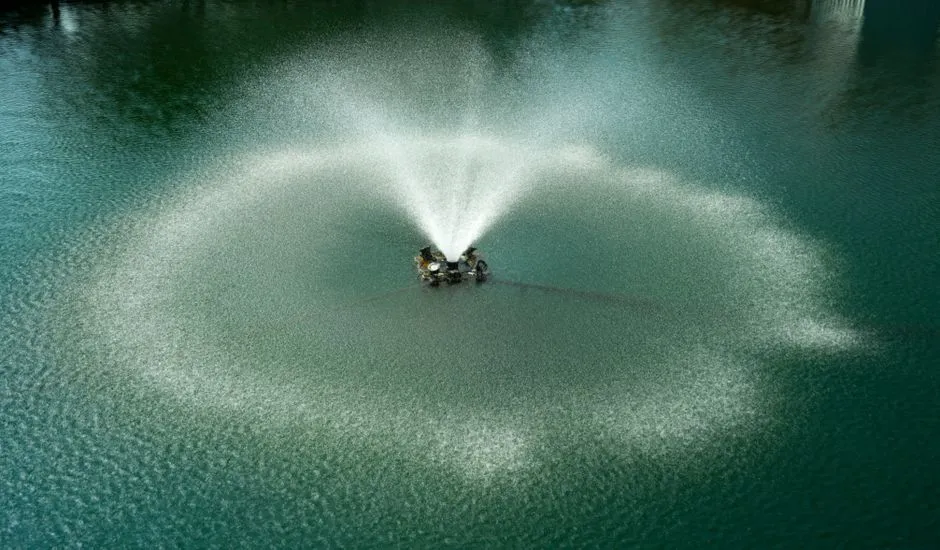
Lima's 2026 industrial WWTP market is built around five process families, and matching the right one to the influent saves both CAPEX and 12 months of operating pain. Conventional Activated Sludge (CAS) remains the default for flows above 2,000 m³/d, requires a primary clarifier, aeration basin, secondary clarifier, and RAS/WAS pumping, and demands an operator with at least a Class II Peruvian certification. MBR (Membrane Bioreactor) systems have displaced CAS for new builds in the 50–2,000 m³/d range because they deliver sub-1 μm effluent in a footprint roughly 60% smaller than an equivalent CAS, and they pair well with reuse targets. The HydropureWater integrated MBR system covers 10–2,000 m³/d with that footprint advantage, and the DF flat-sheet membrane module operates at 0.1 μm nominal with 10–20× lower energy than hollow-fiber when paired with coarse-bubble cleaning cycles. SBR (Sequencing Batch Reactor) fits food and beverage plants in Lurín where flow is batch-driven, and the equalization basin doubles as the reaction chamber. DAF + bio-polishing is the standard train for fishmeal, dairy, and rendering in Callao, where FOG routinely exceeds 300 mg/L — a dissolved air flotation unit in the 4–300 m³/h range removes 90–95% of TSS and up to 95% of FOG before the biological stage. Package/containerized plants — see the WSZ underground package plant at 1–80 m³/h, fully buried, no dedicated operator — fit hotels, hospitals, and small factories that lack space for a civil build. MBBR/IFAS is gaining share as a retrofit bolt-on at existing Lima CAS plants that need to lift capacity 30–50% without new tankage; the economics mirror the MBBR operating cost in 2026 data published in our MBBR operating cost in 2026 reference.
| Process family | Flow range (m³/d) | Typical effluent (BOD/TSS) | Footprint | Best-fit Lima sector |
|---|---|---|---|---|
| CAS (civil) | 2,000–50,000 | 20 / 30 mg/L | Large | Mining-support, large food/beverage |
| MBR (packaged or civil) | 10–2,000 | <5 / <1 mg/L | Compact | Textiles, reuse-driven retrofits |
| SBR | 100–5,000 | 20 / 25 mg/L | Moderate | Food/beverage, batch operations |
| DAF + bio | 50–10,000 | 25 / 30 mg/L | Moderate | Fishmeal, dairy, rendering |
| WSZ containerized | 1–80 m³/h | 20 / 20 mg/L | Buried / minimal | Hotels, hospitals, small factories |
For a deeper side-by-side of integrated MBR, MBBR, and ZLD trains at industrial scale, the best integrated wastewater treatment plant for industrial use spec sheet is the right next read.
CAPEX and OPEX Ranges: What Lima Plants Are Actually Paying in 2026
Sanity-checking a WWTP bid in Lima in 2026 requires anchoring to a CAPEX envelope in USD and a 5-year OPEX projection in $/m³. The numbers below come from 2026 quote ranges across the three manufacturer archetypes in the Lima market and reflect landed cost at Callao.
| System scale | CAPEX range (USD, 2026) | Notes |
|---|---|---|
| Containerized 50 m³/d | $80,000–$180,000 | WSZ-class, no civil works |
| Packaged MBR 200 m³/d | $250,000–$450,000 | Flat-sheet, skid-mounted |
| Packaged MBR 1,000 m³/d | $900,000–$1,500,000 | Multiple skids + control container |
| Civil CAS 2,500 m³/d | $2,200,000–$3,400,000 | Concrete tanks, on-site assembly |
| Civil MBR 5,000 m³/d | $3,200,000–$4,000,000 | Reuse-grade, civil + membrane hall |
OPEX in 2026 typically breaks into four cost blocks: energy at $0.04–$0.12/m³ (the dominant line, driven by aeration and pumping), chemicals at $0.02–$0.08/m³ (coagulant, CIP, defoamer), membrane replacement amortized at $0.015–$0.04/m³ (assumes a 5–7 year flat-sheet life with proper maintenance), and labor at $0.03–$0.06/m³ (one to two operators per shift for a packaged plant, more for civil builds). Asian-supplied equipment landed at Callao carries a 6% ad valorem import duty plus 18% IGV (VAT), pushing a $200,000 FOB unit to roughly $250,000 at the gate. Some mining projects in southern Peru qualify for EXMA trade-zone incentives that can cut the duty line materially; food and textile processors in Lima generally do not. Payback windows in 2026 cluster at 3–5 years for water-reuse-driven MBR retrofits (where the avoided potable purchase is the dominant credit) and 7–10 years for compliance-driven CAS (where the avoided fine risk is the only credit). A bid outside these windows deserves a written justification.
The Altitude Problem Most Foreign Suppliers Miss in Lima
Atmospheric pressure at 3,000 m elevation is roughly 70% of sea-level pressure, and that drop cuts Standard Oxygen Transfer Efficiency (SOTE) on standard aerators by 20–30% if the blower was selected at nameplate sea-level conditions. The engineering fix is straightforward: oversize blowers 25–35% or specify high-efficiency disc/membrane diffusers with published SOTE curves at the actual site elevation, and select downstream separation equipment whose surface-loading rates still meet design at the derated oxygen input. The lamella clarifier in our catalog is rated for 20–40 m/h surface-loading — roughly 3–4× a conventional settling tank — which compensates for partial altitude derating by giving the downstream biological stage a cleaner feed even with reduced dissolved oxygen. Add this one-line clause to every Lima-region RFP: "Blower sizing shall account for the project's site elevation, with SOTE efficiency data at actual atmospheric pressure." Any bidder who cannot answer it is bidding equipment selected at sea level, and that bid will underperform by the time it reaches Chilca at 1,800 m or a high-altitude mining camp at 3,400 m.
Frequently Asked Questions
How much does a wastewater treatment plant cost in Lima in 2026? Containerized 50 m³/d systems land at $80,000–$180,000; packaged MBR at 200 m³/d runs $250,000–$450,000; civil CAS at 2,500 m³/d reaches $2.2M–$3.4M, and civil MBR at 5,000 m³/d tops out near $4M. All figures are 2026 USD, landed at Callao with 6% duty + 18% IGV. A HydropureWater integrated MBR system typically falls in the middle of the packaged band.
What discharge limits apply to industrial wastewater in Peru? ECA Agua D.S. 004-2017-MINAM sets water-body discharge caps (COD 200 mg/L for Class 3 freshwater), and D.S. 010-2019-MINAM sets LMP for sewer discharge at 500 mg/L COD / 100 mg/L BOD / 150 mg/L TSS / 20 mg/L FOG for most industrial categories. Quarterly self-monitoring is enforced by ANA/MINAM in 2026.
How long does it take to install a packaged WWTP in Lima? Containerized units ship in 8–12 weeks from order to commissioned operation, including Callao customs clearance and 2 weeks of on-site startup. Civil builds run 9–18 months depending on concrete cure windows and MINAM permit sequencing. A dissolved air flotation unit delivered as part of a packaged train typically sits at the short end of that range.
Can Chinese wastewater plant manufacturers supply to Peru? Yes — containerized export with FAT (factory acceptance testing) videos, Spanish-language O&M manuals, and INCOTERMS CIP Callao is standard in 2026. The customs reality is 6% ad valorem + 18% IGV at Callao, so evaluate bids on landed cost, not FOB. For a structured supplier-shortlist approach that mirrors Peru's compliance stack, see the DAF system in Mexico 2026 supplier checklist — the evaluation logic transfers directly to Lima.