What Medellín Industrial Buyers Need from a WWTP Manufacturer in 2026
A wastewater treatment plant manufacturer in Medellín for 2026 should be evaluated on three pillars: compliance with Colombia's Resolución 0631/2015 (sector-specific discharge limits for textiles, food, leather), proven treatment trains for Antioquia's dominant industries (textile, coffee, flower, tannery), and after-sales support within the Aburrá Valley. Expect CAPEX of US$250–US$1,200 per m³/day for packaged systems, with MBR delivering reuse-quality effluent at ~60% smaller footprint than conventional activated sludge.
Most procurement managers in Medellín start the wrong way: they collect three quotes, compare sticker prices, and pick the lowest. That approach fails on the first question a regulator or auditor will ask — show me your Res. 0631/2015 compliance data for my sector. A serious shortlist begins with three questions every vendor must answer in writing:
- Can you document Res. 0631/2015 compliance for my specific sector — with caracterización (wastewater characterization) protocols and treatability studies performed on an actual Antioquia feedstock, not generic textbook parameters?
- Do you have a service engineer within 24 hours of the Aburrá Valley — not a Bogotá-based rep who flies in, but a Medellín or Rionegro-resident technician with membrane-replacement and SCADA experience?
- What is the guaranteed effluent quality at 1,495 m altitude — stated as a contractual performance number, factoring the ~18–22% reduction in oxygen transfer efficiency versus sea-level designs?
MADS (Ministerio de Ambiente y Desarrollo Sostenible) enforcement tightened noticeably in 2025–2026. Corpourabá and the Área Metropolitana del Valle de Aburrá (AMVA) are running more frequent discharge audits on industrial users in Medellín, and permiso de vertimientos renewals now require 12 months of monitoring data rather than design-stage projections. The four industrial clusters driving WWTP demand in Antioquia are: textiles in Itagüí and Sabaneta (historically the largest single sector), flowers in Rionegro and Oriente Antioqueño (greenhouse fertilizer and pesticide loads), leather and tanning in Marinilla (high sulfide and chromium), and coffee wet-milling in Suroeste (highly acidic, very high BOD). The median plant size band most commonly procured in Medellín is 50–500 m³/day, which determines the relevant equipment class (packaged skid-MBR, containerized MABR, or pre-engineered SBR).
Colombian Regulatory Framework: Resolución 0631/2015 Compliance Mapping
Resolución 0631/2015 (Ministerio de Ambiente y Desarrollo Sostenible, 2015) is the binding instrument for industrial wastewater discharge into Colombian surface waters and sewer systems. Article 14 sets the general maximum permissible limits for all industrial sectors; Articles 15 through 18 impose stricter, sector-specific limits for textiles (Capítulo VIII), food and beverages, leather/tanning, and other manufacturing verticals. A manufacturer who quotes only "compliance with Colombian standards" without naming the article is hiding something.
Numeric limits a vendor must be able to hit, contractually:
| Parameter | Textile (Cap. VIII) | Food & Beverage | Leather/Tanning | Analytical Method |
|---|---|---|---|---|
| BOD₅ | ≤ 150 mg/L | ≤ 300 mg/L | ≤ 400 mg/L | Standard Methods 5210 |
| COD | ≤ 300 mg/L | ≤ 600 mg/L | ≤ 800 mg/L | Standard Methods 5220 |
| TSS | ≤ 100 mg/L | ≤ 150 mg/L | ≤ 200 mg/L | SM 2540 D |
| Color | ≤ 200 U Pt-Co | — | — | SM 2120 C |
| Sulfides (S²⁻) | — | — | ≤ 1.0 mg/L | SM 4500-S²⁻ D |
| Total Chromium | — | — | ≤ 1.5 mg/L | SM 3500-Cr B |
| pH range | 6.0–9.0 | 6.0–9.0 | 6.0–9.0 | SM 4500-H⁺ |
Jurisdiction determines which authority issues the permiso de vertimientos: plants inside the Medellín metropolitan area fall under AMVA in coordination with EPM (Empresas Públicas de Medellín); plants in Rionegro, Marinilla, and the wider Oriente fall under Corpourabá; facilities in Suroeste may route through Cornare or Corpourabá depending on sub-region. A vendor that confuses these jurisdictions during a proposal review is a vendor who will not survive an environmental audit. Manufacturers should provide caracterización support, treatability studies, and a year of monitoring data templates — a Medellín-area plant should not accept a quote without these deliverables (MADS Resolución 0631/2015, Art. 5 — characterization obligations).
Treatment Train Selection by Sector: Which Process Fits Your Wastewater
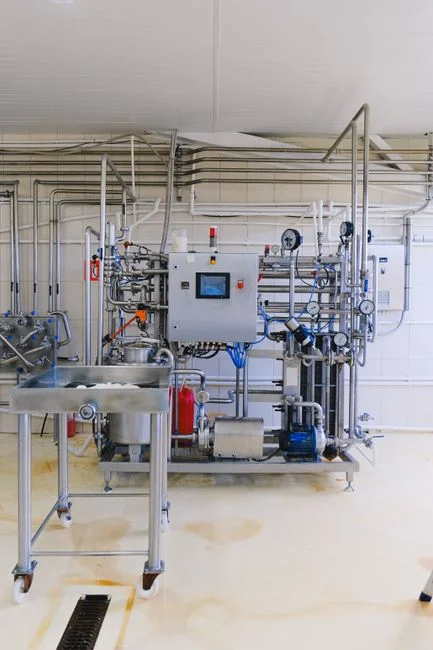
The right treatment train depends on influent characterization, not vendor preference. The table below maps each Antioquia industry to a reference process and the equipment class a manufacturer should be proposing:
| Sector | Typical Influent | Recommended Treatment Train | Reference Equipment |
|---|---|---|---|
| Textile (Itagüí/Sabaneta) | COD 800–2,500 mg/L; pH 8–11; color 500–3,000 U Pt-Co | Equalization → DAF for textile pre-treatment → coagulation/pH correction → biological (MBBR or MABR) → integrated MBR system for reuse-grade effluent → optional RO for water reuse | DAF 4–300 m³/h, 13 standard models; DF-series MBR flat-sheet modules, 0.1 μm nominal pore, 32–135 m³/day per module |
| Flowers (Rionegro/Oriente) | Nitrogen 50–300 mg/L; phosphorus 10–60 mg/L; variable pH from fertilizer dosing | Screening → BNR (biological nutrient removal) → MBR; MABR emerges as 2026 cost-leader at $0.15–$0.25/m³ OPEX (40–55% lower energy than MBR) | DF-MBR modules; MABR cassettes for greenfield |
| Leather/Tanning (Marinilla) | Sulfide 50–500 mg/L; chromium 10–100 mg/L; salinity 5,000–15,000 mg/L Cl⁻ | Sulfide oxidation + chromium precipitation → equalization → biological (salt-tolerant biomass) → MBR polishing; sulfides must be oxidized to <1 mg/L before biological stage | Pre-oxidation tank + DAF + MBR |
| Coffee wet-milling (Suroeste) | BOD 5,000–20,000 mg/L; pH 4.0–5.5; high TSS from mucilage | Anaerobic UASB (HRT 5–10 days) → aerobic polishing (SBR or MBBR) → constructed wetland or MBR for final polish | UASB reactor + MBBR + wetland |
One Medellín-specific correction is non-negotiable: the city's 1,495 m altitude reduces oxygen transfer efficiency by ~18–22% compared to sea-level designs (standard α-factor adjustment for standard oxygen transfer). Any biological design from a coastal or European reference must oversize aeration by 20% or specify membrane-aerated systems (MABR) where the bubble path is replaced by bubble-less diffusion — see our MABR vs MBR operating cost comparison for 2026 for the OPEX math. Vendors who quote "standard" aeration without altitude correction will deliver a plant that fails dissolved-oxygen setpoints at startup.
Manufacturer Comparison: Local Medellín Fabricators vs International OEMs
Antioquia buyers typically face four manufacturer archetypes: (a) local Medellín metal-fabricators — strong on stainless-steel skids, weak on biological process engineering; (b) Colombian integrators (Bogotá/Cali-based) with full process capability but higher overhead; (c) Spanish/European OEMs — high compliance credibility and proven Res. 0631/2015 documentation, typically the highest CAPEX band; (d) Chinese OEMs — lowest CAPEX, but require careful due diligence on after-sales, Spanish-language documentation, and biological commissioning. The scorecard below should be applied to every shortlisted vendor before an RFQ is issued:
| # | Evaluation Criterion | Weight | What "Good" Looks Like |
|---|---|---|---|
| 1 | Res. 0631/2015 track record with named Art./Cap. references | 20% | ≥ 3 reference plants in Colombia with monitored effluent data |
| 2 | In-house process engineering vs subcontracted | 15% | Biologist/chemical engineer on staff, P&ID signed off by P.E. |
| 3 | Factory size / annual capacity | 10% | ≥ 5,000 m² fabrication area; ≥ 50 packaged WWTPs/year delivered |
| 4 | CE / ISO 9001 / ISO 14001 certifications | 10% | Current certificates with scope covering WWTP equipment |
| 5 | Medellín or Antioquia service presence | 15% | Local engineer ≤ 24 h; stocked membrane spares in Medellín |
| 6 | Spanish / English technical support | 5% | Native Spanish documentation; English fall-back for OEM comms |
| 7 | Reference plants in your sector | 15% | ≥ 1 plant operating in same influent class for ≥ 2 years |
| 8 | Warranty terms on membrane modules | 10% | ≥ 2 years on MBR flat-sheet modules; pro-rata terms disclosed |
International pricing reference: Made-in-China baseline for CE-certified packaged industrial WWTPs runs US$4,100–US$20,000 per set (FOB Shandong, 1-piece MOQ), per Qingdao-based OEM listings (2026). Add ~60–90% to land that price in Medellín: ocean freight to Cartagena or Buenaventura, ~10% import duty (arancel), 19% IVA, and commissioning. A Medellín-specific risk worth flagging: Chinese OEMs without Colombian representation routinely generate 6–10 week parts delays when membrane modules or dosing pumps fail — pair that vendor with a local metal-fabricator for pre-treatment (e.g., an automatic bar screen for fiber removal) and the risk drops sharply. Local metal-fabricators, conversely, may lack the biological process expertise to debug a foaming MBBR or starved MBR — that is the integrator's role to fill.
CAPEX and OPEX Benchmarks for a 200 m³/day Medellín WWTP in 2026
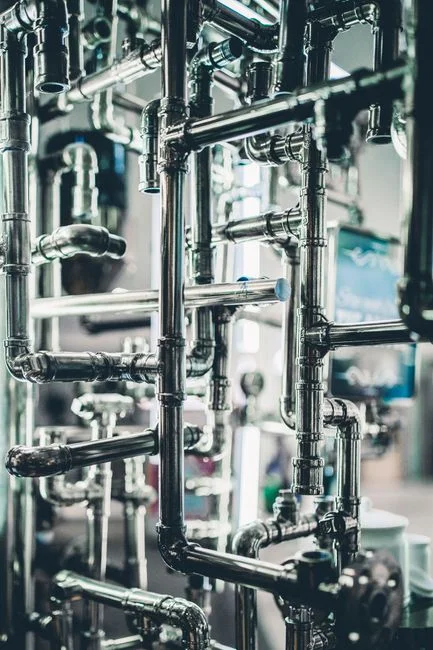
For a 200 m³/day packaged industrial WWTP in the 50–500 m³/day band, CAPEX ranges from US$50,000 to US$240,000 depending on treatment-train complexity (conventional activated sludge < SBR < MBR < MBR + RO reuse). The per-m³/day benchmark is US$250–US$1,200. OPEX in Medellín is dominated by electricity, which runs ~COP 700–800/kWh for industrial users in 2026 (EPM tariff schedule, sector industrial regulado). Aeration alone consumes 50–70% of total plant electricity, so train selection is largely an OPEX decision.
| Treatment Train | OPEX (USD/m³) | OPEX (COP/m³ @ 4,300/USD) | 200 m³/day Annual OPEX (COP) |
|---|---|---|---|
| MABR | $0.15–$0.25 | 645–1,075 | $11,000–$18,250 → COP 47M–78M |
| MBR | $0.30–$0.55 | 1,290–2,365 | $22,000–$40,150 → COP 94M–172M |
| Conventional AS + chemical P-removal | $0.40–$0.70 | 1,720–3,010 | $29,200–$51,100 → COP 125M–219M |
| MBR + RO reuse loop | $0.70–$1.10 | 3,010–4,730 | $51,100–$80,300 → COP 219M–345M |
Hidden costs that rarely appear in headline quotes: 10% import duty, 19% IVA, INVIMA-style sanitary permits where the discharge enters a food-producing watershed, Corpourabá/AMVA resolution fees (typically COP 5–15M for permit issuance in 2026), and 2–4 weeks of operator training. The full breakdown methodology is covered in the 2026 TCO breakdown for industrial wastewater plants. For textile and food processors evaluating water reuse to offset EPM water tariffs, the RO-loop OPEX premium is often recoverable inside 18–30 months.
Logistics, Installation, and Commissioning in the Aburrá Valley
Engineering is only half the project. Non-engineering risks — port routing, road permits, and biological commissioning — are what determine whether a WWTP actually delivers on schedule. From the port of Cartagena, a 20ft or 40ft container reaches a Medellín plant site in 5–7 days by truck, plus 3–10 days for customs clearance depending on whether the shipment clears under a free-trade agreement or standard import. The Buenaventura route adds 2–3 days of overland transit but is sometimes cheaper for Qingdao-origin shipments that consolidate on Pacific-routed vessels.
Antioquia enforces strict peso bruto vehicular limits on its highways: confirm with the manufacturer before issuing a PO that no single skid exceeds 32 tonnes loaded, otherwise an over-dimensional permit is required and adds 10–20 days. Inside Medellín proper, the Aburrá Valley's elevation gains — roughly 7.0 m of cumulative climb on inner-city access roads to hillside industrial parks in Itagüí, Sabaneta, and Girardota — constrain skid height to ~3.6 m for standard trucks; taller skids need a separate low-boy transport plan. Commissioning timelines differ sharply: a Chinese OEM without a local rep runs 8–16 weeks from factory acceptance test through biological seeding; a Colombian integrator with local presence typically finishes in 4–8 weeks because biological seeding and operator training happen in parallel with customs clearance. For a side-by-side regulatory comparison with another Latin American industrial hub, see the regional industrial wastewater treatment compliance guide for Alexandria.
Frequently Asked Questions
What is the minimum flow rate that triggers Res. 0631/2015 compliance for an industrial discharger in Medellín?
Resolución 0631/2015 applies to all industrial discharges to surface water or sewer systems regardless of flow, but the permiso de vertimientos requirement under Decreto 1076/2015 (Art. 2.2.3.3.5.3) is typically triggered above 1.0 L/s for new industrial users. AMVA may impose monitoring below this threshold for existing users in the Aburrá Valley.
How much does altitude correction change biological aeration design at 1,495 m?
Standard oxygen transfer efficiency drops ~18–22% at 1,495 m versus sea level due to reduced atmospheric pressure (~0.84 atm). Designers must oversize blower capacity or specify MABR/membrane-aerated systems; failing to do so results in chronic dissolved-oxygen deficit and incomplete BOD removal.
What is the realistic delivery time for a packaged 200 m³/day MBR plant from a Chinese OEM to Medellín?
For a Chinese OEM without Colombian representation: 8–16 weeks total, including factory acceptance test (1 week), ocean freight (4–5 weeks), customs (1–2 weeks), overland to Medellín (1 week), installation (1–2 weeks), and biological commissioning (1–2 weeks). A Colombian integrator with local stock cuts the freight and customs leg to 1–2 weeks combined.
Which Res. 0631/2015 articles matter most for a textile plant in Itagüí?
Capítulo VIII (Art. 16) sets the textile-specific limits — BOD₅ ≤150 mg/L, COD ≤300 mg/L, TSS ≤100 mg/L, color ≤200 U Pt-Co, pH 6.0–9.0. Art. 5 imposes characterization obligations; Art. 14 applies only where sector articles are silent, which is rare for textiles.
Related Equipment
- PLC-controlled coagulant and pH dosing — specifications, capacity range, and technical data
- on-site ClO₂ disinfection system — specifications, capacity range, and technical data