Why US Hyperscale Sites Are Running Out of Freshwater for Cooling
US hyperscale data centers can cut freshwater withdrawals for cooling by 60–95% in 2026 by treating municipal wastewater and recycling cooling-tower blowdown, but most existing sites still pull the majority of their make-up water from potable sources. Cooling is the dominant water consumer on a hyperscale campus: evaporative cooling towers, adiabatic sidecar units, and humidification systems typically account for 60–80% of a site's total water demand, with cooling-tower evaporation and blowdown driving the largest absolute withdrawals (per the 2026 LCA by Cartagena Vaca et al., hereafter S1).
The problem is siting, not workload. New hyperscale capacity is concentrating in arid US counties — Travis and Williamson (Texas), Maricopa (Arizona), Clark (Nevada), and Bernalillo (New Mexico) — where physical water stress already exceeds 40% of renewable supply and where municipal utilities have begun issuing connection moratoria on large-volume industrial users (S1; a3-usa.com commercial overview, 2025). AI workload growth through 2025–2026 is pushing rack densities past 70 kW per rack and per-megawatt cooling demand higher, compounding the freshwater problem: a 100 MW AI campus in Phoenix now draws on the order of 1.0–1.5 million gallons per day of fresh water at conventional 3–5 cycles of concentration (S1 cooling-tower water-budget framing).
The opportunity at the national scale is large. The 2026 global symbiosis study (Wang et al., Environ Sci Ecotechnol) mapped 4,775 data centers and 57,547 WWTPs across 98 countries and ranked the United States as the country with the greatest absolute mitigation and water-saving potential — about 1,300 million m³ of freshwater conservation and 84 million tonnes of CO₂e annually if AI infrastructure is paired with treated wastewater. At a single state scale, Stillwell & Webber (2014) projected up to 300 million gallons per day of freshwater displacement if Texas cooling sites switched to reclaimed municipal water. The S2 global pairings analysis confirms the United States is where data-water symbiosis pays back fastest.
What Counts as 'Reuse' in a Data Center Cooling Loop
Three practical reuse streams cover the design space for a 2026 US hyperscale campus, and the right choice depends on the utility contract, the water-stress index of the county, and the discharge permit. Tier 1 is off-site municipal reclaimed water delivered through a dedicated purple pipe distribution system; the data center takes title at the meter and treats further only for cooling-tower chemistry. Tier 2 is on-site treatment of municipal sewage or building greywater using a packaged MBR membrane bioreactor for hyperscale reuse, which gives the operator full control of influent quality and bypasses utility tariff risk. Tier 3 is internal recycling of cooling-tower blowdown and RO concentrate, which attacks the largest single line item in the site's water balance after evaporation.
Per S1, published cooling-tower reuse cases build on one of two trains: a baseline train of depth filtration + GAC + chlorination, or an advanced train of UF + RO. The 2025 commercial overview (a3-usa.com) lists municipal reclaimed water, industrial wastewater, and on-site treated wastewater as the three viable sources, each requiring different pretreatment. S1 finds a one-to-one volumetric displacement between reuse water and displaced freshwater, but flags an indirect water penalty of approximately 0.93 L/m³ from higher upstream electricity and chemical inputs — under 0.1% of the direct benefit, so economically invisible but worth disclosing in a life-cycle assessment.
The practical rule: if a hyperscale site can sign a 10–20 year take-or-pay contract for reclaimed water at a tariff below the avoided potable rate plus the avoided wastewater discharge fee, Tier 1 wins on CapEx. If the local utility cannot guarantee volume or quality, Tier 2 with MBR + UF + RO is the defensible default for a 2026 build.
The 2026 Reference Treatment Train for Hyperscale Cooling Reuse
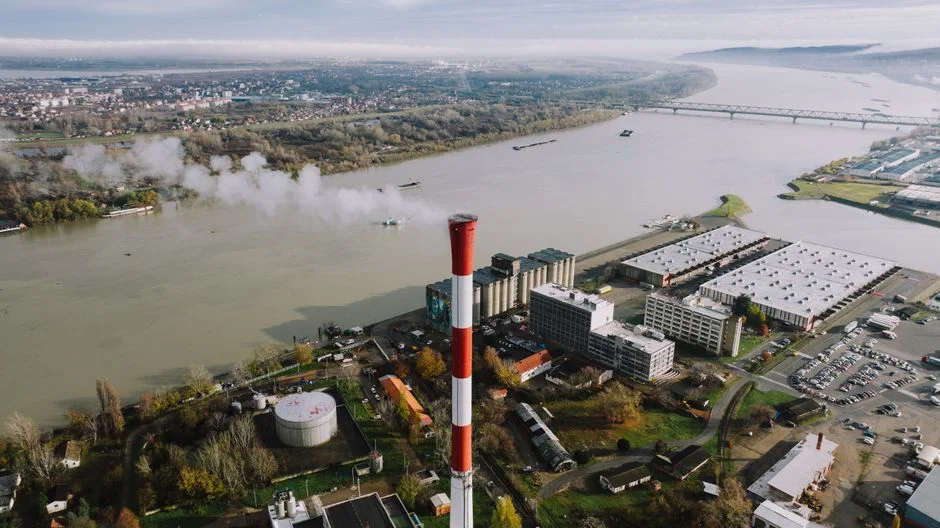
The 2026 reference train for reclaimed water entering a hyperscale cooling tower is a seven-step sequence from raw influent to disinfected make-up, with parameter targets that an engineer can drop directly into a process flow diagram. Each step is sized to protect the next: a failure in screening or clarification is paid for in membrane replacement and CIP frequency downstream.
| Step | Unit Operation | Design Parameter / Target | Notes |
|---|---|---|---|
| 1 | Intake screening | 6 mm bar gap; 95% capture of >6 mm debris | Protects downstream pumps and MBR membranes from ragging |
| 2 | DAF clarification | TSS <30 mg/L; FOG <10 mg/L | Hydraulic residence time 20–30 min; air-to-solids ratio 0.02–0.05 |
| 3 | Submerged MBR | MLSS 8,000–12,000 mg/L; flux 15–25 LMH; TSS <5 mg/L, BOD <5 mg/L | 60% smaller footprint than CAS; eliminates secondary clarifier |
| 4 | UF polishing | 0.03 μm PVDF; turbidity <0.5 NTU; SDI <3 | RO guard; tolerates upstream spikes up to 300 ppm turbidity |
| 5 | RO (or softening) | RO recovery 75–95%; permeate conductivity <50 μS/cm; or softener hardness <20 mg/L as CaCO₃ | RO for high-COC sites; softener alone for moderate-COC sites |
| 6 | GAC polishing | Empty bed contact time 10–15 min; TOC reduction >50% | Removes residual organics and chlorine demand before tower |
| 7 | Disinfection | ClO₂ residual 0.1–0.5 mg/L at tower basin; UV dose ≥40 mJ/cm² as backup | On-site generation preferred; both options consistent with EPA and WHO guidelines |
At full scale, a 1 MGD campus reuse skid running at 80% RO recovery produces roughly 0.8 MGD of cooling-tower make-up and 0.2 MGD of RO concentrate. The concentrate stream is typically routed to the cooling-tower basin as part of the make-up blend rather than discharged, which raises the site's effective cycles of concentration and shrinks the blowdown stream by an additional 30–50% (per S1 finding on UF+RO enabling higher COC).
Cycles of Concentration: Where the Real Water Savings Come From
Cycles of concentration (COC) is the single most important operating lever for a cooling-tower reuse system, and it is the variable that decides whether the advanced train pays back. COC is the ratio of dissolved solids in the circulating water to dissolved solids in the make-up water; a freshwater site running 3–5 COC blows down roughly 1–2% of its circulating flow per cycle, while a reclaimed-water site running 7–10 COC blows down well under 1% (S1).
| Site Profile | Recommended COC | Blowdown Reduction vs COC 4 | Treatment Train | Limiting Water Chemistry |
|---|---|---|---|---|
| Pilot / early deployment, freshwater baseline | 3–5 | Baseline | Filtration + scale inhibitor + ClO₂ | Calcium, alkalinity |
| Reclaimed water, moderate silica (<40 mg/L) | 5–7 | 30–45% | DAF + MBR + softener + ClO₂ | Silica, calcium |
| Reclaimed water, hard groundwater blend | 7–10 | 50–65% | DAF + MBR + UF + RO + GAC + ClO₂/UV | Silica, conductivity |
| High-COC hyperscale (>10 COC) | 10–12 | 65–75% | RO + selective ion exchange + antiscalant | Silica, TDS |
Per S1, an advanced UF+RO train running at 7–10 COC delivers a 40–70% reduction in blowdown volume relative to a freshwater baseline at 4 COC. That blowdown reduction is what offsets the roughly 5× energy penalty of UF+RO reported in the same study, because the avoided chemical dose (scale and corrosion inhibitor per m³ of blowdown) and the avoided make-up water both fall as COC climbs. The operating window is bounded by silica (typically 150 mg/L saturation), calcium hardness, alkalinity, and conductivity; specify real-time conductivity and ORP sensors plus PLC-controlled chemical dosing for scale and corrosion control to keep the loop inside that window without manual intervention.
US Cost Model: When Reuse Beats Potable in 2026
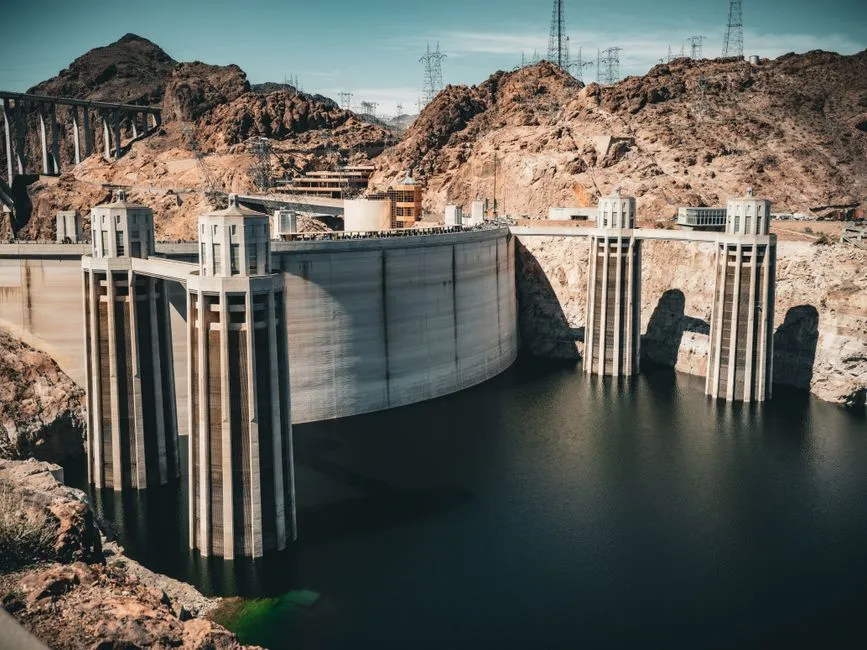
The 2026 procurement decision reduces to two numbers: reuse CapEx expressed as $/MGD of installed treatment capacity, and avoided potable cost expressed as $/kgal of make-up water. The S1 LCA confirms the indirect water penalty of reuse is approximately 0.93 L/m³ — economically invisible — so the decision is dominated by these two line items, not by environmental externalities. A 2026 industrial water reuse skid for a 1–5 MGD hyperscale campus typically lands in the $4.5–8.5 million per MGD CapEx band (excluding intake and purple pipe) and $0.85–1.40 per kgal all-in water cost; potable water in stressed counties now runs $0.006–0.012 per kgal as a raw rate but $0.011–0.024 per kgal delivered once capacity, transmission, and peak surcharges are layered on (per the 2026 cost benchmarks per MGD for water treatment infrastructure).
| Cost Lever | Freshwater Baseline (2026) | Reclaimed Water (1 MGD skid) | Delta |
|---|---|---|---|
| CapEx ($/MGD installed) | $0.8–1.5M (intake + treatment) | $4.5–8.5M (DAF + MBR + UF + RO + GAC + ClO₂) | + $3.7–7.0M |
| Water cost ($/kgal delivered) | $0.011–0.024 | $0.85–1.40 (amortized + OpEx) | Higher unit cost, lower volume |
| Annual water volume offset (1 MGD, 90% utilization) | — | ~330 million gal/yr | Direct displacement 1:1 |
| Indirect water penalty | — | 0.93 L/m³ (<0.1% of benefit) | Negligible |
| GWP penalty vs freshwater (current US grid) | Baseline | ~2× (S1) | Reverses under decarbonized grid |
| Typical simple payback vs potable at $0.020/kgal | — | 7–12 years | Driven by tariff delta, not CapEx alone |
The sensitivity that flips the business case is the avoided potable tariff escalation: in Maricopa County, Arizona, industrial water rates have moved at 6–9% CAGR over 2020–2025, and several large users have negotiated volumetric caps that a reuse project can sell back into. Under a decarbonized grid (S1), the GWP penalty of reuse approaches zero, so ESG reporting flips from a risk to a positive contribution. Treat the indirect water penalty as a disclosure item on the LCA, not a line item on the capital request.
Compliance, Permitting, and ESG Reporting for Reclaimed Cooling Water
US cooling-tower discharge is regulated under the Clean Water Act through NPDES permits, with state-level overlays in Texas (TCEQ), Arizona (ADEQ), Virginia (VDEQ), and Nevada (NDEP) that frequently tighten TDS, metals, and biocide limits below the federal baseline. Blowdown chemistry — not volume — drives the local limit, so any reuse project should run a side-by-side wastewater characterization during the front-end engineering phase rather than at commissioning. Cross-connection control and dual-pipe (purple) distribution are required wherever non-potable reuse enters a site; S1 notes that dual-pipe distribution is one of the largest CapEx line items, but the per-foot cost drops sharply on greenfield sites that pre-install the second loop during site grading.
On the ESG side, hyperscale operators are reporting Water Usage Effectiveness (WUE, L/kWh-IT) under The Green Grid and aligning to Science Based Targets for water (SBTN); reclaimed water directly improves both, and the S2 global pairings analysis demonstrates that 84 million tonnes of CO₂e per year is on the table if AI infrastructure is paired with treated wastewater. For operators with UK or EU sites, the parallel compliance model under the UK Environment Agency framework is covered in detail in the UK data centre water treatment compliance and WUE guide — the same engineering train satisfies both jurisdictions with only the discharge monitoring frequency changing.
Procurement Checklist for a 2026 Hyperscale Reuse Project
Eight items an engineering lead should pin down before signing a notice to proceed on a 2026 reuse build:
- Confirm reclaimed water quality contractually with the utility — turbidity, hardness, silica, chloride, residual organics — with a take-or-pay clause and a defined excursion window.
- Specify MBR effluent targets (TSS <5 mg/L, BOD <5 mg/L) and RO recovery (≥75%) in the equipment schedule; bake in a fouling-rate warranty for the first 24 months.
- Require automatic CIP, backwash, and PLC-controlled chemical dosing tied to a SCADA platform, with a digital twin and SCADA platform for water utilities for remote operations across multi-site portfolios.
- Plan sludge handling up front: a plate and frame filter press for MBR waste-activated sludge sized to dewater WAS to 18–22% dry solids before haul-off.
- Validate on-site chlorine dioxide generation for cooling loop residual control and UV dose against the site's legionella management plan; specify a ClO₂ residual of 0.1–0.5 mg/L at the tower basin and a UV dose ≥40 mJ/cm² as backup.
- Lock the cycles-of-concentration target (5–7 for moderate sites, 7–10 for high-COC) into the control narrative, with conductivity and ORP interlocks on the blowdown valve.
- Pre-install the dual-pipe (purple) distribution during site grading, with backflow preventers and annual cross-connection testing written into the commissioning plan.
- Run the LCA in parallel with the procurement, not after: the GWP and WUE numbers are needed for the ESG disclosure before the first cubic meter of make-up is delivered.
Cross-reference the 2026 cost benchmarks per MGD for water treatment infrastructure and the broader 2026 industrial wastewater treatment market outlook to validate the CapEx band and supply-chain lead times before signing.
Frequently Asked Questions
What treatment train should a 2026 hyperscale data center use for reclaimed cooling water?
Screening → DAF → submerged MBR → UF (0.03 μm PVDF) → RO at 75–95% recovery → GAC → ClO₂ or UV, sized to deliver 0.8 MGD of make-up and 0.2 MGD of RO concentrate per 1 MGD of feed (see the reference table above).
How many cycles of concentration can a reclaimed-water cooling tower run in 2026?
Reclaimed water with UF+RO supports 7–10 COC versus 3–5 COC on a freshwater baseline, cutting blowdown volume by 40–70% and reducing make-up demand by a similar order (S1 finding on UF+RO enabling higher COC).
What does a 1 MGD hyperscale reuse skid cost in 2026?
CapEx lands at $4.5–8.5 million per MGD installed and all-in water cost runs $0.85–1.40 per kgal, against a typical US industrial potable rate of $0.011–0.024 per kgal — payback 7–12 years, dominated by the avoided potable tariff and any avoided freshwater extraction capex (per the 2026 cost benchmarks per MGD for water treatment infrastructure).
Does reclaimed water for cooling need an NPDES permit in the US?
Yes. Cooling-tower blowdown from a reclaimed-water site is covered by an NPDES permit with state-level overlays in Texas, Arizona, Virginia, and Nevada; blowdown chemistry (TDS, metals, residual biocides) drives the local limits, not volume.
How does reclaimed water affect a hyperscale operator's WUE and ESG reporting?
WUE (L/kWh-IT) drops roughly in proportion to the freshwater displacement ratio — a 90% reuse site reports WUE around 0.2 L/kWh-IT versus 1.8 L/kWh-IT for a freshwater-cooled site — and reclaimed water counts as a positive contributor under Science Based Targets for water (SBTN).
Related Equipment
- PVDF ultrafiltration system for RO pretreatment — specifications, capacity range, and technical data
- industrial RO system for high-COC cooling loops — specifications, capacity range, and technical data