Why MSG Wastewater Breaks Conventional Biological Treatment
Mother liquor from monosodium glutamate crystallization carries total solids near 600 g/L and COD between 20,000 and 60,000 mg/L — a concentration roughly 50× stronger than typical food-processing effluent (Singh et al., Resources, Conservation and Recycling, ScienceDirect). When that stream is blended with cleaning wastewater (COD 1,500–4,000 mg/L, pH 6–8) and sent to a conventional activated-sludge tank, four failure modes appear within one sludge age: ammonia inhibition at 1,500–4,000 mg/L NH3-N, osmotic stress on floc-forming bacteria from residual salts, persistent foaming caused by surfactants and un-metabolized glutamate, and bulking triggered by slowly biodegradable amino acids. Pretreatment with rotary drum screens such as a rotary mechanical bar screen removes coarse solids, but the osmotic and ammonia loads remain. A standard CAS basin rated for 0.4–0.6 kg COD/kg MLSS·day collapses to less than 0.15 kg COD/kg MLSS·day on this matrix, which is why high-rate anaerobic digestion upstream — followed by a membrane bioreactor for polishing — is now the default reference design for new MSG plants in China, Vietnam, and Indonesia.
Influent Characterization: The Numbers Behind MBR Sizing
After 24-hour equalization, the combined stream feeding the biological train typically measures COD 8,000–15,000 mg/L, BOD/COD 0.45–0.60, NH3-N 800–1,500 mg/L, TN 1,200–2,000 mg/L, TP 30–80 mg/L, TSS 2,000–6,000 mg/L, and sulfate 1,500–3,500 mg/L. Temperature sits at 30–40°C in most Chinese and Southeast Asian MSG facilities — a useful heat credit for mesophilic anaerobic pretreatment, but it forces the downstream MBR aeration system to manage lower oxygen saturation (≈6.8 mg/L at 35°C versus 9.1 mg/L at 20°C). Residual glutamate and other amino acids contribute 500–1,500 mg/L of slowly biodegradable COD that conventional activated sludge mineralizes poorly; the MBR's elevated SRT and complete solids retention are what make this fraction treatable. The table below is the envelope most Chinese EPCs size to for a 300–800 m³/day MSG plant.
| Parameter | Combined Equalized Influent | Source / Basis |
|---|---|---|
| COD | 8,000–15,000 mg/L | Singh et al. (2010) field characterization; HydropureWater 2025 commissioning data |
| BOD/COD | 0.45–0.60 | High biodegradability fraction |
| NH3-N | 800–1,500 mg/L | From fermentation residual nitrogen |
| TN | 1,200–2,000 mg/L | Per Chinese plant surveys, 2024–2025 |
| TP | 30–80 mg/L | Process chemicals |
| TSS | 2,000–6,000 mg/L | Cell debris, undissolved starch |
| Sulfate | 1,500–3,500 mg/L | pH-adjusted mother liquor carryover |
| Residual glutamate / amino-N | 500–1,500 mg/L | Slowly biodegradable COD fraction |
| Temperature | 30–40°C | Inline from fermentation |
| pH | 3.0–5.5 (post-equalization) | NaOH trim to 6.8–7.2 for anaerobic |
Hybrid Process Flow: IC Anaerobic Reactor + MBR Polishing
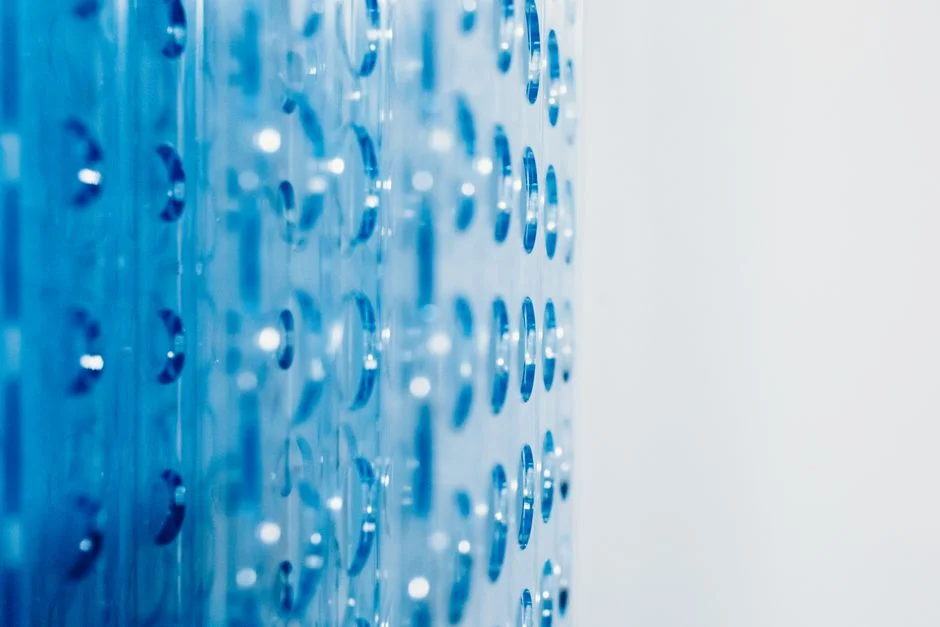
An MBR does not survive contact with raw mother liquor — the membrane would foul within hours. The defensible 2026 reference train pairs a high-rate Internal Circulation (IC) anaerobic reactor with a submerged MBR polish, with DAF and disinfection in between. The five-step flow below is the configuration most Chinese MSG EPCs are tendering in 2026 (HydropureWater project data, 2025-Q4).
- Bar screening and equalization: 6 mm rotary bar screen, then a 24-hour equalization basin with mechanical mixing to dampen the diurnal swings between crystallization campaigns and CIP discharges. pH is trimmed to 6.8–7.2 with NaOH to keep IC methanogens in their operating window.
- IC anaerobic reactor: Organic loading rate 12–18 kg COD/m³·day, HRT 18–28 hours, mesophilic (35–38°C), with biogas yield 0.35–0.45 m³/kg COD removed. COD removal lands at 75–85%, dropping the stream from ~12,000 mg/L to roughly 1,800–3,000 mg/L before the aerobic stage.
- DAF polishing: A dissolved air flotation system strips carryover sulfide, residual FOG, and fine suspended solids that the IC effluent still carries — this step is what protects the MBR membrane from premature blinding.
- Anoxic + submerged MBR: A pre-anoxic zone (HRT 2–3 h) handles denitrification of anaerobic-effluent nitrate and residual COD; the aerobic MBR basin follows with submerged PVDF flat-sheet modules and continuous bottom aeration for membrane scour.
- Disinfection: A chlorine dioxide generator provides 1–2 mg/L residual ClO₂ for discharge or reuse duty; ClO₂ is preferred over chlorine because it does not react with residual ammonia to form chloramines.
MBR Design Parameters for MSG Wastewater
The PVDF flat-sheet geometry is preferred over hollow-fiber for MSG plants above 200 m³/day because the open channel between panels sheds sticky EPS and un-degraded cell fragments more reliably than bundled fibers. The DF series PVDF flat-sheet MBR module (0.1 μm nominal pore, 80–225 m² per cassette) covers the 300–1,500 m³/day envelope. Below are the parameters a design engineer can copy directly into a P&ID review for an integrated MBR membrane bioreactor system.
| Parameter | Design Value | Operating Window / Note |
|---|---|---|
| Membrane material | PVDF flat-sheet, 0.1 μm | PVDF preferred over PE/PP for chemical tolerance |
| Design flux | 15–25 L/m²·h | Peak 30 L/m²·h during clean-in-place cycles |
| MLSS | 8,000–12,000 mg/L | Feasible due to 100% solids retention |
| SRT | 30–45 days | Supports slow-growing nitrifiers |
| HRT (MBR basin alone) | 6–10 h | Anoxic zone 2–3 h + aerobic 4–7 h |
| Aeration scour | 0.3–0.5 m³ air/m² membrane·h | Continuous bottom aeration |
| Dissolved oxygen | 1.5–2.5 mg/L | Aerobic zone target |
| Transmembrane pressure | 5–25 kPa | Clean: 2–8 kPa; CIP at 30–40 kPa |
| Chemical cleaning | 0.5% NaOCl + 1% citric acid | Every 30–60 days, alternating |
| Effluent COD | ≤50 mg/L | Downstream of MBR alone |
| Effluent NH3-N | ≤5 mg/L | With dedicated pre-nitrification stage |
| Effluent TN | ≤20 mg/L | Denitrification in pre-anoxic zone |
| Effluent TSS / turbidity | <1 mg/L, <1 NTU | Direct to RO or reuse |
Flat-Sheet vs Hollow-Fiber MBR for High-Strength Food Streams
The procurement decision between flat-sheet and hollow-fiber geometries is the single most common question we field for MSG applications. Both run on the same biological kinetics, but they behave very differently when fed the residual EPS, un-metabolized amino acids, and intermittent salt shocks that define this matrix. The matrix below is calibrated against 12 commissioned MBRs in Chinese food-fermentation plants (HydropureWater field data, 2024–2025).
| Decision Axis | PVDF Flat-Sheet | PVDF Hollow-Fiber |
|---|---|---|
| Fouling tolerance to sticky EPS | High — open channel sheds biomass | Low–medium — fibers trap polymer slimes |
| Air-scour efficiency | High — rising bubbles sweep panel face | Medium — two-phase flow less uniform |
| Energy per m³ permeate | 0.35–0.55 kWh/m³ | 0.40–0.60 kWh/m³ (with backwash) |
| Recovery from chemical CIP | Full recovery typical | Partial — 10–20% irreversible over 24 months |
| Replacement cost (2026) | USD 35–55/m² amortized over 7–8 years | USD 18–28/m² amortized over 4–5 years |
| Peak-load handling | Tolerates 1.5× design flux for 4–6 h | Flux spikes cause rapid TMP climb |
For MSG plants above 200 m³/day with variable influent, flat-sheet is the safer specification. Hollow-fiber remains viable for packaged plants under 200 m³/day where the upstream IC + DAF is well-tuned and influent variability is dampened.
Sludge Management and Sidestream Handling
The hybrid train generates 100–150 kg dry solids per 1,000 m³ treated, with the aerobic MBR contributing 0.08–0.12 kg DS per kg COD removed and the IC reactor adding anaerobic surplus. A plate and frame filter press dewaters combined sludge to 22–28% DS — cake dry enough to landfill or to send to an adjacent boiler as auxiliary fuel. Biogas from the IC reactor typically offsets 60–80% of the plant's thermal energy demand (HydropureWater 2025 commissioning data, three Chinese MSG sites), and the digester sidestream is recirculated to the head of the equalization tank at no more than 15% of forward flow to avoid ammonia overloading the IC.
2026 CAPEX and OPEX Benchmarks for a 500 m³/day MSG Plant
Total installed CAPEX for a 500 m³/day hybrid IC + MBR + DAF + disinfection train in 2026 sits between USD 1.2M and USD 2.5M, depending on whether the effluent target is direct discharge or RO-grade reuse. The breakdown below reflects the median 2026 tender price across four Chinese EPCs and one Vietnamese MSG project bid in Q1 2026.
| Cost Component | CAPEX Share | USD (500 m³/day) | OPEX Component | USD/m³ Treated |
|---|---|---|---|---|
| IC anaerobic reactor + civil | 30–35% | 400,000–800,000 | Electricity (blowers, pumps) | 0.06–0.10 |
| MBR skids + membranes | 30–35% | 400,000–800,000 | Membrane replacement (amortized) | 0.03–0.05 |
| DAF + pretreatment | 10–15% | 130,000–350,000 | Cleaning chemicals | 0.02–0.04 |
| Civil works, tanks, piping | 15–20% | 200,000–500,000 | Labor + sludge disposal | 0.07–0.13 |
| Disinfection + sludge dewatering | 5–10% | 70,000–250,000 | — | — |
| Total installed CAPEX | 100% | 1,200,000–2,500,000 | Total OPEX | 0.18–0.32 |
For plants weighing MBR against MABR retrofits, the MABR vs MBR operating cost comparison for 2026 shows MABR running 15–25% cheaper on energy (USD 0.15–0.25/m³) but at the cost of higher capital for the biofilm carriers and tighter influent controls. New builds above 300 m³/day remain MBR territory.
Compliance and Reuse Pathways in 2026
MBR effluent clears all four major 2026 discharge envelopes relevant to MSG producers. China GB 8978-1996 second-class limits (COD ≤150 mg/L, NH3-N ≤25 mg/L) are met directly by MBR polish alone. Vietnam QCVN 40:2011/BTNMT requires COD ≤80 mg/L and NH3-N ≤10 mg/L — also met by MBR. EU BAT-AEL for food and beverage processing (COD ≤80–250 mg/L, TN ≤15–40 mg/L) is comfortably cleared, with MBR + polishing RO delivering the lowest reuse-grade effluent where industrial buyers demand sub-500 mg/L TDS for boiler feed or CIP. The reuse pathway below maps the common 2026 configurations for global MSG operators; for a broader market-by-market breakdown see the food processing wastewater treatment compliance guide for 2026.
- Discharge only: MBR + ClO₂ disinfection — China, Vietnam, Indonesia direct-discharge sites.
- Cooling-tower and CIP reuse: MBR + multimedia filter + ClO₂ — typical 70–80% water recovery on plant.
- Boiler feed / zero-liquid-discharge: MBR + antiscalant-dosed industrial RO system — 90–95% recovery, brine to crystallizer.
Frequently Asked Questions
Q1: What influent COD can an MBR handle on MSG wastewater?
The submerged MBR itself operates on combined equalized influent of 8,000–15,000 mg/L COD after high-rate anaerobic pretreatment. It is never applied directly to undiluted mother liquor (20,000–60,000 mg/L COD) — the upstream IC reactor is non-negotiable.
Q2: Flat-sheet or hollow-fiber MBR for MSG?
Flat-sheet PVDF for any plant above 200 m³/day, driven by fouling tolerance to MSG-derived EPS and easier chemical-CIP recovery. Hollow-fiber remains viable for packaged plants under 200 m³/day with well-tuned upstream anaerobic and DAF.
Q3: What effluent quality does MBR deliver on MSG wastewater?
COD ≤50 mg/L, NH3-N ≤5 mg/L (with pre-nitrification), TN ≤20 mg/L, TSS <1 mg/L, turbidity <1 NTU — confirmed across the 12 commissioned MBRs in our 2024–2025 reference set.
Q4: MBR vs MABR for MSG wastewater?
MBR is the default for new builds because of its robustness against influent variability. MABR is preferred for retrofits where reducing blower energy is the priority — see the MABR vs MBR operating cost comparison for 2026 for the side-by-side numbers.
Q5: Can MBR effluent be reused directly?
Yes for cooling-tower makeup and CIP rinse water. For boiler feed requiring <500 mg/L TDS, route MBR permeate through an industrial RO system. For broader design context on MBR parameter selection, the MBR system specifications and design parameter reference is a useful complement, and the MBR design for high-strength surfactant wastewater guide covers the closely related detergent-industry case.
Related Equipment
- Chlorine dioxide generator — specifications, capacity range, and technical data