Shymkent’s Industrial Wastewater Challenges and Regulatory Framework
Industrial wastewater treatment in Shymkent requires systems that achieve 80% salt reduction and 92–97% TSS removal to meet EU BREF standards. The city’s KZT 3.3B WWTP expansion uses biogas-to-energy CHP and EU BAT-aligned technology, setting a benchmark for local industries. HydropureWater offers compliant DAF, MBR, and integrated solutions with capacities from 4–300 m³/h.
Shymkent's population has officially exceeded 1.1 million, placing unprecedented pressure on both municipal and industrial wastewater infrastructure. The European Bank for Reconstruction and Development (EBRD) has provided a KZT 3.3 billion loan to Vodnye Resoursy Marketing LLP to finance the Priority Investment Programme. This expansion is a fundamental shift toward EU Best Available Techniques (BAT) and BREF standards. Facilities that fail to align their internal treatment processes with these benchmarks risk significant penalties.
A critical technical benchmark for local industries is the recent success of the Ydro Process, which achieved an 80% reduction in salt content. Managing Total Dissolved Solids (TDS) and salinity is crucial for sectors such as textiles and food processing. High salt concentrations in effluent can lead to equipment corrosion and biological treatment stage failures. Industrial discharge must adhere to BOD and TSS discharge limits to prevent municipal network overloading.
Compliance in Shymkent hinges on three pillars: TSS removal, organic load reduction (BOD/COD), and FOG mitigation. As the city integrates biogas-to-energy CHP units into its municipal plant, industrial contributors must provide consistent influent quality.
Core Technologies for Industrial Wastewater Treatment in Shymkent
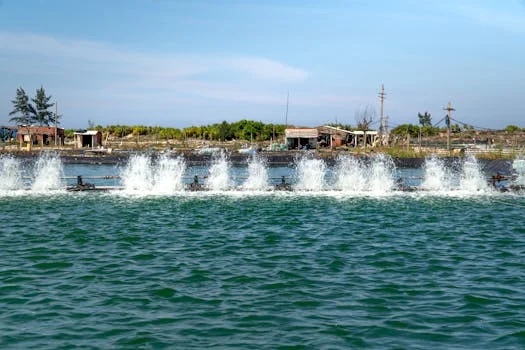
The primary objective for most factories is separating heavy solids and emulsified oils before biological treatment or discharge. Dissolved Air Flotation (DAF) serves as the primary physical-chemical treatment stage, utilizing micro-bubbles to float contaminants to the surface. A high-efficiency DAF system can achieve 92–97% TSS removal and up to 95% FOG removal.
For facilities requiring high-purity effluent for process reuse, Membrane Bioreactor (MBR) systems represent the gold standard. By combining biological degradation with ultrafiltration, a compact MBR system eliminates the need for secondary clarifiers, reducing the system footprint by up to 60%. These systems utilize PVDF membranes with a nominal pore size of 0.1 μm, ensuring compliance with EU Urban Waste Water Directive requirements.
Automation is critical for maintaining compliance without excessive labor costs. Modern integrated package plants, such as the WSZ series, utilize A/O biological processes managed by PLC controllers. Precise dosing of coagulants and flocculants is vital for managing variable influent quality. The use of lamella clarifiers can reduce chemical consumption by 30% while handling surface loads of 20–40 m/h.
| Parameter | DAF | MBR (Integrated) | Package Plant (WSZ) |
|---|---|---|---|
| TSS Removal Efficiency | 92–97% | >99% | 85–90% |
| COD Removal Efficiency | 30–60% (Insoluble) | 90–95% | 80–85% |
| Flow Capacity Range | 4–300 m³/h | 10–2,000 m³/day | 1–80 m³/h |
| Footprint Requirement | Medium | Very Low | Low (Modular) |
| Primary Application | Oily/Fatty Effluent | High-strength Organic | General Sewage/Industrial |
DAF vs MBR vs Package Plants: Which Technology Fits Your Facility?
Building on the technologies discussed, the choice between DAF, MBR, and package plants depends on specific facility needs.
Decision-making for Shymkent procurement engineers balances capital expenditure against water reuse necessity. In petrochemical and food processing industries, DAF is the superior choice for handling high-FOG wastewater. When comparing MBR, CAS, and DAF efficiency and costs, DAF provides the lowest cost-per-m³ for primary treatment, while MBR is a strategic investment for zero-liquid discharge goals.
MBR technology is designed for high-strength organic wastewater where space is limited. In Shymkent's industrial zones, MBR's compact nature is advantageous. The system delivers effluent with a turbidity of <1 NTU, suitable for cooling tower make-up or irrigation. WSZ series package plants offer a "plug-and-play" solution ideal for remote industrial sites or smaller factories requiring reliable, automated treatment.
For a detailed financial breakdown, engineers should consult a 2025 DAF clarifier pricing guide. A DAF system for a medium-scale food processing plant in Kazakhstan (50 m³/h) involves a CAPEX of $85,000 to $120,000, while an MBR system may reach $160,000. However, MBR's ability to produce reuse-quality water can offset these costs within 3–5 years.
| Feature | DAF System | MBR System | WSZ Package Plant |
|---|---|---|---|
| Oil & Grease Removal | Excellent (85–95%) | Poor (Requires Pre-treatment) | Moderate (with Trap) |
| Effluent Quality | Pre-treatment grade | Reuse grade (<1 NTU) | Discharge grade |
| Operator Skill Level | Low (Automated Skimming) | Medium (Membrane Mgt) | Low (PLC Controlled) |
| Sludge Production | High (Chemical Sludge) | Low (High SRT) | Moderate |
| Resistance to Shock | High | Moderate | Low |
Compliance, Performance, and Cost Benchmarks for Shymkent Industries
Meeting EU Urban Waste Water Directive 91/271/EEC is the primary performance benchmark. DAF systems with automatic chemical dosing ensure TSS levels remain below 35 mg/L. For disinfection, particularly in the food and beverage sector, chlorine dioxide generators ensure effluent safety, meeting WHO and EPA standards.
Operational costs are dominated by energy and chemical consumption. MBR systems reduce OPEX by eliminating tertiary polishing stages. Full automation can reduce on-site labor requirements by approximately 40%. To justify ROI, procurement teams should consider the ROI of pressure flotation systems. A typical 50 m³/h DAF unit can pay for itself within 5 years through reduced discharge fees and by-product recovery.
| Operational Metric | Benchmark Value | Standard/Compliance |
|---|---|---|
| Effluent Turbidity (MBR) | <3 mg/L | EU Reuse Standards |
| Fecal Coliform | <100 CFU/100mL | WHO/EPA Disinfection |
| Energy Consumption (DAF) | 0.2–0.5 kWh/m³ | Industry Standard |
| Labor Reduction | ~40% | Full Automation (PLC) |
| Sludge Cake Dryness | 30–45% DS | Filter Press Benchmark |
Frequently Asked Questions
What is the best treatment for oily industrial wastewater in Shymkent?
Dissolved Air Flotation (DAF) systems are the most effective solution, removing 85–95% of FOG. They are widely used in Shymkent’s food processing and petrochemical sectors.
How much does a 50 m³/h industrial wastewater plant cost?
For a standard DAF system, CAPEX ranges from $85,000 to $120,000. For an MBR system, the cost is $110,000 to $160,000, depending on membrane specifications.
Can small factories automate wastewater treatment?
Yes. Small factory wastewater systems like the WSZ series are fully automated via PLC, requiring no full-time operator.
What EU standards apply to industrial discharge in Shymkent?
EBRD-funded projects reference EU BAT, BREF documents, and the Urban Waste Water Directive 91/271/EEC for effluent quality.
How to reduce sludge volume in industrial treatment?
Implementing a high-pressure plate and frame filter press allows for >60% solids capture, reducing disposal costs by approximately 30%.