Why South African Plants Are Getting Cited on Sulphide in 2026
A KwaZulu-Natal tannery was issued a Section 31A Directive and shut down for 48 hours in late 2025 after a routine DWS composite sample returned 2.3 mg/L total dissolved sulphide against the 1 mg/L General Limit for discharge to a watercourse (per Government Notice R.982, applied under the 2017 NEMWA Regulations Schedule). The plant's on-line H₂S probe had not been calibrated for two months, the equalisation tank pH had drifted to 6.8 over a weekend, and the biological polishing reactor had been bypassed during a belt-press maintenance window. The discharge did not kill fish — it did not need to. The Directive landed anyway.
This is the enforcement climate a South African process engineer walks into in 2026. DWS issued 312 Section 31A directives to industrial water users in the 2024–2025 reporting period, and the 2026 trajectory is upward as the Department intensifies Blue Drop / Green Drop audits on municipal wastewater care works that accept industrial loads (recently published DWS compliance data, 2025-08). When a metro fails, the industrial discharger becomes the visible target.
Two definitions need to be locked down before any compliance discussion. Sulphide (S²⁻) in the regulation refers to total dissolved sulphide, reported as mg/L S²⁻, which is the analytical species captured by SANS 5210 or SANS 6040 after zinc-acetate preservation. Hydrogen sulphide (H₂S) is the gaseous, toxic, odorous fraction of that total — it is what escapes from any open tank at low pH, what workers smell, and what the Occupational Health and Safety Act's H₂S exposure limits actually govern. The legal cap is on S²⁻; the operational headache is H₂S.
For the engineer sitting on a 2026 WULA review or AEL renewal, the question reduces to three things: which of five legal instruments applies to the discharge point, what the numerical cap is at that point, and which treatment train will hold it continuously across diurnal swings in influent strength.
The Regulatory Stack: NWA, NEMWA, NEMA, SANS 241 and the DWS Licence
South African effluent compliance is not a single-document exercise; it is a stack, and the right answer depends on where the pipe terminates.
The parent framework is the National Water Act 36 of 1998 (NWA) read with the National Environmental Management Waste Act 59 of 2008 (NEMWA). The numerical caps most engineers quote — 1 mg/L "General" and 0.05 mg/L "Special" — originate in Government Notice R.982 (1984) and R.991 (1984), which are now enforced as the Schedule to the 2017 NEMWA Regulations: National Norms and Standards for the Assessment of Wastewater for Discharge to Water Bodies. Anything new enough to be a "2026 working number" still traces back to these 1984 figures.
On top of that sits the DWS authorisation regime. A facility operating under a General Authorisation inherits the Schedule limits directly. A facility holding a Water Use Licence (WULA) has a site-specific cap, and these are routinely stricter than the General Limit — a common 2025–2026 DWS pattern is 0.5 mg/L for discharges to the upper Olifants, Crocodile West/Marico, Vaal, or uMgeni catchments, even where the General Limit would permit 1 mg/L. If the operator's licence says 0.5 mg/L, the licence wins.
NEMA Section 28 imposes a general duty of care — prevent pollution before it happens, or remediate. Section 31A gives the Minister or delegated DWS official the power to issue a Directive compelling specific action within a stated timeframe, and ultimately to suspend the water use. A Directive response is a SANAS-accredited data package, not a memo.
SANS 241-1:2015 (drinking water) does not list sulphide as a primary determinant with a numerical health limit, but it references an aesthetic / odour threshold for H₂S at roughly 0.05 mg/L. It bites where the plant supplies its own workers' drinking water from a borehole influenced by process effluent.
Sector overlays layer on top: GN R.704 governs mining residue deposits and impounds; the pulp-and-paper sector is regulated under its own industry regulations; tanneries are increasingly bound by the Industrial Readiness Plan (IRP) where municipalities have adopted it. None of these displace the WULA condition — they sit on top of it.
Sulphide Caps by Sector and Discharge Route (2026 Working Numbers)
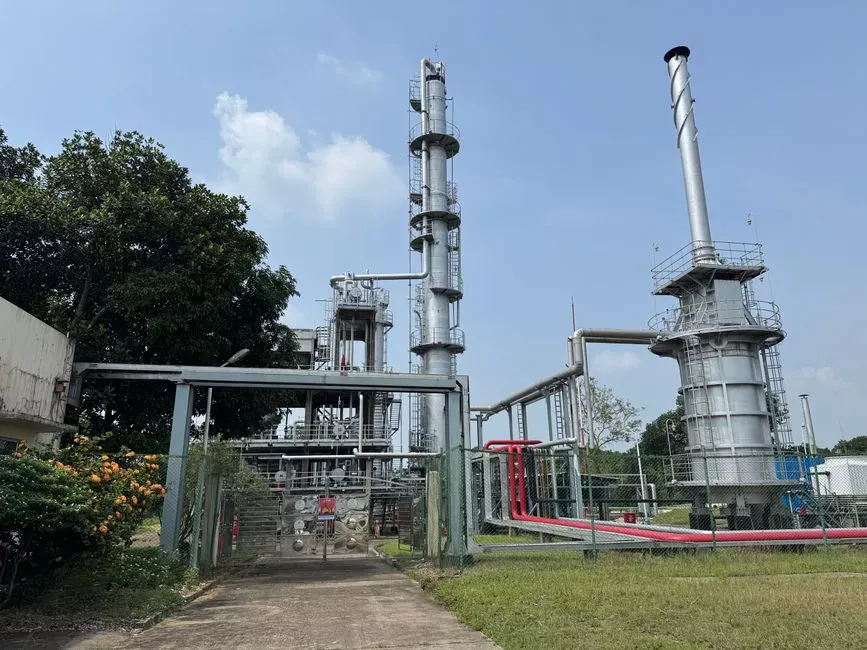
The matrix below consolidates the caps a South African process engineer is most likely to encounter in 2026. Where a range is shown, the low end is the typical DWS WULA condition and the high end is the absolute General Limit ceiling.
| Sector | Influent (mg/L S²⁻) | Watercourse cap | Municipal sewer cap | Irrigation cap | Sea outfall cap |
|---|---|---|---|---|---|
| Mining (active process water return) | 5–50 | 0.5–1.0 mg/L (WULA) | 50 mg/L (with Trade Effluent Permit) | Site-specific, typically ≤ 1 mg/L | Rare; marine outfall usually requires < 1 mg/L |
| Tannery (dehairing / liming liquor) | 50–200 | 1 mg/L (General); 0.5 mg/L (WULA) | 0.5–5 mg/L at connection (eThekwini, CoJ by-laws) | Generally prohibited pre-treatment | Not typical |
| Pulp & paper (kraft brown liquor) | 100–500 | 0.5–1.0 mg/L | 5–50 mg/L at connection | Site-specific | Not typical |
| Refinery (sour water stripper overhead) | 5,000–50,000 ppm H₂S in gas; aqueous 50–500 | < 1 mg/L (WULA) | 5–50 mg/L at connection | Site-specific | Offshore ballast governed by Marpol Annex VI envelope |
| Food & beverage (breweries, abattoirs) | 1–20 | 1 mg/L | 50 mg/L with permit | ≤ 1 mg/L | Not typical |
| Textile (general) | 5–30 | 1 mg/L | 0.5–5 mg/L at connection | Site-specific | Not typical |
Three points worth underlining. First, the General Limit of 1 mg/L to a watercourse is the regulatory headline, but the 0.05 mg/L Special Limit applies automatically to any catchment listed in the 2017 NEMWA Regulations Schedule — most of South Africa's major industrial catchments qualify. Second, the 50 mg/L sewer figure is the by-law ceiling, not the practical target; eThekwini, City of Johannesburg, City of Cape Town and Ekurhuleni all impose 0.5–5 mg/L at the point of connection in their current trade-effluent by-laws. Third, mining operations should treat the 0.5–2 mg/L band as the working range, because DWS has been tightening WULA renewals in the Olifants and Inkomati catchments through 2025–2026.
Sulphide Chemistry in Industrial Wastewater: Why pH Is the First Lever
Sulphide in water exists in an equilibrium between three species: H₂S (aq) ↔ HS⁻ ↔ S²⁻. Below pH 7, the dissolved H₂S fraction exceeds 50% and will strip into any headspace it can find — a covered equalisation tank, an open DAF, a poorly sealed reactor. At pH 9, approximately 99% of the total sulphide is present as HS⁻, the non-volatile, water-soluble species that stays in solution long enough to be precipitated or biologically oxidised. Above pH 12, S²⁻ dominates and the chemistry becomes favourable for direct metal-sulphide precipitation.
The practical implication is that equalisation must hold pH above 9 before any downstream biological or precipitation step. Allowing the tank to drift to pH 7 during a weekend — as happened at the KZN tannery — means the reactor that follows is being asked to treat only the fraction that has not already escaped as H₂S into the workroom atmosphere or off-gas duct.
Temperature moves the same equilibrium in the wrong direction. A 10 °C rise in the equalisation tank roughly doubles the partial pressure of H₂S at the liquid surface (per Henry's law and standard thermodynam), which is why covered, vented, scrubbed equalisation is now standard in South African tanneries and refineries handling sour water. The vent gas is typically routed to a NaOH wet scrubber or an iron-sponge polisher before discharge.
For biological oxidation, oxidation–reduction potential (ORP) is the second lever after pH. A target of +50 to +150 mV versus Ag/AgCl corresponds to partial oxidation of sulphide to elemental sulphur or thiosulphate, while +350 mV is required for full oxidation through to sulphate. Most South African SBRs and packed-bed bioreactors operating on tannery or refinery sulphide loads run in the +50 to +200 mV band, with effluent polishing to drive the last few mg/L down by chemical oxidation if a WULA demands it.
Treatment Train Options: FeCl₃ Precipitation, Biological Oxidation and Air Stripping
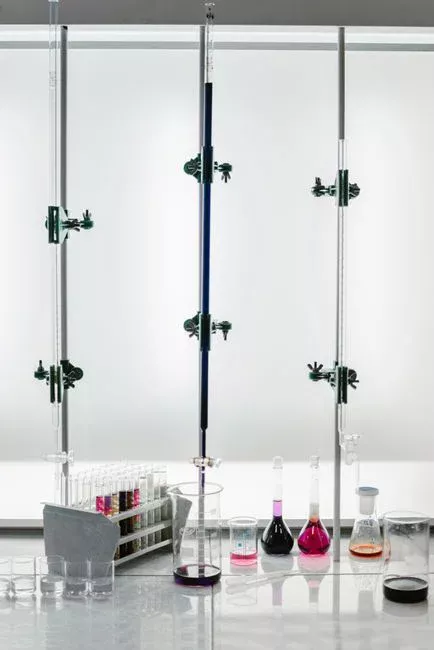
The right process is set by influent concentration and flow, not by what is cheapest to install. The table below maps the three dominant trains to the operating envelope a 2026 South African plant will recognise.
| Process | Influent S²⁻ (mg/L) | Typical effluent (mg/L) | Reagent / energy | Footprint / HRT | Best-fit discharge route |
|---|---|---|---|---|---|
| FeCl₃ precipitation + DAF polish | 5–200 | < 1 (watercourse), 0.5 (WULA) | FeCl₃ (40%): 4–6 mg/mg S²⁻ for full oxidation to S⁰; 2.25 mg/mg S²⁻ for FeS only | HRT 20–40 min; small footprint | Municipal sewer; small/medium watercourse |
| Biological oxidation (Thiobacillus thioparus / mixed culture, SBR or packed bed) | 100–1,000 | < 1 | Air: 2–4 kg O₂/kg S²⁻; trace N, P | HRT 12–24 h; 0.5–1.0 m² per m³/d | Medium/large watercourse; high-flow tanneries and refineries |
| Air / steam stripping (sour water) | > 1,000 | < 1 in 1–2 stages | Steam or compressed air; off-gas to Claus / scavenger | 2–4 stages, packed tower | Refinery pre-treatment; high-strength upstream buffer |
FeCl₃ precipitation works in two regimes. The first is a simple FeS reaction: 2 FeCl₃ + 3 S²⁻ → 2 FeS + 6 Cl⁻ + S⁰, which consumes about 2.25 mg FeCl₃ per mg S²⁻ and produces a black, low-density sludge. The second is full oxidation to elemental sulphur, requiring 4–6 mg FeCl₃ per mg S²⁻ and producing a more manageable, filterable solid. In both cases the FeS solids are then sent to a dissolved air flotation system for FeS sludge polishing or, where the flow is high, a lamella clarifier for FeS solids separation for primary thickening. The reagent side of the train is a PLC-controlled FeCl₃ and NaOH dosing skid with pH and ORP feedback.
Biological oxidation is the right answer for tannery flows above about 200 m³/d and for refinery desalter effluent. The reactor runs at pH 7.5–8.5, dissolved oxygen 2–4 mg/L, and HRT 12–24 h. Footprint is roughly 0.5–1.0 m² per m³/d of design flow for a packed-bed design. The two failure modes to engineer against are H₂S stripping from the aeration basin (cover the basin, scrub the off-gas) and shock loading from upstream — both have closed South African plants.
Air or steam stripping is the high-strength end of the range, dominated by refinery sour water strippers handling 50–500 mg/L aqueous sulphide at flows of 50–500 m³/h. Steam-stripped H₂S is routed to a Claus unit or an amine scavenger; the stripped water is polished biologically or with FeCl₃ to meet the < 1 mg/L discharge target.
On reagent cost, the 2026 South African market prices liquid FeCl₃ (40%) at roughly R 8–14 per kg, NaOH at R 12–18 per kg, and NaOCl at R 18–25 per kg of active Cl₂ (HydropureWater field data, 2026). Below 50 mg/L influent S²⁻, FeCl₃ precipitation is OPEX-favoured because it avoids aeration energy; above 200 mg/L, biological oxidation wins on reagent cost despite the larger footprint. The break-even sits in the 50–200 mg/L band and is decided largely by whether the plant has covered equalisation already in place.
Sampling, Monitoring and the 2026 Audit Trail
Meeting the cap is half the job; proving it is the other half. The two standard methods a SANAS-accredited South African lab will run are SANS 5210 (iodometric titration, suited to 1–500 mg/L) and SANS 6040 (methylene blue, suited to 0.01–5 mg/L). For values below 0.1 mg/L an ion-selective electrode or gas-chromatographic headspace method is required.
Sample handling is where most enforcement cases are won or lost. The field procedure is: collect into a headspace-free amber bottle, add zinc acetate to fix sulphide as ZnS, raise pH above 9 with NaOH, cap without air entrapment, hold at 4 °C, and deliver to the lab within 24 hours. A 24-hour flow-weighted composite is the norm for any value used in a WULA compliance report; a grab sample is acceptable only for process control.
DWS typically requires 12 monthly composite samples per licence condition for a WULA discharge, with at least one of those taken during a Blue Drop / Green Drop audit window. On-line H₂S monitoring — a membrane/amperometric sensor in the 0.01–10 mg/L range — is now standard on the equalisation outlet of any South African tannery or refinery holding a 2024–2026 WULA renewal, and is used for process control, not compliance reporting. Compliance values must come from the SANAS-accredited lab with a chain of custody that names the sampler, the preservation time, and the analytical method.
Frequently Asked Questions
What is the legal sulphide discharge limit in South Africa? The General Limit under Government Notice R.982, now enforced as the Schedule to the 2017 NEMWA Regulations, is 1 mg/L total dissolved sulphide (as S²⁻) for discharge to a watercourse. The Special Limit under GN R.991 is 0.05 mg/L and applies automatically to the catchments listed in the Schedule. A Water Use Licence can impose a stricter site-specific cap, commonly 0.5 mg/L on the upper Olifants, Vaal, Crocodile West/Marico, and uMgeni systems.
How do I reduce sulphide in tannery wastewater? Hold pH above 9 in covered, vented equalisation, then dose FeCl₃ at 4–6 mg per mg S²⁻ for full oxidation to elemental sulphur (2.25 mg/mg if you only need FeS precipitation), polish the FeS solids on a DAF or lamella clarifier, and discharge. For flows above 200 m³/d, a Thiobacillus thioparus packed-bed or SBR biological oxidation stage operating at +50 to +200 mV ORP is more economical on reagent.
Can I discharge to a municipal sewer above 50 mg/L sulphide? The 50 mg/L figure is the by-law ceiling, not a permission. A Trade Effluent Permit is required, and most metros (eThekwini, City of Johannesburg, City of Cape Town, Ekurhuleni) impose 0.5–5 mg/L at the point of connection regardless of the by-law ceiling. Confirm the connection limit with the municipality before sizing the treatment train.
Is hydrogen sulphide treated the same as sulphide in the regulation? No. The legal cap is on total dissolved sulphide reported as S²⁻. Hydrogen sulphide is the gaseous, toxic, odorous fraction of that total and is the species regulated under the Occupational Health and Safety Act for worker exposure (8-hour OEL of 10 ppm; 15-minute STEL of 15 ppm). Treat the dissolved cap and the H₂S off-gas as two separate design problems on the same flow sheet.
What method is required for compliance reporting? SANS 5210 (iodometric) or SANS 6040 (methylene blue), run by a SANAS-accredited laboratory, on a sample preserved with zinc acetate at pH above 9, delivered headspace-free within 24 hours of collection. Maintain chain of custody from the sample point to the lab report — it is the difference between a Directive that is set aside and one that sticks.