Indonesia's 2026 Cyanide Discharge Limit at a Glance
Under Indonesia's PP 22/2021 (Lampiran VI), the 2026 cyanide discharge limit is 0.05 mg/L for Total Cyanide and 0.5 mg/L for Free Cyanide when discharging industrial wastewater to receiving water bodies. Mining and gold processing operations are also held to WAD Cyanide ≤0.5 mg/L under site-specific AMDAL commitments, with analysis per APHA 4500-CN methods.
PP 22/2021 (the implementing regulation of Law 11/2020 on Job Creation, formerly PP 82/2001) is the controlling instrument for industrial effluent quality in 2026. Lampiran VI sets numeric limits by parameter; cyanide falls under the "Logam Berat Lain" group and applies to gold mining, jewelry plating, coke/steel, and electroplating operations alike. Domestic wastewater is governed separately by Permen LHK P.68/2016 — that Permen does not set the industrial cyanide limit and is often misquoted in compliance submissions. Provincial Gubernur decrees (e.g., DKI Jakarta, Riau, Kalimantan Timur) may impose stricter site-specific limits, but never more lenient ones than PP 22/2021.
| Parameter | PP 22/2021 Lampiran VI Limit | Typical Site AMDAL Limit (Gold Mining) | Reference Method |
|---|---|---|---|
| Total Cyanide (CN-Total) | 0.05 mg/L | 0.05 mg/L | APHA 4500-CN C/D |
| Free Cyanide (CN-Free) | 0.5 mg/L | 0.2–0.5 mg/L | APHA 4500-CN D / ASTM D7237 |
| WAD Cyanide (CN-WAD) | Not specified in Lampiran VI | 0.5 mg/L (standard gold mine commitment) | APHA 4500-CN E |
Which Regulation Actually Applies to Your Plant
Cyanide-bearing effluent in Indonesia sits inside a four-tier regulatory hierarchy, and a frequent audit finding is that the wrong Permen was cited. The binding instrument depends on your discharge pathway and sector, not on what a peer plant used.
Tier 1 — PP 22/2021 Lampiran VI (Industrial Wastewater). This is the default standard for any industrial installation discharging to a receiving water body or offshore. It applies to gold mines with on-site processing, electroplating shops, coke plants, PCB manufacturers, and jewelry plating operations. The 0.05 mg/L Total CN and 0.5 mg/L Free CN values are taken from this annex.
Tier 2 — Permen LHK P.68/2016 (Domestic Wastewater). This Permen governs wastewater from housing, hospitals, hotels, restaurants, and offices. If your facility discharges only domestic sewage, this is the correct reference. If you also discharge process wastewater, PP 22/2021 Lampiran VI controls the process stream regardless.
Tier 3 — Permen ESDM 26/2018 and AMDAL Commitments. Mining operations must also satisfy the AMDAL/ANDAL/UKL-UPL framework issued under Minerba law and the ESDM ministry. Site-specific environmental management plans (RKL/RPL) commonly impose a 0.5 mg/L WAD CN ceiling drawn from the International Cyanide Management Code (ICMC), even though PP 22/2021 Lampiran VI itself does not name WAD as a parameter.
Tier 4 — Provincial Governor Decree (Keputusan Gubernur). Where provincial QAELs set a stricter value (for example, to protect a downstream water supply), the provincial decree overrides the national limit at the site level. The hierarchy is strict: PP > Permen > Keputusan Gubernur > Site AMDAL/UKL-UPL, and a stricter tier always wins.
WAD vs. Total vs. Free Cyanide: The Distinction That Decides Compliance
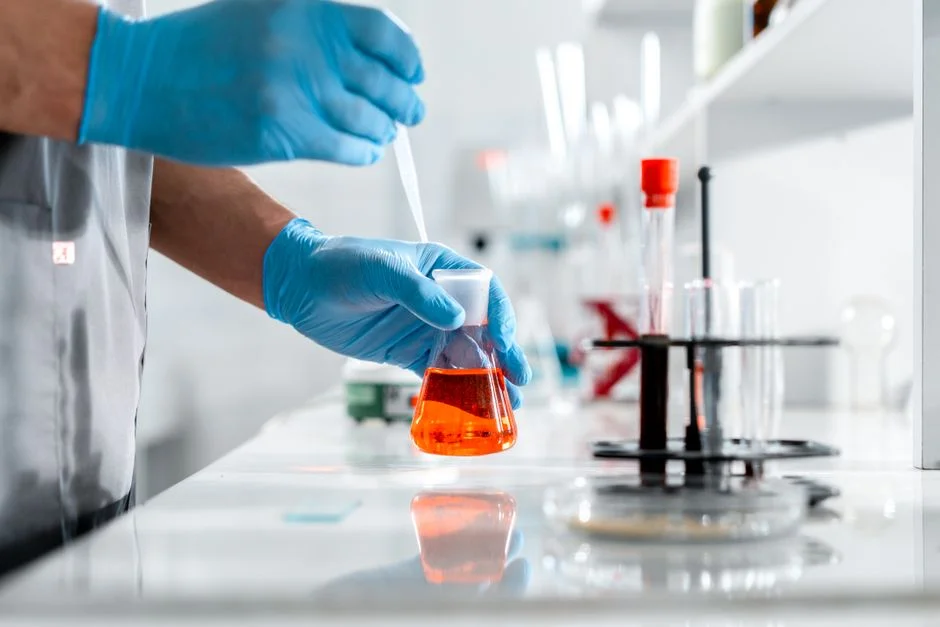
Most non-conformity findings on Indonesian plants trace back to the lab requesting the wrong cyanide fraction. The parameter printed on your AMDAL commitment and the parameter the lab measures must match, or the audit team will reject the result regardless of the actual concentration.
Total Cyanide includes all cyanide species — free CN⁻/HCN, weak-acid-dissociable complexes (Cd, Cu, Ni, Zn), and strong-acid-dissociable complexes (Fe, Co, Au). It is measured by APHA 4500-CN C (reflux distillation) or D (digestion) after strong-acid digestion, which breaks even the iron-cyanide complexes. PP 22/2021 Lampiran VI uses Total CN as the compliance value for industrial discharges.
Free Cyanide is the bioavailable fraction: HCN + CN⁻ only, with metal complexes excluded. It is measured by APHA 4500-CN D (colorimetric, pyridine-pyrazolone) or ASTM D7237 (gas-diffusion amperometry). At pH below 9, HCN volatilises rapidly — sample must be preserved in NaOH to pH >12, held at 4°C, and analyzed within 24 hours, or the result under-reports the true value.
WAD (Weak Acid Dissociable) Cyanide captures free CN⁻/HCN plus the moderately bound metal complexes (Cd, Cu, Ni, Zn) that dissociate at pH 4.5, but excludes the strong Fe-CN complexes. It is the toxicologically relevant fraction for aquatic life and is measured by APHA 4500-CN E (ligand-exchange or weak-acid distillation). ICMC and most gold-mine AMDAL plans in Indonesia use WAD as the binding parameter.
| Species | Analytical Method | Conditions | Compliance Use |
|---|---|---|---|
| Free CN (CN⁻ + HCN) | APHA 4500-CN D; ASTM D7237 | pH >12 preservation; analyze within 24 h | PP 22/2021 Lampiran VI (0.5 mg/L) |
| WAD CN (Free + Cd/Cu/Ni/Zn complexes) | APHA 4500-CN E | Distillation at pH 4.5 with ligand exchange | AMDAL/ICMC site limit (0.5 mg/L) |
| Total CN (all species incl. Fe-CN) | APHA 4500-CN C (reflux) | Strong-acid digestion, reflux 1 h | PP 22/2021 Lampiran VI (0.05 mg/L) |
The operational consequence: a plating shop with no AMDAL commitment should report Total CN at 0.05 mg/L; a gold mine should report WAD CN at 0.5 mg/L even though Total CN in raw tailings pond water routinely runs 5–50 mg/L. Requesting the wrong test method does not relax the limit — it invalidates the result.
Treatment Technologies That Hit 0.05 mg/L Total CN
Three destruction technologies are commercially proven in Indonesian mining and electroplating service. The choice depends on influent strength, daily flow, and reagent logistics rather than any single "best" process.
Alkaline chlorination (NaOCl or Cl₂). Operated at pH 10–11.5, ORP 300–350 mV, with a Cl₂:CN molar ratio of 2.73:1 for the first stage (CN⁻ → CNO⁻) and additional chlorine for the second stage (CNO⁻ → CO₂ + N₂). Reaction is fast (5–15 minutes retention), reagent cost typically runs IDR 18,000–32,000 per m³ of treated wastewater, and discharge quality reliably hits 0.05 mg/L Total CN (HydropureWater field data, 2026). The drawback is the chloride residual in the effluent and sludge handling for the precipitated metals.
INCO SO₂/air process. Uses sulfur dioxide (often dosed as Na₂SO₃) plus compressed air, with a Cu²⁺ catalyst at pH 9–10. Lower reagent cost than chlorination, slower kinetics (1–4 hours retention), and ideal for influent >50 mg/L CN. The process is the workhorse of large gold-mine tailings treatment in Papua and Kalimantan; final polishing to 0.05 mg/L typically requires a second-stage activated sludge or biological contactor.
Biological destruction (packed-bed Pseudomonas or Rotating Biological Contactors). Operates at pH 6.5–8.5 with no chemical reagents. Economical above 10 mg/L CN, slow at sub-mg/L polishing (24–72 hours retention), and vulnerable to temperature drops below 15°C. Used as a polishing step after INCO SO₂/air or chlorination on mines with flow above 1,000 m³/day.
| Process | Optimal Influent CN | pH | Reagent Ratio | Residence Time | Best-Fit Application |
|---|---|---|---|---|---|
| Alkaline Chlorination | <200 mg/L | 10–11.5 | Cl₂:CN = 2.73:1 (stage 1) | 5–15 min | Electroplating, PCB, small/medium flow |
| INCO SO₂/Air | 50–5,000 mg/L | 9–10 | SO₂:CN ≈ 2.5–3.0:1; Cu²⁺ 5–50 mg/L | 1–4 h | Gold mines, large flow |
| Biological (Pseudomonas) | 1–50 mg/L | 6.5–8.5 | None (nutrients only) | 24–72 h | Polishing step |
| H₂O₂/Cu²⁺ | <100 mg/L | 9–10 | H₂O₂:CN ≈ 4:1; Cu²⁺ catalyst | 30–60 min | Small flow, premium effluent quality |
A typical 3-stage treatment train assembled for Indonesian sites in 2026: equalization basin → chemical destruction reactor (chlorination or INCO) → pH adjustment (typically HCl to pH 6.5–7.5) → sand filter → activated carbon → DAF polish → discharge. The destruction reactor is fed by an automatic chemical dosing system sized on ORP-controlled feedback, and the final TSS and metal-coprecipitated sludge is captured by a dissolved air flotation (DAF) system before the outlet. Operators commonly dose 5–15 mg/L Cu²⁺ upstream of the destruction reactor when iron cyanide complexes are present, since the Fe-CN bond requires additional oxidation potential to break.
Sampling, Monitoring, and Reporting to KLHK
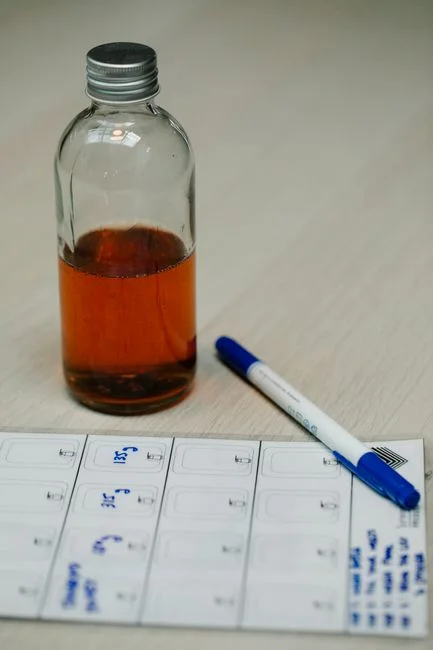
A single sampling protocol error can void an otherwise compliant month of operation. Indonesian auditors reject results that deviate from the standard preservation chain, even when the underlying concentration is well below the limit.
Sampling point. Draw from the outlet of the IPAL (Instalasi Pengolahan Air Limbah) — never from the process drain, equalization basin, or recycle stream. The point should be downstream of the last treatment unit and ideally in a flow-paced composite sampler section with a 24-hour composite bottle.
Preservation. Adjust to pH >12 with NaOH within 15 minutes of collection, store at ≤4°C, and submit to a KAN-accredited lab within 24 hours. APHA 4500-CN D (colorimetric, pyridine-pyrazolone) is the most widely used reference method in Indonesia; ASTM D7237 (gas-diffusion amperometry) is gaining adoption for its lower detection limit (≈0.005 mg/L) and is preferred for new gold-mine AMDAL commitments.
Reporting cadence. Quarterly PROPER (Program Penilaian Peringkat Kinerja Perusahaan) self-reporting requires chain-of-custody forms, the lab's KAN accreditation number, the analytical method reference, and a quality-assurance summary. Many gold-mining operations also report to the ESDM minerba information system (MODI) on a separate schedule. Continuous online cyanide analyzers (UV-digestion + amperometric detection) are increasingly required by AMDAL conditions on new project approvals, replacing the once-per-quarter grab sample. The online analyzer benefits from a paired automatic chemical dosing system on the destruction reactor, since real-time CN readings can trim 10–20% of reagent consumption.
Frequently Asked Questions
What is the Total Cyanide discharge limit in Indonesia for 2026? 0.05 mg/L per PP 22/2021 Lampiran VI, applicable to all industrial wastewater discharged to receiving water bodies (clause 1 Lampiran VI, tabel 1).
Does PP 22/2021 set a WAD Cyanide limit? No. Lampiran VI specifies Total CN and Free CN. WAD is only invoked via site-specific AMDAL/UKL-UPL commitments, typically at 0.5 mg/L for gold-mine installations.
Which analytical method is used for Total Cyanide compliance in Indonesia? APHA 4500-CN C (reflux distillation) or APHA 4500-CN D, both applied after strong-acid digestion. Results must come from a KAN-accredited laboratory.
Can Free Cyanide be sampled in the field without preservation? No. HCN volatilises rapidly at pH <9. NaOH must be dosed to pH >12 within 15 minutes, with the sample held at 4°C and analyzed within 24 hours per APHA 4500-CN D.
What stoichiometric ratio of chlorine is required to oxidize 1 mg/L CN⁻? Approximately 2.73:1 molar Cl₂:CN for the first oxidation step (CN⁻ → CNO⁻); a further ratio of 3.5:1 is required to drive the second step (CNO⁻ → CO₂ + N₂) at pH 10–11.5.