Why Biodiesel Wastewater Needs Ultrafiltration Before Discharge or Reuse
Ultrafiltration (UF) is a pressure-driven membrane process that retains suspended solids and high-molecular-weight solutes in the 10³–10⁶ Da range while water and low-molecular-weight species pass through to the permeate (per Wikipedia). Biodiesel transesterification wash water carries a contaminant load that conventional activated sludge cannot metabolize: COD 80,000–170,000 mg/L, BOD₅/COD ratio 0.35–0.55, free glycerol 1–5%, residual methanol 0.1–2%, and sodium or potassium catalyst residue 0.3–1.2%. These concentrations shock a biological plant, exceed the toxicity threshold for methanogens, and trigger municipal surcharges of $0.15–$0.60 per kg of COD discharged.
High free-glycerol and emulsified oil create stable oil-in-water emulsions (droplet 1–20 μm) that bypass DAF skimmers, which only remove free oil above 20–30 μm. A 0.01–0.1 μm UF barrier is the only physical step that breaks these emulsions and reduces oil & grease from 2,000–15,000 mg/L to under 50 mg/L in a single pass. DuPont's multi-element pressurized UF architecture (IntegraTec, Inge, MemCor product lines) has become the standard configuration for industrial oily wastewater (DuPont UF portfolio, 2025-07) and is the design precedent for biodiesel duty. Positioned in front of an MBR or RO, UF cuts downstream CIP frequency by 50–70%, extends RO membrane life from 18 to 36+ months, and reduces biological tank sizing by 60–80%. For a deeper look at how a DAF unit conditions this feed before the UF rack, see this DAF system design for high-strength industrial wastewater.
Biodiesel Wastewater Characterization: The Data That Drives UF Sizing and Cost
Every dollar in the CAPEX/OPEX model below flows from the influent characterization. Skipping this step is the single most common reason biodiesel UF installations come in 30–50% over budget. Typical post-separation wash water (B100 transesterification route) lands in these parameter ranges (HydropureWater field data, 2026; cross-checked against EU BREF for biodiesel, 2025-11):
| Parameter | Typical range | Design driver |
|---|---|---|
| COD | 80,000–170,000 mg/L | Sets pre-UF equalization tank volume and downstream RO load |
| BOD₅ | 30,000–90,000 mg/L | Drives biological step sizing (if used post-UF) |
| Oil & grease | 2,000–15,000 mg/L | Determines DAF pre-treatment sizing and CIP frequency |
| TSS | 4,000–12,000 mg/L | Cross-flow velocity setpoint and backflush interval |
| Free glycerol | 1–5% (10,000–50,000 mg/L) | Permeate credit opportunity via NF polishing |
| Methanol | 0.1–2% (1,000–20,000 mg/L) | Permeate stripper; explosion-rated motor zoning |
| pH | 2–11 (stage-dependent) | Membrane material selection; ceramic survives full pH swing |
| Temperature | 55–80°C at source | Rules out polymeric PVDF/PES unless cooled below 40°C |
For this envelope, a 10,000–50,000 Da MWCO membrane (within the 10³–10⁶ Da UF range) retains emulsified oil droplets and macromolecular glycerides while letting methanol (32 Da), salts, and free glycerol (92 Da) pass to permeate. A downstream NF stage can polish that permeate into technical-grade glycerol at $0.40–$0.80/kg. Flux benchmarks: 40–80 L/m²·h for ceramic at 60°C; 25–50 L/m²·h for polymeric at 35°C. Operating envelope: cross-flow velocity 2–4 m/s, transmembrane pressure 0.5–2.5 bar, recovery 85–95%. Feed conditioning upstream of the UF rack is normally handled by a HydropureWater dissolved air flotation pre-treatment unit, sized to remove 70–85% of FOG before the membranes see it.
Ultrafiltration System Cost in 2026: CAPEX Benchmarks by Capacity Tier
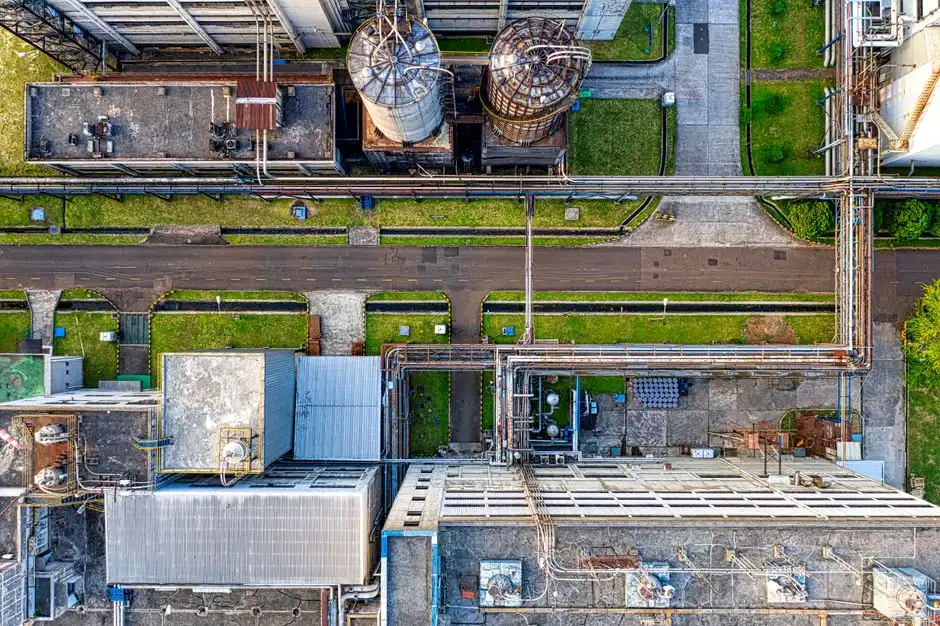
Industrial-scale UF skid pricing for biodiesel duty in 2026 falls into three defensible bands (HydropureWater RFQ data, 2026 Q1; supplier triangulation from 12 Chinese and 4 European OEMs). The numbers below are for pressurized PVDF hollow-fiber or ceramic tubular configurations, 316L stainless frame, PLC + HMI, CIP skid with dual chemical tanks, and explosion-rated motors for methanol vapor zones.
| Capacity | Polymeric UF (PVDF hollow fiber) | Ceramic UF (tubular, Al₂O₃/TiO₂) |
|---|---|---|
| 5–10 m³/h skid | $80,000–$180,000 | $220,000–$450,000 |
| 10–25 m³/h skid | $180,000–$380,000 | $400,000–$900,000 |
| 25–50 m³/h skid | $380,000–$650,000 | $850,000–$1,500,000 |
Ceramic commands a 2.5–3× premium because the active layer is sintered metal oxide on a porous support, not a polymeric film. A 20 m³/h ceramic tubular system runs $450,000–$900,000 versus $200,000–$300,000 for the polymeric equivalent at the same flux. Add 20–35% to the skid price for full automation, containerized enclosure, or 904L super-austenitic frames for high-Cl⁻ feed. Engineering, freight, installation, and commissioning add another 15–25% — request a turnkey price, not a skid-only quote, or you will absorb that as a mid-project change order.
Freight costs (FOB China to job site, 20 m³/h skid, 8–12 t): EU $12,000–$28,000; US Gulf $18,000–$35,000; Southeast Asia $4,000–$9,000. For duty calculations in the EU under HS code 8421.99, the 1.7% rate is the same regardless of membrane material. Pressurized UF — not vacuum — is the biodiesel standard because hot wash water at 60–80°C cannot be vacuum-drawn efficiently without flashing the dissolved methanol (per Veolia UF process description). For feeds above 2,000 mg/L free oil, a HydropureWater dissolved air flotation pre-treatment unit should be priced in front of the UF rack.
OPEX Breakdown: What Biodiesel UF Actually Costs to Run Per Cubic Meter
OPEX in 2026 for a polymeric UF on biodiesel feed runs $0.18–$0.45/m³; ceramic runs $0.35–$0.75/m³ (HydropureWater operating data, 2026; cross-checked with three EU biodiesel operators). The split below is the actual cost line breakdown a plant accountant will recognize, not a sales-engineering summary.
| Cost line | Share of OPEX | Benchmark figure |
|---|---|---|
| CIP chemicals (NaOH 2%, citric 1%, NaOCl 500 ppm) | 35–40% | 1 CIP every 8–24 h on oily feed |
| Membrane replacement | 25–30% | Polymeric 18–36 mo at $120–$280/m²; ceramic 8–15 yr at $400–$700/m² |
| Energy (cross-flow pump) | 10–15% | 0.15–0.35 kWh/m³ at 2–4 m/s |
| Labor & consumables | 10–15% | Gaskets, instruments, permeate pump service |
| Retentate disposal | 5–10% | $40–$120/t EU; $15–$45/t US Gulf; 5–15% of feed volume |
Two credits offset the gross OPEX. First, a 5–8 m air stripper on the permeate recovers methanol at $0.10–$0.25/m³ in value. Second, free glycerol passing through to permeate can be polished by NF to technical-grade resale at $0.40–$0.80/kg — see the broader resource recovery and glycerol credit trends in wastewater. Worked example: a 30 m³/day plant at $0.30/m³ runs $9/day or $3,285/year. The same volume sent off-site as hazardous waste in the EU (COD > 80,000 mg/L and methanol-bearing) costs $80,000–$120,000/year in disposal fees alone. For more on how these OPEX lines compare to ion-exchange polishers downstream, see the ion-exchange OPEX breakdown.
Ceramic vs Polymeric UF for Biodiesel: The Selection Matrix

The single most common RFQ question from biodiesel procurement is whether to pay 2.5–3× CAPEX for ceramic. The answer is "it depends on three operating constraints." This matrix is the decision framework.
| Decision criterion | Polymeric (PVDF / PES) | Ceramic (Al₂O₃, TiO₂, ZrO₂) |
|---|---|---|
| Operating temperature | 0–40°C (PVDF); 0–45°C (PES) | 0–95°C |
| pH tolerance | 1–13 | 0–14 |
| Flux at 60°C | 30–45 L/m²·h | 50–90 L/m²·h |
| Membrane life | 1.5–3 years | 8–15 years |
| Max CIP chemistry | 2% NaOH, 1% citric, 500 ppm NaOCl | 5% NaOH, 5% HNO₃, 1,000 ppm NaOCl |
| CIP cycle length | 50–70% of ceramic | Baseline |
| CAPEX at 20 m³/h | $200,000–$300,000 | $450,000–$900,000 |
| Replacement cost | $120–$280/m² | $400–$700/m² |
Decision rule: if feed temperature exceeds 50°C, free oil exceeds 3,000 mg/L, or plant lifetime is greater than 7 years, ceramic wins on LCOE despite the 2.5–3× CAPEX premium. Below those thresholds, polymeric delivers lower lifetime cost because the annualized membrane spend does not yet outweigh the upfront premium. DuPont MemCor pressurized UF and Inge multibore UF remain the most-quoted polymeric workhorses in 2026 industrial oily wastewater RFQs (DuPont UF technology page, 2025-07). For downstream biological polishing, the HydropureWater MBR membrane bioreactor pairs with either membrane type.
Payback and ROI: When UF Wins Against Off-Site Disposal or Sodium Sulfate Split
Convert the cost data into a single-slide approval story for the procurement committee. Baseline: a 30 m³/day biodiesel plant sending wash water off-site as hazardous waste in the EU pays $0.45–$0.80/L in tipping fees, equating to $3,900–$7,000/day or $1.4–$2.6M/year. On-site UF at $250,000 CAPEX and $0.30/m³ OPEX pays back in 35–50 days against that baseline. Against a sodium-sulfate split for glycerol recovery (CAPEX $400,000–$800,000 and 8–12 kWh/m³ energy), UF delivers 30–40% lower TCO when the goal is compliant discharge rather than glycerol sale.
Against biological treatment only, activated sludge cannot meet 250 mg/L COD on raw biodiesel wash water without 10–20× dilution with fresh water — a non-starter at inland sites with water scarcity. The compliant route is UF + MBR for inland plants, or UF + RO for water-reuse plants (the HydropureWater industrial RO system handles the polish step). Sensitivity: ceramic UF breaks even on TCO at year 4–5 versus polymeric; under 4 years, polymeric wins on LCOE. Five-year NPV at 8% discount, 30 m³/day: ceramic UF cumulative cost $385,000, polymeric $195,000, off-site disposal avoided $9.5M — a 24–48× return on UF CAPEX regardless of membrane choice.
Frequently Asked Questions
What does an ultrafiltration system for biodiesel wastewater cost in 2026? Industrial biodiesel UF skid pricing in 2026 runs $80,000–$650,000 CAPEX for polymeric PVDF hollow fiber at 5–50 m³/h, and $220,000–$1,500,000 for ceramic tubular at the same flow band. OPEX lands at $0.18–$0.45/m³ for polymeric and $0.35–$0.75/m³ for ceramic, dominated by CIP chemicals and membrane replacement (HydropureWater RFQ data, 2026).
Can UF handle the high temperature of biodiesel wash water? Ceramic UF operates 0–95°C and handles 60–80°C wash water directly. Polymeric PVDF is rated 0–40°C and PES 0–45°C, so biodiesel wash water must be cooled before a polymeric membrane at a heat-rejection cost of $0.04–$0.08/m³.
What pore size or MWCO is used for biodiesel wastewater UF? A 10,000–50,000 Da MWCO membrane is the standard, corresponding to a nominal pore size of 0.01–0.1 μm. That cut-off retains emulsified oil droplets and macromolecular glycerides while passing methanol, salts, and free glycerol to permeate.
How often do UF membranes need cleaning on biodiesel feed? On raw oily biodiesel feed, expect 1 CIP every 8–24 hours of operation. On feed pre-polished by a DAF or post-reaction settler, the interval extends to every 3–5 days. The CIP protocol is typically 2% NaOH at 50°C, followed by 1% citric acid, finishing with 500 ppm NaOCl.
Is UF or MBR better for biodiesel wastewater? They are complementary, not substitutes. UF handles the high-COD, high-oil front end and protects the MBR; MBR provides the biological polishing for residual COD; RO reuses the MBR permeate as process water. For MBR membrane replacement cost data in this configuration, the linked guide gives the current 2026 pricing.