Why Hospital Wastewater in Denmark Is Regulated Differently in 2026
Hospital effluent in Denmark in 2026 is treated as an industrial sub-stream under EU Urban Waste Water Directive 91/271/EEC, transposed through the Danish Environmental Protection Act (Miljøbeskyttelsesloven) and Statutory Order on urban wastewater, with site-specific discharge permits issued by Miljøstyrelsen. Unlike municipal sewage, hospital wastewater carries pharmaceutical residues, cytostatics, disinfectants, and antibiotic-resistant bacteria that conventional activated-sludge plants were not designed to handle. The Capital Region of Denmark has spent 2014–2024 mapping which substances actually reach Danish receiving waters, and the list is now embedded in regional BAT expectations for any new or retrofitted on-site treatment plant.
The Capital Region's published inventory names 9 critical pharmaceuticals — ciprofloxacin, sulfamethoxazole, capecitabine, nilotinib, buprenorphine, duloxetine, diclofenac, amlodipine, propranolol — and 4 critical chemicals: sodium hypochlorite, EDTA, benzotriazole, and hematoxylin. For context, Slovak and Czech hospital monitoring at 5 facilities in 2019 found maximum concentrations of cotinine at 6,700 ng/L, bisoprolol at 5,200 ng/L, metoprolol at 2,600 ng/L, tramadol at 2,400 ng/L, sulfamethoxazole at 1,500 ng/L, and ranitidine at 1,400 ng/L (Buelow et al., Environ. Sci. Pollut. Res., 2019-08) — a defensible worst-case envelope for a Danish university hospital of similar bed count. Combined with the region's identification of antibiotic-resistance gene loads in hospital sewage, the regulatory expectation is unambiguous: a 2026 Danish hospital WWTP must include a polishing step (ozone, UV/H₂O₂, or comparable AOP) that delivers >1-log on cytostatics and >90% on the broader pharmaceutical spectrum, on top of biological treatment. A board, EPC, or regulator who reads only this paragraph should be able to defend the spend.
Herlev Hospital: The Full-Scale Proof Point for Danish Hospital Treatment
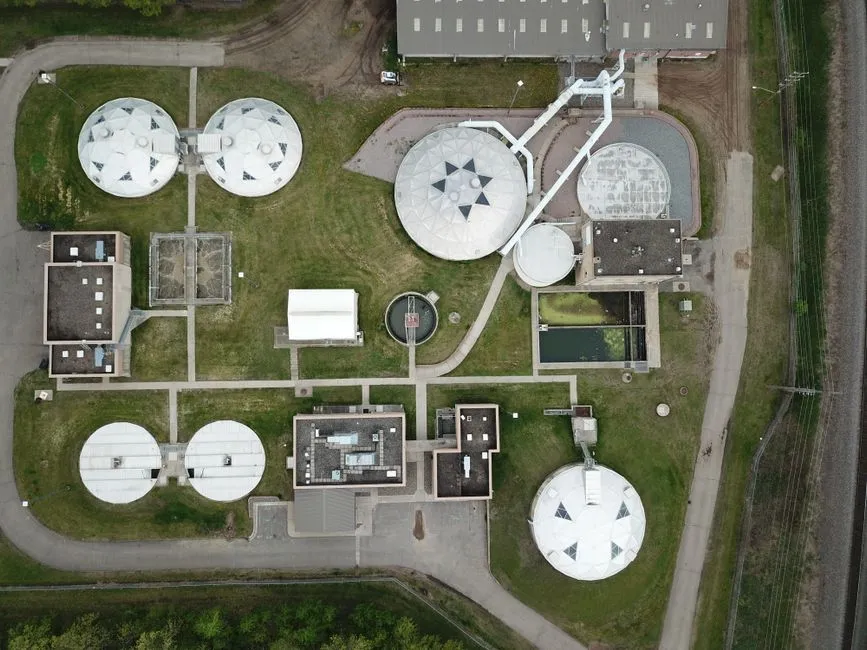
Herlev Hospital (Capital Region, Copenhagen) has operated a full-scale ULTRAAQUA on-site treatment plant on 100% of its wastewater since May 2014 — the longest-running decentralized hospital wastewater installation in Denmark. The plant is the practical output of the Capital Region's lab- and pilot-scale testing program, documented in their regional hospital-wastewater report, which culminates in the Herlev full-scale test plant shown in Figure 4 of that source. For a procurement team, this matters for three reasons.
First, the case proves that hospital-side treatment can be operated by hospital facility staff with the right automation — the plant does not need a municipal WWTP shift roster. Second, the technology has accumulated 11+ years of operational data, which de-risks the technology choice for any other Capital Region facility. Third, Herlev's commissioning predates the EU's 2022–2026 tightening of micropollutant expectations under the Urban Wastewater Treatment Directive revision, so the Danish evidence base is not retrospective — it is already aligned with where EU discharge policy is heading. The Herlev case study is also referenced as an external proof point the reader can attach to their own feasibility study when justifying decentralized treatment to hospital management or municipal utility partners. Comparable hospital treatment guides in Luanda and Kumasi use the same evidence template but for very different receiving-water and regulatory contexts.
Critical Pollutants and Required Log-Removals
The matrix below ties the Capital Region's named substances to their hospital sources, typical Danish influent ranges, and the log-removal the 2026 BAT baseline requires. Cytostatics (capecitabine, nilotinib) are flagged separately because they are the regulatory driver for the strictest end-of-pipe target — mutagenicity thresholds are orders of magnitude lower than for antibiotics or NSAIDs.
| Pollutant class (example substances) | Source ward / activity | Typical influent range | 2026 target log-removal | Delivered by |
|---|---|---|---|---|
| Antibiotics — ciprofloxacin, sulfamethoxazole | Infectious disease, ICU, outpatient IV therapy | 500–1,500 ng/L (per Slovak/Czech 2019 study) | ≥1.5 log | MBR + ozone or UV/H₂O₂ |
| Cytostatics — capecitabine, nilotinib | Oncology day ward, infusion suites | 10–200 ng/L (regional risk assessment) | ≥2.0 log (mutagenicity driver) | Ozone or AOP polish (MBR alone insufficient) |
| Psychiatric drugs — buprenorphine, duloxetine | Psychiatric inpatient, pain clinic | 100–800 ng/L | ≥1.0 log | MBR + ozone |
| NSAIDs / heart drugs — diclofenac, amlodipine, propranolol | General wards, cardiology outpatient | 500–5,200 ng/L (bisoprolol proxy, Slovak/Czech 2019) | ≥1.0 log | MBR + ozone |
| Disinfectants — sodium hypochlorite, chlorine residues | CSSD, endoscopy, surface disinfection | 1–10 mg/L Cl₂ equivalent | Dechlor before biological step | Equalization + sulfite dosing |
| Chelating agents — EDTA | Radiology contrast, laundry, cleaning | 0.5–5 mg/L | ≥0.5 log (MBR limited) | Ozone or Fenton (AOP) |
| Corrosion inhibitors / lab chemicals — benzotriazole, hematoxylin | Boiler treatment, histopathology lab | 50–500 ng/L | ≥1.0 log | MBR + ozone |
An MBR alone delivers roughly 1-log on most pharmaceuticals but <0.5-log on EDTA, which is why any 2026 Danish hospital train needs the downstream ozone or AOP step on top of the MBR membrane bioreactor system. The Capital Region's own report reaches the same conclusion: biological treatment is necessary but not sufficient.
Process Train Design: From Pre-Treatment to Disinfection
A defensible 2026 Danish hospital process train runs in six stages, each with a defined equipment line and operating envelope.
Stage 1 — Screening and grit removal. A rotary mechanical bar screen (e.g. a GX series unit) sized for hospital solids — surgical gauze, wipes, IV packaging, and the occasional pharmaceutical blister pack. 2–6 mm bar spacing is standard; downstream grit removal is sized for 0.1–0.3 m³ grit per 1,000 m³ wastewater (HydropureWater field data, 2026).
Stage 2 — Equalization and flow balancing. Hospital flows swing 2–4× diurnally — a 200 m³/d design flow can spike to 30–40 m³/h at shift change. Buffer the flow with a 6–8 h HRT equalization tank; this is also where sodium hypochlorite residues get dechlorinated with sodium sulfite (1.5× stoichiometric on active Cl₂) before reaching the biology.
Stage 3 — Biological treatment. An MBR with a PVDF submerged membrane at 0.1–0.4 μm pore size is the right call over conventional activated sludge for hospitals: it takes roughly 60% less footprint, holds MLSS at 8,000–12,000 mg/L, and produces a stable effluent of COD <50 mg/L, NH₃-N <10 mg/L, and SS <5 mg/L — the same effluent envelope reported for the 200 m³/d MBR + NaOCl reference case in the Chinese discharge-standard study (Sci. Net, paper 725). A 4-h HRT contact-oxidation variant is acceptable for sub-50 m³/d clinics but does not meet the solids envelope for university hospitals.
Stage 4 — Micropollutant removal. Ozone at 5–15 mg/L O₃ dose with a 10–20 min contact time, or UV/H₂O₂ at 1–5 mg/L H₂O₂ and 400–800 mJ/cm² UV, is the BAT polish. The Slovak/Czech 2019 AOP comparison (Environ. Sci. Pollut. Res.) reported >90% elimination across the full pharmaceutical spectrum with modified Fenton or boron-doped diamond electrode; ozone and UV/H₂O₂ sit in the same operational envelope on cytostatics and antibiotics. Target specific ozone dose to the highest-loaded substance (typically ciprofloxacin or sulfamethoxazole).
Stage 5 — Disinfection. Chlorine dioxide (ClO₂) at 1–3 mg/L residual and 30 min contact time is preferred over NaOCl for hospital effluent because ClO₂ does not form trihalomethanes with the pharmaceutical residue load. A chlorine dioxide generator covers the 50 g/h to 20,000 g/h capacity range and operates to EU Drinking Water Directive 98/83/EC and WHO drinking-water guidelines for ClO₂ residuals. Dose control is verified with an online chlorine analyzer (see the 2026 buyer's guide).
Stage 6 — Sludge handling. A hospital MBR generates 0.5–1.2 kg DS per m³ treated — small volume, high solids. A plate-and-frame filter press producing a >30% DS cake for off-site incineration is the standard endpoint. Upstream screening with a GX rotary mechanical bar screen protects the press from ragging.
CAPEX and OPEX Benchmarks for 50–500 Bed Danish Hospitals
The table below gives 2026 EUR-denominated bands for the equipment train, not turnkey EPC. Treat these as supply-cost benchmarks against which RFQ responses can be compared; site work, civil works, and permit fees are excluded. Anchors: 150-bed row tracks the 200 m³/d MBR + NaOCl reference case from the Sci. Net dataset; equipment capacities are drawn from HydropureWater's published WSZ, MBR, and ClO₂ generator product lines.
| Hospital size (beds) | Design flow (m³/d) | Equipment CAPEX range (EUR) | OPEX (EUR/m³, equipment-driven) | Footprint (m², equipment only) |
|---|---|---|---|---|
| 50 | 25 | 120,000 – 180,000 | 1.20 – 1.80 | 20 – 30 |
| 150 | 100 | 320,000 – 460,000 | 0.80 – 1.20 | 45 – 70 |
| 300 | 200 | 560,000 – 820,000 | 0.60 – 0.95 | 80 – 120 |
| 500 | 350 | 900,000 – 1,300,000 | 0.50 – 0.80 | 130 – 180 |
Energy line items for an OPEX model: MBR at 0.4–0.8 kWh/m³, ozone at 4–8 kWh/m³, ClO₂ generation at roughly 0.05 kWh per g ClO₂ (HydropureWater field data, 2026). At a Danish industrial tariff of €0.18–0.28/kWh in 2026, ozone dominates site energy — typically 55–65% of total electricity. For a 200 m³/d plant, that lands at 7,500–15,000 EUR/year in ozone energy alone. The WSZ underground package plant is the right supply basis for any site in the 50–150-bed band; above that, the MBR + ClO₂ configuration scales more cleanly. For OPEX modeling on the MBR stage specifically, the 2026 MBR operating cost breakdown walks through membrane replacement, cleaning chemical, and aeration line items in EUR/m³.
Selecting the Right Equipment Package for Your Danish Hospital
The decision framework below maps hospital size and effluent target to a specific equipment configuration. Each branch is sized so a procurement engineer can paste it directly into an RFQ technical specification.
Small clinics (<10 beds, <5 m³/d). A medical wastewater treatment system with a sub-0.5 m² footprint, integrated ozone disinfection, and plug-and-play installation. Skips the MBR entirely; relies on contact oxidation + ozone + UV for the micropollutant envelope.
Mid-size hospitals (10–100 beds, 5–80 m³/d). A WSZ underground package plant with A/O biological contact oxidation and ClO₂ disinfection. MBR is not yet cost-justified at this scale, but the equalization tank must be sized for 2–4× diurnal peaking.
Large hospitals and university hospitals (100–500+ beds, 80–500 m³/d). An MBR membrane bioreactor for the biological step, downstream ozone or UV/H₂O₂ for micropollutants, ClO₂ for final disinfection, and a plate-and-frame filter press for sludge. The 300-bed row in the cost table maps directly to the 200 m³/d Herlev-class envelope and is the natural configuration for a Capital Region expansion or new-build project. An automatic chemical dosing system is required upstream of the MBR for coagulant, pH adjustment, and defoamer to keep membrane fouling in the design envelope. ClO₂ generator capacity is sized as (1–3 mg/L × peak flow × 1.5 peak factor) ÷ generator output — at 200 m³/d and 1.5× peaking, a 500 g/h ClO₂ unit covers it with margin.
For the borderline 80–100-bed case (where the bed count pushes the train into the MBR band but the flow is still small), recommend the MBR configuration with one membrane cassette rather than two — capital cost drops into the 220,000–280,000 EUR band while retaining the membrane effluent envelope.
Frequently Asked Questions
What is the compliance basis for hospital wastewater discharge in Denmark in 2026? EU Urban Waste Water Directive 91/271/EEC sets the framework, transposed into Danish law via the Environmental Protection Act and Statutory Order on urban wastewater, with site-specific permits issued by Miljøstyrelsen. Hospital effluent is treated as an industrial sub-stream, and 2026 permits for new or retrofitted plants reference the Capital Region's 2014–2024 critical-substance mapping.
Is there a Danish full-scale proof point for on-site hospital wastewater treatment? Yes — Herlev Hospital (Capital Region, Copenhagen) has operated a full-scale ULTRAAQUA on-site plant on 100% of its wastewater since May 2014, with 11+ years of operating data and effluent aligned to the EU's tightened micropollutant expectations.
Which treatment train meets 2026 Danish BAT for a 200-bed hospital? Pre-treatment (rotary bar screen + grit) → equalization (6–8 h HRT) → MBR with PVDF 0.1–0.4 μm membrane → ozone (5–15 mg/L) or UV/H₂O₂ polish → ClO₂ disinfection (1–3 mg/L, 30 min) → plate-and-frame sludge dewatering. MBR alone is insufficient for cytostatics and EDTA.
What CAPEX should a Danish hospital budget for on-site wastewater treatment in 2026? For equipment only, 320,000–460,000 EUR for a 150-bed plant, 560,000–820,000 EUR for a 300-bed plant, and 900,000–1,300,000 EUR for a 500-bed plant. OPEX runs 0.50–1.20 EUR/m³, with ozone energy as the dominant line item at 7,500–15,000 EUR/year for a 200 m³/d train at Danish tariffs.
Can a hospital WWTP reduce antibiotic-resistant bacteria to acceptable levels? Yes. The Slovak/Czech 2019 study reported complete removal of antibiotic-resistant bacteria with modified Fenton, ferrate(VI), and boron-doped diamond electrode AOPs (Buelow et al., 2019-08), and MBR + ozone + ClO₂ in the Danish train sits in the same operational envelope. With EU BAT-AEL tightening through 2026–2030, designers should oversize the ozone stage by 20–30% to leave headroom for stricter future antibiotic-resistance gene limits.