What a Kampala wastewater treatment plant manufacturer actually delivers
A wastewater treatment plant manufacturer in Kampala typically delivers containerized MBR, package A/O (WSZ-style) units, or built-in-place SBR systems sized 10–2,000 m³/day for breweries, dairies, hospitals, and municipal clients. HydropureWater supplies skid-mounted MBR and WSZ plants with NEMA-compliant effluent (COD ≤ 60 mg/L, BOD ≤ 30 mg/L) and ships 6–10 weeks from China to Mombasa or Dar es Salaam with on-site commissioning in Kampala.
Four process architectures dominate every quote a buyer will receive. First, the containerized MBR ships in a 20- or 40-ft ISO container with membrane cassettes, aeration blowers, and PLC pre-wired — one 40-ft HC unit covers ~50 m³/day at 60% the footprint of conventional activated sludge. Second, the package WSZ underground A/O contact-oxidation unit operates at 1–80 m³/h, runs fully buried to keep the surface free, and needs no full-time operator (per HydropureWater WSZ spec). Third, the built-in-place concrete SBR is cast on site with a decanter, blowers, and timers — lowest lifecycle cost above 500 m³/day but a 90–120 day build cycle. Fourth, the constructed or planted wetland uses Typha and Phragmites beds for polishing; zero energy, low CAPEX, but requires 0.8–1.2 m² per m²/day of land.
Typical Kampala demand ranges from an 80 m³/day 200-bed hospital, to a 200 m³/day dairy, to a 1,800 m³/day 100,000 HL brewery. The DirectIndustry supplier index lists 11 continuous-treatment manufacturers globally, which is a useful proxy for how fragmented the Kampala bid pool will be — expect wide variance in technical depth, local references, and post-commissioning support. Most new builds in Uganda now come from Chinese OEMs because shipping economics favor 40-ft HC containers and lead times sit at 8–12 weeks, versus 6–9 months for European-engineered concrete plants.
Uganda's regulatory envelope: NEMA standards, Water Act, and Kampala effluent targets
The National Environment (Standards for Discharge of Effluent into Water or on Land) Regulations, S.I. No. 5/1999 set the binding limits for any factory in Uganda: BOD 30 mg/L, COD 60 mg/L, TSS 30 mg/L, pH 6–8, and fecal coliform ≤ 5,000 CFU/100 mL for discharge to inland waters (NEMA, 1999). The Water Act, Cap 152 (1995) gives the Director of Water Resources authority to issue discharge permits and inspect non-compliant sites, with fines up to UGX 18 million per offence.
Discharge-to-land limits under S.I. 5/1999 are 2–3× more lenient than the water-discharge column — BOD 100 mg/L, COD 250 mg/L, TSS 150 mg/L — and matter for factories on the peri-urban fringes with no sewer access (KCCA trade-effluent permitting guidance, 2025). For sites tied into the Nakivubo or Lubigi catchment, the Kampala Capital City Authority (KCCA) requires a pre-treatment approval letter and a trade-effluent permit signed by the KCCA Director of Public Health before the plant is energized. Skipping this step is the single most common cause of project delay at the Luzira and Nalukolongo industrial clusters.
Manufacturers without Uganda-specific commissioning experience routinely miss nitrate and fecal-coliform limits because they oversize the BOD stage but undersize the disinfection step. A Kampala brewery effluent with 2,500 mg/L COD and 1,100 mg/L BOD will pass BOD/COD but fail on total nitrogen if nitrification-denitrification volume is not sized for Uganda's typical 18–24 °C ambient range and 6.5–7.5 influent pH.
| Parameter | Discharge to water (S.I. 5/1999) | Discharge to land (S.I. 5/1999) | Typical Luzira brewery raw influent |
|---|---|---|---|
| BOD (mg/L) | ≤ 30 | ≤ 100 | 800–1,200 |
| COD (mg/L) | ≤ 60 | ≤ 250 | 1,800–2,800 |
| TSS (mg/L) | ≤ 30 | ≤ 150 | 400–900 |
| pH | 6–8 | 6–9 | 6.5–7.5 |
| Fecal coliform (CFU/100 mL) | ≤ 5,000 | — | 10⁶–10⁷ |
Process comparison: MBR vs. WSZ A/O vs. SBR vs. constructed wetland
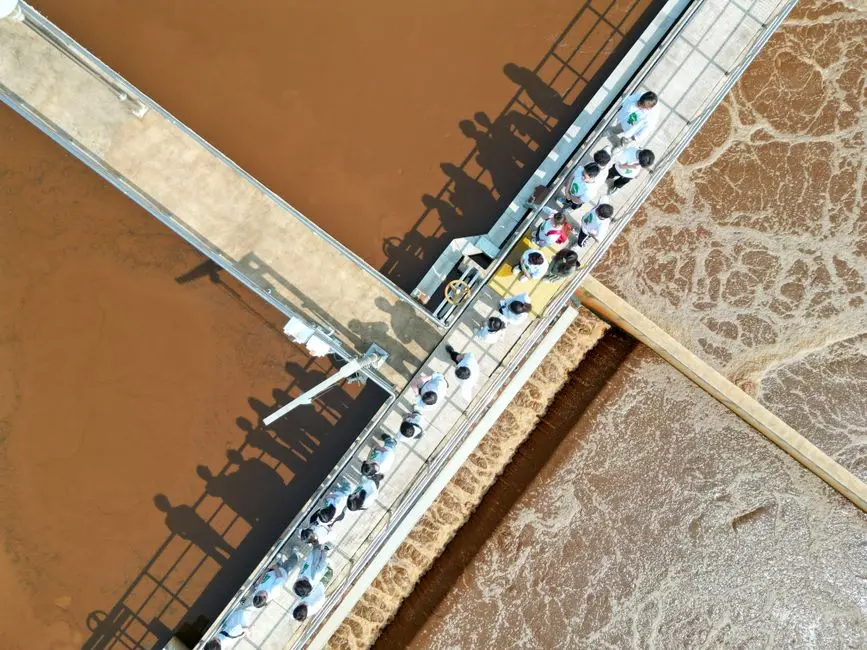
The supplier conversation is easier once the buyer has pre-selected a process. The four architectures that compete for a 50–2,000 m³/day brewery, dairy, hospital, or municipal project have very different footprints, operator demands, and grid tolerances — and a serious Chinese OEM will usually stock at least two of them. A containerized MBR wastewater treatment system is the right pick when effluent reuse (BOD < 5 mg/L, turbidity < 1 NTU) is in scope; a WSZ underground package sewage treatment plant is the lowest-effort fit for sub-100 m³/day flows with no full-time operator.
The headline trade-offs in 2026: WSZ A/O contact oxidation drops BOD below 20 mg/L at 1–80 m³/h and runs fully automatic, but is sensitive to power cuts beyond 4 hours (per HydropureWater spec). The containerized MBR delivers near-reuse effluent and a 60% smaller footprint than conventional activated sludge (per HydropureWater MBR spec), but membrane replacement hits every 7–10 years at USD 35–55/m². Concrete SBR has the lowest lifecycle cost above 500 m³/day but needs a trained plant operator at a Uganda salary of USD 400–700/month. The constructed wetland costs ~USD 90–140 per m³/day in CAPEX and uses zero energy, but the 0.8–1.2 m²/m²/day land requirement makes it viable only for Kampala suburbs with 1+ acre free.
| Parameter | MBR (containerized) | WSZ A/O (buried) | Concrete SBR | Constructed wetland |
|---|---|---|---|---|
| Footprint (m² per m³/day) | 0.3–0.5 | < 1.0 | 0.4–0.6 | 0.8–1.2 |
| Operator skill required | Low (PLC) | None (fully automatic) | Medium (trained op.) | Low (weekly check) |
| Grid-tolerance (hrs outage) | Up to 6 hr | Up to 4 hr | Up to 8 hr | Infinite (no power) |
| BOD / COD removal | ≥ 98% / ≥ 95% | ≥ 92% / ≥ 88% | ≥ 95% / ≥ 90% | ≥ 80% / ≥ 70% |
| CAPEX per m³/day (USD) | 380–620 | 220–340 | 550–950 | 120–180 |
| 20-yr OPEX per m³ treated (USD) | 0.18–0.32 | 0.10–0.16 | 0.08–0.14 | 0.02–0.05 |
What it costs in 2026: CAPEX, OPEX, and the landed-price reality from China
For a 100 m³/day turnkey plant shipped DAP Kampala, the realistic 2026 bands are: containerized MBR USD 38,000–62,000; WSZ underground USD 22,000–34,000; concrete SBR USD 55,000–95,000; and constructed wetland USD 12,000–18,000 excluding land (HydropureWater landed-cost model, 2026). These are equipment-only numbers — a Chinese FOB quote that looks 30% cheaper almost always omits line items that surface during the Uganda Revenue Authority clearance process.
The hidden add-ons: 16% VAT on import, 25% import duty on HS code 8421.21 (filtering or purifying machinery for liquids), installation civil works USD 8,000–25,000 depending on soil conditions, and commissioning plus operator training USD 4,000–7,000. Add a chlorine dioxide generator for fecal-coliform compliance and a dissolved air flotation system as the brewery-grade pre-treatment stage — both raise the all-in price by USD 6,000–14,000 combined but are the difference between passing and failing NEMA's microbiological limits.
OPEX per cubic meter treated in 2026: MBR USD 0.18–0.32 (membrane aeration is the dominant line), WSZ A/O USD 0.10–0.16, SBR USD 0.08–0.14, and constructed wetland USD 0.02–0.05. The spare-parts channel from Mombasa to Kampala by road is 18–25 days; order critical spares (membrane modules, blower bearings, ClO₂ precursor) on day one of commissioning, not after the first failure. The MBR market is still expanding, with a 2026 MBR market growth and buyer outlook that confirms membrane pricing has softened 8–12% year-on-year.
| Line item (100 m³/day, DAP Kampala) | MBR | WSZ A/O | Concrete SBR | Wetland |
|---|---|---|---|---|
| Equipment FOB China (USD) | 38,000–62,000 | 22,000–34,000 | 55,000–95,000 | 12,000–18,000 |
| Freight Mombasa → Kampala | 3,500–5,500 | 2,800–4,200 | n/a (built locally) | n/a |
| Import duty (25%) + VAT (16%) | 10,400–16,900 | 6,200–9,600 | included in civil | included in civil |
| Civil works + installation | 8,000–18,000 | 6,000–12,000 | 15,000–25,000 | 10,000–20,000 |
| Commissioning + training | 5,000–7,000 | 4,000–5,500 | 5,500–7,000 | 3,000–5,000 |
| OPEX per m³ treated (USD) | 0.18–0.32 | 0.10–0.16 | 0.08–0.14 | 0.02–0.05 |
Supplier evaluation scorecard: 8 questions to send every Kampala bidder
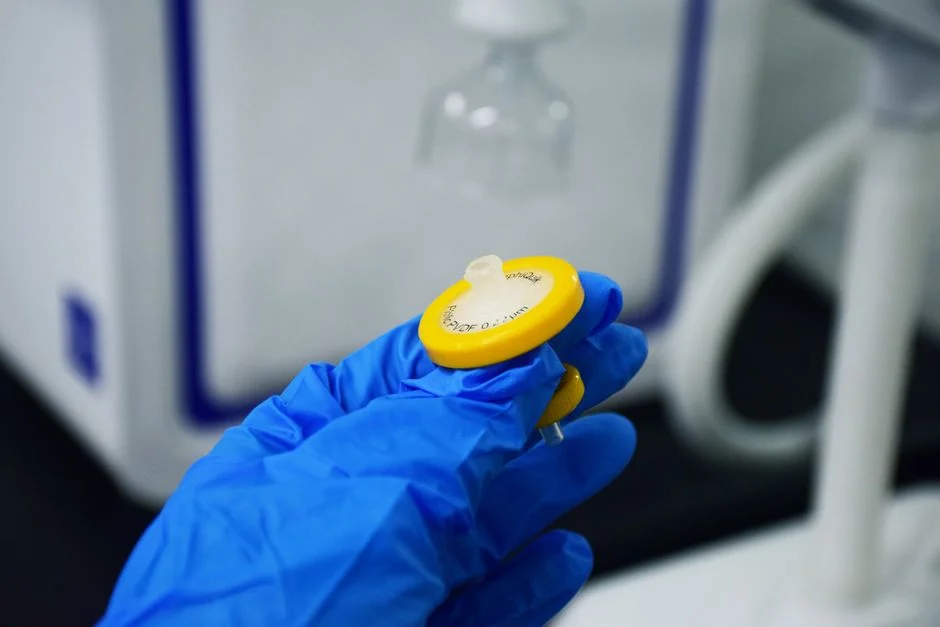
Paste these eight questions into every RFQ; weak bidders will not answer them straight. (1) How many Kampala or East Africa installations in the last 36 months, and can the buyer visit one with a working influent? A referenceable site visit is mandatory — a slideshow is not. (2) Does the warranty cover the membrane modules and aeration blower for 24 months including freight from Mombasa to Kampala? (3) Will the supplier sign a process guarantee with liquidated damages for non-compliance with NEMA S.I. 5/1999? (4) Lead time on membrane replacement parts shipped to Kampala — must be under 30 days. (5) Does the PLC support remote monitoring via 4G for the KCCA quarterly reporting requirement?
(6) Training: how many operator-days are included, and is the curriculum certified by a Ugandan TVET institution such as Nakawa Vocational College? (7) Pre-treatment: does the bid include a GX rotary mechanical bar screen and DAF, or only the biological stage? (8) Can the supplier provide a performance bond from a Ugandan-licensed bank — Stanbic, Absa, or dfcu — rather than only a Chinese parent guarantee? A bond from a local bank is the only enforceable security under Ugandan contract law if the plant fails NEMA compliance in year one.
Bidders who fail two or more of these eight questions should be cut before technical evaluation. A "yes" on a Chinese parent guarantee alone is worth nothing in a Kampala courtroom.
Frequently Asked Questions
Which wastewater treatment plant manufacturer in Kampala delivers NEMA-compliant effluent for a brewery? A Kampala brewery should specify a containerized MBR with anaerobic pre-treatment, sized for 1.5–2.0× average flow to handle CIP discharge peaks; NEMA-compliant effluent means COD ≤ 60 mg/L, BOD ≤ 30 mg/L, fecal coliform ≤ 5,000 CFU/100 mL (per S.I. 5/1999). HydropureWater ships skid-mounted MBR units with on-site commissioning and a written process guarantee.
How much does a 100 m³/day package sewage treatment plant cost in Uganda in 2026? DAP Kampala, a 100 m³/day turnkey package plant costs USD 22,000–34,000 for a buried WSZ A/O unit, USD 38,000–62,000 for a containerized MBR, and USD 55,000–95,000 for a built-in-place concrete SBR; add 25% import duty and 16% VAT on the equipment portion. Civil works typically add another USD 8,000–25,000 depending on soil and site access.
What is the KCCA trade-effluent permit process for factories in Luzira and Nalukolongo? Any factory discharging into the Nakivubo or Lubigi catchment must obtain a KCCA pre-treatment approval letter, sign a trade-effluent permit, and submit quarterly monitoring data — the KCCA Public Health Director's office processes applications in 30–60 days. Plants energised without this permit are subject to fines up to UGX 18 million per offence under the Water Act, Cap 152.
How long does a containerized MBR plant take to ship from China to Kampala? A containerized MBR leaves the Chinese OEM factory 6–10 weeks after PO, clears Mombasa or Dar es Salaam in 7–14 days, and reaches Kampala by road in 4–6 days; on-site assembly and commissioning adds 10–20 working days. Total door-to-operational lead time is 12–18 weeks for a standard 50–100 m³/day skid.
Can a constructed wetland meet NEMA S.I. 5/1999 standards in Uganda? A constructed wetland alone typically achieves 70–85% BOD removal, which is insufficient for direct discharge to inland waters; the S.I. 5/1999 limit is BOD ≤ 30 mg/L. Wetlands work as a tertiary polishing step after a packaged MBR or SBR, especially for sites with 1+ acre of free land and no reuse requirement.