What Zero Liquid Discharge Means for a Vietnamese Industrial Plant in 2026
A zero liquid discharge plant in Vietnam is a treatment train — typically MBR → RO → mechanical vapor recompression (MVR) or multi-effect evaporator (MEE) plus crystallizer — that recovers ≥95% of industrial wastewater for reuse and converts the remaining brine to solid salt for disposal, designed to meet QCVN 40:2011/BTNMT and QCVN 44:2012 discharge limits. Vietnam-installed 2026 CAPEX typically runs USD 2.4M–18M for a 500–5,000 m³/day train, with OPEX of USD 0.55–2.10 per m³ depending on influent TDS and reuse target.
The Vietnamese regulatory anchor is QCVN 40:2011/BTNMT for industrial wastewater discharged into surface water or industrial-park sewer: COD ≤75 mg/L, BOD₅ ≤45 mg/L, TDS ≤1,000 mg/L, SS ≤50 mg/L, total nitrogen ≤40 mg/L, and total phosphorus ≤6 mg/L. Plants discharging to municipal sewers inside an industrial park also fall under QCVN 40 by reference, while stricter outfalls in water-supply protection zones follow QCVN 44:2012 (COD ≤50 mg/L, BOD₅ ≤25 mg/L). With MONRE enforcement tightening in 2024–2026 and several southern industrial parks rejecting high-TDS RO concentrate into shared sewer, ZLD is moving from voluntary ESG branding to a permit-driven capex line for tannery, electroplating, textile, and chemical plants in HCMC, Binh Duong, Dong Nai, and Hai Phong clusters.
ZLD must be distinguished from minimum liquid discharge (MLD). MLD still produces a liquid sidestream — typically 5–20% of feed — that is sent to deep-well injection, evaporation ponds, or a Class B hazardous-waste landfill in slurry form. MLD can meet the same reuse percentage (80–90%) at 30–50% lower CAPEX, but the Vietnamese regulatory environment has not clarified a deep-well injection permit pathway, and Class B landfill capacity in the south is constrained. Lime-treatment ZLD precedent in the Indian plywood sector (Prasad et al., 2019, ScienceDirect) demonstrates that high-COD streams (8,000–15,000 mg/L) can be driven to a closed-loop solid residue — directly transferable to Vietnamese wood-product exporters. Global ZLD demand is forecast to grow at 8–9% CAGR through 2026, with Asia-Pacific the fastest region (Research and Markets, 2020-11), confirming that Vietnam is tracking, not bucking, regional capex patterns. For an MBR-based pre-stage selection reference, the MBR membrane bioreactor for ZLD pretreatment is the standard first block, with the industrial RO system for brine concentration as the second.
The 2026 Vietnam ZLD Process Train: MBR → RO → MEE/MVR → Crystallizer
Stage 1 is pretreatment: a DAF system for upstream oil and TSS removal (4–300 m³/h capacity across 13 standard models) and a lamella clarifier strip FOG and TSS to <30 mg/L — a hard feed requirement for downstream MBR, and the difference between an 18-month and a 4-year membrane life. Stage 2 is the MBR membrane bioreactor using submerged PVDF modules at 0.1 μm pore size, with the DF-series module delivering 32–135 m³/day per unit. MBR typically cuts COD from 1,500–4,000 mg/L down to <50 mg/L and TSS to <5 mg/L, and saves roughly 60% of the civil footprint versus conventional activated sludge — a real advantage on a congested Vietnamese industrial-park plot.
Stage 3 is brine concentration by RO, optionally with an NF pre-stage where silica or color bodies would foul RO membranes. Single-pass RO runs at 60–70% recovery; two-pass RO reaches 70–75%, producing 70–80% of the feed as reusable permeate and a concentrate at 50,000–80,000 mg/L TDS that the thermal block can handle. The industrial RO system for brine concentration block is the second-largest CAPEX item after the evaporator. Stage 4 is thermal evaporation — an MVR evaporator (electrical, 25–40 kWh/m³ of distillate) or an MEE (steam-driven, 0.25–0.40 kg steam per kg of water) — taking the RO concentrate from 50,000–80,000 mg/L up to 200,000–250,000 mg/L TDS. The thermal block is the single largest lifetime-cost item: 45–65% of lifetime OPEX, dominated by electricity or steam (per Clean Technologies and Environmental Policy review). Stage 5 is a forced-circulation crystallizer or agitated dryer that produces NaCl, Na₂SO₄, or mixed salt cake at <2% moisture for landfill or sale — typically 25–35% of total CAPEX. The crystallizer is also the highest-risk equipment for scale-up and the most frequent cause of unplanned shutdowns.
| Stage | Unit Operation | Key Parameter / Output | Typical Range |
|---|---|---|---|
| 1 | DAF + Lamella | TSS to MBR | <30 mg/L |
| 2 | MBR (PVDF, 0.1 μm) | COD / TSS effluent | <50 / <5 mg/L |
| 3 | RO (1- or 2-pass) | Recovery / concentrate TDS | 60–75% / 50,000–80,000 mg/L |
| 4 | MVR or MEE | Concentrate to TDS | 200,000–250,000 mg/L |
| 5 | Crystallizer / Dryer | Salt moisture | <2% |
Matching the Process Train to Vietnamese Industrial Effluents
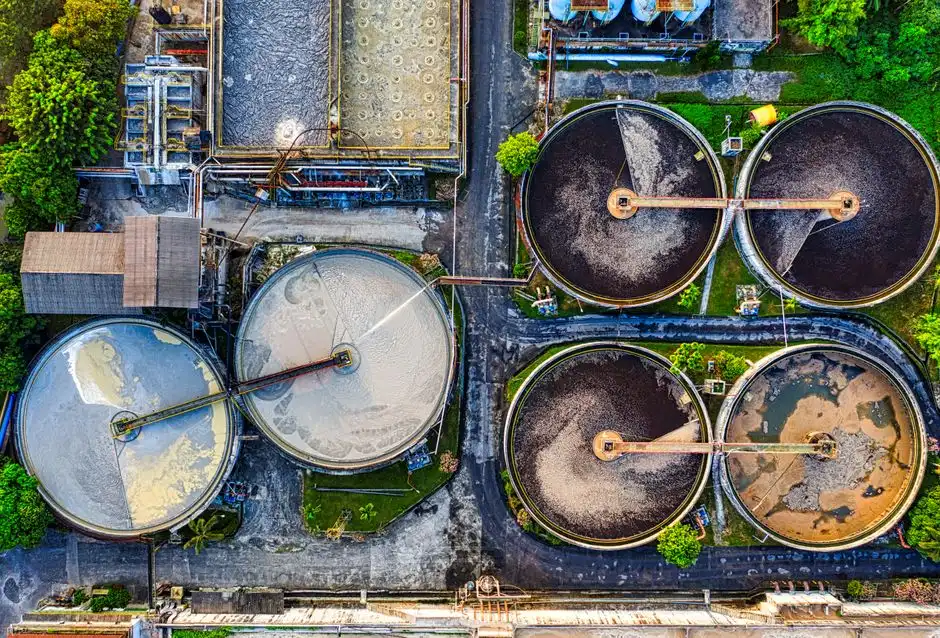
A one-size-fits-all ZLD specification is the most common capex mistake Vietnamese buyers make, because influent TDS — not flow rate — drives 70% of the OPEX. Textile dyeing and finishing streams carry TDS of 8,000–25,000 mg/L and COD of 1,500–4,000 mg/L, dominated by reactive dyes and sodium sulfate; the full MBR + RO + MEE train is required, with an NF pre-stage upstream of RO to protect the membrane from color bodies and silica. Electroplating and metal finishing run at TDS 5,000–15,000 mg/L with heavy metals, so a dedicated chemical precipitation and ion-exchange block is mandatory upstream of MBR — and the OPEX case often depends on whether nickel and chromium recovery is saleable at industrial-park gate price (typical nickel sulfate credit USD 2.50–4.20/kg Ni in 2026).
Tanneries are the most punishing stream: TDS 15,000–40,000 mg/L, sulfide 200–800 mg/L, and ammonia 400–1,200 mg/L, so an ammonia-stripping pre-stage is required before MBR. OPEX lands at the upper end of the band (USD 1.40–2.10/m³) because stripping steam is added on top of evaporator duty. Food and beverage — starch, dairy, brewery — is the easiest case at TDS 2,000–6,000 mg/L: anaerobic UASB + MBR typically discharges below QCVN 40, and MLD is often more economic than full ZLD unless the buyer has a specific reuse contract. The Indian textile and fertilizer parallel (Sedevino et al., 2023, ScienceDirect) confirms necessity-driven ZLD adoption under tightening discharge rules — Vietnam's 2026 tightening is a similar inflection. For a brewery UASB sizing reference, see the 2026 UASB reactor sizing guide and the chemical wastewater COD removal cost data for process-intensification baselines.
| Industry | Influent TDS (mg/L) | Recommended Train | OPEX Band (USD/m³) |
|---|---|---|---|
| Textile (dyeing/finishing) | 8,000–25,000 | DAF + MBR + NF + RO + MEE | 1.10–1.85 |
| Electroplating / metal finishing | 5,000–15,000 | Precipitation + IX + MBR + RO + MEE | 0.95–1.60 |
| Tannery | 15,000–40,000 | Sulfide oxidation + NH₃ strip + MBR + MVR | 1.40–2.10 |
| Food & beverage | 2,000–6,000 | UASB + MBR (MLD often suffices) | 0.55–0.90 |
| Chemical / fertilizer | 10,000–30,000 | MBR + RO + MEE + crystallizer | 1.20–1.95 |
Vietnam-Installed 2026 CAPEX and OPEX Benchmarks
Turnkey Vietnam-installed CAPEX in 2026 — including civil works, erection, commissioning, and a 12-month performance warranty — scales roughly linearly with capacity in the 500–5,000 m³/day band: USD 2.4–4.5M for a 500 m³/day train, USD 4.5–8M for 1,000 m³/day, USD 8–13M for 2,500 m³/day, and USD 12–18M for 5,000 m³/day. OPEX sits at USD 0.55–2.10/m³, with energy at 35–55% of the bill and the thermal evaporator block alone consuming 45–65% of that energy share. The published 2026 wastewater treatment plant OPEX breakdown gives a USD 0.18–2.10/m³ industry-wide band, and the multiple effect evaporator maintenance cost reference isolates USD 0.08–0.42/m³ of the OPEX to the evaporator block specifically — useful for an energy-audit drilldown.
The economics turn on two Vietnamese-specific numbers. First, industrial-park water tariffs in HCMC, Binh Duong, and Dong Nai industrial parks run USD 0.45–0.80/m³ for clean process water in 2026 (per local IP authority tariff schedules), so a 2,000 m³/day plant running at 90–95% recovery offsets USD 295,000–555,000/year in avoided water purchases. Second, salt disposal is a hard cost: Class B hazardous landfill tipping fees in southern Vietnam run USD 35–80/tonne in 2026, which for a 2,000 m³/day plant producing 8–14 tonnes/day of salt cake is USD 100,000–400,000/year. The way to neutralize the disposal cost is crystallization to a saleable grade (NaCl > 96% purity has a domestic market at USD 25–40/tonne in 2026) or co-processing in a cement kiln. Payback on a 2,000 m³/day ZLD plant in 2026 Vietnam is typically 4–7 years, with longer payback for high-TDS streams that push toward the upper OPEX band.
| Capacity (m³/day) | CAPEX (USD M, turnkey) | OPEX (USD/m³) | Indicative Payback |
|---|---|---|---|
| 500 | 2.4–4.5 | 0.85–1.80 | 5–8 years |
| 1,000 | 4.5–8.0 | 0.70–1.60 | 4–7 years |
| 2,500 | 8.0–13.0 | 0.60–1.40 | 4–6 years |
| 5,000 | 12.0–18.0 | 0.55–1.25 | 3–6 years |
Selecting a ZLD Supplier in Vietnam: 7-Point RFQ Checklist
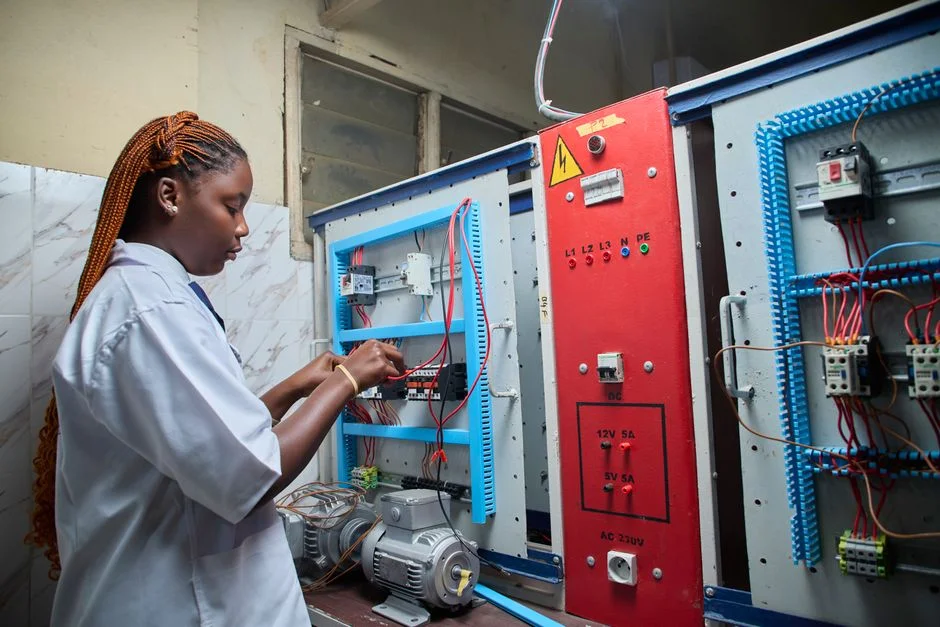
The supplier shortlist is where most Vietnamese ZLD capex goes off the rails, because a ZLD train is a chain of unit operations and a weak evaporator package sinks the whole train. Paste these seven items into every RFQ email sent this quarter.
- Demand three reference plants with influent TDS within ±20% of the buyer's stream — not generic case studies from a brochure.
- Require a mass-balance and energy-balance guarantee on the evaporator block, stated in kWh per m³ of distillate, with a crystal-purity specification (typically ≥95% NaCl or Na₂SO₄ as applicable).
- Verify in-house manufacturing for MBR, RO, and evaporator blocks; sub-supplied evaporator packages are the single most common reliability failure and the most common cause of warranty disputes.
- Require a guaranteed water recovery rate (typically 90–95%) and a guaranteed permeate TDS (typically <50 mg/L) written into the performance contract with liquidated-damages clauses.
- Ask for a 10-year OPEX model with line items for electricity, chemicals, membrane replacement, and salt disposal — refuse a single blended number, because blended OPEX hides where the real cost risk sits.
- Confirm local service: a Vietnam-resident commissioning engineer and <48-hour response for critical spares in HCMC, Binh Duong, Dong Nai, Hai Phong, and Bac Ninh industrial parks.
- Check QCVN compliance documentation, ISO 9001 / ISO 14001 certification, and CE or equivalent marking on the equipment skids — gives the buyer's EHS team an audit trail for MONRE inspections.
Frequently Asked Questions
Q1 — What is the minimum capacity that makes ZLD economically viable in Vietnam?
The economic floor in 2026 is approximately 500 m³/day influent with influent TDS above 8,000 mg/L; below this, fixed civil and evaporator CAPEX of USD 2.4M+ cannot be amortized below a 7-year payback in the Vietnamese cost environment (HydropureWater field data, 2026).
Q2 — Which Vietnamese industries are required to install ZLD in 2026?
QCVN 40:2011/BTNMT and QCVN 44:2012 do not name industries, but MONRE enforcement in 2024–2026 has effectively required full ZLD for new tannery permits in the south and for electroplating facilities discharging above 5,000 mg/L TDS to industrial-park sewer.
Q3 — Can a ZLD plant operate on biogas or solar power to cut OPEX?
Yes — energy is 35–55% of OPEX, and rooftop solar PPA at USD 0.06–0.08/kWh plus anaerobic digester gas can offset 25–45% of the evaporator block's electrical load in southern Vietnam, where grid electricity runs USD 0.08–0.11/kWh in 2026.
Q4 — How long does it take to build a ZLD plant in Vietnam?
10–14 months from purchase order to mechanical completion and commissioning for a 1,000–2,500 m³/day train, plus 2–3 months of performance testing; 18+ months if the evaporator block is fabricated overseas with extended sea freight (HydropureWater project data, 2026).
Q5 — Does the salt produced by the crystallizer count as hazardous waste?
Under QCVN 07:2009/BTNMT thresholds, salt cake is hazardous if it carries heavy metals above the specified leachable limits; a Class B hazardous landfill in southern Vietnam charges USD 35–80/tonne for disposal in 2026.