Why Green Hydrogen Has a Hidden Water Problem
A 100 MW PEM electrolyzer plant consumes roughly 9 liters of ultrapure deionized feed water per kilogram of hydrogen produced, and 15-20 L/kg H2 once alkaline-system balance-of-plant losses are included (IEA Global Hydrogen Review 2024 benchmarks). For a mid-scale 50 MW facility running at 4,000-5,000 hours per year, that translates to 180-450 m3/d of feed-quality water entering the plant boundary, of which 20-40% exits as reject, blowdown, or condensate that must be treated before discharge or reuse. This is the line item that rarely appears in green hydrogen project announcements but consistently surfaces in lender due-diligence reviews: Protium's Pioneer One electrolyzer at the University of South Wales Hydrogen Centre, which produced its first kilogram of hydrogen in May 2023 (businessnewswales.com, 2023-07-05), is one of many operational sites where the water system is engineered separately from the electrolyzer skid.
Three waste streams converge at every green H2 facility: feed-water pretreatment reject from the deionizer regeneration cycle (5-10% of feed flow, high in total dissolved solids), cooling loop blowdown (5-15% of loop volume, with conductivity drift from cycle-up), and stack off-gas condensate carrying trace electrolyte species. In 2026, water reuse has shifted from an ESG talking point to a project-finance requirement; the EU Hydrogen Bank's 2026 award criteria and most US state-level hydrogen hub RFPs now require a quantified water-balance and reuse plan as a condition of award, and the U.S. Department of Energy's hydrogen shot funding tracks water consumption per kg H2 as a Tier 2 reporting metric.
Electrolyzer Effluent Chemistry by Stack Type
Alkaline electrolyzers discharge a strongly caustic leachate at pH 12-14 with suspended nickel and iron hydroxides in the 50-200 mg/L TSS range, plus trace asbestos fibers from legacy asbestos-diaphragm cells still present in some 2026 retrofits in Eastern European and Chinese installations. PEM electrolyzers produce near-neutral pH 5-8 effluent but carry 2-5 mg/L of fluoride from PFSA (Nafion-type) membrane degradation, with platinum and iridium at ppb levels that selectively adsorb onto activated carbon or chelating resin. Solid oxide (SOEC) stacks generate a high-temperature steam condensate containing lithium, cobalt, and strontium leached from cell interconnects, plus a BOD load of 200-400 mg/L when anti-coking additives such as methanol or toluene slip through the sweep-air loop. The table below summarizes the influent envelope a design engineer should plan around before specifying any unit operation.
| Parameter | Alkaline | PEM | SOEC |
|---|---|---|---|
| pH | 12-14 | 5-8 | 6-9 |
| TDS (mg/L) | 2,000-8,000 | 50-300 | 300-1,200 |
| TSS (mg/L) | 50-200 | <20 | <30 |
| Fluoride (mg/L) | <1 | 2-5 | <1 |
| Critical metals | Ni, Fe, Cr (legacy) | Pt, Ir (ppb) | Li, Co, Sr |
| Temperature (°C) | 30-50 | 25-40 | 40-70 |
| Flow (L/kg H2) | 5-15 | 9-12 | 8-14 |
Feed-water pretreatment reject behaves like a low-volume, high-TDS stream (often 500-2,000 mg/L chloride, 200-600 mg/L calcium hardness) and is best handled with a PLC-controlled pH neutralization skid feeding a multi-media filtration for RO pretreatment train before discharge or recovery. PEM off-gas condensate has the cleanest profile but the most demanding trace-metal targets, and typically requires an automatic chemical dosing system tuned for fluoride precipitation with calcium chloride followed by selective ion exchange.
The 2026 Treatment Train: Unit Operations That Actually Work
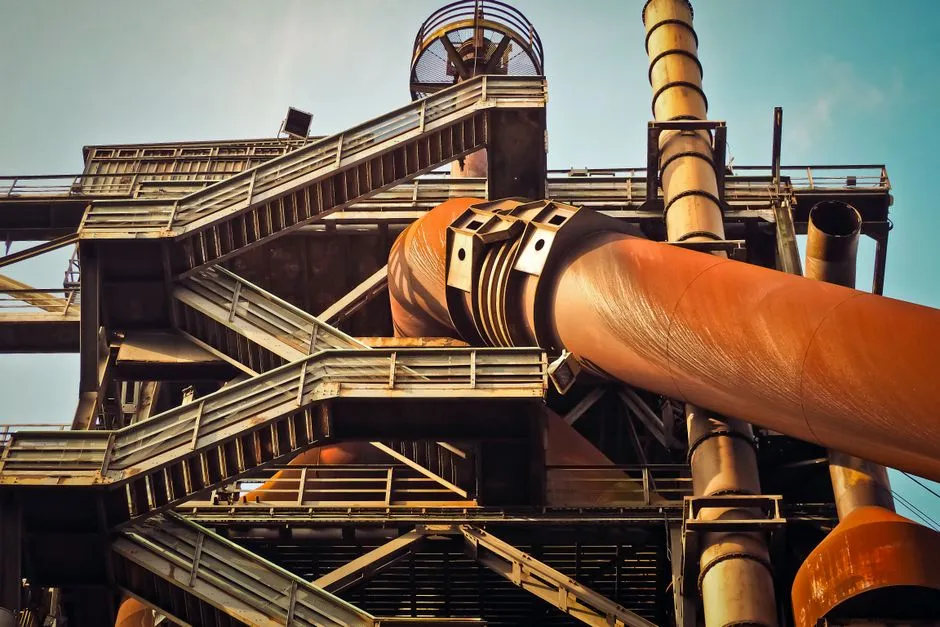
A defensible 2026 treatment train for a 10-100 MW green hydrogen plant runs equalization → pH neutralization → multi-media filtration → two-pass RO → polishing, with DAF or lamella clarification inserted only when influent TSS exceeds 500 mg/L. This configuration addresses the specific green hydrogen wastewater implications of varied stack chemistries.
- Equalization (8-24 h HRT): Concrete or epoxy-coated carbon steel basin sized at 8-24 hours of hydraulic residence time to dampen pH and flow swings; typical 50 MW plant specifies 800-1,500 m3 of equalization volume. Coarse screening at 6 mm upstream protects downstream pumps.
- Neutralization: PLC-controlled acid/base dosing with redundant pH probes (triple-redundant is common in EU plants) targeting pH 6.5-8.5 before filtration. CO2 stripping using stack off-gas is a 2026 trend that cuts reagent cost by 30-60% for alkaline streams.
- Multi-media filtration: Anthracite-sand-garnet bed reducing TSS from 100-300 mg/L to <5 mg/L as a guard for downstream RO membranes. Backwash water recycles to the equalization basin at 5-8% of throughput.
- Two-pass RO: Recovery 75-85% designed for cooling tower makeup; concentrate (15-25% of feed) requires separate management via evaporation pond, mechanical vapor recompression (MVR), or crystallization. A two-pass RO system for chloride compliance typically holds permeate chloride under 10 mg/L, well inside EU BAT-AEL limits.
- Polishing: Activated carbon or selective ion exchange for residual fluoride (PEM), precious metal recovery (Pt/Ir on chelating resin), and trace lithium recovery (SOEC). Polishing effluent typically meets <0.1 mg/L fluoride and <1 ppb precious metals.
For high-TSS alkaline streams, inserting a DAF for high-TSS alkaline electrolyzer waste upstream of filtration cuts solids loading by 70-90% and extends media life. A high-efficiency sedimentation tank is a lower-CAPEX alternative for flow rates under 50 m3/h where footprint is not constrained. Plants co-located with a municipal wastewater treatment works sometimes route RO concentrate to a municipal MBR integrated wastewater treatment line for biological polishing, though this is operationally fragile when chloride exceeds 8,000 mg/L.
2026 Regulatory Landscape: EU, US, and China Compared
The EU applies the Industrial Emissions Directive 2010/75/EU BAT-AEL framework to electrolyzer wastewater, with binding effluent limits of <200 mg/L chloride, <1,000 mg/L sulfate, <10 mg/L fluoride, and pH 6.5-9.5 for discharges to surface water. The 2026 EU Hydrogen Bank award criteria tighten these further for funded projects, effectively requiring 75%+ reuse and limiting discharge volume to <15% of feed-water intake. The US situation is more fragmented: EPA's 40 CFR Part 437 Effluent Limitations Guidelines cover steam-electric legacy plants, but green hydrogen falls under the multi-sector ELG framework, and state permits increasingly set the binding limits. Texas TCEQ and California Water Boards have both moved to require zero-liquid-discharge (ZLD) for green H2 plants above 50 MW capacity, and the U.S. Department of Energy's 2026 hydrogen hub selections (Appalachian, Gulf Coast, Midwest) include reuse-rate covenants in their award letters. China's framework runs through GB/T 34187-2017 for hydrogen manufacturing and GB 8978-1996 integrated wastewater discharge, with 2026 updates adding lithium and PFAS parameters in line with the EU.
| Parameter | EU BAT-AEL 2026 | US (state-led, 2026) | China GB 2026 |
|---|---|---|---|
| pH | 6.5-9.5 | 6.0-9.0 (TCEQ) | 6.0-9.0 |
| TDS / chlorides | <200 mg/L Cl | ZLD for >50 MW | <500 mg/L (draft) |
| Fluoride | <10 mg/L | <10 mg/L (CA) | <10 mg/L |
| Heavy metals | Ni <0.5, Cr <0.2 | Ni <1.0 (state avg.) | Ni <1.0 |
| Lithium (SOEC) | Not yet regulated | Pending EPA study | <0.5 mg/L (2026 add) |
| PFAS | EU directive pending | EPA rule Q4 2026 | Draft 2026 |
| ZLD trigger | Implicit >75% reuse | Explicit >50 MW in TX/CA | Pilot projects only |
Turning Wastewater Into a Water Reuse Asset
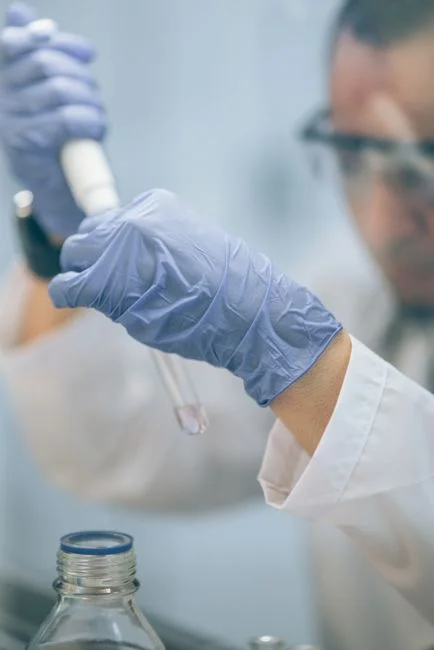
Two-pass RO with side-stream softening routinely achieves 60-80% reuse as cooling tower makeup, with permeate conductivity <50 µS/cm and silica <5 mg/L, suitable for cycles of concentration up to 6.0 without scale risk. Concentrate management is the deciding economic question: evaporation ponds are the lowest CAPEX option but need 1-2 hectares per 10 MW and fail in arid zones, while mechanical vapor recompression (MVR) crystallizers at 1.5-3.0 kWh per m3 of concentrate are the workhorse for plants above 50 MW, and salt recovery becomes a revenue line only above 100 MW where NaCl sale offsets 15-25% of OPEX. CAPEX for a complete 10 MW water treatment train in 2026 dollars sits in the $1.8-3.2M range, with OPEX at $0.18-0.34 per m3 treated (HydropureWater field data, 2026). Payback falls to 4-6 years when freshwater cost exceeds $1.50/m3 and discharge fees exceed $0.80/m3, a threshold crossed in most of coastal China, the US Southwest, and southern Spain. Dewatered sludge from the equalization basin and any upstream plate-frame filter press operation runs 18-25% dry solids and is typically landfilled as non-hazardous waste at $40-80 per wet ton, though nickel-rich alkaline sludge may classify as hazardous under US RCRA and EU EWC 19 02 05.
Frequently Asked Questions
What is the EU BAT-AEL chloride limit for green hydrogen wastewater discharge in 2026? The Industrial Emissions Directive BAT-AEL sets a binding daily average of <200 mg/L chloride for surface-water discharge, with EU Hydrogen Bank 2026