Industrial AOP System Spare Parts Cost 2026
Industrial AOP system spare parts cost 2026 runs $18,000–$65,000 per year for a 50–500 m³/day plant. UV lamps, hydrogen peroxide, ozone electrodes, and catalyst makeup dominate the band; pool cartridge prices do not transfer to this duty.
First-page prices for this search are pool and spa cartridges at $316–$450, not plant equipment. Bullfrog's Clear Comfort AOP replacement cartridge, SKU 45-04003, lists at $316.00, and the full Clear Comfort cartridge system lists at $2,160.00 while drawing 10 W. That duty would not treat 50 m³ of chemical or pharmaceutical wastewater in a year, let alone a day.
Using those shelf prices as a plant benchmark is a budgeting error that surfaces about twelve months later as a $40K+ unbudgeted consumables line. For a 50–500 m³/day installation, the 2026 industrial band remains $18,000–$65,000 per year, and influent COD, oxidant selection, and polish versus refractory destruction drive most of that spread.
Buyers should line-item those five groups before they compare vendors, because a single OPEX percentage hides the reagent line. The groups are UV lamps, oxidant reagents such as H2O2, ozone, or both, plus catalyst and TiO2 media, electrodes, and wear parts such as pumps, seals, sensors, quartz sleeves, and ballasts. Most plants we size at 200 m³/day on 1,200 mg/L COD run near the lower half of the annual band when peroxide is bought in Asia, not the EU.
The process chemistry explains why reagent lines scale with load: AOPs rely on in-situ production of highly reactive hydroxyl radicals (·OH) to oxidize contaminants, a mechanism aimed at biologically toxic or non-degradable materials (Wikipedia, Advanced oxidation process). Compliance pressure is pushing the same annual band upward from the 2020 design basis. Directive 2010/75/EU — the European Union directive regulating pollution from industrial activities — carries BAT-AEL revisions that are the EU driver cited for 2026 permits, and tighter EPA limits on COD and total residual oxidant are the US driver. Together they line up with 10–25% higher oxidant doses than 2020 baseline designs (HydropureWater field data, 2026). Read the unit prices below against a 200 m³/day reference plant before scaling the quantities to your flow.
| Consumable Category | 2026 Unit Price Range (USD) | Typical Annual Quantity (200 m³/day plant) | Replacement Interval |
|---|---|---|---|
| Medium-pressure UV lamp | $400–$1,200 / lamp | 4–8 lamps | 8,000–12,000 hr |
| LPHO Amalgam UV lamp | $200–$500 / lamp | 6–12 lamps | 12,000–16,000 hr |
| H2O2 (50% w/w bulk) | $0.40–$1.10 / kg | 15–80 tonnes | Continuous |
| O3 generator electrode set | $1,500–$6,000 / set | 0.3–0.7 sets | 18–36 months |
| TiO2 catalyst media | $80–$220 / kg loaded | 40–150 kg | 2–5% attrition/yr |
| BDD / PbO2 electrode plate | $3,000–$12,000 / plate | 0.3–0.8 plates | 3–5 years |
Hydrogen Peroxide Dosing Cost Wastewater AOP 2026
Hydrogen peroxide dosing for wastewater AOP costs $0.40–$1.10 per kg of 50% w/w bulk chemical in 2026, and stoichiometric use is 0.5–2.0 kg H2O2 per kg COD removed. A 200 m³/day plant removing 1,200 mg/L COD spends $14,000–$58,000 per year on peroxide alone. Asian producers cluster at $0.40–$0.60/kg, while EU buyers more often see $0.80–$1.10/kg delivered.
UV/H2O2 is still the configuration most procurement teams price first when the COD target sits below 2,000 mg/L. A medium-pressure UV lamp costs $400–$1,200 and lasts 8,000–12,000 hours, while a low-pressure high-output amalgam lamp costs $200–$500 but delivers lower photon flux, so the lamp count about doubles. On continuous duty, a 200 m³/day plant replaces 4–8 medium-pressure lamps per year, or 6–12 amalgam lamps (HydropureWater field data, 2026).
Quartz sleeves add $150–$400 each on a 12–24 month clean or replace cycle, and electronic ballasts run $300–$700 each with a 5–7 year service life. The peroxide storage and feed train is the adjacent capital item, and dosing accuracy lives or dies on that skid. The automatic chemical dosing skid for H2O2 and reagent feed is what sets dose error and how often operators handle peroxide.
Table figures below use a harsher case than the 1,200 mg/L example: 200 m³/day at 1,500 mg/L COD. Peroxide quantity there is 15,000–60,000 kg per year, and the subtotal spans $6,000–$66,000 at the same $0.40–$1.10/kg price. Lamp, sleeve, ballast, and sensor lines stay smaller than the reagent line on this duty. Most plants we dose at the low stoichiometric end, near 0.5 kg H2O2 per kg COD, only after a jar test shows the residual meets the permit.
| UV/H2O2 Line Item | Unit Cost (2026 USD) | Annual Quantity (200 m³/day, 1,500 mg/L COD) | Annual Subtotal |
|---|---|---|---|
| Medium-pressure UV lamps | $400–$1,200 | 4–8 lamps | $1,600–$9,600 |
| H2O2 (50% bulk) | $0.40–$1.10 / kg | 15,000–60,000 kg | $6,000–$66,000 |
| Quartz sleeves | $150–$400 | 3–8 sleeves | $450–$3,200 |
| Electronic ballasts | $300–$700 | 0.5–1 units (amortized) | $150–$700 |
| UV intensity sensors | $250–$600 | 1–2 sensors | $250–$1,200 |
Ozone AOP Electrode Replacement Cost Industrial
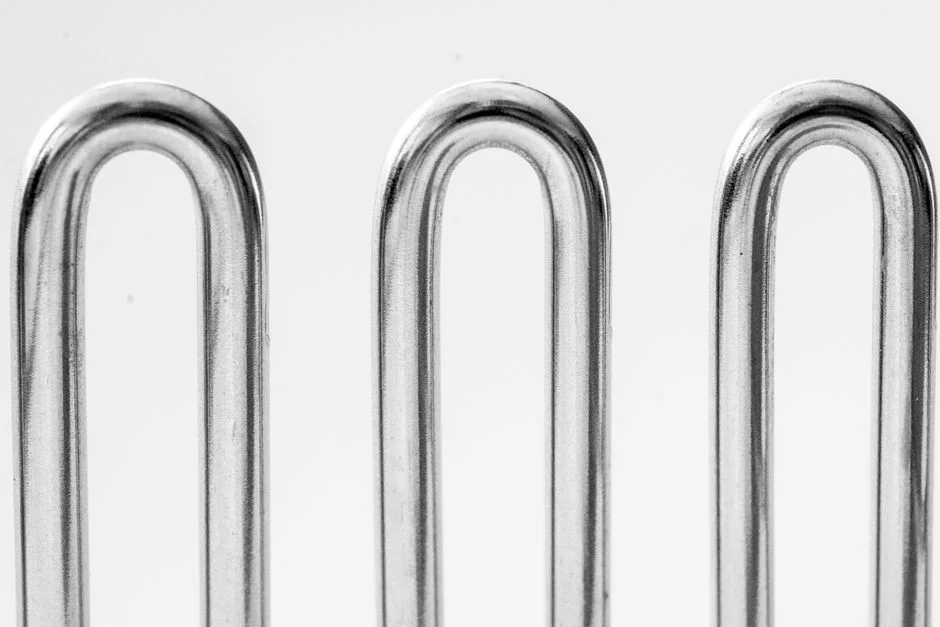
An ozone AOP electrode and dielectric set costs $1,500–$6,000 per generator, and plants replace 0.3–0.7 sets per year on an 18–36 month cycle. Feed-gas humidity is the largest variable behind early failure, and the annualized set lands near $500–$4,200 for a 200 m³/day reference. The ozone AOP OPEX breakdown article puts the wider spare-parts bill for ozone systems at $24,000–$68,000 per year, weighted to electrodes and power.
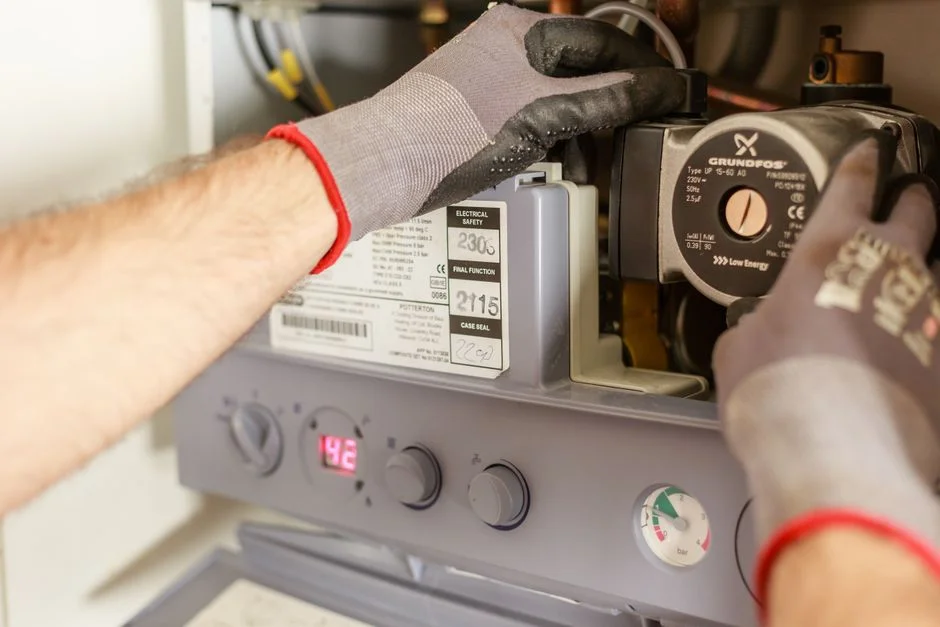
Upstream, a PSA oxygen concentrator sieve lasts 5–7 years, while desiccant and pre-filters still cost $200–$500 per year. Downstream, the catalytic off-gas destruct unit is required because OSHA and EU workplace ozone limits are 0.1 ppmv as an 8-hour TWA. A heated catalyst bed costs $1,200–$3,000 and is replaced every 3–5 years, which annualizes to about 0.2–0.33 beds, or $240–$1,000.
Power is the line most buyers under-budget on an ozone AOP. Specific energy is 8–12 kWh per kg of ozone produced, so a 5 kg/h generator draws 1,200–1,800 kWh per day for ozone alone, before any UV or catalyst polish. At $0.08–$0.14 per kWh and 440,000–660,000 kWh per year, the power subtotal is $35,000–$92,000. Do not fold that power into the spare-parts quote the vendor headlines.
Industrial ozone AOP shares inventory with disinfection kits on sites that run both chemistries. The ClO2 generator for hybrid AOP-disinfection polishing is the practical route to one spare-parts shelf instead of two. Most plants we commission keep one electrode set on site, because a humidity excursion fails the dielectric faster than the 18-month plan. Sieve-bed amortization at $3,000–$8,000 per set, taken as 0.15–0.20 sets per year, adds $450–$1,600.
| O3 AOP Line Item | Unit Cost (2026 USD) | Annual Quantity (200 m³/day) | Annual Subtotal |
|---|---|---|---|
| Generator electrode/dielectric set | $1,500–$6,000 | 0.3–0.7 sets | $500–$4,200 |
| PSA sieve bed (amortized) | $3,000–$8,000 | 0.15–0.20 sets | $450–$1,600 |
| Desiccant & pre-filters | $200–$500 | 1 set | $200–$500 |
| Catalytic off-gas destruct bed | $1,200–$3,000 | 0.2–0.33 beds | $240–$1,000 |
| Ozone power consumption | $0.08–$0.14 / kWh | 440,000–660,000 kWh | $35,000–$92,000 |
Fenton Reagent Cost Industrial Wastewater Treatment 2026
Fenton reagent for industrial wastewater costs $0.30–$0.80 per kg of FeSO4·7H2O, plus hydrogen peroxide at the same $0.40–$1.10 per kg bulk price used in UV/H2O2. Iron sludge disposal is the line most bids miss, and hazardous-waste handling at $80–$250 per tonne offsets 20–40% of reagent spend (HydropureWater field data, 2026). High-COD landfill leachate is the usual Fenton duty, not a low-COD polish.
Photocatalytic AOP for refractory organics, using TiO2 on glass or ceramic supports, loses 2–5% of media mass per year to attrition. Loaded replacement media costs $80–$220 per kg, and a 500 L reactor holds about 200–300 kg, so annual makeup is 40–150 kg. Most plants we open after year two find attrition at the low end of that 2–5% band when the support is ceramic, and higher when the coating is a thin film on glass.
Electrochemical AOP uses boron-doped diamond or lead-dioxide plates at $3,000–$12,000 per plate and a 3–5 year life. Life tracks current density, typically 200–500 A/m², and chloride in the water. This variant fits chloride-tolerant polishing, and it enters a ZLD comparison only when chloride is acceptable and a minimal-discharge effluent is required. Membrane replacement on that ZLD loop adds $25–$60 per m² on an 18–36 month cycle, and the MBR flat sheet module is the adjacent capital in that polishing train.
A solids step ahead of AOP cuts oxidant demand on the reactor that follows. Cavitation air flotation maintenance OPEX can lower downstream AOP oxidant demand by 15–30%. Where rinse recovery already produces ceramic membrane water, the dissolved load into the reactor drops, and peroxide use follows that load. Most plants we pretreat this way buy the lower oxidant case, not the raw-COD case.
Two upstream choices change the spare-parts math again on fab and biological plants. A Chip Fab Wastewater Treatment: 2026 Engineering Specs train should price AOP on residual COD after metals and fluoride removal. If an MBR is upstream, MBR effluent quality sets the COD and solids the lamps and peroxide actually see. Budget the reactor on that effluent, not on the raw process drain.
| Variant | Primary Consumable | Unit Cost (2026 USD) | Annual Cost Driver |
|---|---|---|---|
| Fenton | FeSO4·7H2O + H2O2 | $0.30–$0.80 / kg | Sludge disposal offsets 20–40% |
| Photocatalytic (UV/TiO2) | TiO2 on media | $80–$220 / kg loaded | 2–5% attrition/year |
| Electrochemical (BDD/PbO2) | Anode plates | $3,000–$12,000 / plate | 3–5 year life |
| Membrane polish (post-AOP) | UF/MF membrane | $25–$60 / m² | 18–36 month cycle |
Five-Year Cost per Cubic Metre at 200 m³/day
Five-year ownership cost for industrial AOP at 200 m³/day, 1,500 mg/L influent COD, and 80% removal runs from $0.18 to $1.40 per m³ treated. UV/H2O2 sits at the low end when influent COD is below 2,000 mg/L. Ozone-based AOP takes over when the permit targets refractory micropollutants such as PFAS, 1,4-dioxane, or NDMA precursors. Electrochemical AOP belongs in the comparison only when chloride is acceptable and a ZLD effluent is required.
The bands below are mid-range 2026 US dollars, with reagent prices at the median of the ranges above and electricity at $0.10/kWh. On these boundaries, industrial AOP system spare parts cost 2026 is a line-item budget, not one OPEX percentage. Hidden items outside vendor headlines include Fenton sludge at $0.05–$0.12/m³, ozone off-gas monitoring at $1,500–$4,000 per year, and electrochemical electrode refurbishment at $800–$2,500 per year.
Capital is indexed with UV/H2O2 set to 1.00. Ozone systems typically run 1.4–1.8 times that capital, Fenton 0.6–0.9 times, photocatalytic 1.2–1.6 times, and electrochemical 1.8–2.6 times. Annual consumables, power, and labor in the table are not interchangeable across columns. Most plants we normalize at $0.10/kWh see ozone power, not ozone electrodes, set the five-year rank.
Annual consumables for UV/H2O2 in this frame are $8,000–$70,000, against ozone consumables of $1,400–$7,300 before power. Ozone power is $35,000–$92,000 per year, while UV/H2O2 power is $4,000–$9,000 and Fenton power is only $2,000–$5,000. Fenton consumables are $5,000–$22,000, photocatalytic consumables are $3,200–$33,000, and electrochemical consumables are $1,000–$4,000 before $18,000–$45,000 of power. Labor in the same columns runs $3,000–$6,000, $4,000–$8,000, $5,000–$9,000, $3,500–$7,000, and $3,000–$6,000 per year.
| Cost Component (200 m³/day, 1,500 mg/L COD, 5-yr horizon) | UV/H2O2 | O3-Based | Fenton | Photocatalytic UV/TiO2 | Electrochemical |
|---|---|---|---|---|---|
| CAPEX index (UV/H2O2=1.0) | 1.00 | 1.4–1.8 | 0.6–0.9 | 1.2–1.6 | 1.8–2.6 |
| Annual consumables (USD) | $8,000–$70,000 | $1,400–$7,300 | $5,000–$22,000 | $3,200–$33,000 | $1,000–$4,000 |
| Annual power (USD) | $4,000–$9,000 | $35,000–$92,000 | $2,000–$5,000 | $6,000–$14,000 | $18,000–$45,000 |
| Annual labor (USD) | $3,000–$6,000 | $4,000–$8,000 | $5,000–$9,000 | $3,500–$7,000 | $3,000–$6,000 |
| 5-year TCO per m³ treated | $0.18–$0.55 | $0.55–$1.40 | $0.22–$0.60 | $0.30–$0.85 | $0.45–$1.10 |
Who Should Budget an AOP Consumables Contract
A defensible five-year consumables budget needs five checks before the purchase order is signed. The first check characterizes influent COD, BOD, salinity, chloride, and the removal percentage the permit actually names. UV/H2O2 turns uneconomic above 3,000 mg/L COD. Ozone is the better fit when the target is one refractory compound, not bulk COD.
Itemized quantities come next, and the vendor should list annual counts rather than one rolled-up OPEX number. Aggregate figures hide which line will escalate. A 15–20% contingency covers 2026 reagent-price volatility on top of that list. H2O2 and electricity are the swing variables, and a 2022 baseline understates 2026 OPEX by 10–25% under current PFAS effluent guidance.
Fixed pricing belongs in the purchase order, including a five-year spare-parts price and a 48-hour critical-spare delivery commitment. Local availability is the fifth check, because imported UV lamps and boron-doped diamond electrodes can take 6–10 weeks. That wait raises inventory carrying cost by 20–35%. Most plants we support that import lamps carry at least one lamp per reactor so a failure does not wait on that lead time.
- Record COD, BOD, salinity, chloride, and the removal target before naming a variant.
- Demand annual quantities for each consumable, not one rolled-up OPEX figure.
- Add a 15–20% contingency on peroxide price and electricity.
- Lock a five-year parts price and a 48-hour critical spare into the order.
- Check local lamp and electrode lead time, or hold the critical spare on site.
- Budget Fenton sludge, ozone off-gas monitoring, and electrode refurbishment as separate lines.
The regulatory wildcard is real for micropollutants, not for every COD plant. Updated EU and EPA PFAS effluent guidance is raising oxidant demand, and the cost pressure is set out in the 2026 PFAS removal cost pressure analysis. A budget built on 2022 reagent consumption will understate 2026 OPEX by 10–25%. Build that contingency before the fiscal year closes, or explain the overrun later.
Plant engineers and EPC buyers on a 50–500 m³/day industrial plant are the audience, specifically where COD or a micropollutant limit is beyond biology alone. Pool and spa owners should ignore these bands. Cartridge prices of $316–$450 do not describe this duty. Plants whose COD is readily biodegradable, and whose permit does not name PFAS, 1,4-dioxane, or NDMA precursors, should spend the money on biology first.
Stock sleeves, seals, and valve trim from Water Treatment Parts, Valves & Filter Media so a lamp week does not wait on an overseas shipment. For a line-item budget on your COD and flow, send the water data through the industrial AOP spare-parts quote. That quote is where lamp count, peroxide mass, and electrode life get tied to your water, not to a pool cartridge.
Frequently Asked Questions
What is the realistic 2026 annual consumables cost for an industrial AOP system?
For a 50–500 m³/day industrial wastewater plant, AOP consumables run $18,000–$65,000 per year, dominated by UV lamp replacement, H2O2 or ozone oxidant, and catalyst attrition. UV/H2O2 duty at 1,500 mg/L COD can reach $70,000 in peroxide alone at EU pricing. The low end assumes Asian peroxide prices and moderate COD; the high end assumes EU pricing, higher COD, or both.
How much does a UV lamp cost for industrial AOP and how often is it replaced?
A medium-pressure UV lamp costs $400–$1,200 and lasts 8,000–12,000 hours; a low-pressure high-output amalgam lamp costs $200–$500 and lasts 12,000–16,000 hours. A 200 m³/day plant on continuous duty needs 4–8 medium-pressure lamps per year, or 6–12 amalgam lamps. The amalgam is cheaper per unit, but lower photon flux raises the lamp count.
What is the 5-year TCO per cubic meter treated for each AOP variant?
At 200 m³/day with 1,500 mg/L influent COD and about 80% removal, five-year cost is $0.18–$0.55/m³ for UV/H2O2, $0.55–$1.40/m³ for ozone, $0.22–$0.60/m³ for Fenton, $0.30–$0.85/m³ for photocatalytic, and $0.45–$1.10/m³ for electrochemical AOP, all in 2026 dollars. Bands use median reagent prices and electricity at $0.10/kWh.
Which AOP variant has the lowest consumables cost for COD below 2,000 mg/L?
UV/H2O2 is the lowest five-year cost option when influent COD is below 2,000 mg/L, with annual consumables of $8,000–$70,000 dominated by hydrogen peroxide. Ozone is the selection when the target is a named refractory micropollutant rather than bulk COD. Above about 3,000 mg/L COD, UV/H2O2 stops being the cheap option because stoichiometric peroxide mass grows with the COD load.
Why are 2022 AOP consumables budgets underestimating 2026 OPEX?
A 2022 reagent budget understates 2026 OPEX by 10–25% where COD, residual oxidant, or PFAS limits have tightened. Directive 2010/75/EU BAT-AEL revisions and EPA PFAS guidance align with 10–25% higher oxidant doses than 2020 baseline designs. EU bulk H2O2 is $0.80–$1.10/kg in 2026, up from $0.50–$0.70/kg in 2022. Hold a 15–20% contingency on peroxide and power until a year of site data replaces the estimate.