What Animal Feed Wastewater Treatment Actually Costs in 2026
Animal feed wastewater treatment cost in 2026 typically runs $180,000–$2,600,000 in CAPEX and $0.18–$0.65 per m³ in OPEX, depending on influent strength and process train. High-COD feed mill effluent (BOD 3,000–25,000 mg/L) usually requires anaerobic pretreatment plus MBR or SBR polishing, with DAF upfront for fats, oils, and suspended solids removal. The wide range is driven primarily by flow (10–2,000 m³/day) and influent concentration, not equipment markup alone.
Three CAPEX buckets account for nearly the full budget. Pretreatment — screening, grit removal, and flow equalization — represents roughly 10–15% of installed cost. Primary and biological treatment (DAF, anaerobic reactor, aerobic basin) consumes 50–65%. Polishing and discharge infrastructure (MBR modules, tertiary disinfection, sludge dewatering, outfall) takes the remaining 20–30%. Buyers who omit the polishing line from the early estimate typically see a 15–25% budget overrun once the engineer-of-record's P&ID is finalized.
On the OPEX side, the cost framework from Texas A&M's solid-liquid separation research — separating the system, construction, energy, labor, and maintenance — gives a usable backbone for line-item forecasting. A 200 m³/day plant running 8,000 hours/year will spend roughly 35–45% of OPEX on energy, 15–25% on chemicals and consumables, 20–30% on sludge handling, and 10–20% on labor. These ratios hold across poultry, swine, aquaculture, and pet food feed mills, though the absolute dollar values shift with influent strength.
Influent Characteristics by Feed Type: Why Costs Vary So Widely
Feed mill effluent is not a single wastewater — its BOD, FOG, and ammonia content differ by an order of magnitude depending on what the plant actually makes. Characterizing your stream correctly is the single biggest determinant of whether your CAPEX lands near the bottom or the top of the 2026 range. Florida DEP's animal feeding operations guidance confirms that nitrogen and phosphorus are the principal regulated AFO contaminants, which sets the design floor for biological treatment in every feed segment.
Pet food extrusion lines produce the highest FOG load of any feed category — typically 800–2,500 mg/L — because of rendering, fat coating, and meat-meal slurry steps. Swine feed mills generate moderate-strength streams with high ammonia-N from urea and protein hydrolysis. Aquaculture feed generates the highest ammonia-N (often 200–600 mg/L) because fishmeal hydrolysis releases both organic-N and free ammonia, forcing a full nitrification-denitrification train rather than simple carbonaceous BOD removal.
| Feed Type | BOD (mg/L) | COD (mg/L) | TSS (mg/L) | NH₃-N (mg/L) | Total P (mg/L) | Oil & Grease (mg/L) |
|---|---|---|---|---|---|---|
| Poultry feed | 3,000–8,000 | 6,000–18,000 | 2,000–6,000 | 80–250 | 30–90 | 200–800 |
| Swine feed | 4,000–12,000 | 8,000–22,000 | 3,000–8,000 | 150–400 | 50–150 | 300–1,000 |
| Aquaculture feed | 5,000–15,000 | 10,000–28,000 | 2,500–7,000 | 200–600 | 40–120 | 400–1,400 |
| Pet food (extruded) | 6,000–25,000 | 12,000–45,000 | 4,000–12,000 | 100–350 | 60–180 | 800–2,500 |
| Grain/mash feed | 1,500–4,000 | 3,000–8,000 | 1,000–3,500 | 30–120 | 20–70 | 100–400 |
Use the table to self-classify your plant. If your numbers sit at the high end of two or more rows — especially FOG above 800 mg/L or NH₃-N above 200 mg/L — your treatment train needs both a high-rate anaerobic front-end and a nitrification-capable aerobic stage. A grain/mash feed plant with BOD under 3,000 mg/L can usually skip anaerobic and go straight from DAF to SBR, dropping CAPEX by 30–45%.
Process Train Options and Their Cost Trade-Offs
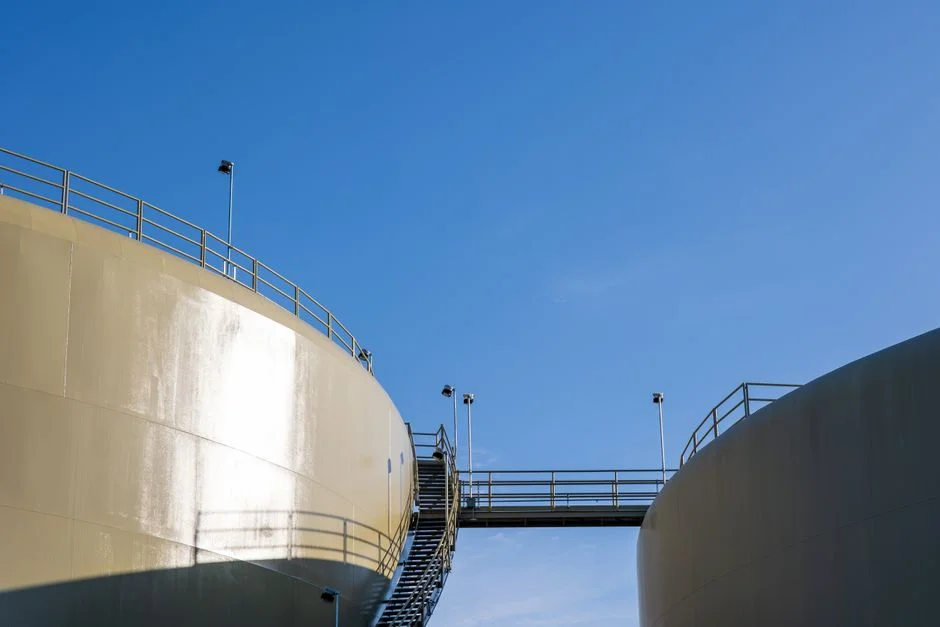
The realistic technology choices for feed mill wastewater in 2026 break into five stages, and the cost delta between a minimal and a heavy train is roughly 3–4×. Pretreatment starts with rotary bar screens and grit removal — a GX series rotary mechanical bar screen sized for peak flow handles the bulk of coarse solids at $8,000–$35,000 installed for a 200 m³/day plant. Equalization follows, then a dissolved air flotation system that consistently removes 60–90% of FOG and TSS in food-processing service, with installed cost of $25,000–$110,000 depending on hydraulic loading and polymer system scope.
The biological step is where most of the CAPEX lives. For high-strength streams (BOD above 5,000 mg/L), a UASB or internal circulation (IC) anaerobic reactor runs $120,000–$600,000 at 200 m³/day and produces enough biogas to offset 30–60% of OPEX through combined heat and power. Aerobic polishing then compares three options. Conventional activated sludge (CAS) is cheapest upfront but largest in footprint. SBR (sequencing batch reactor) handles flow variability well and runs 15–20% cheaper than MBR in CAPEX. An integrated MBR membrane bioreactor with submerged DF series PVDF modules cuts footprint by roughly 60% versus CAS, but adds $0.05–$0.12/m³ in membrane OPEX from aeration, cleaning chemicals, and periodic replacement.
Tertiary treatment closes the train. A chlorine dioxide generator handles fecal coliform compliance at $0.005–$0.02/m³ chemical cost. RO polish only enters the picture if water reuse or ZLD is the discharge target — for direct surface discharge, RO is wasted capital. Decision rule: pick anaerobic + MBR when BOD exceeds 5,000 mg/L and discharge ammonia-N limit sits below 30 mg/L; pick SBR alone when BOD is under 3,000 mg/L and reuse isn't required.
| Process Train | CAPEX (200 m³/day) | OPEX ($/m³) | Footprint (m²) | Best Fit |
|---|---|---|---|---|
| Screen + DAF + SBR + ClO₂ | $320K–$520K | $0.22–$0.38 | 180–260 | Grain/mash, low-FOG poultry |
| Screen + DAF + UASB + SBR + ClO₂ | $540K–$820K | $0.26–$0.42 | 220–320 | Swine, aquaculture feed |
| Screen + DAF + UASB + MBR + ClO₂ | $680K–$1.05M | $0.30–$0.48 | 140–220 | Pet food extrusion, high-FOG |
| Full ZLD (above + RO + evaporator) | $1.6M–$2.6M | $0.45–$0.65 | 300–450 | Water reuse mandate, arid sites |
For deeper process detail on sludge-side decisions, the screw press for pet food wastewater guide walks through dewatering selection for high-FOG streams. If you're considering MBBR as an alternative to SBR, the MBBR media replacement cost 2026 breakdown gives the 5-year media spend comparison. For low-CAPEX alternatives on small flows, the constructed wetland operating cost 2026 analysis is the reference.
OPEX Breakdown: Energy, Chemicals, Sludge, and Labor
Energy dominates feed mill wastewater OPEX at 0.8–1.6 kWh/m³, with aeration alone consuming 50–65% of that total. MBR permeate pumps and recirculation loops add another 10–20%. High-efficiency turbo blowers and variable-frequency drives on the aeration grid routinely claw back 20–30% of aeration energy — a payback of 14–22 months at 2026 industrial electricity rates of $0.08–$0.12/kWh.
Chemical costs are smaller but persistent. Coagulant (polyaluminum chloride, PAC) and flocculant (polyacrylamide, PAM) dosing ahead of the DAF run $0.015–$0.04/m³ combined. A purpose-built automatic chemical dosing system with flow-paced control cuts over-dosing waste by 15–25% versus manual preparation — the lever Texas A&M's continuous-feed chemical-dosing research highlights for OPEX reduction in DAF-fed streams.
Sludge handling is the second-largest OPEX line and the most commonly underestimated. Mechanical dewatering on a plate-and-frame filter press to 22–28% dry solids cuts disposal tonnage by 70–80% versus liquid hauling, saving $40–$110/ton off landfill or off-site disposal cost. For a 200 m³/day plant generating 800–1,200 kg DS/day, that's $12,000–$40,000/year in avoided disposal cost.
Labor runs 0.5–2.0 FTE depending on automation. A fixed-bed PLC panel keeps a 200 m³/day plant at the 1.5–2.0 FTE level. Full SCADA with remote monitoring drops it below 0.5 FTE — labor savings of $35,000–$60,000/year at 2026 fully-loaded operator rates, against a $40,000–$80,000 SCADA upgrade.
Case Snapshot: 200 m³/day Pet Food Wastewater Plant, 2026 Numbers
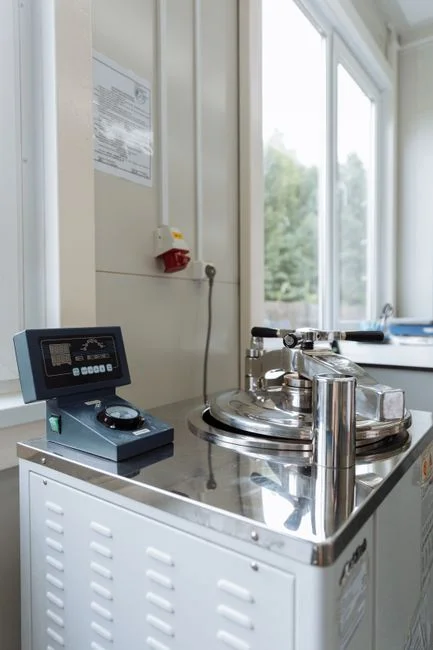
Worked example: a 200 m³/day pet food extrusion line with BOD 8,000 mg/L, TSS 6,000 mg/L, and FOG 1,200 mg/L — high-end of the pet food band but well within the operating envelope of a standard UASB + MBR train. Selected process train: rotary screen → equalization → DAF → UASB (anaerobic) → integrated MBR → ClO₂ disinfection, with a plate-and-frame filter press for sludge. Installed CAPEX lands at roughly $820,000, with OPEX at $0.31/m³ before biogas credit.
Annual OPEX at 8,000 operating hours and 73,000 m³ treated: energy $32,000 (1.1 kWh/m³ × $0.10/kWh × 73,000 m³ adjusted for demand charges), chemicals $14,000, sludge disposal $22,000, labor $28,000 (1.0 FTE), membrane replacement reserve $9,000, and maintenance/misc $7,000 — totaling $112,000/year or $0.31/m³. UASB biogas production at 0.35 m³ CH₄/kg COD removed yields roughly 18,000–26,000 m³ CH₄/year, worth $18,000–$26,000 in CHP credit at 2026 natural gas equivalence. Net OPEX drops to $0.22–$0.24/m³, and the project clears capital payback inside 4.2 years at these utility rates.
How to Choose a Treatment Vendor: 6-Criterion Checklist
Vendor selection is where most feed mill projects either save 25% of CAPEX or lose 6 months to scope churn. Run every candidate through these six filters before issuing an RFQ.
| Criterion | What to Verify | Red Flag |
|---|---|---|
| 1. In-house process engineering | Manufacturer employs licensed process engineers, not just sales agents | Reseller adds 25–40% markup with no design accountability |
| 2. Reference plants in your feed segment | At least 3 running installations in poultry, swine, aquaculture, or pet food respectively | Generic "food & beverage" references only |
| 3. Membrane warranty terms | PVDF over PES; 5–8 year guaranteed lifespan; pro-rata vs. full replacement terms | PES membranes in high-FOG service or no defined lifespan commitment |
| 4. Automation level | PLC standard; SCADA with remote monitoring as priced option; open protocol (Modbus/OPC-UA) | Proprietary closed-loop controls locking you to one service provider |
| 5. Sludge handling scope | Filter press or screw press sized for your DS loading; cake handling included | Sludge passed to "third party" without specifying receiving facility |
| 6. Compliance documentation package | Process guarantee, discharge parameter tables, and P&ID stamped for your regulator (China GB, EU, EPA, or local) | Generic English-only docs with no local engineering stamp |
Two of these — reference plants in the same feed segment and membrane warranty specifics — will save more money than the rest combined. A vendor with five pet food plants in service will quote tighter and stand behind performance; a vendor selling PES membranes into a 1,200 mg/L FOG stream will cost you 30–40% in membrane replacement OPEX over the first 5 years.
Frequently Asked Questions
What is the average CAPEX for a small feed mill wastewater treatment plant in 2026?
A 50–200 m³/day feed mill plant typically costs $180,000–$820,000 in installed CAPEX in 2026, with the wide band driven by influent strength (BOD 1,500 vs. 15,000 mg/L) and whether anaerobic treatment is required.
How much does it cost to treat one cubic meter of feed mill wastewater?
OPEX runs $0.18–$0.65 per m³ across the 2026 feed mill segment, with most plants in the $0.22–$0.40/m³ range. Plants with UASB reactors and biogas CHP credit land at the low end; ZLD plants with RO and evaporators land at the top.
Is anaerobic treatment necessary for feed mill wastewater?
Anaerobic treatment (UASB or IC) becomes economically justified when influent BOD exceeds 5,000 mg/L — typical of aquaculture feed, pet food extrusion, and most swine feed operations. Below 3,000 mg/L, a well-designed SBR or MBR alone usually achieves discharge compliance at lower total cost.
What is the best DAF system for feed mill FOG removal?
A dissolved air flotation system with white-water saturator and automatic scraping typically removes 60–90% of FOG and TSS in feed mill service, with hydraulic loading rates of 20–35 m³/m²·h depending on influent solids.
When should a feed mill choose MBR over SBR?
Choose an integrated MBR membrane bioreactor when footprint is constrained (60% smaller than CAS), ammonia discharge limits are tight (under 10 mg/L), or water reuse is a future requirement. SBR is more cost-effective at lower flows with relaxed ammonia targets.
How long do MBR membranes last in feed mill service?