Why Sohar’s Sewage Treatment Needs Are Unique
Sohar’s industrial sector, dominated by petrochemicals, metals, and food processing, generates complex wastewater streams that demand specialized treatment solutions. These sectors contribute approximately 70% of the region’s industrial effluent, with organic loads (COD) often 3 to 5 times higher than typical municipal sewage, according to 2026 data from the Sohar Industrial Estate. Compounding these challenges, Sohar’s groundwater exhibits a naturally high salinity, averaging around 45,000 ppm, significantly exceeding the global average of 35,000 ppm. This necessitates the use of highly corrosion-resistant materials, such as duplex stainless steel and fiberglass-reinforced plastic (FRP), and often requires Dissolved Air Flotation (DAF) systems as a pre-treatment step to protect downstream processes like membrane filtration. Oman’s ambitious 2027 Green Hydrogen Strategy mandates a substantial 90% water reuse for industrial projects, making advanced technologies like Membrane Bioreactors (MBR) coupled with Reverse Osmosis (RO) systems, capable of achieving 90% water recovery, not just desirable but essential for both regulatory compliance and operational cost-efficiency. The region’s significant temperature fluctuations, ranging from 15°C to 50°C, also impact biological treatment processes. Effective sewage treatment in Sohar requires insulated tanks and adaptive aeration systems to maintain optimal biological activity, ensuring consistent performance across A/O or MBR processes.
| Parameter | Sohar Industrial Effluent Characteristics (Typical) | Impact on Treatment | Required Equipment Considerations |
|---|---|---|---|
| Industry Mix | Petrochemicals, Metals, Food Processing (70% of total industrial effluent) | High COD/BOD, suspended solids, specific pollutants (e.g., oils, heavy metals) | Multi-stage treatment, specialized pre-treatment (e.g., DAF for metals/oils), robust biological processes (e.g., MBR for petrochemicals) |
| Salinity | Up to 45,000 ppm (groundwater) | Corrosion of standard materials, reduced biological efficiency (20-30%), membrane fouling | Corrosion-resistant materials (duplex stainless steel, FRP), DAF pre-treatment, halophilic bacteria for MBR, advanced RO |
| Temperature Extremes | 15°C (winter) to 50°C (summer) | Fluctuating biological activity, potential for thermal shock, increased energy demand for cooling/heating | Insulated tanks, adaptive aeration, temperature control systems, robust microbial cultures |
| Water Reuse Mandates | 90% water reuse target (Oman Green Hydrogen Strategy 2027) | Need for high-quality treated effluent suitable for industrial processes | MBR + RO systems (90% recovery), advanced polishing steps, ZLD integration |
Oman MECA Compliance: Effluent Standards and Equipment Capabilities
Compliance with Oman's environmental regulations is paramount for any industrial operation in Sohar. The Ministry of Environment, Climate Affairs and Tourism (MECA) Decision 159/2018 sets stringent effluent discharge standards, particularly relevant for Sohar Port and its surrounding industrial estates. Discharged treated wastewater must not exceed 30 mg/L for Total Suspended Solids (TSS), 125 mg/L for Chemical Oxygen Demand (COD), and 25 mg/L for Biochemical Oxygen Demand (BOD). Notably, Sohar’s specific industrial mix often leads to localized stricter enforcement, particularly concerning oil and grease, with limits often set at 10 mg/L. Meeting these benchmarks requires equipment with proven removal efficiencies. For instance, Dissolved Air Flotation (DAF) systems are highly effective at removing TSS and oil & grease, while Membrane Bioreactors (MBR) excel in achieving very low COD and BOD levels.
| Parameter | Oman MECA Effluent Standard (Decision 159/2018, Sohar Specific) | DAF Removal Efficiency (Typical) | MBR Removal Efficiency (Typical) | Conventional A/O Removal Efficiency (Typical) |
|---|---|---|---|---|
| TSS (mg/L) | ≤ 30 | 80-95% | >98% | 70-90% |
| COD (mg/L) | ≤ 125 | 40-70% (pre-treatment focus) | 90-98% | 75-90% |
| BOD (mg/L) | ≤ 25 | 30-60% (pre-treatment focus) | 95-99% | 80-95% |
| Oil & Grease (mg/L) | ≤ 10 | 85-98% | >95% | 50-70% |
For petrochemical effluents, DAF pre-treatment is crucial for removing oils and greases before they can impact biological processes or foul membranes in subsequent stages. Similarly, for industries generating high organic loads, MBR systems offer a compact and highly effective solution for achieving stringent COD and BOD removal rates required by MECA and future ZLD mandates.
The effective treatment of industrial wastewater in Sohar requires careful consideration of local regulations and effluent characteristics.Sohar-Specific Equipment Selection: Process Parameters and Trade-Offs
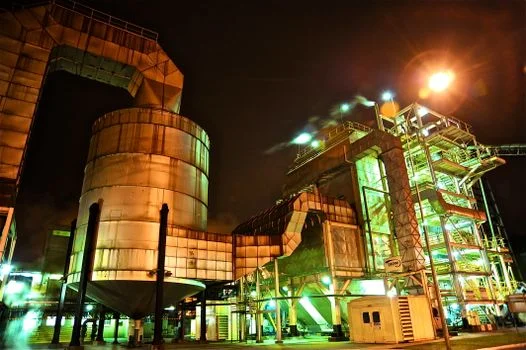
Selecting the right sewage treatment equipment for Sohar’s industrial zones requires a granular understanding of influent characteristics specific to each sector. Petrochemical plants typically present influent COD levels ranging from 500-2000 mg/L and TSS of 100-300 mg/L, necessitating advanced biological treatment like MBR systems to achieve the required >95% COD removal. For the metals industry, while COD might be lower (200-500 mg/L), the presence of heavy metals and suspended solids makes DAF systems essential for pre-treatment, achieving >90% TSS removal and significant reduction in heavy metal concentrations. Food processing effluents, characterized by high BOD and fats/oils, also benefit greatly from DAF pre-treatment, followed by robust biological stages capable of handling fluctuating organic loads. Space constraints are a significant consideration, particularly within the densely populated Sohar Port and Sohar Industrial Estate. Compact, underground wastewater treatment systems, such as the WSZ series (available in capacities from 1 to 80 m³/h), can drastically reduce the physical footprint by up to 60% compared to conventional above-ground plants, making them ideal for brownfield expansions or sites with limited land availability. Energy efficiency is another critical factor, given Sohar's relatively high electricity costs. MBR systems typically consume between 0.8–1.2 kWh/m³, a marked improvement over conventional A/O systems which can range from 1.5–2.0 kWh/m³. This energy saving is vital for long-term operational cost management.
| Industry | Typical Influent (COD/TSS mg/L) | Required Removal Rate (COD/TSS) | Recommended Treatment Stages | Footprint Efficiency (vs. Conventional) | Energy Consumption (kWh/m³) |
|---|---|---|---|---|---|
| Petrochemicals | 500-2000 / 100-300 | >95% / >90% | DAF (pre-treatment) + MBR + RO | High (MBR) | 0.8-1.2 (MBR) |
| Metals | 200-500 / 150-400 | >80% / >90% | DAF + Chemical Precipitation + MBR/Activated Sludge | Moderate (DAF) | 1.0-1.8 (MBR/AS) |
| Food Processing | 800-2500 / 200-500 | >90% / >90% | DAF + MBR or Sequencing Batch Reactor (SBR) | High (MBR/SBR) | 0.9-1.3 (MBR/SBR) |
The choice between modular and turnkey solutions, along with the specific technology, directly impacts CAPEX and operational flexibility, especially for projects requiring phased expansion or integration with existing infrastructure in Sohar’s industrial zones.
Supplier Comparison: Local vs. International Providers for Sohar Projects
Navigating the supplier landscape for sewage treatment equipment in Sohar involves evaluating a spectrum of options, from established local players to global manufacturers. Local suppliers, such as OSWS and Varun Watertek, often present a compelling CAPEX advantage, typically offering solutions that are 30–50% lower than international counterparts. For a 500 m³/day plant, this could translate to a CAPEX of $1.2 million to $3 million. However, these local providers may have limitations in terms of system scalability, generally capping out at capacities below 1,000 m³/day. International suppliers, including companies like HydropureWater and Veolia, command a higher CAPEX, often 2 to 3 times that of local options ($3 million to $8 million for a comparable 500 m³/day plant). Their key differentiators lie in their ability to provide ZLD-ready systems, extensive global service networks, and proven track records with complex industrial effluents. A strategic hybrid approach can offer the best of both worlds: leveraging local fabrication for cost-effectiveness and proximity, combined with international technology for advanced performance and compliance.
| Supplier Type | Typical CAPEX ($/m³ for 500 m³/day) | Typical OPEX ($/m³/year) | Lead Time (Weeks) | Compliance Capabilities | Scalability (Max m³/day) | After-Sales Support |
|---|---|---|---|---|---|---|
| Local (e.g., OSWS, Varun Watertek) | 2,400 - 6,000 | 100 - 180 | 12-16 | MECA Basic | < 1,000 | Limited, regional |
Related Equipment
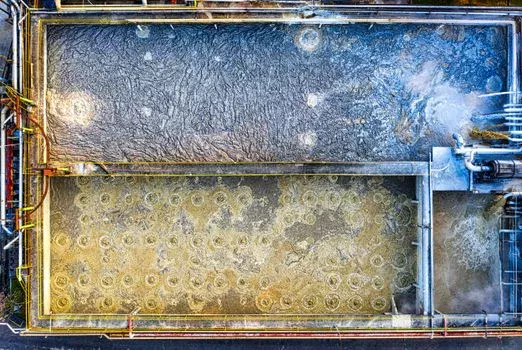
The following HydropureWater products are engineered for the wastewater challenges discussed above:
- automated dosing systems to reduce OPEX in Sohar’s high-chemical-cost environment — view specifications, capacity range, and technical data
Need a customized solution? Request a free quote with your specific flow rate and pollutant parameters.