Massachusetts requires sewage treatment equipment to meet strict DEP and EPA standards, with 2025 effluent limits of <5 mg/L TN and <10 mg/L TP for most discharges. Top suppliers like F.R. Mahony and New England Sales offer DAF systems (92-97% TSS removal), MBR units (<0.1 μm filtration), and Amphidrome systems (90%+ nitrogen removal) for industrial and municipal projects. This guide compares technical specs, costs ($80K–$2.5M CAPEX), and vendor reliability to help buyers select compliant, high-performance solutions.
Consider the scenario of a factory manager in Lowell facing a 180-day compliance deadline from the Massachusetts Department of Environmental Protection (MassDEP). Their existing dissolved air flotation system is failing to meet new phosphorus limits, and the threat of $25,000-per-day fines is looming. This situation is increasingly common across the Commonwealth as regulatory agencies tighten effluent standards to protect sensitive watersheds like the Charles River and the nitrogen-impaired zones of Cape Cod. Selecting the right equipment is no longer just about volume; it involves precision engineering and verified performance metrics.
Massachusetts Sewage Treatment Equipment: Technical Requirements & Compliance Standards
Massachusetts Title 5 regulations (310 CMR 15.000) mandate that all nitrogen-sensitive areas, particularly within the Cape Cod and Islands watersheds, implement Best Available Technology (BAT) to achieve effluent nitrogen levels below 10 mg/L.The permit process in Massachusetts typically spans 6 to 12 months, involving detailed engineering reports, Operation and Maintenance (O&M) manuals, and often a public comment period for larger municipal projects. Documentation must prove that the selected equipment can handle peak hydraulic loads without compromising effluent quality. A common pitfall for Massachusetts buyers is failing to account for the state's emerging PFAS (per- and polyfluoroalkyl substances) limits, which are increasingly being integrated into industrial discharge permits near drinking water sources.
A notable case involves a food processing plant in Worcester that faced escalating surcharges due to high biological oxygen demand (BOD) and nitrogen levels. By transitioning from a traditional activated sludge process to a high-efficiency MBR system for nitrogen-sensitive Massachusetts watersheds, the facility achieved a TN output of <1 mg/L. This upgrade allowed the plant to avoid $250,000 in annual fines and significantly reduced their volumetric sewer fees. For those in the healthcare sector, understanding Massachusetts hospital wastewater treatment regulations and equipment selection is critical for managing specialized medical waste streams.
| Parameter | Standard Limit (2025) | Sensitive Watershed Limit | Typical Equipment Solution |
|---|---|---|---|
| Total Nitrogen (TN) | <10 mg/L | <3 - 5 mg/L | MBR or Amphidrome Systems |
| Total Phosphorus (TP) | <1.0 mg/L | <0.1 - 0.2 mg/L | Tertiary Chemical Precipitation / MBR |
| Total Suspended Solids (TSS) | <30 mg/L | <10 mg/L | DAF or MBR Systems |
| BOD5 | <30 mg/L | <10 mg/L | A/O or MBR Systems |
| PFAS (Sum of 6) | 20 ng/L (Direct) | Site Specific | GAC or Specialized Ion Exchange |
Sewage Treatment Equipment Types: Performance Comparison for Massachusetts Applications
Selection of sewage treatment technology in Massachusetts is driven by the specific discharge permit (NPDES or state-level), where Membrane Bioreactor (MBR) systems typically achieve 99% TSS removal compared to 92-97% for Dissolved Air Flotation (DAF) systems.Each technology serves a distinct niche within the industrial and municipal sectors. For instance, Massachusetts-compliant DAF systems for industrial wastewater are the gold standard for removing fats, oils, and grease (FOG) in food processing applications, where influent TSS can exceed 500 mg/L.
In contrast, MBR systems utilize 0.1 μm pore-size membranes to provide a physical barrier to pathogens and solids, resulting in a footprint that is approximately 60% smaller than conventional activated sludge plants. This is a critical advantage in densely populated Massachusetts urban centers like Boston or Cambridge, where real estate is at a premium. For smaller-scale residential developments or municipal expansions, A/O systems for Massachusetts municipal and residential projects offer a cost-effective balance of BOD removal and ease of operation.
Specialized systems like the Amphidrome process are frequently specified in Cape Cod due to their sequencing batch reactor (SBR) design that optimizes both nitrification and denitrification in a single tank, achieving over 90% nitrogen removal. For low-pressure sewer systems common in coastal areas, grinder pumps with flow rates of 20–50 GPM are essential to move waste through small-diameter mains without clogging. To ensure you choose the right technology, reviewing how to select the best DAF system for Massachusetts industrial wastewater can provide deeper technical insights into air-to-solids ratios and recycle rates.
| System Type | Primary Application | TSS Removal Efficiency | Key Performance Metric |
|---|---|---|---|
| DAF (Dissolved Air Flotation) | Food/Industrial FOG | 92% - 97% | Effective at high oil loads |
| MBR (Membrane Bioreactor) | Municipal/Industrial Reuse | >99% | Effluent turbidity <0.2 NTU |
| A/O (Anoxic/Aerobic) | Municipal Sewage | 85% - 90% | Low energy consumption |
| Amphidrome | Nitrogen-Sensitive Zones | 90% - 95% | TN <5 mg/L consistently |
| Grinder Pumps | Low Pressure Sewers | N/A | 2,000+ RPM shredding capability |
Massachusetts Vendor Comparison: Technical Capabilities, Costs & Reliability
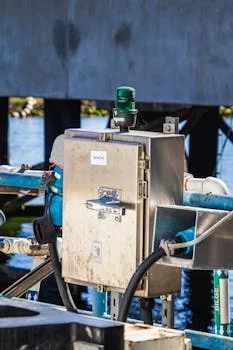
F.R. Mahony & Associates, based in Rockland, is a dominant player in the municipal market, specifically for their expertise in Amphidrome systems and E/One grinder pumps. Their service network covers the entirety of New England, which is a vital consideration for municipal engineers who require rapid response times during system upsets.
New England Sales serves the industrial sector with a focus on DAF and Zero Liquid Discharge (ZLD) systems, often working with textile plants in Lowell or metal finishers in the Springfield area. Lead times in 2025 remain a critical procurement factor; standard A/O units may be available in 8–16 weeks, whereas custom-engineered MBR units can require 20–30 weeks from design approval to delivery. Reliability is often measured by the vendor's ability to provide local references; for example, Orenco systems are widely utilized in rural Massachusetts for their robust performance in decentralized septic applications.
| Vendor | Core Expertise | Typical Lead Time | Service Availability |
|---|---|---|---|
| F.R. Mahony | Amphidrome, Grinder Pumps | 12 - 20 Weeks | 24/7 Field Service (MA/RI/CT) |
| New England Sales | Industrial DAF, ZLD | 10 - 18 Weeks | On-site Pilot Testing |
| Orenco Systems | Decentralized Septic/Adv. Treatment | 8 - 12 Weeks | Regional Distributor Network |
| Maher Corporation | Large Scale Municipal Process | 20 - 35 Weeks | Engineering Support |
| Maltz Sales | Chemical Feed & Industrial Pumps | 4 - 8 Weeks | Local Inventory in Foxboro |
Cost Breakdown & ROI Calculator for Massachusetts Sewage Treatment Projects
Capital expenditure (CAPEX) for Massachusetts industrial wastewater projects ranges from $80,000 for basic DAF units to over $2.5 million for high-capacity MBR plants, depending on flow rates and contaminant loading.Operational expenditure (OPEX) is primarily driven by energy consumption and chemical usage. MBR systems, while highly effective, consume between 0.5 and 1.2 kWh per cubic meter of treated water. Chemical costs for phosphorus removal, involving coagulants like ferric chloride or aluminum sulfate, typically range from $0.10 to $0.30 per cubic meter.
Return on Investment (ROI) is calculated by weighing these costs against the avoidance of DEP non-compliance fines and the reduction in municipal sewer surcharges. In many Massachusetts jurisdictions, the cost of water and sewer services is rising at 5-7% annually, making water reuse technologies increasingly attractive. The Massachusetts Clean Water Trust offers 0% interest loans and principal forgiveness for projects that meet specific environmental criteria, which can significantly shorten the ROI period. For a detailed local analysis, see the Boston wastewater treatment plant cost breakdown and ROI analysis.
| System Type | Estimated CAPEX Range | Annual OPEX (per 10k GPD) | ROI Period (Avg) |
|---|---|---|---|
| DAF System | $80,000 - $500,000 | $12,000 - $25,000 | 2 - 4 Years |
| MBR System | $150,000 - $2,500,000 | $20,000 - $45,000 | 3 - 6 Years |
| A/O System | $50,000 - $300,000 | $8,000 - $15,000 | 4 - 7 Years |
| Amphidrome | $100,000 - $750,000 | $10,000 - $20,000 | 3 - 5 Years |
Procurement Checklist: 10 Steps to Selecting a Massachusetts Sewage Treatment Equipment Supplier