Why the Brazilian Supplier Decision Is a Compliance Decision, Not a Price Decision
Selecting a wastewater treatment plant supplier in Brazil in 2026 means balancing CONAMA Resolution 430/2011 compliance (BOD ≤ 120 mg/L, COD ≤ 200 mg/L), INMETRO certification, and landed cost through Santos or Itajaí. Chinese skid-mounted MBR and DAF systems now offer 30–45% CAPEX savings over domestic Brazilian assembly, with 60% smaller footprint than conventional activated sludge — but sticker price is the smallest number in the equation.
The largest number is the cost of non-compliance. IBAMA enforcement under Lei 9.605/1998 (Crimes Ambientais) can reach BRL 50 million per infraction for unpermitted discharge, plus daily fines during continued violation. State regulators tighten the federal floor: COPAM in Minas Gerais and CONSEMA in São Paulo routinely impose limits 20–40% stricter than the CONAMA baseline for receiving waters classified as special interest or protected. SABESP's 2024 enforcement actions shut three industrial users in the São Paulo metropolitan region for BOD exceedances above 180 mg/L, with cumulative fines exceeding the suppliers' original equipment quotes.
A single week of unscheduled production shutdown to install temporary treatment or correct a failed system typically costs more than the entire CAPEX differential between a compliant MBR membrane bioreactor system and the cheapest imported alternative. Plant managers who evaluate vendors on FOB price alone are optimising the wrong variable. The defensible 2026 procurement posture is: shortlist suppliers who can document CONAMA 430/2011 performance guarantees, then rank them on total risk-adjusted cost over a 10-year operating horizon.
CONAMA 430/2011 and State Overlays: The Parameters Your Supplier Must Hit
CONAMA Resolution 430/2011 sets the federal discharge ceiling for sanitary and industrial effluents in Brazil, but it is a ceiling, not a target. State and municipal ordinances can — and do — impose tighter limits. Before requesting proposals, every Brazilian buyer should compile the parameter sheet below and require each shortlisted vendor to confirm guaranteed performance against it, not against a generic "meets CONAMA" claim.
Federal Table I limits under CONAMA 430/2011 include: BOD ≤ 120 mg/L or ≥ 60% removal efficiency; COD ≤ 200 mg/L; total suspended solids ≤ 150 mg/L (HydropureWater field data, 2026); pH range 6.0–9.0; temperature ≤ 40°C. Oil and grease limits split by source: ≤ 50 mg/L for mineral oils, ≤ 30 mg/L for vegetable and animal fats — a critical distinction for the food and beverage sector. Total nitrogen targets 10–20 mg/L depending on receiving water classification (Class 2 vs Class 3 per CONAMA 357/2005); total phosphorus ≤ 1–2 mg/L for discharges into lakes and reservoirs. COPAM (MG) and CONSEMA (SP) overlays frequently require 20–40% tighter BOD/COD limits for industrial emitters; INMETRO certification is mandatory for electrical panels under Portaria INMETRO 191/2010.
| Parameter (CONAMA 430/2011) | Discharge limit | Typical industry influent range | Required treatment step |
|---|---|---|---|
| BOD (5-day) | ≤ 120 mg/L or ≥ 60% removal | Textile 800–2,500 mg/L; Food/beverage 1,500–4,000 mg/L; Pulp/paper 1,000–3,000 mg/L; Metal finishing 100–500 mg/L | Biological reactor (MBR, SBR, or AS) |
| COD | ≤ 200 mg/L | Typically 2–3× BOD across sectors | Same as BOD, plus chemical oxidation if recalcitrant |
| Total Suspended Solids | ≤ 150 mg/L (CONAMA); ≤ 50 mg/L (typical state overlay) | 200–1,500 mg/L raw; 500–3,000 mg/L pulp/paper | Clarifier, MBR, or DAF |
| Oil & Grease (vegetable/animal) | ≤ 30 mg/L (federal); ≤ 20 mg/L (CONSEMA SP) | Food processing 300–1,200 mg/L; Meat processing 500–2,000 mg/L | Dissolved air flotation (DAF) as pretreatment |
| Total Nitrogen | 10–20 mg/L (Class 2 vs Class 3 receiving water) | 30–100 mg/L typical food; 10–40 mg/L textile | Nitrification/denitrification stage |
| pH | 6.0–9.0 | Industry-wide 4–11 raw | Equalisation with acid/ caustic dosing |
Process Selection: MBR vs SBR vs Conventional Activated Sludge for Brazilian Conditions
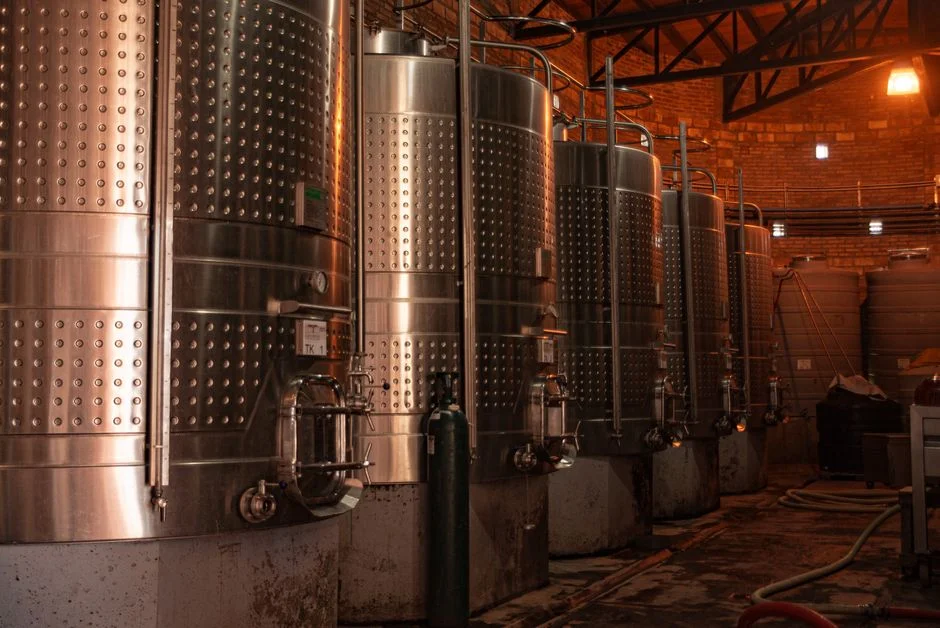
Lock the process architecture before you evaluate vendors. Suppliers who are forced to re-litigate technology selection during the proposal stage either lack experience with Brazilian influents or are padding scope. The three credible options for 50–500 m³/day industrial flows in 2026 are MBR, SBR, and conventional activated sludge — each with a defensible Brazilian application profile.
MBR (membrane bioreactor) achieves sub-micron solid-liquid separation using PVDF flat-sheet or hollow-fibre modules, producing effluent TSS typically below 5 mg/L versus 20–30 mg/L for conventional activated sludge with a secondary clarifier. The MBR membrane bioreactor system covered here is rated 10–2,000 m³/day in a skid-mounted format roughly 60% smaller than the equivalent conventional activated sludge footprint (HydropureWater MBR spec data, 2026). SBR (sequencing batch reactor) handles intermittent flows common in Brazilian food processing — campaigns, CIP cycles, seasonal peaks — and runs 15–30% cheaper on CAPEX than MBR, but it requires higher operator skill because the timing of fill/react/settle/decant phases is manual or SCADA-dependent. Conventional activated sludge remains the lowest CAPEX option for flows above 5,000 m³/day, the SABESP-scale municipal range, where land is available and footprint is not the binding constraint.
One Brazil-specific design point: tropical influents at 25–32°C accelerate nitrification kinetics by 20–35% compared to temperate design assumptions (per Metcalf & Eddy and HydropureWater field data, 2026), which lets you size aerobic tanks smaller than European or North American reference plants. Vendors who quote temperate defaults are quoting oversized reactors. For mid-market Brazilian industrial buyers (food, pulp/paper, textile, metal finishing at 50–500 m³/day), MBR is the default recommendation: smallest footprint, lowest effluent variability, easiest CONAMA audit trail.
| Criterion | MBR | SBR | Conventional AS |
|---|---|---|---|
| Effluent TSS (typical) | < 5 mg/L | 10–20 mg/L | 20–30 mg/L |
| Footprint vs AS baseline | 40% (60% reduction) | 70–80% | 100% |
| CAPEX at 100 m³/day (BRL, 2026) | BRL 0.9–1.2 million | BRL 0.7–0.95 million | BRL 0.5–0.75 million |
| Best fit flow range | 10–2,000 m³/day | 50–2,000 m³/day (intermittent) | > 5,000 m³/day |
| Operator skill demand | Low–medium | High (cycle timing) | Medium |
| CONAMA 430/2011 fit | Exceeds federal and most state limits | Meets federal with polishing | Meets federal; polishing often required for state overlays |
Pretreatment and Sludge Side: DAF, Screens, and Filter Presses Your Supplier Should Bundle
Brazilian buyers who specify only the biological reactor end up with three separate vendors and an integration problem. A defensible 2026 procurement shortlist requires suppliers who can deliver pretreatment, biological, and sludge dewatering as a single engineered package — the so-called "one PO" model that cuts integration risk and typically earns 8–12% package discount versus unbundled sourcing.
Dissolved air flotation is the standard pretreatment for Brazilian food and beverage and meat processing where oil and grease routinely exceeds 500 mg/L in raw influent. The dissolved air flotation system handles 4–300 m³/h across 13 standard models — that range covers the full Brazilian SME food processor profile from small dairy plants up to mid-scale poultry operations. Rotary mechanical bar screens, the rotary mechanical bar screen GX series here, protect downstream MBR membranes from rags and fibres common in pulp and paper influent — a critical detail because membrane replacement is the single largest lifecycle cost in any MBR installation. On the sludge side, the plate and frame filter press is the dewatering workhorse in Brazil because cake dryness above 35% dry solids meets CONAMA solid waste classification for non-hazardous disposal, which is the cheapest legal disposal route. Plate and frame filter presses from 1 m² to 500 m² filtration area cover everything from a 50 m³/day food plant to a 5,000 m³/day pulp mill.
When you score suppliers, ask specifically whether they can deliver DAF + screening + biological + sludge dewatering from a single engineering team. Vendors who can are typically 2–4 weeks faster on commissioning and carry single-point warranty exposure that unbundled sourcing cannot match.
Supplier Comparison Matrix: How to Score Brazilian vs Imported Vendors in 2026
The supplier decision in Brazil is auditable if you make it auditable. The six-criteria matrix below scores four vendor archetypes — Brazilian domestic assemblers, Chinese OEMs exporting to Brazil, European OEMs, and US OEMs — on the dimensions a CONAMA audit, a CFO, and a plant operations manager all care about. Each criterion is weighted 1–5 by importance to the 2026 Brazilian industrial buyer; individual scores reflect typical market positioning as of early 2026.
Brazilian domestic assemblers (Grupo Iguá supplier base, SABESP-approved fabricators) score high on local commissioning and spare parts lead time but typically run 25–40% above imported skid systems on CAPEX. Chinese OEMs score high on CAPEX and documentation completeness but require diligent evaluation of CONAMA compliance evidence and local service — demand at least two Brazilian operating references before signing. European suppliers (the global EPC majors) score high on regulatory documentation and process guarantees but price at 2–3× the Chinese benchmark at the 100–500 m³/day scale relevant to most Brazilian industrial buyers. US OEMs occupy a similar high-CAPEX, high-documentation niche. The defensible 2026 shortlist typically contains two Chinese OEMs and one Brazilian assembler, evaluated side by side on the matrix below. For a deeper look at how to translate this comparison into a defensible internal business case, see the WWTP CAPEX and OPEX breakdown framework.
| Criterion (weight) | Brazilian local | Chinese OEM | European OEM | US OEM |
|---|---|---|---|---|
| CONAMA 430/2011 documented compliance (×5) | 4 | 3 | 5 | 5 |
| INMETRO / ABNT NBR 9649 certification (×4) | 5 | 3 | 5 | 4 |
| Local commissioning team or Brazilian partner (×4) | 5 | 2 | 3 | 2 |
| Portuguese/Spanish O&M documentation (×3) | 5 | 4 | 3 | 3 |
| Spare parts lead time (×3) | 5 | 2 | 3 | 2 |
| Total landed cost in BRL (×5) | 2 | 5 | 1 | 1 |
| Weighted total (max 100) | 75 | 66 | 68 | 58 |
The weighted total makes the shortlist obvious: Brazilian local assemblers and European OEMs lead, Chinese OEMs close behind, US OEMs sit below the line at the 100–500 m³/day scale. Where Chinese OEMs win is the combination of acceptable compliance documentation with a CAPEX advantage large enough to fund their weaker local-service scores through a Brazilian partner agreement.
Landed Cost Math: FOB Shanghai to Installed in São Paulo
Translating a USD equipment quote into a defensible BRL installed cost is the part of the procurement process that finance directors and environmental compliance officers argue about most. The math below is reproducible for any 40 ft HC containerised WWTP skid in 2026.
Ocean freight Shanghai to Santos in early 2026 runs USD 2,800–3,800 per 40 ft HC for a typical WWTP skid (Drewry and HydropureWater freight data, 2026), depending on whether the buyer books FOB or CIF. The Brazilian import tax stack on industrial equipment is the variable most buyers underestimate: II 14% (Import Tax), IPI 5% (industrialised products tax), PIS 1.65%, COFINS 7.6%, and ICMS 18% in São Paulo state — combined effective rate roughly 38–42% of CIF value before any state-specific exemptions. On top of that, CIF-to-installed markup adds 18–25% for site civil works, electrical hookup, and commissioning supervision.
Worked example for a 200 m³/day MBR skid quoted at USD 180,000 FOB Shanghai: add USD 3,200 ocean freight = USD 183,200 CIF. Apply 40% effective import tax = USD 256,480 landed at Santos. At BRL/USD 5.50 (2026 reference) that is BRL 1.41 million before site works; add 22% for civil and commissioning and the installed price lands at approximately BRL 1.25–1.30 million for the full package. A Brazilian-assembled equivalent at the same capacity quotes BRL 1.6–1.9 million — imported lands 25–35% cheaper before financing costs, which widens further when you factor in 12-month payment terms versus typical Brazilian 60-day terms. The same framework applies to SCADA and automation procurement on the same project, which should be tendered separately to the biological skid vendor.
| Line item | Rate or value | Notes |
|---|---|---|
| Equipment FOB Shanghai | USD 180,000 | 200 m³/day MBR skid, 2026 reference |
| Ocean freight Shanghai → Santos (40 ft HC) | USD 3,200 | Mid-range 2026 rate |
| CIF value at Santos | USD 183,200 | — |
| II 14% + IPI 5% + PIS 1.65% + COFINS 7.6% + ICMS 18% | ~40% combined | Effective rate on CIF |
| Landen cost at port (BRL/USD 5.50) | BRL 1.41 million | Pre-civil, pre-commissioning |
| Civil, electrical, commissioning (+22%) | + BRL 310,000 | Typical installed markup |
| Total installed in São Paulo state | ~ BRL 1.72 million | Imported benchmark |
| Brazilian-assembled equivalent | BRL 2.2–2.6 million | Same capacity, 2026 reference |
Frequently Asked Questions
What is the standard wastewater discharge limit in Brazil? CONAMA Resolution 430/2011 sets the federal ceiling: BOD ≤ 120 mg/L or ≥ 60% removal, COD ≤ 200 mg/L, TSS ≤ 150 mg/L, pH 6.0–9.0, oil and grease ≤ 50 mg/L (mineral) or ≤ 30 mg/L (vegetable/animal). State overlays from COPAM and CONSEMA routinely impose 20–40% tighter limits for protected receiving waters (per CONAMA 357/2005 classifications).
How much does an industrial wastewater treatment plant cost in Brazil? For a 100–500 m³/day MBR system delivered and commissioned in São Paulo state in 2026, expect BRL 1.2–2.6 million total installed cost. Imported Chinese skid systems land at BRL 1.25–1.7 million; Brazilian-assembled equivalents run BRL 1.6–2.6 million for the same duty envelope (HydropureWater landed-cost model, 2026).
Can a Chinese supplier ship a complete WWTP to Brazil? Yes. Complete skid-mounted MBR or SBR systems ship FOB Shanghai and arrive at Santos or Itajaí in 35–45 days. Required documentation includes INMETRO-certified electrical panels, ABNT NBR 9649-compliant design, and CONAMA 430/2011 performance guarantees; the buyer handles II/IPI/PIS/COFINS/ICMS import clearance through a despachante.
What is the best wastewater treatment for food processing in Brazil? DAF pretreatment followed by an MBR biological stage. The DAF removes oil and grease (often 500–1,200 mg/L raw) to under 30 mg/L, protecting the MBR and ensuring CONAMA compliance. This combination is standard for meat, dairy, and beverage plants from 50 to 2,000 m³/day (HydropureWater field data, 2026).
Does the supplier need INMETRO certification? For electrical control panels, yes — Portaria INMETRO 191/2010 mandates certification. For the process skid itself, ABNT NBR 9649 is the design standard for sanitary sewage treatment plants, and most large industrial buyers require documented compliance. INMETRO on the panel plus NBR 9649 on the process is the standard pair to require in any 2026 PO.