What Counts as a Wastewater Treatment Automation System in 2026
A wastewater treatment automation system in 2026 is the instrumentation and control layer that sits on top of the physical process — not the tanks, blowers, or membranes themselves, and not the civil works. It is a stack of four discrete subsystems: (1) PLC or RTU controllers running the closed loops, (2) HMI panels for local operator interaction, (3) SCADA software with historian and alarming, and (4) field instrumentation — pH, ORP, dissolved oxygen (DO), total suspended solids (TSS), chemical oxygen demand (COD), ammonia (NH3-N), flow, level, and pressure transmitters. Buyers who skip the fourth layer end up with a "blind" PLC that cannot actually run closed-loop aeration or chemical dosing, which is the single most common reason automation projects under-deliver on payback.
Most top-ranking pages quote an industrial wastewater treatment plant CAPEX range of $200,000 to $1.5M+, which conflates civil works, tanks, blowers, and membranes with controls. Automation itself is typically 10–25% of that envelope on a greenfield EPC package and can be 100% of a retrofit budget when the biology and hydraulics are already in place. Retrofitting an existing plant generally adds 10–25% to the original equipment cost when modern VFDs and motor control centers already exist; full replacements on relay-logic plants run toward the upper end of that range. For buyers scoping greenfield work, machine learning optimization for wastewater control is the next layer above what this article covers.
The four architectures a 2026 buyer will encounter: standalone PLC with no visualization beyond a local HMI; PLC plus a color HMI and local SCADA node; plant-wide SCADA with redundant servers; and cloud-connected IIoT water treatment telemetry using OPC UA water treatment gateways and MQTT brokers. The boundary between them is mostly about where the data lives (on-premises server versus vendor cloud) and who can see it (one operator versus multi-site managers on mobile). The 2026 smart water monitoring supplier map breaks down which vendors sit in which tier.
2026 CAPEX Breakdown: Three Pricing Tiers for Wastewater Automation
Wastewater treatment automation CAPEX in 2026 falls into three defensible tiers, each tied to plant size and operator headcount rather than vendor brand. Tier 1 is a single PLC with 8–16 I/O, a 7-inch HMI, and no SCADA software — total installed cost $30,000–$80,000 — and it suits flows under 50 m³/day with one or two on-site operators. Tier 2 is the default for 50–500 m³/day food, textile, and chemical plants: redundant PLCs, a 15-inch color HMI, historian, and a single-server SCADA wastewater treatment license for $80,000–$200,000. Tier 3 is full plant-wide SCADA with cloud IIoT water treatment telemetry, mobile alarming, and OPC UA integration for $200,000–$400,000+, and is required for 1,000+ m³/day flows, multi-site operators, or any plant under a strict consent decree.
The SCADA license itself is rarely the dominant cost line. Integration engineering — the programming hours to map sensors, build screens, and write the control logic — typically runs 15–30% of hardware cost, and commissioning plus site acceptance testing adds another 5–10%. Training and documentation is another 3–5% but is the line item most often cut, which is why operators revert to manual control six months after handover. For buyers specifying an MBR membrane bioreactor with integrated MLSS and DO control, the DO and MLSS loops alone will push the project into mid-tier; an automatic chemical dosing skid with PLC-controlled coagulant and pH trim is the lowest-cost way to demonstrate closed-loop savings on a Tier 1 budget.
Process drivers that force a tier upward: MBR control requires DO, level, MLSS, and permeate flow loops (mid-tier floor). Zero-liquid-discharge and RO trains need pH, conductivity, ORP, and inter-stage pressure on every vessel — typical Tier 3 territory because the historian and audit trail become regulatory requirements rather than nice-to-haves. Buyers specifying an RO system with PLC-controlled conductivity and pressure monitoring should plan for Tier 3 SCADA from day one.
| Tier | Scope | 2026 CAPEX (USD) | Typical Flow | Integration + Commissioning Adders |
|---|---|---|---|---|
| 1 — Basic PLC | Single PLC, 8–16 I/O, 7" HMI, no SCADA | $30,000 – $80,000 | 10–50 m³/day | +15–20% (commissioning only) |
| 2 — Mid-tier PLC + HMI + local SCADA | Redundant PLCs, color HMI, historian, single-server SCADA | $80,000 – $200,000 | 50–500 m³/day | +20–35% (engineering + commissioning) |
| 3 — Plant-wide SCADA + cloud IIoT | Server-grade SCADA, multi-site dashboard, OPC UA, MQTT, mobile | $200,000 – $400,000+ | 1,000+ m³/day or multi-facility | +25–40% (integration engineering dominates) |
Sensor and Instrumentation Costs: The 25–40% Most Buyers Underestimate
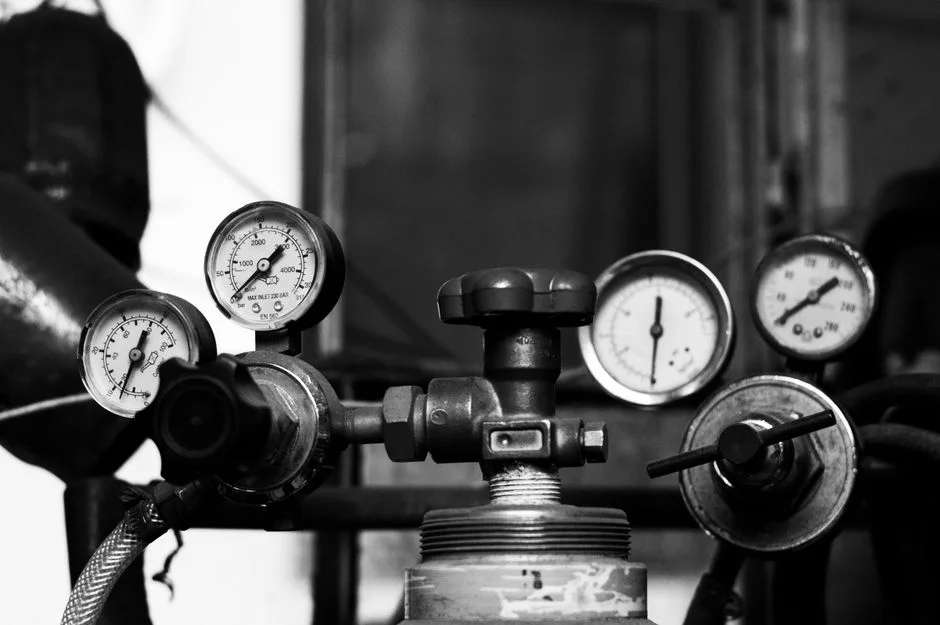
Field instrumentation is consistently the line item that turns a $60,000 automation quote into a $145,000 retrofit, because each measurement loop needs a sensor, a transmitter, a cable run, and a tap or insertion fitting. For a typical industrial WWTP, instrumentation totals 25–40% of total automation CAPEX. pH and ORP sensors run $500–$2,500 each plus $300–$800 per loop for installation, and a biological stage typically needs 2–4 of these loops. Dissolved oxygen probes cost $800–$3,500 each and are non-negotiable for any aeration control loop in an MBR or activated sludge plant — without a DO signal, the VFD on the blower is just a glorified manual damper.
TSS and MLSS optical sensors sit at $2,000–$6,000 each and are required for MBR membrane protection and MLSS-controlled sludge wasting. Online COD analyzers run $2,500–$35,000 per stream depending on reagent-free UV technology versus wet-chemistry methods; reagent budgets run $1,500–$4,000 per analyzer per year. The full online COD analyzer cost breakdown for 2026 is worth reading before specifying a stream. Online ammonia analyzers cost $4,000–$25,000 per stream — gas-sensing electrodes are cheaper up front but carry higher maintenance than ion-selective probes, and the 2026 ammonia analyzer selection guide walks through the trade-off.
Electromagnetic and ultrasonic flow meters run $1,500–$8,000 per line and are non-negotiable for mass-balance calculations and discharge compliance reporting — a PLC control panel wastewater installation without flow measurement cannot demonstrate compliance to a regulator. Budget rule: count your sensor loops first, multiply by an average installed cost of $3,000–$5,000 per loop including cabling, and add 20% for spares and calibration standards.
| Sensor / Instrument | Unit Cost (USD, 2026) | Installed Cost Adders | Typical Quantity (200 m³/day plant) |
|---|---|---|---|
| pH / ORP sensor | $500 – $2,500 | $300 – $800 per loop | 4–6 |
| Dissolved oxygen (DO) probe | $800 – $3,500 | $400 – $900 | 2–3 |
| TSS / MLSS optical sensor | $2,000 – $6,000 | $500 – $1,200 | 2 |
| Online COD analyzer | $2,500 – $35,000 | Reagents $1.5K–$4K/yr | 1–2 streams |
| Online NH3-N analyzer | $4,000 – $25,000 | Reagents $1K–$3K/yr | 1 |
| Electromagnetic / ultrasonic flow meter | $1,500 – $8,000 | $800 – $2,000 | 3–4 lines |
| Level transmitter (ultrasonic / hydrostatic) | $600 – $3,000 | $300 – $700 | 4–6 |
| Pressure transmitter | $400 – $1,800 | $200 – $500 | 2–4 |
OPEX Savings That Justify the CAPEX: Quantified 2026 Numbers
The four OPEX line items automation actually moves are chemical spend, aeration energy, operator labor, and sludge handling — and each has a defensible 2026 percentage range tied to a specific control strategy. Closed-loop coagulant and pH dosing, the same logic that runs an automatic chemical dosing skid, cuts polymer and coagulant spend 20–40% by eliminating overdosing during low-load periods; the underlying chemical cost optimization engineering guide documents the field results.
Aeration is the largest energy load in any aerobic plant — typically 45–60% of total plant electricity per the SBR operating cost breakdown — and DO-controlled blowers with VFDs cut that line item 15–30% versus constant-speed operation. The payback math is brutal for plants running oversized blowers 24/7. Operator labor is the most variable line: automated alarming, remote HMI access, and online water quality sensors reduce routine on-site hours 40–60%, with the biggest absolute savings in regions paying $15–$30/hour for qualified operators. MLSS-controlled sludge wasting cuts sludge volume 10–20%, which reduces downstream dewatering chemical and hauling cost proportionally.
Compliance-driven savings are harder to put on a spreadsheet but real: continuous online water quality sensors reduce manual sampling labor and the risk of non-compliance penalties, which exceed $50,000 per incident in many jurisdictions for nutrient or heavy-metal exceedances. Closed loop chemical dosing and aeration blower VFD control are the two single control loops with the fastest payback, often under 12 months on their own.
Worked ROI Example: 200 m³/day Textile Wastewater Plant
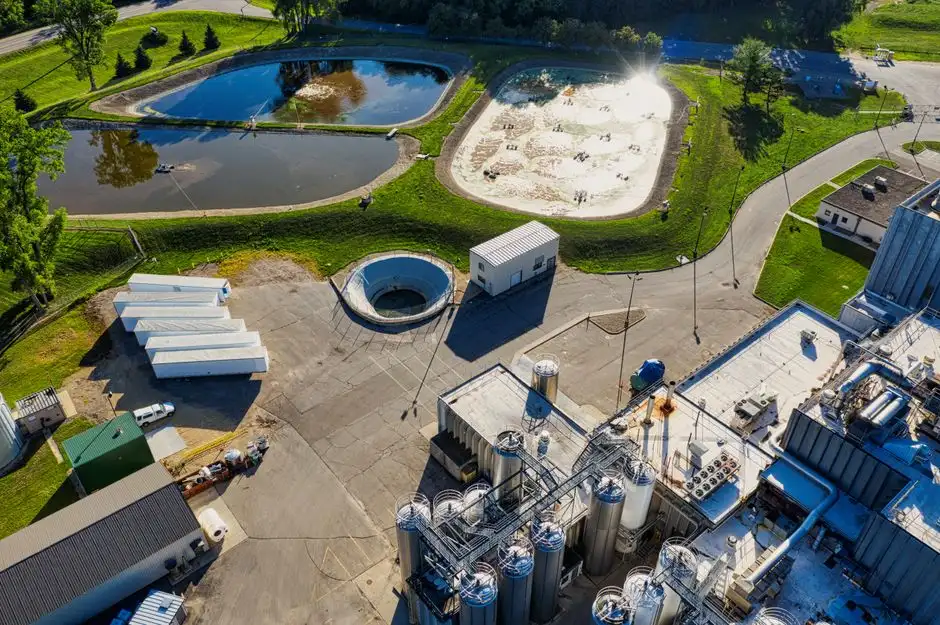
Baseline: a 200 m³/day textile dyeing plant running two operators per shift at $8/hour, current coagulant and polymer spend of $180,000 per year, and energy spend of $220,000 per year with three constant-speed blowers. The proposed automation scope is a Tier 2 PLC plus local SCADA with pH, ORP, DO, TSS, and flow loops, a coagulant dosing skid, and VFDs on two blowers — installed CAPEX of $145,000 in 2026. This is the same envelope covered in the textile wastewater recycling system engineering guide and the MBBR for textile dyeing cost analysis.
Annual savings: chemicals at -25% = $45,000, energy at -20% from VFDs and DO control = $44,000, labor at -50% by saving one operator shift = $70,000, sludge handling at -15% from MLSS control = $12,000, for a total of $171,000 per year. Simple payback is $145,000 / $171,000 = 0.85 years, or roughly 10 months. At a 10% discount rate, the 5-year NPV is strongly positive (around $480,000 before terminal value). The same template applied to a sub-50 m³/day plant stretches payback because instrumentation dominates the CAPEX, and a North American plant with $25/hour operators shortens payback to under 6 months.
| Line Item | Baseline (USD/yr) | Post-Automation Change | Annual Savings |
|---|---|---|---|
| Chemicals (coagulant + polymer) | $180,000 | -25% | $45,000 |
| Energy (aeration-dominated) | $220,000 | -20% | $44,000 |
| Operator labor (4 shifts → 2) | $140,000 | -50% | $70,000 |
| Sludge handling & dewatering | $80,000 | -15% | $12,000 |
| Total annual savings | — | — | $171,000 |
| CAPEX | — | — | $145,000 |
| Simple payback | — | — | ~10 months |
How to Choose the Right Tier for Your Plant: A 2026 Decision Framework
Five questions select a tier without a paid scoping study. Step 1 — size: under 50 m³/day usually maps to Tier 1; 50–500 m³/day usually maps to Tier 2; above 1,000 m³/day or any multi-facility operator maps to Tier 3. Step 2 — labor cost: high-labor regions (North America at $20–$35/hour, Western Europe, Australia, Japan) justify higher tiers faster than low-labor regions where the labor savings line does not carry the ROI. Step 3 — discharge risk: any plant under a consent decree, zero-liquid-discharge mandate, or nutrient-tight permit needs Tier 3 with full historian and audit trail; the regulator will not accept an unlogged control sequence as evidence of compliance.
Step 4 — existing infrastructure: plants already running modern VFDs and motor control centers retrofit cheaply because aeration blower VFD control is largely a programming exercise. Plants running relay logic from the 1990s need full Tier 2 replacement including a new motor control center, which is what pushes retrofit CAPEX to the upper end of the $200K–$400K+ range. Step 5 — vendor lock-in: insist on open protocols — Modbus TCP, OPC UA water treatment, MQTT — over proprietary SCADA ecosystems. Lock-in shows up five years later when the SCADA license renewal triples or the vendor exits the market. Pre-engineered skids like a rotary mechanical bar screen or a dissolved air flotation machine with documented Modbus maps plug into any Tier 2 or Tier 3 stack without custom drivers.
Frequently Asked Questions About Wastewater Treatment Automation System Cost
How much does a wastewater treatment automation system cost in 2026?
CAPEX ranges from $30,000 for a basic single-PLC retrofit on a sub-50 m³/day plant to $400,000+ for a full plant-wide SCADA system with cloud IIoT telemetry on a 1,000+ m³/day or multi-site facility. Mid-tier projects for 50–500 m³/day industrial plants typically land at $80,000–$200,000 before integration and commissioning adders.
What is the typical payback period for wastewater treatment automation?
Simple payback is 18–30 months for most 50–500 m³/day plants combining chemical, energy, and labor savings, and can drop below 12 months in high-labor regions with VFD-ready blowers. Sub-50 m³/day plants stretch to 24–40 months because instrumentation dominates the CAPEX line.
How much do online water quality sensors cost individually in 2026?
pH and ORP sensors run $500–$2,500 each; DO probes $800–$3,500; TSS/MLSS optical sensors $2,000–$6,000; online COD analyzers $2,500–$35,000 per stream; and online ammonia analyzers $4,000–$25,000 per stream, with reagent budgets of $1,500–$4,000 per analyzer per year on top.
What is included in a SCADA license versus a PLC-only automation system?
A PLC-only system includes the controller, I/O, and local HMI but no historian, alarming, or remote access. A SCADA license adds a server, historian database, alarm management, trending, and reporting, but does not include integration engineering (15–30% of hardware cost) or commissioning (5–10%), which are the real costs buyers underestimate.
Which industries see the fastest ROI on wastewater automation?
Textile dyeing, food and beverage, and chemical plants see the fastest ROI because chemical and aeration energy dominate their OPEX and both are highly responsive to closed-loop control. Municipal plants see slower ROI because labor costs are lower and discharge penalties are typically less severe, though the compliance and audit-trail case for Tier 3 SCADA often carries the decision.