What Counts as a Nature Based Wastewater Solution in 2026 Engineering Practice
A nature based wastewater solution, as defined by the IUCN Global Standard and adopted verbatim into 2025–2026 EU and Chinese guidance, is an engineered system that uses biological, physical, and plant-uptake processes — not merely natural space — to deliver quantifiable effluent quality (Silva 2026 systematic review). For 2026 projects this taxonomy is narrow: free-water-surface (FWS) wetlands, subsurface horizontal-flow (SSF-H) wetlands, subsurface vertical-flow (SSF-V) wetlands, aerated treatment wetlands, and floating treatment wetlands (FTWs). A stabilization pond without engineered inlet/outlet hydraulics, designed media, and controlled retention does not qualify, and neither does a planted swale handling stormwater runoff. The distinction matters because green-infrastructure elements like rain gardens and bioswales are designed for stormwater conveyance, not for BOD, NH3-N, or TP removal against a discharge permit — and a procurement engineer specifying "NbS" without this distinction risks a failed design basis review.
NbS re-entered industrial scope in 2024–2026 after a decade of MBR-only specifications. The Springer 2024 chapter on small-capacity NbS plants frames the shift using Barry Commoner's environmental-cost argument: the cumulative energy, sludge-disposal, and civil-work costs of conventional trains are forcing EPC teams to look at hybrid systems where engineered biology does part of the work. The areas where NbS still loses to conventional treatment are automation, remote operation, and real-time parameter monitoring — the exact functions that upstream MBR or DAF stages in a hybrid train are designed to handle.
2026 Performance Data: BOD, COD, Ammonia, Phosphorus, and Pathogen Removal
Free-water-surface (FWS) wetlands are the workhorse of the NbS family. At hydraulic loadings of 20–60 mm/d, properly designed FWS systems deliver BOD removal of 65–80%, TSS 60–75%, NH3-N 50–70%, total phosphorus (TP) 30–50%, and fecal coliform reduction of 90–99% (1–2 log) per the Silva 2026 systematic review and standard US EPA design manuals. They handle the broadest range of influent variability but underperform on ammonia and phosphorus versus the engineered subsurface options.
Subsurface vertical-flow (SSF-V) wetlands are the nitrification specialists. With intermittent dosing and a 20–80 mm/d hydraulic loading, SSF-V systems achieve BOD removal of 85–95%, NH3-N 80–95%, TN 30–60% (limited denitrification without recirculation), and TP 50–75% when paired with PLC-controlled chemical dosing for SSF-V phosphorus precipitation. Subsurface horizontal-flow (SSF-H) wetlands invert that profile: BOD 80–92%, TN 50–75% (better denitrification than V), TP 20–40%, at lower 10–40 mm/d hydraulic loadings. For ammonia-limited effluents the 2026 design default is a two-stage V → H train, which combines the nitrification of SSF-V with the denitrification of SSF-H.
Aerated treatment wetlands close the gap to conventional activated sludge. Forced aeration at 50–200 mm/d hydraulic loadings drives BOD 85–95% and NH3-N 85–95%, making them the right choice for industrial ammonia loads above 50 mg/L. Floating treatment wetlands (FTWs) are a retrofit polishing tool, not a primary treatment step: 30–60% TN and 20–50% TP at short residence times, but no meaningful BOD reduction. Specify FTWs as a tertiary cap on an existing pond or lagoon, never as the main reactor. India's 44% treatment coverage of 72,000 MLD of generated wastewater (Springer 2024) is the macro case for why NbS is being scaled rapidly for secondary cities and industrial parks in 2026.
| NbS Type | BOD Removal | NH3-N Removal | TN Removal | TP Removal | Hydraulic Loading (mm/d) |
|---|---|---|---|---|---|
| FWS wetland | 65–80% | 50–70% | 30–50% | 30–50% | 20–60 |
| SSF-V wetland | 85–95% | 80–95% | 30–60% | 50–75% | 20–80 |
| SSF-H wetland | 80–92% | 40–60% | 50–75% | 20–40% | 10–40 |
| Aerated wetland | 85–95% | 85–95% | 50–70% | 30–50% | 50–200 |
| FTW (polishing) | 10–25% | 20–40% | 30–60% | 20–50% | 100–400 |
The Land Footprint Constraint: How Much Area NbS Actually Requires
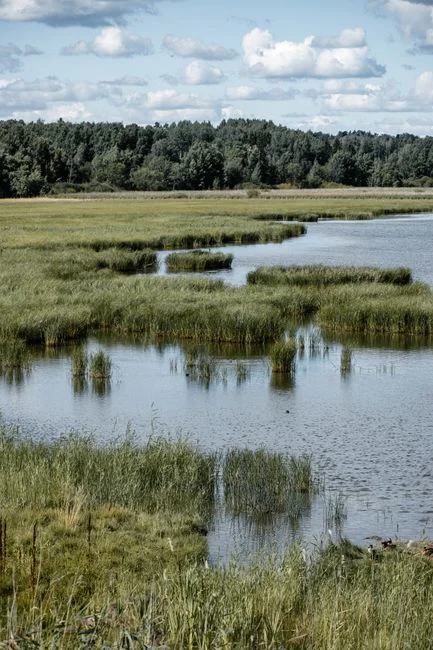
Land area is the single most common reason industrial projects reject NbS, and almost always the rejection is based on outdated estimates. The 2026 engineering numbers are: standalone NbS requires 5–20 m² per m³/d for secondary domestic treatment and 15–40 m² per m³/d for industrial tertiary polishing (Silva 2026). Worked against a real scope — a 500 m³/d industrial park effluent that fails on ammonia and phosphorus — the standalone wetland occupies 2,500–10,000 m² (0.25–1.0 ha). Pair the same wetland as a polishing stage downstream of an MBR membrane bioreactor for hybrid NbS polishing and the wetland footprint drops to 600–2,500 m² (0.06–0.25 ha), a 60–75% reduction that usually fits inside the available plant boundary.
FTWs compress the footprint further: at 10–20% of the FWS area required for equivalent polishing, they are the right tool when site is constrained to under 0.1 ha. The procurement framing is that land is a CAPEX offset — a smaller wetland + MBR train frequently beats a large conventional-only train on 10-year TCO because of avoided civil works, smaller blowers, and reduced aeration energy. A WSZ buried package plant for land-constrained sites is the conventional complement that keeps the surface footprint near zero when even 0.06 ha is unavailable.
Hybrid Configurations: When to Pair NbS with MBR, DAF, or RO
The 2026 procurement question is not "NbS or conventional" — it is "which hybrid pattern fits my influent." Four patterns cover the industrial and municipal retrofit cases that top-ranking pages never address.
Pattern A — MBR + NbS polish: the MBR delivers sub-1 μm effluent with stable BOD and TSS under 5 mg/L; the downstream wetland handles residual organics, color, and nutrient polishing, and qualifies the discharge for reuse. This is the default 2026 specification for industrial parks with reuse targets, and it lets the MBR stage run at 40–60% of its standalone design flux because the wetland absorbs the rest of the load. Pattern B — DAF + NbS: a DAF system for FOG and TSS removal ahead of NbS strips fats, oils, and grease upstream so the wetland does not clog. It is the standard configuration for food processing, dairy, and abattoir effluents, and it converts an otherwise impossible wetland design into a 10-year asset. Pattern C — Conventional activated sludge + NbS: when retrofitting an existing WWTP against tightened 2026 nutrient limits, the wetland is bolted on as the tertiary stage; the existing aeration basin is unchanged and the wetland does the TP and any residual NH3-N work. Pattern D — NbS as primary equalization + MBR/RO: rare but documented for high-strength industrial streams where the wetland smooths BOD shock loads of 5–10× design before they reach the membranes. This pattern needs a 2-stage wetland and is only viable where the influent is biodegradable.
The Springer 2024 review is explicit on the weakness the design must accommodate: NbS lacks automation and real-time monitoring capability. In a hybrid train the PLC and IoT sensors belong upstream of the wetland — on the MBR, DAF, or equalization basin — not inside the wetland itself. Trying to put smart instrumentation on a vegetated bed is a known failure mode.
| Pattern | Upstream Stage | NbS Role | Best-Fit Influent | Wetland Footprint vs Standalone |
|---|---|---|---|---|
| A | MBR | Nutrient & color polish | Industrial park, reuse target | 25–40% |
| B | DAF | Tertiary BOD/TN/TP | Food, dairy, abattoir | 40–60% |
| C | CAS | Tertiary TP / residual NH3-N | Municipal retrofit | 30–50% |
| D | NbS equalization | Load dampening | High-strength industrial | 100% + MBR/RO |
2026 Compliance and Standards Anchors for NbS Specifications
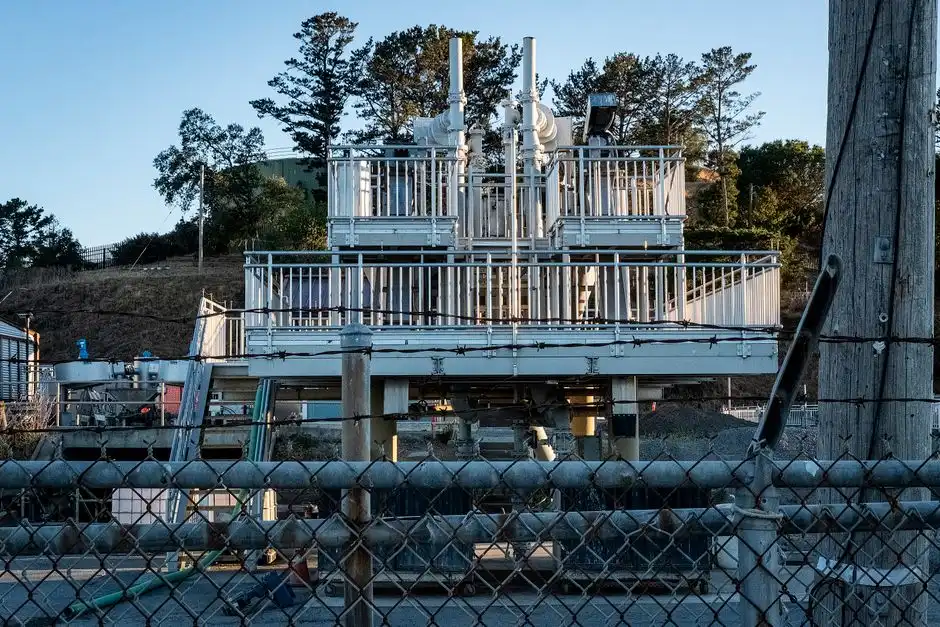
Engineers can specify NbS in 2026 against three named regulatory anchors that survive any board-level design review. The EU Urban Waste Water Treatment Directive 91/271/EEC, Annex II, explicitly lists constructed wetlands as a Best Available Technique for small communities under 2,000 PE, and 2026 EU implementing decisions preserve that status without tightening the qualifying envelope. In the United States, the EPA 2024 decentralized wastewater guidance formally endorses engineered treatment wetlands as an acceptable technology under the Clean Water Act §402 NPDES framework for flows up to 1 MGD (approximately 3,785 m³/d), which covers the bulk of industrial-park and small-municipal scopes. China's GB 18918-2025 draft, released late 2025 and effective 2026, adds engineered wetland parameters directly into the municipal discharge standard, with explicit BOD, NH3-N, and TN limits for land-treatment systems — a first for a national standard of that scope.
The World Bank/IFC EHS Guidelines for Water and Sanitation (2024 update) reference NbS as a default consideration for projects in low- and middle-income contexts, and the Silva 2026 systematic review provides the academic anchor that procurement audits typically require. Together these four citations cover the regulator, the lender, the academic reviewer, and the host country's national standard — the four signatures a board memo needs before a 2026 NbS specification clears compliance review.
2026 CAPEX, OPEX, and 10-Year Total Cost of Ownership
Standalone engineered wetland CAPEX in 2026 sits in the $50–$250 per m³/d of design capacity band — FWS at the low end, SSF-V at the upper end, inclusive of earthworks, media, plants, and distribution piping. Hybrid NbS+MBR CAPEX runs $300–$900 per m³/d combined, but the MBR stage is 40–60% smaller than a standalone MBR train, and the shared civil works between the two stages compresses site preparation costs. OPEX tells the more interesting story. A standalone NbS runs at 30–60% lower OPEX than a comparable conventional activated sludge plant by year 3, once the vegetation and media ecology is established (Springer 2024). Hybrid OPEX runs 10–20% lower than MBR-only across the same window. The line items that drop are energy (smaller blowers, no recirculation pumps in FWS), chemical dosing (natural nitrification replaces part of the methanol or external carbon feed), and sludge handling, which runs 60–80% lower because wetland biomass slough-off is captured and pressed rather than continuously wasted. The new line item added is vegetation maintenance at 5–10% of OPEX — harvesting, invasive control, and media top-up.
The 10-year TCO crossover point is the number a procurement lead actually needs. Standalone NbS vs. conventional activated sludge breaks even at year 4–6 in most flow ranges. Hybrid with MBR breaks even at year 6–8 but delivers better reuse-water value because the wetland-polished effluent typically meets the 2026 reuse standard for industrial cooling and toilet flushing without a downstream RO polish. A 500 m³/d industrial park on Pattern A typically lands at $180,000–$450,000 total annual OPEX by year 5, against $280,000–$520,000 for an MBR-only train at the same discharge quality. See the SBR plant operating cost breakdown for 2026 for comparable conventional-train benchmarks.
| Configuration | CAPEX 2026 (USD/m³/d) | OPEX vs. CAS Baseline (Year 3+) | 10-yr TCO Crossover | Best-Fit Flow Range |
|---|---|---|---|---|
| FWS standalone | $50–$120 | −40 to −60% | Year 4–5 | 100–5,000 m³/d |
| SSF-V standalone | $150–$250 | −30 to −50% | Year 5–6 | 50–2,000 m³/d |
| Aerated wetland | $180–$300 | −20 to −35% | Year 6–7 | 200–10,000 m³/d |
| Hybrid NbS + MBR | $300–$900 | −10 to −20% | Year 6–8 | 500–20,000 m³/d |
Where NbS Fails: Six Conditions Where You Should Not Specify It in 2026
Specifying NbS where it cannot perform is the fastest way to lose a design review. Six conditions disqualify NbS in 2026. First, highly toxic or recalcitrant streams — phenols, cyanides, complex chlorinated organics — need thermal or oxidative destruction (wet air oxidation, Fenton, ozonation), not microbial polishing. Second, cold-climate sites below -10 °C average winter temperature where biological activity stops for more than 90 consecutive days: SSF-V can be designed around this with insulation and buried media, but FWS cannot. Third, high-strength ammonia above 200 mg/L NH3-N — pure FWS will not meet a typical 10 mg/L NH3-N discharge limit; an aerated wetland or a hybrid train is mandatory (see the high-nitrate wastewater treatment guide for the 2026 design approach). Fourth, sites with less than 0.05 ha available land at any flow rate — not a technical fit regardless of design, unless the project accepts an FTW polishing role only. Fifth, effluents with strict heavy-metal limits (Cd, Pb, Hg) — wetlands remove these through media sorption but require careful media selection and downstream polishing; conventional chemical precipitation is more predictable and easier to validate. Sixth, acute seasonal load shocks above 5× design flow — wetlands dampen shocks through equalization volume but do not absorb extreme spikes; an upstream equalization basin is mandatory, not optional.
Frequently Asked Questions
What is a nature based wastewater solution in 2026 engineering terms?
An engineered system — FWS, SSF-H, SSF-V, aerated wetland, or FTW — that uses biological, physical, and plant-uptake processes to deliver quantifiable effluent quality per the IUCN Global Standard (Silva 2026). A planted pond without engineered hydraulics does not qualify.
What removal rates can a properly designed FWS wetland achieve in 2026?
BOD 65–80%, NH3-N 50–70%, TP 30–50%, fecal coliform 90–99% (1–2 log) at hydraulic loadings of 20–60 mm/d (Silva 2026 systematic review).
How much land does a hybrid NbS + MBR system need for a 500 m³/d industrial park?
600–2,500 m² (0.06–0.25 ha) for the wetland stage, against 2,500–10,000 m² (0.25–1.0 ha) for a standalone NbS at the same flow — a 60–75% reduction enabled by the upstream MBR membrane bioreactor for hybrid NbS polishing.
What does engineered wetland CAPEX look like in 2026?
Standalone engineered wetland CAPEX runs $50–$250 per m³/d of design capacity in 2026 — FWS at the low end, SSF-V at the upper end, inclusive of earthworks, media, plants, and distribution piping.
Is NbS regulator-accepted under 2026 EU, US, and Chinese standards?
Yes. EU UWWTD 91/271/EEC Annex II lists constructed wetlands as BAT for small communities under 2,000 PE; US EPA 2024 decentralized guidance endorses engineered treatment wetlands under CWA §402 NPDES for flows up to 1 MGD; China's GB 18918-2025 adds engineered wetland parameters to the municipal discharge standard effective 2026.