What Makes Amino Acid Fermentation Wastewater a Special Treatment Challenge
An amino acid fermentation wastewater treatment plant supplier is an EPC vendor that designs and delivers a multi-stage system — equalization, high-rate anaerobic digestion (EGSB or IC), anoxic/aerobic biological treatment, MBR, and optional RO — engineered for the extreme contaminant profile of fermentation broth (COD 30,000–80,000 mg/L, NH3-N 3,000–8,000 mg/L, sulfate 5,000–15,000 mg/L, pH 1.5–4.0). Generic municipal WWTPs fail on this stream because three microbial failure modes activate simultaneously: free ammonia toxicity above 1,500 mg/L, sulfate-reducing bacteria outcompeting methanogens when SO4²⁻/COD > 0.3, and severe foaming in aerobic tanks from residual amino acids and sugars.
Mother liquor from monosodium glutamate, lysine, threonine, and tryptophan production carries a contaminant envelope that no single activated-sludge tank can metabolize. The BOD/COD ratio of 0.4–0.6 indicates a stream that is biodegradable in principle, but only if the toxic inhibition factors are removed upstream. The microbial niche nexus concept articulated in npj Clean Water (Wu & Yin, 2020) explains why staged anaerobic → anoxic → aerobic trains outperform single-sludge designs: each reactor hosts a distinct r/K-strategist community tuned to a narrow substrate gradient, which is what variable, high-strength streams actually need.
The compliance bar is the second constraint shaping supplier selection. Discharge to a municipal sewer in China under GB 8978-1996 plus provincial add-ons typically requires COD < 500 mg/L, NH3-N < 45 mg/L, and sulfate < 400 mg/L; surface water discharge tightens these further. A 1,000 m³/day influent at 50,000 mg/L COD represents a 100× reduction requirement, which dictates the multi-stage architecture.
| Parameter | MSG mother liquor | Lysine mother liquor | Threonine mother liquor |
|---|---|---|---|
| COD (mg/L) | 30,000–60,000 | 40,000–80,000 | 35,000–65,000 |
| BOD/COD ratio | 0.45–0.55 | 0.40–0.50 | 0.50–0.60 |
| NH3-N (mg/L) | 3,000–6,000 | 4,000–8,000 | 3,500–6,500 |
| SO4²⁻ (mg/L) | 5,000–12,000 | 8,000–15,000 | 6,000–11,000 |
| pH | 1.5–3.5 | 2.0–4.0 | 2.5–4.0 |
| Temperature (°C) | 50–70 | 55–70 | 50–65 |
The 2026 Process Flow: Equalization → Anaerobic → A/O → MBR → Polishing
A complete amino acid effluent train runs in six stages, each justified by a specific number.
Stage 1 — Equalization and pH adjustment. Raw broth at pH 1.5–4.0 and 50–70 °C is neutralized to pH 6.5–7.5 with NaOH or lime and cooled below 38 °C using a heat exchanger; bar screens remove mycelium and residual biomass before downstream reactors. Automated chemical dosing for pH adjustment prevents the shock loads that would otherwise kill methanogens in Stage 2.
Stage 2 — High-rate anaerobic (EGSB or IC). This is the load-reduction workhorse. Typical design runs at OLR 8–15 kg COD/m³/d, HRT 1–3 days, achieving 75–85% COD removal and a biogas yield of 0.35–0.45 m³/kg COD removed. For deeper reactor sizing and recycle-ratio guidance, refer to the EGSB reactor design guide for high-strength effluent. EGSB's upflow velocity of 4–8 m/h gives better sludge-biomass contact than CSTR or UASB on this stream.
Stage 3 — Sulfide and residual NH3-N polishing. A micro-aeration zone strips H2S before it corrodes downstream piping and aerators; sulfur-removal losses run 20–30% of influent SO4²⁻. Without sulfide control, dissolved H2S above 50 mg/S/L causes toxic breakthrough in the aerobic stage.
Stage 4 — A/O or A²/O biological treatment. Nitrification runs at HRT 18–30 h with DO 2–4 mg/L; denitrification requires C/N ≥ 6, which anaerobic effluent typically supplies without methanol dosing. Total NH3-N is cut from 3,000–8,000 mg/L to <45 mg/L. For a broader technology comparison including partial nitritation and anammox, see the ammonia nitrogen removal technology comparison.
Stage 5 — MBR polishing. A submerged MBR membrane bioreactor system with a PVDF flat-sheet MBR membrane module at 0.1 μm runs at flux 12–18 L/m²/h with MLSS 8,000–12,000 mg/L. Effluent TSS is held below 5 mg/L and COD below 80 mg/L, ready for either sewer discharge or RO feed.
Stage 6 — Optional RO for ZLD. Where water scarcity or local regulation forces reuse, an RO system for water reuse or ZLD achieves 65–75% recovery on the MBR permeate, handling residual salinity and color. Sludge from stages 2 and 4 is dewatered with a plate-and-frame filter press for sludge dewatering to 22–28% DS before off-site disposal.
| Stage | Key parameter | 2026 design range |
|---|---|---|
| Equalization | Cooling target | <38 °C, pH 6.5–7.5 |
| EGSB / IC | OLR / HRT / CH4 yield | 8–15 kg COD/m³/d, 1–3 d, 0.35–0.45 m³/kg COD |
| Micro-aeration | H2S removal | 20–30% of influent SO4²⁻ |
| A/O nitrification | HRT / DO | 18–30 h, 2–4 mg/L |
| MBR | Flux / MLSS / TSS | 12–18 L/m²/h, 8,000–12,000 mg/L, <5 mg/L |
| RO (ZLD) | Recovery | 65–75% |
How to Compare Amino Acid Fermentation Wastewater Treatment Plant Suppliers
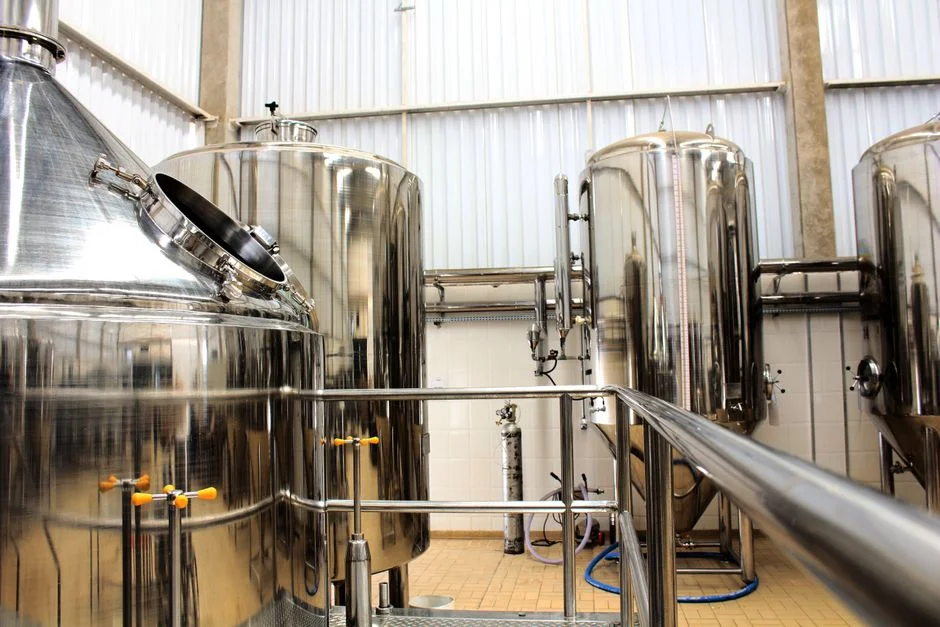
Four supplier archetypes compete for this work, and they score very differently on the criteria that actually matter to a buyer. Chinese EPCs with full in-house design and manufacturing typically lead on cost and on documented amino acid references; Western OEMs reselling packaged skids score high on documentation quality but rarely ship a complete anaerobic train; local engineering contractors subcontracting equipment tend to lack a coherent process guarantee; academic spin-offs are still piloting novel pretreatments and have not displaced high-rate anaerobic as the core technology in 2026 (Environmental Science Europe, 2024, on ionizing irradiation pretreatment confirms research-stage status).
For a regional procurement benchmark, the regional supplier comparison (Vietnam example) shows the same archetype ranking holds across Southeast Asia.
Three red flags to filter out quotes fast: vendors that quote only on COD without addressing NH3-N and sulfate (they have not built one of these before), vendors that propose activated sludge as the primary treatment (it cannot handle 50,000 mg/L COD), and vendors without a single running amino acid reference plant in the last 36 months.
| Criterion (weight) | Chinese EPC, full in-house | Western OEM, skid reseller | Local contractor, sub-equipment | Academic spin-off |
|---|---|---|---|---|
| Amino acid project references (25%) | 8–9/10 | 5–6/10 | 3–4/10 | 2–3/10 |
| In-house anaerobic design (20%) | 8–9/10 | 4–5/10 | 3–5/10 | 6–7/10 |
| NH3-N / sulfate track record (15%) | 8/10 | 6/10 | 4/10 | 5/10 |
| MBR membrane brand & cost (10%) | 7–8/10 | 9/10 | 5/10 | 5/10 |
| After-sales ≤48 h (15%) | 7/10 | 8/10 | 6/10 | 3/10 |
| Destination-country compliance certs (15%) | 7–8/10 | 9/10 | 5–6/10 | 4/10 |
| Weighted total | 7.7–8.4 | 6.4–7.1 | 4.2–5.0 | 3.9–4.6 |
2026 CAPEX and OPEX Benchmarks for a 1,000 m³/day Plant
Total CAPEX for a 1,000 m³/day amino acid fermentation effluent plant in 2026 runs USD 180,000–450,000 (USD 180–450 per m³/day) for a Chinese-supplied EPC, and USD 350–700 per m³/day for European or Indian supply (HydropureWater field data, 2026). The scale factor is roughly 0.7, so a 2,000 m³/day plant lands at ~USD 270–680 per m³/day. ZLD scope adds 35–60% to CAPEX because it adds RO, evaporation, and crystallization trains that are not in a discharge-only design.
OPEX breaks down as: energy 40–55% (largely offset by CHP from biogas), chemicals 15–20% (NaOH, defoamer, flocculant), membrane replacement 5–10%, labor 10–15%, sludge disposal 10–20%. A 1,000 m³/day plant at 40,000 mg/L influent COD and 80% anaerobic removal generates ~14,000 m³/day of biogas, which at a CHP electrical efficiency of 35–40% offsets 30–50% of plant electricity consumption. Whether the supplier sources MBR and RO membranes in-house or imports them is the single largest cost lever after flow rate.
| Cost item | 2026 Asia-market range (USD) | Notes |
|---|---|---|
| CAPEX, 1,000 m³/d, Chinese EPC | 180,000–450,000 | USD 180–450 per m³/d |
| CAPEX, European/Indian supply | 350–700 per m³/d | Higher documentation cost |
| ZLD scope adder | +35–60% CAPEX | RO + evaporation train |
| Energy share of OPEX | 40–55% | 30–50% offset by CHP biogas |
| Membrane replacement | 5–10% of OPEX | Every 3–5 years for well-designed MBR |
| Biogas production, 1,000 m³/d plant | ~14,000 m³/d | At 40,000 mg/L COD, 80% removal |
Supplier Selection Checklist: 10 Questions to Ask Before You Sign
- Can you provide three amino acid fermentation reference plants with 18+ months of operating data — influent and effluent COD, NH3-N, and sulfate — not just startup photos?
- What is the anaerobic reactor design justification: OLR, HRT, recycle ratio, expected methane yield, and sulfide control strategy?
- Which MBR membrane brand are you supplying, what is the replacement cost per m², and what replacement interval do you guarantee (typically 3–5 years)?
- Is biogas utilization (CHP or boiler) included in scope, and do you guarantee a minimum COD removal percentage at the anaerobic effluent?
- Will you provide a written performance warranty with liquidated damages if COD or NH3-N targets are missed in the first 12 months?
- What is your service network in the destination country — response time SLA, spare parts inventory, and number of local commissioning engineers?
- What is the maximum tolerated SO4²⁻/COD ratio in the anaerobic influent, and how do you prevent sulfate-reducing bacteria from outcompeting methanogens?
- What is the free ammonia concentration in the feed, and what is your specific mitigation strategy above 1,500 mg/L NH3-N?
- What is the total project schedule from PO to mechanical completion, and what milestones trigger payment?
- Can you share the most recent reference plant that used an identical or similar MBR/RO membrane brand to what you are quoting?
Frequently Asked Questions
What is the typical COD removal efficiency of an EGSB reactor on amino acid fermentation effluent? A well-designed EGSB operating at OLR 8–15 kg COD/m³/d and HRT 1–3 days typically achieves 75–85% COD removal, with biogas yield 0.35–0.45 m³ per kg COD removed. Reactor sizing, recycle ratio, and sulfide control details are covered in the EGSB reactor design guide for high-strength effluent.
How do you handle high NH3-N in amino acid fermentation wastewater? Two-stage anaerobic + A/O biological treatment is the 2026 default; influent NH3-N of 3,000–8,000 mg/L is reduced to <45 mg/L via nitrification (HRT 18–30 h, DO 2–4 mg/L) and denitrification with C/N ≥ 6, typically met by anaerobic effluent residual COD. An integrated MBR membrane bioreactor system downstream protects the polishing stage from solids breakthrough.
What CAPEX should I budget for a 1,000 m³/day amino acid fermentation effluent plant in 2026? USD 180,000–450,000 for a Chinese-supplied EPC, or USD 350–700 per m³/day for European/Indian supply; ZLD scope adds 35–60%. These ranges assume the standard six-stage train described above and do not include land, civil works, or grid interconnection costs (HydropureWater field data, 2026).
Why can't a generic biological WWTP treat this stream? Three reasons: free ammonia above 1,500 mg/L inhibits methanogens, sulfate-reducing bacteria outcompete methanogens when SO4²⁻/COD > 0.3, and residual amino acids cause severe aerobic foaming. Generic activated-sludge designs assume a COD below 1,000 mg/L and sulfate below 200 mg/L — both 30–50× lower than what fermentation broth delivers.