Why the Right Dissolved Oxygen Sensor Supplier Matters for Wastewater Aeration
A drifting or fouled dissolved oxygen sensor in an activated-sludge aeration basin wastes 15–25% of blower energy on top of the 45–60% of total plant power that aeration already consumes, because the SCADA loop over-aerates whenever the probe under-reads (HydropureWater field data, 2026). Two failure modes dominate in industrial service. First, Clark-cell membrane fouling from biological growth and grease coats the PTFE membrane within 8–14 weeks, suppresses the diffusion current, and tricks the controller into pushing dissolved oxygen above setpoint — typically by 0.3–0.8 mg/L. Second, optical sensor photobleaching from extended exposure to chlorinated mixed liquor or high-intensity UV cuts the ruthenium-foil luminescence lifetime baseline, causing 2–4 week recalibration cycles that no scheduled maintenance plan can absorb. Both failure modes share one economic signature: they are invisible until the power bill or effluent violation arrives.
Quantify the energy penalty with a single arithmetic step. A 0.5 mg/L measurement error in a 1,000 m³ aeration basin shifts the dissolved oxygen setpoint upward and forces blowers to deliver 800–1,200 kWh/month of additional air, depending on diffuser alpha factor and depth. At 2026 industrial electricity tariffs of $0.08–$0.12/kWh, that is $770–$1,440/month, or $9,000–$17,000/year per basin from sensor inaccuracy alone. The Vernier DO-BTA user manual describes the Clark-type polarographic electrode as the historical baseline technology for dissolved oxygen measurement, and most municipal specifications still inherit that architecture by default — even where optical luminescence has become the better fit.
The procurement consequence is that sensor selection is not an instrumentation line item; it is an aeration-energy line item. A buyer who treats the probe as a $500 commodity and ignores membrane life, calibration drift, and output protocol pays for the gap in blower power for the next decade.
Optical vs Clark-Cell: How the Two Dominant DO Sensor Technologies Compare
A Clark-cell polarographic sensor uses a gas-permeable membrane, a gold cathode, and a silver anode immersed in electrolyte; oxygen diffusing through the membrane is reduced at the cathode, producing a current proportional to dissolved O2 — typically 290–500 nA in ambient air (per ISweek SE 707 specification). An optical luminescent sensor uses a ruthenium-based sensing foil excited by a blue LED; oxygen quenches the luminescence, and the lifetime of the returned light, measured in microseconds, is the analytical signal. No membrane electrolyte means no scheduled membrane replacement, no electrolyte refill, and no anode cleaning — the three maintenance tasks that dominate Clark-cell service time.
Detection limits differ by an order of magnitude. Clark-cell industrial probes reach approximately 0.05 mg/L; standard optical probes reach approximately 0.01 mg/L; specialized trace optical sensors reach 1 ppb (per ISweek SE 707 detection-limit spec). Response time diverges the same way. Clark-cell T90 sits in the 30–90 second band, optical T90 in the 5–15 second band, which is decisive for SBR reactors that swing from 0 to 2 mg/L inside a single aeration phase. Operating envelope is comparable: industrial DO probes handle 0.2–6 bar absolute pressure and 0–60 °C, and flow dependence must stay at or below 5% to avoid placement errors inside the aeration tank (per ISweek SE 707 flow-dependence spec).
| Parameter | Clark-Cell (Polarographic) | Optical (Luminescent) |
|---|---|---|
| Sensing principle | Membrane diffusion + electrochemical reduction | Luminescence quenching of ruthenium foil |
| Signal in air | 290–500 nA (per ISweek SE 707) | Lifetime in microseconds, firmware-converted to mg/L |
| Detection limit | ~0.05 mg/L | ~0.01 mg/L; trace variants 1 ppb |
| Response time T90 | 30–90 s | 5–15 s |
| Membrane / cap life | 12–24 months | 24–36 months |
| Calibration interval | 4–8 weeks (typical plant practice) | 8–16 weeks |
| Pressure / temperature | 0.2–6 bar abs / 0–60 °C | 0.2–6 bar abs / 0–60 °C |
| Flow dependence | ≤5% (per ISweek SE 707) | ≤5% |
| Main failure mode | Membrane fouling, electrolyte depletion | Photobleaching, foil delamination |
The maintenance-interval column is where procurement thinking should focus. A 12–24 month Clark-cell membrane and electrolyte replacement forces a planned shutdown twice per ownership cycle; a 24–36 month optical cap swap is a 15-minute field task with no consumable electrolyte.
DO Sensor Supplier Evaluation Framework: 6 Criteria That Separate OEMs from Distributors
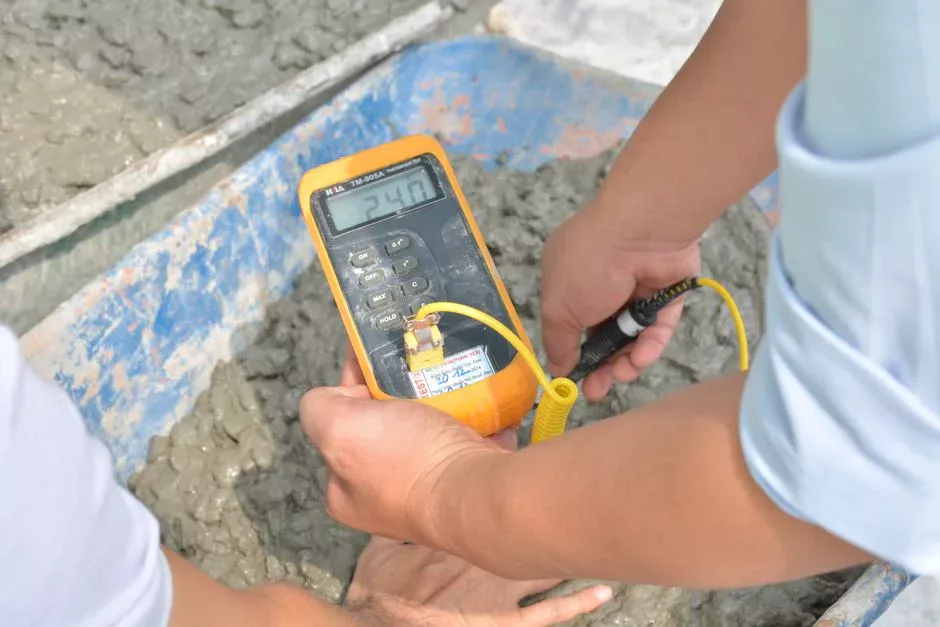
Price quotes from Chinese trading companies and from OEM factories differ by less than 15% on the same SKU, so the shortlist cannot rest on unit cost alone. Six weighted criteria separate a sensor manufacturer with in-house membrane production and optical-foil assembly from a distributor reselling another brand under a private label.
| Criterion | Weight | OEM Factory | Trading Distributor | What to verify |
|---|---|---|---|---|
| 1. Manufacturing origin | 20% | In-house membrane, optical-foil, PCB assembly | Private-label assembly only | ISO 9001 certificate number, verify against issuing body |
| 2. Calibration method | 15% | Auto air, N₂ zero, in-situ reference (≥2 of 3) | Single-point air calibration only | Calibration menu screenshot in tender response |
| 3. Certifications | 15% | CE, IECEx, RoHS, FDA wetted parts | CE only, often without RoHS | Request PDF of each certificate with validity date |
| 4. Output protocol | 15% | 4–20 mA + MODBUS RTU; optional HART/PROFINET | 4–20 mA only | Register map and EDS/GSD file for SCADA integration |
| 5. Lead time & spares | 20% | Membrane cap and optical foil stocked, ≤2-week ship | 4–8 week drop-ship from upstream | Spare-parts price list valid 12 months |
| 6. Documentation | 15% | NIST-traceable cal cert, material declaration, I&C drawings | Generic datasheet only | Sample calibration certificate with traceability chain |
The highest-weighted criteria — manufacturing origin (20%) and lead time plus spares (20%) — are the two that distributors fail most often. A distributor can quote a $300 Clark-cell probe that looks identical to an OEM $450 probe, but when the membrane cap is needed in year two and the distributor's upstream factory has a 6-week lead time, the cost-of-failure math from the next section takes over. An automatic chemical dosing system paired with a reliable DO loop is a common 2026 upgrade package because both subsystems share the same SCADA infrastructure and the same calibration-drift failure pattern.
2026 Pricing Breakdown: CAPEX, OPEX, and 5-Year Total Cost of Ownership
Industrial DO sensor pricing in 2026 splits into three hardware bands: Clark-cell industrial probes $300–$1,200, optical industrial probes $800–$4,500, and handheld portable units $150–$600 (reference Made-in-China 2026 manufacturer pricing). OPEX is the line procurement teams underestimate. Clark-cell annual membrane and electrolyte kits run $120–$250/year; optical annual cap foils run $180–$400/year because the consumable is more expensive per unit even though the swap interval is longer. Calibration labor adds 2–4 hours/year at technician rates of $50–$80/hour.
Inline installation accessories are not optional. A submersion mount, retractable holder, or jet-clean nozzle adds $200–$900 to CAPEX but reduces manual cleaning frequency by 60–80%, which is the single largest lever for keeping the optical sensor on its 8–16 week calibration cycle rather than slipping into monthly re-calibration.
| Cost element | Clark-Cell (5-year) | Optical (5-year) |
|---|---|---|
| Probe CAPEX (industrial unit) | $600 | $1,800 |
| Mounting & cleaning accessory | $400 | $700 |
| Membrane / cap consumables | $625 (5 × $125) | $1,200 (3 × $400) |
| Calibration labor (4 h/yr × $65) | $1,300 | $650 (longer interval) |
| 5-year TCO | $2,925 | $4,350 |
| Planned shutdowns for service | 3–5 membrane swaps | 1–2 cap swaps |
Optical comes out roughly 49% more expensive over five years on the line items, but eliminates 3–5 membrane-change shutdowns. The bigger lever is the cost-of-failure number. One unscheduled aeration tank shutdown from a failed sensor costs $5,000–$20,000 in lost treatment capacity, emergency service, and consent-violation exposure (HydropureWater field data, 2026). That single event pays for the entire 5-year TCO premium of the optical probe. SBR operating cost in 2026 shows the same arithmetic from the energy side: every avoided shutdown translates directly into blower-energy continuity.
Matching Sensor Type to Wastewater Application: SBR, MBR, Aeration Basin, and Pure Water
Technology choice is not generic; it follows reactor geometry and mixed-liquor chemistry. Sequencing batch reactors (SBR) cycle dissolved oxygen from 0 to 2 mg/L during the aeration phase, and a Clark-cell T90 of 30–90 seconds lags behind the actual swing, producing cycle-time errors and denitrification shortfall. Fast-response optical sensors (T90 under 15 seconds) track the swing in real time and are the default spec for SBR.
MBR basins run at high mixed-liquor suspended solids (8,000–12,000 mg/L), and Clark-cell membrane fouling accelerates 2–3× faster than in clean-water service. Specify an optical or heavy-duty Clark-cell probe with a factory-integrated jet-clean nozzle from day one rather than retrofitting after the first membrane swap. A packaged MBR membrane bioreactor wastewater treatment system from an OEM typically ships with that nozzle pre-engineered, which removes the field-integration risk.
Conventional activated-sludge aeration basins of 1,000–5,000 m³ — the most common industrial configuration — tolerate either technology; the deciding factor is usually maintenance labor availability rather than performance. Plants with a thin instrument-tech team favor optical because the longer calibration interval halves the annual labor budget. High-purity water (RO permeate, boiler feed, deionized rinse) and seawater applications require sensors in the 1 ppb to 0.1 mg/L range, served only by specialized optical luminescence probes; Clark-cell detection limits cannot reach that band. Plant engineers cross-checking phosphate-loop sensor budgets should read the parallel online phosphate analyzer cost in 2026 breakdown, since the same SCADA/PLC infrastructure carries both analyzers.
Frequently Asked Questions
How long does a DO sensor membrane or optical cap last in wastewater service? Clark-cell membrane and electrolyte replacement runs 12–24 months in typical mixed-liquor service, while optical luminescent caps last 24–36 months. The shorter end of each range applies to MBR and high-MLSS applications; the longer end applies to clean-water or low-MLSS basins.
What pressure and flow conditions can an industrial DO probe tolerate? Industrial probes handle 0.2–6 bar absolute pressure and 0–60 °C, with flow dependence held to ≤5% (per ISweek SE 707). Above 6 bar the membrane deforms; below 0.2 bar absolute the calibration curve shifts and the probe must be re-zeroed in nitrogen.
Which certifications should a wastewater DO sensor supplier hold in 2026? At minimum, CE for EU projects, ISO 9001 for the manufacturing QMS, and IECEx if the probe is installed in a headworks or wet-well classified as a potentially explosive atmosphere. Food and pharma effluent buyers should also specify FDA-compliant wetted parts and RoHS for EU export.
What output protocol do I need for SCADA integration with my aeration blower VFDs? Specify 4–20 mA plus MODBUS RTU as the floor. PROFINET, HART, or Ethernet/IP add cost but allow direct register-level polling from the SCADA tag database, which is the cleanest way to wire a dissolved oxygen setpoint into a blower VFD speed command.
How often should a DO sensor be calibrated, and what method is best? Clark-cell units in mixed liquor need calibration every 4–8 weeks, optical units every 8–16 weeks. Air-calibration is the standard single-point method, but OEM suppliers that offer nitrogen zero-point plus in-situ reference calibration give the buyer a way to verify the slope independently — a meaningful advantage when the probe is the input to a closed-loop aeration controller.