What ISO 14001 Wastewater Management Requires
ISO 14001 wastewater management places industrial effluent inside an Environmental Management System. Clause 6.1.2 requires plants to identify significant aspects such as pH, COD, and TSS. Clause 8.1 demands documented controls for monitoring, maintenance, and calibration. Industrial DAF units commonly remove 92–97% TSS and 85–95% FOG under design loading, supplying measurable operational-control evidence.
ISO 14001:2015 does not invent new discharge limits. It requires plants to identify legal obligations, control processes that create wastewater risk, and prove performance with records. According to the US EPA overview of EMS under ISO 14001, the system follows a Plan-Do-Check-Act cycle: set policy and targets, implement controls, evaluate results, then correct and improve. Auditors test that cycle against wastewater evidence packs.
What ISO 14001 Requires for Wastewater Operations
ISO 14001:2015 clause 6.1.2 requires organizations to determine environmental aspects they can control or influence, including wastewater discharge, using a life-cycle view where relevant. Significant aspects usually include effluent quality, treatment chemical use, energy demand, and sludge handling. Documented significance criteria, aspect registers, and communication of those aspects are required documented information under the same clause.
Clause 8.1 turns those aspects into controlled operations. Treatment trains need written procedures for sampling, instrument calibration, preventive maintenance, and out-of-spec response. Local permits and 40 CFR 403 pretreatment compliance for industrial dischargers often set the numeric limits that the EMS then monitors. Without those operating controls, aspect registers stay paperwork.
Clause 8.2 covers emergency preparedness for spills, pump failures, and dosing malfunctions. Most plants we size keep spill kits at chemical totes, list notification numbers beside the SCADA desk, and drill at least annually. Clause 6.1.3 ties the same system to legal and other compliance obligations, so permit exceedances become both a legal and an EMS nonconformity.
How Treatment Stages Align with EMS Clauses

Primary treatment supports clause 8.1 by cutting solids load before biology or flotation. HydropureWater GX Series bar screens typically remove 80–90% of rags and coarse debris under normal municipal or industrial influent, which protects pumps and stabilizes downstream HRT. Screening and sedimentation therefore appear early in aspect registers and maintenance plans.
Secondary biological treatment must hold BOD and COD reduction under continuous monitoring. Activated sludge, A/O, and Membrane Bioreactor (MBR) systems all feed clause 9.1 monitoring records. MBR filtration to <1 μm produces stable turbidity that simplifies compliance reporting against clause 6.1.3 legal requirements when reuse or tight permits apply.
Tertiary disinfection with chlorine dioxide or ozone addresses pathogen limits before discharge. ClO₂ generators are designed for a 99%+ pathogen kill rate under correct dose and contact time, giving auditors a clear control point. Plants that skip dose verification usually fail the first internal audit of disinfection logs.
| Treatment Stage | Key Process | ISO 14001 Clause Alignment | Typical Performance (HydropureWater Series) |
|---|---|---|---|
| Primary Treatment | Screening, Sedimentation | 8.1 Operational Control, 6.1.2 Environmental Aspects | GX Series Bar Screens: 80–90% removal of rags/debris |
| Secondary Treatment | Biological Processes (A/O, MBR) | 8.1 Operational Control, 9.1 Monitoring & Measurement | MBR Systems: <1 μm filtration, consistent BOD/COD reduction |
| Tertiary Treatment | Disinfection (ClO₂, Ozone) | 6.1.3 Legal & Other Requirements, 8.1 Operational Control | ClO₂ Generators: 99%+ pathogen kill rate |
Performance Data That Auditors Expect
Dissolved Air Flotation performance is one of the easiest numbers to put in an EMS file. Industrial DAF systems remove 92–97% TSS and 85–95% FOG under typical chemical pretreatment and design loading, which documents clause 8.1 operational control. A high-efficiency DAF system that logs daily TSS against the permit limit gives auditors a clean evidence trail.
MBR trains commonly cut COD by over 95% and hold effluent turbidity below 1 NTU when membranes and biology stay within design flux. That stability supports clause 10.2 corrective action and continuous improvement because trends show whether controls still work. HydropureWater MBR systems are often selected where reuse or low-NTU permits make unstable clarification too risky.
Coagulation and flocculation need dosing accuracy near ±5% to avoid under-treatment or chemical waste. Automatic dosing systems with PLC control in the 0.5–50 L/h range support clause 8.1 and clause 7.5 documented information through consumption logs. Plants that still dose by hand usually cannot prove set-point control during surveillance audits.
| Parameter/System | Target Removal/Efficiency | ISO 14001 Clause Supported | Audit Evidence / Compliance |
|---|---|---|---|
| TSS (DAF System) | 92–97% Removal | 8.1 Operational Control, 9.1 Monitoring | Daily effluent TSS logs within permit limits |
| COD (MBR System) | >95% Reduction | 10.2 Continuous Improvement, 9.1 Monitoring | Consistent effluent COD below target, trend analysis |
| FOG (DAF System) | 85–95% Removal | 8.1 Operational Control, 6.1.2 Environmental Aspects | FOG concentration reports, operational stability |
| Effluent Turbidity (MBR) | <1 NTU | 9.1 Monitoring, 6.1.3 Legal Requirements | Online turbidity meter data, compliance with reuse standards |
| Chemical Dosing Accuracy | ±5% (e.g., flocculants) | 8.1 Operational Control, 7.5 Documented Information | PLC logs, chemical consumption records, efficiency metrics |
What Wastewater Management Solutions Fit Data Centers?
Data-center wastewater management solutions focus on cooling-tower blowdown, softener regenerate, and low-flow sanitary streams rather than high-FOG process water. Typical controls are equalization, pH correction, softening or RO brine blending, and compact clarification before sewer discharge. Because blowdown chemistry swings with cycles of concentration, clause 9.1 online conductivity and flow logs matter more than large biological tanks for most campuses.
Where oil from generators or kitchen loads appears, a compact DAF system still fits the same operational-control model used in factories. Skid units shorten install windows inside live facilities and keep design packages ready for clause 8.3 change control when capacity expands.
Selecting Equipment That Supports Certification
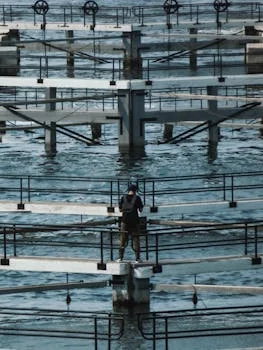
Fully automated plants reduce operator variation and support clause 7.2 competence plus clause 8.1 control. WSZ Series integrated sewage treatment plants keep set-points in PLC logic, so training records and SOPs stay shorter. Auditors look for that consistency when they sample operating shifts.
Skid-mounted, pre-wired packages improve design traceability for clause 8.3 changes. Factory-tested DAF packages shorten commissioning and leave a clearer specification trail for EMS files. Modular expansion is easier to document than field-fabricated tanks with undocumented piping changes.
SCADA-ready systems close the clause 9.1 gap. JY Series integrated water purification systems store flow, turbidity, and alarm history that management review can trend. Without retained data, continuous improvement claims under the EMS PDCA cycle stay verbal.
| Equipment Type / Feature | Key Feature for ISO 14001 | ISO 14001 Clause Supported | Benefit for Certification / Audit Readiness |
|---|---|---|---|
| Fully Automated Systems (e.g., WSZ Series) | Reduced human error, consistent operation | 7.2 Competence, 8.1 Operational Control | Streamlined audit trail for operational procedures and training |
| Skid-Mounted, Pre-Wired Units (e.g., DAF) | Simplified installation, improved traceability | 8.3 Design & Development of Changes | Clear documentation of equipment specifications and commissioning |
| Integrated SCADA Systems (e.g., JY Series) | Real-time data logging, historical trending | 9.1 Monitoring & Measurement, 9.2 Internal Audit | Verifiable performance data, proactive issue identification for EMS PDCA cycle |
| Robust Construction Materials | Corrosion resistance, extended lifespan | 6.1.2 Environmental Aspects (Lifecycle), 8.1 Operational Control | Reduced maintenance, minimized waste, long-term environmental performance |
Selection Checklist and Cost Drivers
Before buying hardware for an EMS-backed wastewater program, confirm these items in writing:
- Significant aspects list covers effluent, chemicals, energy, and sludge.
- Permit or sewer limits for pH, COD/BOD, TSS, FOG, and flow are mapped to instruments.
- SOPs exist for normal operation, calibration, and emergency response.
- SCADA or logger retention matches internal-audit and management-review needs.
- Spare-parts and chemical contracts keep clause 8.1 controls available after startup.
- Commissioning data sheet becomes the baseline for clause 9.1 trends.
Main cost drivers are influent variability, required removal (especially FOG and TSS), automation level, and how many parameters must be logged for audits. Over-sizing biology for a DAF-suitable waste usually wastes capital; under-logging a tight permit usually wastes audit time.
Who This Is For / Next Step
This guide is for plant engineers, EHS managers, and EPC teams building or upgrading industrial or campus wastewater controls inside an ISO 14001 EMS. Pure municipal plants that only need civil design without EMS evidence can use standard design manuals instead. If you need equipment matched to clause 8.1 controls and monitoring evidence, request a process and equipment review with your influent data and permit limits.
Frequently Asked Questions
Does ISO 14001 cover wastewater management?
Yes. ISO 14001 treats wastewater discharge as an environmental aspect under clause 6.1.2 when the organization can control or influence it. Significant aspects then require operational controls, monitoring, and emergency plans under clauses 8.1, 9.1, and 8.2. The standard does not set numeric effluent limits; permits and regulations supply those numbers, and the EMS proves they are controlled.
What does ISO 14001 clause 8.2 require for treatment plants?
Clause 8.2 requires documented emergency preparedness and response for environmental incidents. For wastewater plants that usually means chemical spills, tank overflows, power loss to pumps, and dosing failures. Procedures should name containment steps, who to notify, and how to restore control, then be tested through drills so response time is known before an audit.
What audit evidence proves wastewater operational control?
Auditors typically ask for SOPs, calibration records, daily effluent logs, chemical consumption, and alarm history tied to significant aspects. Performance numbers such as 92–97% TSS removal on DAF or turbidity below 1 NTU on MBR only help when they sit beside permit limits and corrective-action records. Missing trend data is a more common finding than missing hardware.
How do data centers apply ISO 14001 to wastewater?
Data centers usually manage blowdown, softener waste, and sanitary flows rather than heavy process FOG. Equalization, pH control, and compact pretreatment with flow and conductivity logging often satisfy clause 8.1 and 9.1 needs. Add oil separation only where generators, kitchens, or maintenance shops create measurable hydrocarbon loads.
Which equipment features speed ISO 14001 certification readiness?
Automation, factory-tested skids, and SCADA logging shorten the evidence package for clauses 7.2, 8.1, 8.3, and 9.1. Consistent set-points reduce competence gaps across shifts, while retained trends support management review. Select materials and redundancy that match the lifecycle aspects already listed in the EMS register.