Why Industrial Fluoride Limits Differ from Drinking Water Standards in Saudi Arabia
Saudi Arabia does not apply a single national industrial fluoride discharge limit. The Royal Commission for Jubail and Yanbu (RCJ) sets 10 mg/L fluoride for industrial discharge to the marine environment. Potable reuse must meet 1.5 mg/L under Saudi Arabian Standards Organization (SASO) standards adopted in 2007. Aluminum, phosphate fertilizer, and semiconductor plants typically treat raw influent of 50–500 mg/L fluoride down to 1–10 mg/L, depending on the discharge route. Teams writing an RCJ permit or a Ma'aden wastewater compliance audit use the industrial threshold, not the 1.5 mg/L drinking-water figure that dominates search results.
Most top-ranking fluoride pages for KSA come from groundwater surveys, dental-health papers, or chemistry references. They cite 13.96% of Saudi groundwater wells above the WHO 1.5 mg/L guideline in a 1,060-well Springer study (2013), or bottled water averaging 1.06 mg/L in a PMC Alkharj study. Those figures describe source water, not industrial discharge. A compliance manager preparing permit paperwork needs the industrial thresholds: 10 mg/L for marine outfall, 1.5 mg/L for reuse, and 5–10 mg/L for land application.
Authority is split across four bodies. RCJ sets and enforces limits in Jubail, Yanbu, Ras Al-Khair, and Wa'ad Al-Shamal. SASO sets product and potable-water standards nationwide. The National Center for Environmental Compliance (NCEC), under the Ministry of Environment, Water and Agriculture (PME in older documents), sets industrial discharge limits for non-RCJ sites. The Ministry of Municipal and Rural Affairs (MOMRA) governs municipal plants that receive industrial flows. The binding threshold depends on facility location, discharge destination, and whether effluent enters a Treated Sewage Effluent (TSE) reuse network.
Raw groundwater can already approach industrial reuse limits before process fluoride is added. The Springer survey recorded Eastern Province averages of 1.33 mg/L and Riyadh averages of 1.01 mg/L across 1,060 wells, with a maximum of 5.4 mg/L. Plants that use local groundwater for makeup therefore start at 60–90% of the 1.5 mg/L reuse ceiling and have little room for process contribution.
Fluoride Discharge Limit Saudi Arabia: Limits by Authority and Sector
The table below maps each primary KSA authority to its fluoride threshold, discharge route, and reference basis. Compliance officers otherwise assemble the same data from scattered RCJ, SASO, and NCEC publications.
| Authority | Applicable Sector | Fluoride Limit (mg/L) | Discharge Route | Reference Basis |
|---|---|---|---|---|
| RCJ (Royal Commission for Jubail and Yanbu) | Industrial facilities within Jubail, Yanbu, Ras Al-Khair, Wa'ad Al-Shamal | 10 | Marine outfall (Arabian Gulf) | RCJ Environmental Regulations, current edition |
| RCJ reuse | Same RCJ industrial cities | 1.5 | Irrigation, non-potable reuse, TSE | RCJ reuse guidelines; aligned with SASO potable |
| NCEC / PME | Non-RCJ industrial facilities nationwide | 10–20 (typical range; varies by regional permit) | Industrial sewer, evaporation pond, or land application | NCEC permit conditions; often aligned with RCJ 10 mg/L |
| SASO | Bottled water, municipal drinking water, food-contact applications | 1.5 (maximum); 0.6–0.8 (minimum) | Potable distribution, bottled product | SASO 2007 adoption of MOH recommendations |
| WHO (guideline, not binding) | Drinking water reference | 1.5 | Drinking water context | WHO Guidelines for Drinking-water Quality |
| USEPA (reference for EPC benchmarks) | International EPC project design | 4.0 MCL; 2.0 secondary standard | U.S. surface/groundwater discharge | EPA National Primary Drinking Water Regulations |
Limits tighten when discharge enters a reuse network. A plant sending effluent to a marine outfall under RCJ jurisdiction targets 10 mg/L. The same plant discharging to a TSE reuse system or landscape irrigation must hit 1.5 mg/L. That 6.7× tighter specification moves the train from single-stage precipitation to multi-stage precipitation-plus-adsorption or precipitation-plus-RO.
Which Saudi Industries Generate Fluoride-Laden Wastewater
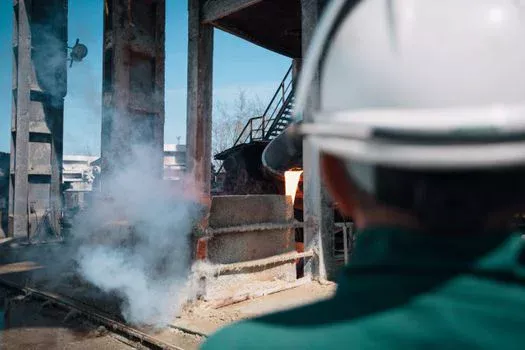
Fluoride in Saudi industrial wastewater concentrates in a few sectors, with ranges spanning three orders of magnitude. Naming the sector is the first step in equipment specification.
Aluminum smelting (Ma'aden Aluminium in Ras Al-Khair; units under construction at Wa'ad Al-Shamal) releases fluoride from cryolite (Na₃AlF₆) breakdown in the Hall-Héroult cell and from anode effects that emit perfluorocarbon compounds. Typical combined smelter wastewater carries 50–300 mg/L fluoride, with peaks above 1,000 mg/L during anode-effect events captured at the gas treatment system. Eastern Province potable water averages 1.33 mg/L (Springer regional data), so process water must cover both source fluoride and process contribution.
Phosphate fertilizer processing (Ma'aden Phosphate, Wa'ad Al-Shamal, and associated sulfuric acid plants) produces the strongest fluoride streams in KSA industry. Sulfuric acidulation of phosphate rock liberates hydrogen fluoride and silicon tetrafluoride from fluorapatite. Strong process streams can exceed 10,000 mg/L fluoride before dilution with scrubber water or cooling-tower blowdown; combined plant wastewater typically sits at 1,000–10,000 mg/L. Ma'aden wastewater compliance at phosphate sites needs multi-stage treatment that no single technology can deliver alone.
Glass and ceramics manufacturing releases fluoride from hydrofluoric acid etching, polishing-compound rinses, and breakdown of fluoride-bearing opacifiers during firing. Typical influent is 20–200 mg/L; etching-bath batches can reach 500 mg/L. Volumes are lower than smelter or phosphate flows, but untreated peaks can still exceed the RCJ 10 mg/L marine limit.
Semiconductor and solar panel manufacturing uses HF for wafer etching and dilute HF for native oxide removal. Ultrapure rinses typically yield 5–50 mg/L fluoride. Many fabs target sub-1 mg/L effluent because discharge returns to the same reuse network that feeds process water.
HF acid production and downstream fluorochemical manufacturing generate direct fluoride streams that can exceed 10,000 mg/L. KSA does not host large-scale HF production, but Ma'aden's phosphate complex includes captive HF recovery, and any fluoropolymer or refrigerant unit would inherit the same high-strength profile.
Coal- and oil-fired power plants with wet flue-gas desulfurization (FGD) produce fluoride-laden blowdown when flue-gas HF dissolves into the limestone slurry. Typical FGD wastewater carries 10–100 mg/L fluoride, above the RCJ 10 mg/L threshold for Jubail or Yanbu sites. This pathway matters as KSA expands FGD capacity to meet sulfur dioxide limits.
The Springer 2013 survey found Eastern Province groundwater at 1.33 mg/L and Riyadh at 1.01 mg/L. Plants drawing process water from these aquifers start closer to the reuse ceiling than plants on desalinated water, which typically holds fluoride below 0.2 mg/L.
Fluoride Removal Technologies: Performance and Operating Parameters
The matrix below maps influent fluoride to each technology's treatment window, achievable effluent, and waste streams. Use it as the core decision table for equipment specification.
| Technology | Influent Range (mg/L) | Effluent Achievable (mg/L) | Sludge / Waste Generation | CAPEX Index | OPEX Index | Best-Use Case |
|---|---|---|---|---|---|---|
| Calcium precipitation (lime / CaCl₂) | 100–10,000 | 5–15 | Large CaF₂ + CaSO₄ sludge volume; 3–6 kg dry solids per kg F⁻ removed | Low | Medium (chemical cost) | High-strength pretreatment for phosphate, HF production, and concentrated smelter streams |
| Activated alumina adsorption | 5–100 | 0.5–2 | Regenerable with NaOH; regenerant brine contains concentrated fluoride | Medium | Low–Medium | Polishing stage to hit 1.5 mg/L reuse targets; workhorse for moderate-strength groundwater correction |
| Reverse osmosis (RO) | 1–50 (after pretreatment) | <1 | Concentrated brine reject, typically 10–20% of feed volume | High | High (energy, membrane replacement) | Final polishing for sub-1.5 mg/L reuse; fluoride rejection typically 95–98% |
| Ion exchange resins | 1–20 | <0.5 | Regeneration brine with concentrated fluoride; high regeneration frequency at higher influent | Medium | Medium–High | Small flows, strict reuse limits, semiconductor-grade water |
| Electrocoagulation | 10–500 | 2–10 | Lower sludge volume than chemical precipitation; iron or aluminum hydroxide floc | Medium | High (electricity) | Emerging in KSA; mid-strength streams where sludge minimization is critical |
| Two-stage (precipitation + adsorption or RO) | 100–10,000 first stage | 0.5–2 | Combined CaF₂ sludge + regenerant brine or RO reject | High | High | Sub-1.5 mg/L reuse targets at high-strength sources (phosphate, HF) |
Calcium precipitation with lime (Ca(OH)₂) or calcium chloride (CaCl₂) remains the only economical first stage for influent above 500 mg/L. The reaction forms calcium fluoride (CaF₂, Ksp ≈ 3.9 × 10⁻¹¹), which precipitates readily at pH 8–9. An automated lime or calcium chloride dosing system holds stoichiometric balance; under-dosing leaves residual fluoride, and over-dosing wastes reagent and grows sludge volume. Typical stoichiometry is 2.0–2.5 mol Ca²⁺ per mol F⁻, with field doses at 1.5–2× theoretical minimum to cover competing sulfate and carbonate reactions.
Activated alumina adsorption exploits aluminum oxide affinity for fluoride at pH 5–7. Columns run to breakthrough, then regenerate with 1–4% NaOH, which desorbs fluoride as NaF. Regenerant still needs disposal or treatment, but its volume is 50–100× smaller than CaF₂ sludge from chemical precipitation. Effluent below 1 mg/L is routine, so activated alumina is the standard polish for irrigation reuse. Most plants we size for moderate-strength groundwater correction run two vessels in lead-lag so regeneration does not stop throughput.
Reverse osmosis rejects fluoride at 95–98% with brackish-water membranes. An industrial RO system for fluoride polishing is the only single-stage option that reliably delivers sub-1 mg/L effluent, but RO cannot take raw influent above 50 mg/L without pretreatment. A two-stage train—precipitation from 1,000+ mg/L down to 10–20 mg/L, then RO to <1 mg/L—is standard for high-strength reuse. RO reject at 10–20% of feed must go to brine recovery, evaporation ponds, or further concentration.
Ion exchange resins (typically strong-base anion exchange in chloride form) reach the lowest residual fluoride (<0.5 mg/L), but operating cost rises sharply when influent exceeds 10 mg/L. They fit semiconductor plants and small flows that need the strictest effluent quality.
Electrocoagulation uses sacrificial iron or aluminum anodes to form coagulant in situ. Fluoride leaves with the hydroxide floc by adsorption and co-precipitation. Sludge volume is typically 30–50% lower than lime precipitation for the same fluoride removal, but electricity use of 2–6 kWh/m³ limits application to sites with cheap power or where sludge disposal dominates cost.
Equipment Selection Framework for Saudi Industrial Fluoride Compliance

The workflow below turns the technology matrix into a specification sequence for any KSA industrial site.
Step 1: Identify the discharge route. Marine outfall under RCJ jurisdiction targets 10 mg/L. TSE reuse or irrigation targets 1.5 mg/L. Land application to non-irrigation soil may accept 5–10 mg/L under the regional NCEC permit. Discharge route sets the effluent spec and therefore train complexity. A Ras Al-Khair plant discharging to the Arabian Gulf has a 6.7× looser target than the same plant feeding a TSE reuse system.
Step 2: Characterize the influent. Combine Springer regional groundwater data for the source aquifer with a site process audit. The Springer survey reports Eastern Province groundwater at 1.33 mg/L and Riyadh at 1.01 mg/L, with a maximum of 5.4 mg/L across all 13 regions. For process streams, use the sector ranges above: aluminum 50–300 mg/L, phosphate 1,000–10,000 mg/L, glass 20–200 mg/L, semiconductor 5–50 mg/L, FGD blowdown 10–100 mg/L. Expect large swings during smelter anode-effect events and phosphate acidulation campaigns.
Step 3: Match influent to technology window. Use the comparison table from the previous section. Streams at 1,000+ mg/L need precipitation first; polishing alone cannot carry that load. Streams at 50–500 mg/L can sometimes use activated alumina or electrocoagulation alone when the target is 5–10 mg/L, but two-stage trains are more robust. Streams under 50 mg/L can go straight to RO or ion exchange when the target is sub-1.5 mg/L.
Step 4: Configure the full train. A high-strength, reuse-grade train typically runs equalization, pH adjustment, then calcium precipitation with an automated lime or calcium chloride dosing system. Next comes an integrated coagulation-flocculation-sedimentation system for CaF₂ sludge removal and multi-media filtration for fluoride pre-treatment. Finish with activated alumina or RO polishing, pH correction, and discharge. Size precipitation reactors for the 95th-percentile influent, not the average, because upset spikes set the design case.
Step 5: Verify compliance margin. Design for 60–70% of the regulatory limit in normal operation, not 100%. That margin covers influent swings, lab uncertainty (typically ±10–15% for fluoride ISE and ion chromatography), and media or membrane aging between maintenance cycles. A system sized to deliver exactly 10 mg/L will exceed on occasion; a system sized for 6–7 mg/L will not.
For Ma'aden wastewater compliance at phosphate operations, design around the 10,000 mg/L upper bound of strong process streams and size precipitation to cut that load to 15–20 mg/L before polishing. For Ma'aden Aluminium at Ras Al-Khair, size around 300 mg/L with anode-effect spike allowance, and hold the discharge target at 10 mg/L under RCJ marine limits unless the site joins a reuse network later.
Neighboring Gulf jurisdictions use similar industrial discharge compliance logic. See the engineering comparison in Gulf-region industrial discharge compliance benchmarks. The healthcare-sector note on SASO compliance for Saudi healthcare wastewater shows how SASO's 1.5 mg/L standard extends beyond fluoride to other trace parameters.
Request a fluoride treatment feasibility review with your influent profile and discharge route, and we will size the train against RCJ, NCEC, or SASO targets.
Frequently Asked Questions
What is the fluoride discharge limit for industrial wastewater in Saudi Arabia?
Saudi Arabia does not apply a single national industrial fluoride limit. The Royal Commission for Jubail and Yanbu sets 10 mg/L for industrial discharge to the marine environment. NCEC permits for non-RCJ facilities typically range 10–20 mg/L. Reuse applications must meet 1.5 mg/L per SASO standards adopted in 2007.
Does SASO regulate fluoride in industrial discharge or only drinking water?
SASO regulates fluoride in drinking water and bottled water, with a 1.5 mg/L maximum set in 2007. SASO does not directly regulate industrial wastewater discharge. Industrial limits come from RCJ for Jubail and Yanbu and from NCEC for other facilities nationwide.
What is the Royal Commission limit for fluoride in Jubail and Yanbu?
RCJ sets 10 mg/L fluoride for industrial discharge to the marine environment in Jubail, Yanbu, Ras Al-Khair, and Wa'ad Al-Shamal. For reuse inside RCJ cities, the limit tightens to 1.5 mg/L, aligned with SASO drinking-water standards and applied to irrigation, non-potable reuse, and TSE networks.
How do Saudi industries treat fluoride to meet 10 mg/L or 1.5 mg/L discharge limits?
High-strength streams (100–10,000 mg/L) use calcium precipitation with lime or CaCl₂ and typically reach 5–15 mg/L effluent. To hit 1.5 mg/L for reuse, add a second stage: activated alumina for 0.5–2 mg/L, or reverse osmosis for sub-1 mg/L at 95–98% fluoride rejection.
Is reverse osmosis required to meet Saudi Arabia's 1.5 mg/L fluoride limit for industrial reuse?
RO is the most reliable single-stage path to sub-1.5 mg/L effluent, with 95–98% fluoride rejection. Activated alumina can also reach 0.5–2 mg/L at lower CAPEX and energy cost when influent stays below 100 mg/L after precipitation, and ion exchange can reach <0.5 mg/L on small semiconductor-grade flows.