Edinburgh industrial facilities face SEPA discharge limits of BOD <20 mg/L, COD <125 mg/L, and TSS <30 mg/L, with trade effluent charges up to £2.15/m³. In 2024, a local distillery was fined £120,000 for copper violations, highlighting the need for zero-risk sewage treatment equipment. This guide compares DAF (95% TSS removal), MBR (99% pathogen reduction), and chemical dosing systems for Edinburgh’s key industries, with capital costs ranging from £85,000 to £1.2M depending on flow rate (5–50 m³/h) and effluent quality requirements.
Edinburgh’s Industrial Wastewater Challenge: SEPA Limits, Trade Effluent Charges, and Hidden Risks
Industrial facilities across Edinburgh are subject to stringent environmental regulations enforced by the Scottish Environment Protection Agency (SEPA) to protect local water bodies and municipal infrastructure. SEPA discharge limits for industrial effluent entering the public sewer typically mandate biological oxygen demand (BOD) below 20 mg/L, chemical oxygen demand (COD) below 125 mg/L, and total suspended solids (TSS) below 30 mg/L. Exceeding these thresholds not only incurs significant financial penalties but also contributes to the escalating costs of trade effluent charges, which can reach up to £2.15/m³ for high-strength discharges, with additional surcharges for heavy metals such as copper exceeding 2 mg/L.
The financial consequences of non-compliance are substantial, as evidenced by a prominent Edinburgh distillery that was fined £120,000 in 2024 for chronic copper discharge violations. This case underscores the critical importance of robust pre-treatment systems for industrial dischargers in Edinburgh. Local industrial zones, including Sighthill, Leith, and Newbridge, frequently experience localized pressure on the sewer network due to the high density of manufacturing units. This density can lead to hydraulic surges that overwhelm pumping stations and increase the risk of emergency sewer overflows, necessitating precise flow balancing and effective pre-treatment at the source. The Seafield Wastewater Treatment Works (WwTW), Edinburgh’s primary municipal treatment facility, has a considerable capacity of 300 million litres per day; however, industrial pre-treatment remains mandatory to prevent shock loads of heavy metals, high COD, or extreme pH from destabilizing the municipal biological processes and ensuring the long-term health of the Forth Estuary.
Sewage Treatment Equipment for Edinburgh Industries: DAF vs. MBR vs. Chemical Dosing Systems
Selecting the appropriate sewage treatment equipment for industrial applications in Edinburgh requires a detailed understanding of effluent characteristics and specific compliance requirements. Each technology offers distinct advantages for different industrial profiles and operational constraints.
Dissolved Air Flotation (DAF) systems achieve up to 95% total suspended solids (TSS) removal, making them ideal for industries with high levels of fats, oils, and greases (FOG) or suspended solids. Edinburgh's numerous food processing plants and breweries, for instance, frequently utilize Edinburgh DAF systems for food processing and breweries to reduce their effluent load before discharge. HydropureWater’s DAF units, for example, handle flow rates from 4–300 m³/h, employing micro-bubble technology to float contaminants to the surface for automatic skimming. This process significantly reduces trade effluent charges by lowering TSS and FOG concentrations.
Membrane Bioreactor (MBR) systems provide superior effluent quality, achieving over 99% pathogen reduction and filtration down to <1 μm. These systems are particularly beneficial for sensitive applications such as pharmaceuticals and hospitals, including facilities similar to the Edinburgh Royal Infirmary, where highly purified discharge is essential. HydropureWater’s MBR series offers a compact footprint, often 60% smaller than conventional activated sludge systems, which is a critical advantage for space-constrained industrial sites in Edinburgh. For more detailed insights into compliance, refer to our Edinburgh hospital wastewater treatment compliance guide.
Automatic chemical dosing systems are essential for pH adjustment, heavy metal precipitation, and enhanced coagulation/flocculation. These PLC-controlled units precisely inject coagulants and flocculants, making them critical for industries like distilleries, where copper and other heavy metals can be present, and metalworking facilities. HydropureWater’s Edinburgh chemical dosing for distilleries and metalworking ensures consistent chemical addition, crucial for meeting specific heavy metal discharge limits.
For industries with complex or highly concentrated waste streams, hybrid systems often provide the most effective solution. A DAF + MBR configuration, for example, is highly effective for high-COD industries like brewing, where the DAF system removes bulk solids and FOG, reducing the load on the MBR. A Leith-based brewing facility, for instance, implemented a DAF pre-treatment followed by an Edinburgh MBR system for pharmaceuticals and hospitals, achieving a remarkable 98% COD removal and consistently meeting SEPA compliance. Edinburgh-specific considerations such as cold-climate performance, which can influence membrane fouling rates in MBR systems during winter, and noise restrictions in urban zones, necessitate careful equipment selection. space constraints in industrial areas like Sighthill often demand compact, modular designs.
| System Type | Primary Function | Typical Removal Efficiency | Key Edinburgh Industry Application | Footprint (relative) |
|---|---|---|---|---|
| DAF (Dissolved Air Flotation) | TSS, FOG removal | 95% TSS, 90% FOG | Food Processing, Breweries | Medium |
| MBR (Membrane Bioreactor) | BOD, COD, Pathogen removal | >95% BOD/COD, 99% Pathogens | Pharmaceuticals, Hospitals | Small (60% less than conventional) |
| Chemical Dosing | pH adjustment, Heavy Metal Precipitation | Variable (depends on contaminant) | Distilleries, Metalworking | Small (ancillary system) |
| Hybrid (DAF + MBR) | High-strength BOD/COD, TSS, FOG, Pathogen removal | >98% COD/BOD | Breweries, Complex Food Processing | Medium to Large |
Edinburgh Sewage Treatment Equipment Costs: CAPEX, OPEX, and ROI Breakdown for 2026
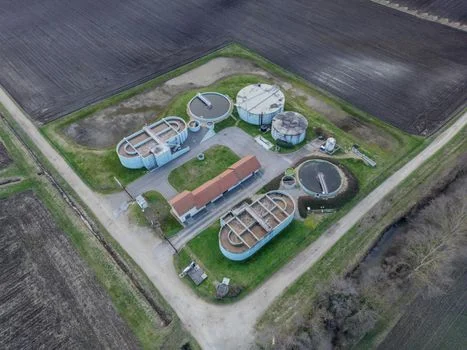
Understanding the financial implications of industrial sewage treatment equipment involves a comprehensive analysis of both capital expenditure (CAPEX) and operational expenditure (OPEX), along with the potential return on investment (ROI) derived from compliance and cost savings. For industrial facilities in Edinburgh, CAPEX for sewage treatment equipment can range significantly, from approximately £85,000 for a 5 m³/h DAF system to over £1.2M for a 50 m³/h MBR system, depending on flow rates and desired effluent quality. These figures often include Edinburgh-specific installation costs, such as groundworks which can be more complex and expensive in areas like Leith due to prevalent clay soil conditions requiring specialized foundations.
Operational expenditure (OPEX) is driven by several key factors. Chemical dosing, for instance, can cost between £5–£15 per cubic meter of treated effluent, varying with contaminant load and chemical prices. MBR systems incur membrane replacement costs, typically £20–£50 per square meter, usually every 5-10 years. Energy consumption is another significant OPEX component: DAF systems generally consume 0.3–0.5 kWh/m³, while MBR systems, due to aeration and membrane scouring, require 0.8–1.2 kWh/m³. For a 20 m³/h facility, the ROI calculation becomes compelling when comparing the current trade effluent charges of £2.15/m³ with the pre-treatment costs, which can range from £0.50–£1.20/m³ depending on the system and effluent. Additionally, avoiding SEPA penalties, such as the £120,000 fine incurred by an Edinburgh distillery, provides a substantial, albeit intangible, return on investment. Scottish Water also offers trade effluent rebates for facilities achieving exceptionally low discharge limits, typically below 10 mg/L BOD, incentivizing higher quality pre-treatment. Eligibility for these rebates often requires consistent monitoring and a formal application process. Beyond direct operational costs, hidden expenses include emergency callouts, which can range from £150–£300 per hour in Edinburgh, the cost of specialized spare parts like MBR membranes, and ongoing compliance testing, typically £200–£500 per sample.
| Cost Category | DAF System (5 m³/h) | MBR System (50 m³/h) | Potential ROI / Savings |
|---|---|---|---|
| CAPEX (Approx. Range) | £85,000 - £150,000 | £800,000 - £1,200,000 | N/A |
| OPEX (per m³ treated) | £0.50 - £1.00 (energy, chemicals) | £0.80 - £1.50 (energy, membranes, chemicals) | N/A |
| Trade Effluent Charge (Untreated) | £2.15/m³ | £2.15/m³ | Up to £1.65/m³ (pre-treatment vs. discharge) |
| SEPA Penalty Avoidance | Significant (e.g., £120K fine) | Significant (e.g., £120K fine) | Direct avoidance of regulatory fines |
| Scottish Water Rebates | Potential for <10 mg/L BOD | Higher potential for <10 mg/L BOD | Reduced overall discharge costs |
| Hidden Costs (e.g., emergency callout) | £150-£300/hour in Edinburgh | £150-£300/hour in Edinburgh | Mitigated by robust maintenance & SLAs |
For a broader perspective on industrial wastewater treatment costs and compliance, particularly in different geographical contexts, consider comparing Edinburgh and Houston wastewater treatment costs.
How to Select a Zero-Risk Sewage Treatment Equipment Supplier in Edinburgh
Selecting a sewage treatment equipment supplier in Edinburgh that guarantees zero-risk compliance and operational reliability is paramount for industrial facilities. The primary criterion is a supplier's ability to provide explicit compliance guarantees, backed by SEPA-compliant effluent quality certificates specifically demonstrating adherence to Edinburgh's limits (BOD <20 mg/L, COD <125 mg/L, TSS <30 mg/L). This ensures that the proposed equipment can reliably meet all regulatory requirements.
Local service capabilities are equally critical. A zero-risk supplier must offer 24/7 emergency response within a guaranteed timeframe, ideally within 2 hours, recognizing Edinburgh’s traffic patterns and the logistical challenges of reaching more remote industrial areas like Newbridge. This rapid response minimizes downtime and potential non-compliance events. consider suppliers who demonstrate hybrid system flexibility, offering modular upgrades (e.g., transitioning from DAF pre-treatment to an MBR system) to accommodate future capacity increases or changes in effluent characteristics. Requesting Edinburgh-specific case studies is essential; a reputable supplier should readily provide references from local distilleries, food processing plants, or pharmaceutical facilities, complete with measured effluent quality data to validate their claims.
Robust warranty and Service Level Agreements (SLAs) are non-negotiable. Insist on a minimum 2-year warranty for all major equipment components and a 1-year warranty on consumables like MBR membranes. An uptime SLA of 95% or higher, with clear penalties for failure to meet this standard, provides a crucial layer of protection against operational disruptions. Finally, Edinburgh-specific considerations must be addressed during the selection process. This includes verifying cold-climate testing data to ensure membrane performance at temperatures below 5°C, confirming noise compliance for installations in urban zones, and evaluating space-efficient designs for notoriously constrained sites in areas like Sighthill.
Frequently Asked Questions
What are the primary SEPA discharge limits for industrial facilities in Edinburgh?
Industrial facilities in Edinburgh are typically required to meet SEPA discharge limits of BOD <20 mg/L, COD <125 mg/L, and TSS <30 mg/L to prevent environmental pollution and protect municipal wastewater treatment infrastructure. These limits are critical for avoiding regulatory penalties.
How much can an industrial facility in Edinburgh expect to pay for trade effluent charges?
Trade effluent charges in Edinburgh can be up to £2.15/m³ for untreated or high-strength discharges, with additional surcharges for specific contaminants like heavy metals. Implementing effective pre-treatment can significantly reduce these costs by lowering contaminant concentrations, as detailed in our cost breakdown.
Which sewage treatment system is best for breweries in Edinburgh?
For breweries in Edinburgh, a hybrid system combining Dissolved Air Flotation (DAF) for efficient removal of fats, oils, greases, and suspended solids, followed by an MBR system for high biological treatment and pathogen reduction, is highly effective. This combination can achieve over 98% COD removal, as demonstrated by a Leith facility, ensuring compliance with stringent SEPA limits. More information on Edinburgh DAF systems for food processing and breweries is available.
What are the typical capital costs for a new industrial sewage treatment plant in Edinburgh?
Capital costs for industrial sewage treatment plants in Edinburgh vary widely based on technology and capacity, ranging from approximately £85,000 for a 5 m³/h DAF system to over £1.2M for a 50 m³/h MBR system. These figures include equipment and local installation considerations, such as groundworks in Leith's clay soil.
How can Edinburgh facilities ensure zero-risk SEPA compliance?
To ensure zero-risk SEPA compliance, Edinburgh facilities must select a sewage treatment equipment supplier that provides compliance guarantees with certified effluent quality data, offers 24/7 local emergency service within 2 hours, and backs their equipment with robust warranties and uptime SLAs. Prioritizing suppliers with proven Edinburgh-specific case studies and cold-climate testing for equipment like Edinburgh MBR systems for pharmaceuticals and hospitals is also crucial.