Houston industrial wastewater treatment permit compliance starts with City Ordinance Chapter 47, Section V: facilities discharging non-domestic wastewater need a permit, TCEQ limits apply, and 68% of 2025 applications were rejected for incomplete paperwork.
Houston Industrial Wastewater Treatment Permit Compliance: Rules and Penalties
Houston's Industrial Wastewater Service enforces pretreatment rules under City Ordinance Chapter 47, Section V, and requires permits for non-domestic dischargers. TCEQ discharge limits include 30 mg/L maximum for TSS and 250 mg/L for COD. Non-compliance draws fines up to $25,000 per day and possible shutdowns.
Rejection odds are higher than most applicants expect. In 2025, 68% of permit applications were rejected due to incomplete Industrial Waste Survey forms or missing onsite inspections, according to Houston Public Works data. A Houston metal plating plant paid a $50,000 fine in 2023 for illegal discharges. The lesson from both numbers: paperwork discipline is part of the treatment plant.
The federal backdrop reinforces the local rules. Under the Clean Water Act, “point sources may not discharge pollutants to surface waters without an NPDES permit” (Wikipedia). Houston plants that discharge to the city sewer are indirect dischargers — categorical pretreatment standards apply “to industrial users (also called 'indirect dischargers') contributing wastes to POTW” — while 40 CFR Part 403 sets the general pretreatment regulations for existing and new sources of pollution (Cornell LII). TCEQ adds its own trigger: “every facility that discharges wastewater must be authorized by either an agency rule, or by order of the Commission, or by an issued permit” (TCEQ).
Specific discharge parameters matter at design time. Limits cover pH (6–9), Oil & Grease (below or equal to 100 mg/L), TSS, COD, and heavy metals. Houston Public Works also emphasizes proper hazardous waste characterization for cyanide, heavy metals, and VOCs. Regular self-monitoring and reporting keep small issues from escalating into violations, increased monitoring frequencies, or mandatory equipment upgrades.
| Parameter | Houston City Ordinance Chapter 47, Section V | TCEQ Discharge Limits (2025 Standards) | Typical Removal Efficiency (DAF) | Typical Removal Efficiency (MBR) |
|---|---|---|---|---|
| Industrial Waste Definition | 'Any waterborne waste from production, manufacturing, or natural resource processing.' | N/A | N/A | N/A |
| Permit Requirement | Required for facilities discharging non-domestic wastewater. | N/A | N/A | N/A |
| Total Suspended Solids (TSS) | N/A | <= 30 mg/L | 92–97% | < 1 mg/L |
| Chemical Oxygen Demand (COD) | N/A | <= 250 mg/L | Variable (typically 50-70%) | < 50 mg/L |
| pH | N/A | 6–9 | N/A | N/A |
| Oil & Grease | N/A | <= 100 mg/L | 90–95% | N/A |
| Penalties for Non-Compliance | Fines up to $25K/day, forced shutdowns. | N/A | N/A | N/A |
Houston Industrial Wastewater Permit Application Process: Step by Step
The Houston industrial wastewater permit application process spans 4–12 weeks from submission to approval, per Houston Public Works 2025 data. Most delays trace to incomplete documentation — especially the Industrial Waste Survey form — or failures during the mandatory onsite inspection. Rejected facilities get 30 days to correct deficiencies and resubmit.
Start with a call, not a form. Contact the Industrial Wastewater Service at (832) 395-5800 or via email at [email protected] to discuss your operations before filing. That consultation clarifies your discharge profile and the permit class you actually need. Skipping it is how applications drift into the rejected pile.
The Industrial Waste Survey form, downloadable from the Houston Public Works website, demands detail. Expect to document influent and effluent parameters, process flow diagrams, and existing or proposed equipment specifications. Characterize every stream honestly: flow rates, pollutant concentrations, and the industrial processes behind them. Understated loads surface later as inspection failures.
The onsite inspection verifies what the paperwork claims. Inspectors check for adequate pretreatment equipment, proper sampling port installation, and compliance with TCEQ limits. Common failures include missing pH adjustment systems, inadequate sludge handling, and mislabeled waste streams. Have equipment operational, safety protocols in place, and documentation within reach on inspection day.
Wastewater Treatment Equipment for Houston Industries: Specs, Costs, and Use Cases
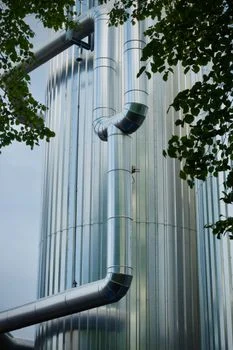
Equipment selection drives both compliance and cost for Houston plants, and the right choice differs by sector and by the pollutants each industrial wastewater treatment approach targets. Dissolved Air Flotation (DAF) suits food processing, metal finishing, and refineries, removing 92–97% of TSS and 85–90% of FOG. Fine air bubbles attach to suspended solids and oils, floating them for surface skimming. Chemical dosing systems then handle pH adjustment, coagulation, and flocculation at $0.10–$0.30/m³ OPEX on $50,000–$200,000 skid-mounted CAPEX.
Sludge handling closes the loop. Plate and frame filter presses cut sludge volume by 70–80%, against Houston disposal costs averaging $80–$120 per ton in 2025. A refinery might pair DAF with TCEQ oil and grease limits in mind; a food processor might choose MBR for reuse-grade effluent; a metal finisher might combine dosing with a press. Sites juggling industrial wastewater streams across regions can also compare notes in our Ajman Industrial Effluent Guide: 2026 Specs and Compliance. For cramped Houston plots, the Underground Package Sewage Treatment Plant (WSZ Series) buries the footprint entirely.
DAF System Cost Houston Industrial Facility Guide
DAF system cost for a Houston industrial facility runs $1.2 million to $3.5 million at 50–300 m³/h flow, based on 2026 cost models, with OPEX of $0.80–$1.50/m³. Chemical demand stays modest and operation is straightforward, which keeps day-to-day staffing light. Most plants we quote in the Ship Channel corridor size DAF as the front end and add polish stages only where limits demand them.
Choosing an MBR System for Houston Refinery Wastewater
An MBR system for Houston refinery wastewater delivers TSS below 1 mg/L and COD below 50 mg/L in a footprint roughly 60% smaller than conventional trains. CAPEX spans $2.5 million to $6 million for 10–200 m³/h, with OPEX of $1.20–$2.50/m³ driven largely by membrane replacement every 5–7 years. That effluent quality also opens reuse paths — cooling towers and irrigation — that DAF alone cannot reach.
| Equipment Type | Primary Applications | Typical Removal Efficiencies | CAPEX Range (50-300 m³/h, 2026) | OPEX Range ($/m³) | HydropureWater Product Link |
|---|---|---|---|---|---|
| DAF Systems | Food processing, metal finishing, refineries, pulp & paper | TSS: 92–97% FOG: 85–90% Oil & Grease: 90–95% |
$1.2M – $3.5M | $0.80 – $1.50 | DAF Machine |
| MBR Systems (WSZ/DF Series) | Space-constrained, high-quality effluent, water reuse | TSS: < 1 mg/L COD: < 50 mg/L |
$2.5M – $6M (10-200 m³/h) | $1.20 – $2.50 | MBR Integrated Wastewater Treatment |
| Chemical Dosing Systems | pH adjustment, coagulation, flocculation, disinfection | N/A (enhances other processes) | $50K – $200K (skid-mounted) | $0.10 – $0.30 | Automatic Chemical Dosing System |
| Plate & Frame Filter Press | Sludge dewatering, solids concentration | Volume Reduction: 70–80% | $100K – $500K (depending on size) | $0.05 – $0.15 (per m³ of sludge processed) | Plate Frame Filter Press |
Houston TCEQ Discharge Limits for Industrial Wastewater
Houston TCEQ discharge limits for industrial wastewater set the design targets every train must beat: TSS at or below 30 mg/L, COD at or below 250 mg/L, pH within 6–9, and Oil & Grease at or below 100 mg/L. DAF typically clears 92–97% of TSS and 90–95% of oil and grease on these feeds. MBR goes further, holding TSS below 1 mg/L and COD below 50 mg/L. Match the technology to the parameter that binds your permit, not the one that sounds impressive.
Industrial Wastewater CAPEX OPEX Houston 2026: Budget Benchmarks
Industrial wastewater CAPEX OPEX Houston 2026 benchmarks span $1.2 million to $8 million in capital for 50–300 m³/h systems, depending on technology choice from DAF through ZLD hybrid. OPEX runs $0.80–$2.50 per cubic meter. The OPEX split: energy 30–40%, chemicals 20–30%, labor 15–25%, and maintenance 10–20%.
At a single reference size of 100 m³/h, initial CAPEX can still range from $1.2 million for a DAF setup to $4.5 million for an MBR-Zero Liquid Discharge (ZLD) hybrid system. Each technology then occupies its own band. DAF sits at $1.2–$3.5 million CAPEX and $0.80–$1.50/m³ OPEX thanks to modest chemical needs. MBR runs $2.5–$6 million with $1.20–$2.50/m³ OPEX and membrane replacement at $50–$100/m² every 5–7 years. ZLD hybrids (DAF plus RO plus evaporation) top the range at $5–$8 million CAPEX and $2.00–$3.50/m³ OPEX — but they erase discharge fees that averaged $0.50–$1.20/m³ in Houston during 2025.
Several levers pull costs down. Containerized wastewater treatment systems trim CAPEX roughly 20% through faster installation and lighter site preparation. Optimized chemical dosing saves 15–25% of OPEX. Reusing MBR effluent for cooling towers or irrigation can return the investment within 3–5 years.
Total-cost-of-ownership analysis across the system lifespan — not sticker CAPEX — is what sound budgeting for Houston industrial wastewater treatment permit compliance looks like. Regular preventative maintenance keeps that math honest by avoiding unplanned downtime. Model both CAPEX and OPEX over the full service life before signing.
| System Type | CAPEX Range (50-300 m³/h, 2026) | OPEX Range ($/m³) | Key OPEX Components | Houston Sewer Fee Range (2025) | HydropureWater Blog Link |
|---|---|---|---|---|---|
| DAF Systems | $1.2M – $3.5M | $0.80 – $1.50 | Energy, minimal chemicals, labor, maintenance | $0.50 – $1.20 | Containerized Wastewater Treatment |
| MBR Systems | $2.5M – $6M | $1.20 – $2.50 | Energy, chemicals, membrane replacement, labor, maintenance | $0.50 – $1.20 | MBR Systems Explained |
| ZLD Hybrid Systems | $5M – $8M | $2.00 – $3.50 | High energy (evaporation), membrane replacement, chemicals, labor, maintenance | $0.00 (discharge eliminated) | Zero Liquid Discharge Solutions |
Next step: lock the permit pathway before pricing hardware. Send your flow rate, pollutant profile, and target limits through our quote request form for a sized DAF-to-ZLD recommendation built around Houston requirements.
Frequently Asked Questions
What happens if a Houston facility exceeds TCEQ discharge limits?
Violations draw fines of up to $25,000 per day, potential operational shutdowns, and increased monitoring requirements. A Houston metal plating plant paid a $50,000 fine in 2023 for illegal discharges. Repeat offenders can also face mandatory treatment upgrades, which cost far more than the original compliance work would have.
How long does permit approval take in Houston?
Plan on 4–12 weeks from submission to approval, per Houston Public Works 2025 data. Incomplete Industrial Waste Survey forms and failed onsite inspections are the two main causes of delay. Rejected applicants get 30 days to correct deficiencies and resubmit, so prepare documentation before the inspector arrives.
What does a 50–300 m³/h treatment train cost in Houston?
Total CAPEX runs $1.2 million to $8 million depending on technology, with DAF trains at $1.2–$3.5 million, MBR at $2.5–$6 million, and ZLD hybrids at $5–$8 million. OPEX lands between $0.80 and $2.50 per cubic meter. Containerized builds cut CAPEX roughly 20% through faster installation and reduced site work.
Which equipment suits a Houston metal finisher?
A DAF unit paired with chemical dosing and a plate-and-frame filter press covers most metal finishing loads. DAF removes 92–97% of TSS and 85–90% of FOG; dosing handles pH and metals precipitation; the press cuts sludge volume 70–80% before disposal at $80–$120 per ton. Add MBR only if reuse targets demand it.
Further Reading
Explore these in-depth articles on related wastewater treatment topics:
- how EU facilities achieve zero-discharge compliance
- Best Containerized Wastewater Treatment for Industrial Use (2026)
- California's stringent industrial wastewater regulations and solutions
- Texas state-level compliance for industrial wastewater