Hospitals in Thiruvananthapuram must treat wastewater to Kerala PCB discharge standards (BOD < 30 mg/L, COD < 250 mg/L, fecal coliform < 100 MPN/100 mL) using technologies like MBBR (92–97% COD removal) or MBR (99% pathogen removal). For a 150 m³/day system, MBBR systems cost ₹45–60 lakhs CAPEX with 15-year lifespans, while MBR systems cost ₹75–90 lakhs but achieve near-reuse quality. Chlorine dioxide generators (ClO₂) are replacing UV for disinfection due to lower OPEX and 99.99% kill rates for antibiotic-resistant bacteria.
Why Hospital Wastewater Treatment in Thiruvananthapuram is Non-Negotiable in 2025
Regulatory enforcement by the Kerala State Pollution Control Board (KSPCB) has reached an unprecedented peak, with 12 hospitals in Thiruvananthapuram issued formal notices in 2024 for exceeding BOD and COD limits. These enforcement actions, cited in the Kerala PCB annual report 2023–24, reflect a shift toward zero-tolerance for environmental non-compliance in the healthcare sector. For facility managers, the risk is no longer just a fine; it is the potential for a total operational shutdown. Typical hospital influent in Thiruvananthapuram is characterized by a BOD of 300–600 mg/L, COD of 800–1,200 mg/L, and TSS of 200–400 mg/L, according to 2023 CPCB guidelines for healthcare facilities. These levels are nearly double those of standard domestic sewage, requiring specialized hospital effluent treatment plant design to mitigate risks.
Beyond standard chemical parameters, the biological threat is escalating. A 2024 study published in the Journal of Environmental Management found that 68% of Kerala hospital wastewater samples contained carbapenem-resistant Enterobacteriaceae (CRE). These antibiotic-resistant bacteria in hospital effluent pose a significant liability to healthcare providers. In a recent real-world scenario, a 200-bed hospital in Thiruvananthapuram was fined ₹12 lakhs after an inspection revealed a discharge BOD of 45 mg/L, significantly exceeding the Kerala PCB limit of 30 mg/L. The facility was given a strict 30-day compliance deadline, illustrating the urgent need for robust, high-performance treatment technologies.
Kerala PCB vs. CPCB Discharge Standards: What Hospitals in Thiruvananthapuram Must Achieve
Hospitals in Thiruvananthapuram must navigate a dual-layer regulatory framework where Kerala PCB standards are often more stringent than national CPCB norms. Specifically, the limits for fecal coliform and heavy metals require higher-precision filtration and disinfection stages. The Kerala PCB wastewater discharge limits are designed to protect the state's sensitive water table and backwater ecosystems, making compliance a complex engineering challenge. While national standards might allow higher microbial counts, Kerala mandates a fecal coliform limit of < 100 MPN/100 mL, necessitating advanced disinfection protocols.
| Parameter | Kerala PCB Standard (2024) | CPCB Standard (2023) | Engineering Impact |
|---|---|---|---|
| pH | 6.5 – 9.0 | 6.5 – 9.0 | Neutralization tank required |
| BOD (mg/L) | < 30 | < 30 (with 90% removal) | Requires aerobic biological stage |
| COD (mg/L) | < 250 | < 250 | Secondary/Tertiary treatment needed |
| TSS (mg/L) | < 50 | < 100 | Enhanced clarification or MBR |
| Fecal Coliform (MPN/100 mL) | < 100 | < 1,000 | High-dose ClO₂ or UV required |
| Cr(VI) (mg/L) | < 0.1 | < 0.2 | Chemical precipitation for labs |
| Lead (Pb) (mg/L) | < 0.1 | < 0.5 | Ion exchange or advanced DAF |
Monitoring frequency in Thiruvananthapuram is also rigorous. Per Kerala PCB 2024 guidelines, hospitals must conduct quarterly testing for BOD/COD and monthly testing for coliform. For facilities with more than 50 beds, real-time online monitoring systems are increasingly recommended to provide Thiruvananthapuram hospital wastewater compliance data directly to the board's servers.
Hospital Wastewater Treatment Technologies Compared: MBBR vs. MBR vs. DAF for Thiruvananthapuram Facilities

Selecting the right technology depends on the hospital’s specific influent profile and space availability. For most medium-sized hospitals in Kerala, the choice often boils down to Moving Bed Biofilm Reactor (MBBR) vs. Membrane Bioreactor (MBR). MBBR systems are favored for their 92–97% COD removal efficiency and modular nature, as seen in the General Hospital, Kanjirappilly’s 150 m³/day system. However, for hospitals targeting water reuse for flushing or landscaping, MBR systems for hospital wastewater reuse in Kerala offer superior pathogen removal and a smaller footprint.
| Feature | MBBR (Moving Bed) | MBR (Membrane Bio) | DAF (Dissolved Air Flotation) |
|---|---|---|---|
| COD Removal | 92–97% | > 98% | 70–85% (Mainly TSS) |
| Pathogen Removal | Moderate (Requires Disinfection) | 99.9% (Physical Barrier) | Low |
| Footprint | Moderate | Compact (50% less than MBBR) | Moderate |
| CAPEX | Lower (₹45–60L for 150m³) | Higher (₹75–90L for 150m³) | Moderate |
| OPEX | Lower | 25% Higher (Membrane cleaning) | Moderate (Chemical costs) |
| Best For | General compliance | Space-constrained/Reuse | Laundry/Kitchen pre-treatment |
In facilities with high laundry or kitchen loads, DAF systems for high-TSS hospital wastewater in Thiruvananthapuram are utilized as a pre-treatment stage to remove 95% of fats, oils, and grease (FOG). A typical process flow involves a primary clarifier for solids, followed by an anoxic tank for denitrification, an aerobic tank (MBBR or MBR) with a retention time of 6–8 hours, and a final disinfection stage. Maintaining MLSS (Mixed Liquor Suspended Solids) levels between 3,000 and 5,000 mg/L in MBBR systems is critical for meeting Kerala's strict discharge limits.
Disinfection Showdown: Chlorine Dioxide vs. UV vs. Ozone for Hospital Effluent in Kerala
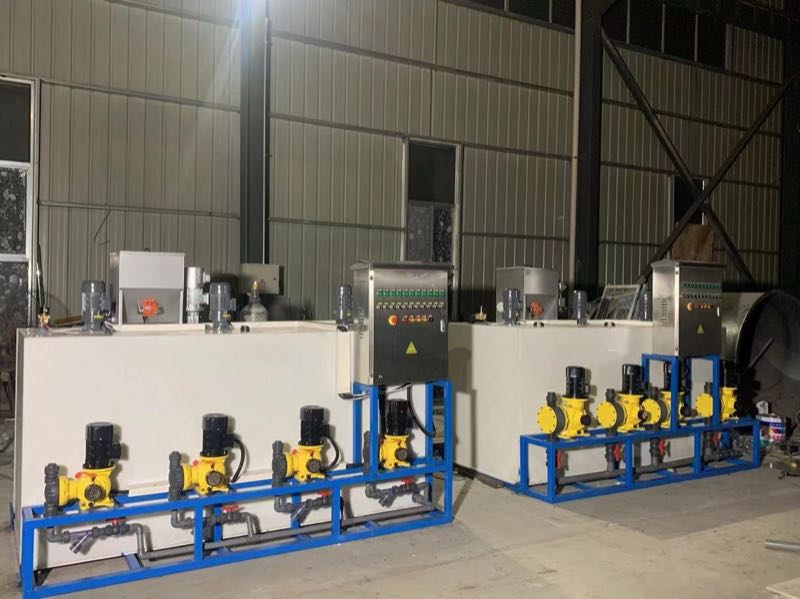
Disinfection is the most critical stage for hospital wastewater due to the presence of multi-drug resistant organisms. While UV has been a traditional choice, many facilities are transitioning to chlorine dioxide generators for hospital effluent disinfection. ClO₂ offers a 99.99% kill rate for CRE and other antibiotic-resistant bacteria, according to a 2023 study in Water Research. Unlike chlorine gas or bleach, ClO₂ does not produce harmful disinfection byproducts (DBPs) like trihalomethanes, which are closely monitored by environmental agencies.
| Technology | Kill Rate (CRE/E.coli) | Residual Effect | OPEX (150 m³/day) | Maintenance |
|---|---|---|---|---|
| Chlorine Dioxide (ClO₂) | 99.99% | Yes (Prevents regrowth) | ₹0.12 per log removal | Low (Chemical refill) |
| UV Irradiation | 99.9% | No | ₹0.18 per log removal | High (Lamp replacement) |
| Ozone (O₃) | 99.99% | No | ₹0.25 per log removal | Complex (Off-gas handling) |
UV systems face significant challenges in hospital settings where effluent TSS may fluctuate; any turbidity can "shield" pathogens from the light, leading to non-compliance. UV requires lamp replacements every 12–18 months, leading to a 20% higher OPEX compared to ClO₂. For a detailed look at how chlorine dioxide generators work, engineering teams should evaluate the chemical precursor safety and dosing automation to ensure consistent chlorine dioxide disinfection for medical wastewater.
How to Size a Hospital STP for Thiruvananthapuram: Engineering Calculations and Design Parameters

Correct STP sizing calculations for hospitals are vital to prevent system bypass during peak hours (typically 8:00 AM to 12:00 PM). Engineers must account for the "bed-to-wastewater" ratio, which in Kerala is approximately 1,000 liters per bed per day for multi-specialty facilities. To understand the broader context, facility managers can review this detailed engineering guide to healthcare wastewater treatment.
- Step 1: Flow Calculation: Q = 0.8 × bed capacity × 1,000 L/bed/day. For a 200-bed hospital, Q = 0.8 × 200 × 1,000 = 160,000 L/day or 160 m³/day.
- Step 2: Organic Load Determination: Use a conservative BOD of 500 mg/L for design. Total BOD load = 160 m³/day × 0.5 kg/m³ = 80 kg BOD/day.
- Step 3: Aeration Tank Sizing: Formula: V = (Q × BOD_in) / (MLSS × F/M ratio). Assuming MLSS of 3,000 mg/L and F/M of 0.15: V = (160 × 500) / (3,000 × 0.15) = 17.8 m³.
- Step 4: Clarifier Sizing: Using a surface loading rate of 25 m³/m²/day: Area = 160 / 25 = 6.4 m².
Worked Example: A 200-bed hospital in Thiruvananthapuram (160 m³/day) would require an MBBR system with a 20 m³ aeration tank, a 6.5 m² secondary clarifier, and a 50 g/h ClO₂ generator to ensure compliance with the < 100 MPN/100 mL coliform limit. It is also useful to see how hospital wastewater treatment compares in other regions to benchmark local performance against international standards.
Cost Breakdown and ROI Calculator for Hospital STPs in Thiruvananthapuram
The cost of hospital STP in Kerala is driven by technology choice and the degree of automation. While MBBR offers a lower initial investment, MBR systems can reduce long-term costs if the treated water replaces purchased tanker water for non-potable uses. According to a 2024 Water Science & Technology survey, energy accounts for 40% of the annual OPEX, followed by chemicals at 25%.
| Capacity (m³/day) | MBBR CAPEX (Lakhs) | MBR CAPEX (Lakhs) | Annual OPEX (Lakhs) | 10-Year Lifecycle Cost |
|---|---|---|---|---|
| 50 | ₹30 – 40 | ₹50 – 65 | ₹3.5 – 5.0 | ₹65 – 90 Lakhs |
| 150 | ₹45 – 60 | ₹75 – 90 | ₹6.0 – 8.5 | ₹105 – 145 Lakhs |
| 300 | ₹80 – 100 | ₹120 – 150 | ₹10.0 – 14.0 | ₹180 – 240 Lakhs |
ROI Calculator: To calculate the payback period, use the formula: Payback Period = CAPEX / (Annual OPEX Savings + Annual Penalty Avoidance). For a 150 m³/day MBBR system costing ₹50 lakhs, if the system prevents an average annual penalty of ₹4.5 lakhs and saves ₹1.5 lakhs in water procurement, the payback period is approximately 8.3 years. This calculation excludes the intangible value of brand reputation and legal security.
Step-by-Step Equipment Selection Checklist for Hospital STPs in Thiruvananthapuram
When evaluating vendors for compact medical wastewater treatment systems for small hospitals in Thiruvananthapuram, procurement teams should use a structured framework to avoid under-performing equipment. The following checklist ensures the selected system meets both engineering and regulatory requirements.
- Verify Kerala PCB Compliance: Demand recent test reports from a NABL-accredited lab for a similar installation in Kerala.
- Match Technology to Influent: Ensure MBBR is used for standard loads (100–300 m³/day) and consider MBR only if reuse is mandated or space is extremely limited.
- Check Footprint and Civil Requirements: Underground integrated sewage treatment systems can save up to 60% of surface space, which is critical for urban hospitals.
- Evaluate Automation: Systems with PLC/SCADA control can reduce OPEX by 20% by optimizing aeration and chemical dosing based on real-time flow.
- Assess Disinfection: Confirm the disinfection system can handle CRE and fecal coliform to < 100 MPN/100 mL limits.
- Demand Lifecycle Costing: Avoid vendors who only quote CAPEX. Request a 10-year projected OPEX including membrane replacement (for MBR) or media replenishment (for MBBR).
Red Flags: Be cautious of vendors who cannot provide Kerala-based references, those who lack a dedicated after-sales service team in Thiruvananthapuram, or equipment that lacks a performance guarantee for BOD/COD removal.
Frequently Asked Questions
What is the Kerala PCB limit for fecal coliform in hospital wastewater?
The limit is < 100 MPN/100 mL, which is significantly stricter than the national CPCB limit of 1,000 MPN/100 mL. This requires advanced disinfection like Chlorine Dioxide or high-intensity UV.
Is MBBR or MBR better for a 100-bed hospital in Thiruvananthapuram?
MBBR is generally more cost-effective for 100-bed facilities (approx. 80 m³/day) due to lower CAPEX and simpler maintenance, unless the hospital has severe space constraints or intends to reuse the water for flushing.
How much space does a 150 m³/day hospital STP require?
A conventional MBBR system requires approximately 80–100 m², whereas an integrated MBR system can be installed in 40–50 m². Underground configurations can further reduce the visible footprint.
Can chlorine dioxide remove antibiotic-resistant bacteria?
Yes, ClO₂ is highly effective against carbapenem-resistant Enterobacteriaceae (CRE) and other "superbugs" found in hospital effluent, achieving a 99.99% kill rate where standard chlorination might fail.