An industrial chlorine dioxide generator selection guide starts from duty, not from catalog capacity. On-site units make ClO₂ for disinfection, odor control, and bleaching, and typically yield 95–99% pure ClO₂ at doses of 0.1–10 mg/L, with industrial packages from 50 g/h to 20,000 g/h. Compared with chlorine, ClO₂ forms fewer THMs and can stay below the EPA Stage 2 limit of 80 µg/L when organic load is managed. Common duties include drinking water, hospital effluent, cooling-tower Legionella control, and food-plant sanitation.
Industrial chlorine dioxide generator selection guide
Selection of on-site chlorine dioxide is a mass-balance decision followed by a chemistry-path decision. Required output in g/h equals flow in m³/h times dose in mg/L. Chemical skids usually sit at $10,000–$50,000 CAPEX with precursor OPEX of $0.50–$2.00/kg. Electrochemical skids usually sit at $20,000–$100,000 CAPEX with OPEX of $0.80–$3.00/kg including power.
On-site units convert sodium chlorite into ClO₂ by acid chemistry or electrolysis. Chemical trains typically reach 90–98% yield and 98–99% purity. Electrochemical trains often reach 95–99% yield near 99% purity. Industrial capacity spans 50–20000 g/h at doses of 0.1–10 mg/L under common plant duty.
Why Chlorine Dioxide Outperforms Chlorine in Industrial Water Treatment
Chlorine dioxide (ClO₂) offers three practical advantages over chlorine: selective oxidation, lower disinfection byproduct (DBP) formation, and stronger kill on chlorine-resistant pathogens. Chlorine reacts broadly with organics and often drives THMs and HAAs into the 100–200 µg/L range. ClO₂ keeps THMs well below the EPA 2024 limit of 80 µg/L in many high-TOC waters when dose and contact time are controlled.
Most plants we size for high-organics feed water run ClO₂ at the lower end of the 0.5–2 mg/L drinking-water band first, then trim to residual targets. One food plant with persistent Cryptosporidium oocysts and THMs at 120 µg/L cut THMs by about 70% after switching to on-site ClO₂. The same project achieved full oocyst inactivation once CT was held through the contact basin.
WHO Guidelines for Drinking-water Quality (2022) and EU Drinking Water Directive 98/83/EC set a maximum ClO₂ residual of 0.7 mg/L. The EPA Stage 2 DBP Rule targets THM and HAA reduction, which ClO₂ supports by limiting chlorination pathways. ClO₂ disrupts protein synthesis and cell membranes. That mechanism reaches Giardia and Cryptosporidium more reliably than free chlorine alone in many surface-water plants.
According to WHO (2016 assessment, in the fourth-edition fact sheet with the first and second addenda), a guideline value for chlorine dioxide has not been established. The provisional guideline values are 0.7 mg/L (700 µg/L) for chlorite and 0.7 mg/L (700 µg/L) for chlorate. WHO states that tap residual is reduced to chlorite and chloride on ingestion, and that the taste and odour threshold is 0.2–0.4 mg/L. At typical final-disinfectant doses, chlorite is normally below 0.2 mg/L, and missing that value must not justify weaker disinfection.
That 0.2–0.4 mg/L taste band sits below the 0.5–2 mg/L municipal dose many plants apply for CT, so residual decay before the tap is part of the design. WHO notes that chlorine dioxide can be reduced below 0.1 mg/L, yet normal practice is to leave a residual of a few tenths of a milligram per litre for regrowth control. The 0.7 mg/L ClO₂ residual attributed above to Directive 98/83/EC stays in this guide as the earlier claim. Buyers writing a European potable spec should confirm the chlorite and chlorate parameters in force for their member state rather than treating that residual sentence as the current EU cap.
| Feature | Chlorine Dioxide (ClO₂) | Chlorine (Cl₂) |
|---|---|---|
| Disinfection Byproducts (DBPs) | Minimal THMs (<80 µg/L EPA), no HAAs | Significant THMs (100–200 µg/L), HAAs |
| Pathogen Efficacy | Highly effective against *Cryptosporidium*, *Giardia*, viruses, bacteria | Less effective against *Cryptosporidium* oocysts; forms resistant cysts |
| Oxidation Selectivity | Selective oxidant; does not react with ammonia or form chloramines | Non-selective; reacts with organic matter and ammonia, forming chloramines |
| pH Effectiveness | Effective across a wide pH range (6–10) | Efficacy decreases significantly at higher pH levels |
| Odor/Taste Control | Excellent for taste and odor control (e.g., phenols, sulfides) | Can create chlorinous tastes and odors |
| Residual Stability | More stable residual in distribution systems (half-life 12–24 hours) | Less stable, easily consumed by organic matter |
Use the table as a shortlist filter, not a purchase decision. If your water already forms THMs above 80 µg/L on free chlorine, ClO₂ deserves a pilot before another chlorination upgrade. If ammonia is high and you rely on chloramines for network residual, confirm secondary disinfection strategy before removing chlorine entirely.
Which chemical vs electrochemical chlorine dioxide generator fits?
A chemical vs electrochemical chlorine dioxide generator decision is driven by yield, acid storage, and power, not by a brochure purity claim. Chemical acid trains are the default where operators already store HCl or H₂SO₄. Electrochemical cells win where acid tanks are the permit problem and power is stable.
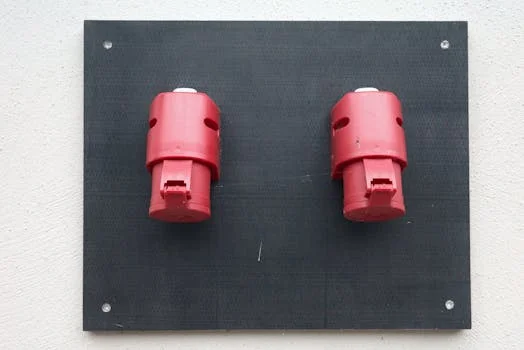
On-site ClO₂ systems remove the need to ship and store pre-formed ClO₂ gas. Chemical generators mix precursors in a reaction chamber under controlled ratio, temperature, and residence time. Three industrial pathways dominate day-to-day procurement discussions.
What is the sodium chlorite chlorine dioxide generator yield formula?
The sodium chlorite chlorine dioxide generator yield formula on the common acid route is 5NaClO₂ + 4HCl → 4ClO₂ + 5NaCl + 2H₂O, with quoted yield of 95–98% and purity of 98–99%. The two other industrial routes below trade some of that yield for different precursor hazards. Stoichiometry only holds when the chlorite assay and the acid ratio stay inside the skid's control band.
- Two-precursor system (Sodium Chlorite + Hydrochloric Acid):
5NaClO₂ + 4HCl → 4ClO₂ + 5NaCl + 2H₂O
This route is widely used, with ClO₂ yield of 95–98% and purity of 98–99%. Precursor ratio control limits excess chlorite. For stoichiometry detail, see the formula for chlorine dioxide generator yield. - Three-precursor system (Sodium Chlorite + Chlorine Gas + Hydrochloric Acid):
2NaClO₂ + Cl₂ → 2ClO₂ + 2NaCl
Yields of 90–95% are common, but chlorine-gas handling adds safety and permitting load. - Three-precursor system (Sodium Chlorite + Sulfuric Acid + Hydrogen Peroxide):
2NaClO₂ + H₂SO₄ + H₂O₂ → 2ClO₂ + Na₂SO₄ + 2H₂O
This path avoids chlorine gas and still delivers usable industrial yields.
Electrochemical generators pass sodium chlorite through an electrolytic cell: NaClO₂ + electricity → ClO₂ + NaOH + H₂. Purity near 99% and yields of 95–99% are typical without bulk strong-acid storage. Power use is about 0.5–1.2 kWh per kilogram of ClO₂, so electricity is a real OPEX line item on continuous duty.
Both chemical and electrochemical trains dose in the 0.1–10 mg/L window with better control than batch make-down. HydropureWater's Chlorine Dioxide (ClO₂) Generator for Water Disinfection covers 50–20,000 g/h in chemical or electrochemical builds. Most plants we size for food or hospital effluent start by locking dose and CT, then choose the chemistry path from acid-handling appetite rather than brochure claims.
| Parameter | Chemical ClO₂ Generator | Electrochemical ClO₂ Generator |
|---|---|---|
| Primary Reaction | Precursor chemicals (e.g., NaClO₂ + HCl) | Electrolysis of NaClO₂ solution |
| ClO₂ Yield Rate | 90–98% | 95–99% |
| ClO₂ Purity | 98–99% | 99% |
| CAPEX (typical) | $10,000 – $50,000 | $20,000 – $100,000 |
| OPEX (per kg ClO₂) | $0.50 – $2.00 (precursors) | $0.80 – $3.00 (electricity + precursors) |
| Acid Storage Required | Yes (e.g., HCl, H₂SO₄) | No (internal acid generation or pH control) |
| Maintenance Complexity | Moderate (pump calibration, line cleaning) | Lower (electrode cleaning, less chemical handling) |
| Safety Considerations | Handling/storage of concentrated acids | Electrical safety, less hazardous chemical handling |
Read CAPEX and OPEX together. A chemical skid that looks cheap at $10,000–$50,000 can still lose on five-year cost if acid logistics, secondary containment, and operator overtime are high. An electrochemical skid at $20,000–$100,000 can win when power is moderate and acid storage is the real bottleneck.
Industrial Applications of ClO₂ Systems: Use Cases and Performance Data
Municipal drinking-water plants dose ClO₂ at 0.5–2 mg/L as a primary disinfectant. That band supports 4-log inactivation of Giardia lamblia cysts and helps control Cryptosporidium under the EPA LT2ESWTR framework while cutting THM and HAA formation. Utilities usually confirm CT tables with their primacy agency before freezing setpoints.
Food and beverage plants use 1–5 mg/L on equipment surfaces for 99.99% (4-log) reduction of E. coli and Salmonella. FDA-allowed produce washes run up to 3 mg/L without quality loss on many fruit and vegetable lines. Meat plants use ClO₂ for carcass and room odor control as well as pathogen reduction on belts and drain zones.
Cooling towers dosed near 0.8 mg/L ClO₂ have shown 99.9% kill of Legionella pneumophila when residual is held steady across the basin and fill. Hospital effluent programs use ClO₂ to meet tight microbial limits, including those aligned with EU Urban Waste Water Directive 91/271/EEC for resistant organisms. Clinical search topics such as chlorine dioxide treatment for lyme 2026 are outside industrial process selection; plant buyers should stay on wastewater and utility specs.
Paper mills replaced elemental chlorine with ClO₂ in ECF bleaching and cut AOX discharge by 80–90%. That shift remains one of the clearest environmental wins documented for ClO₂ chemistry in industry. Pre-oxidizing industrial wastewater with ClO₂ ahead of dissolved air flotation often lifts TSS removal by 20–30% by breaking emulsions and destabilizing oily organics before flotation.
ClO₂ System Selection Guide: 5 Critical Factors for Industrial Buyers
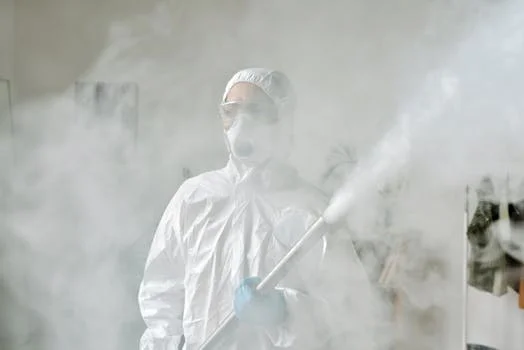
This industrial chlorine dioxide generator selection guide scores capacity, chemistry path, certifications, controls, and maintainability before a purchase order. Skipping any one of these five factors is how plants overspend on CAPEX or miss residual limits within the first season of operation.
Factor 1: Required ClO₂ Output (g/h)
Required output equals flow (m³/h) times dose (mg/L), with unit conversion to g/h. A food plant at 100 m³/h and 2 mg/L needs about 200 g/h. Municipal systems often need 5,000–20,000 g/h at 0.5–2 mg/L. Over-sizing wastes CAPEX; under-sizing fails CT credit.
Most plants we size for batch food duty land near the compact end of the 50–500 g/h band unless CIP loops run continuously. Add 20–30% spare for peak flow and seasonal TOC swings rather than doubling capacity "just in case."
What capacity does an LG-25 ClO₂ unit cover?
An LG-25-class package sits in the small-unit search band buyers use for low-flow loops, well below the 50 g/h industrial floor covered in this guide. Industrial packages discussed here start at 50 g/h and scale to 20,000 g/h for municipal and large process plants. If your duty is under about 25–40 g/h continuous, confirm whether a compact OEM skid or a duty-cycled 50 g/h industrial unit with turndown is the cheaper compliant path.
Factor 2: Chemical vs. Electrochemical
Chemical skids usually cost $10,000–$50,000 CAPEX with OPEX near $0.50–$2.00/kg ClO₂ from precursors and acid handling. Electrochemical skids often cost $20,000–$100,000 CAPEX with OPEX near $0.80–$3.00/kg including power. Sites that want to drop bulk acid storage usually accept the higher CAPEX.
Manual setpoints drift fast on variable process water and create chlorite spikes that fail SDWA sampling.
Factor 3: Compliance and Certifications
Drinking-water service needs NSF/ANSI 60 for additives and generated ClO₂ purity typically above 95%. U.S. SDWA limits are 0.8 mg/L ClO₂ residual and 1.0 mg/L chlorite. EN 12671 covers generator performance for European disinfection duty. Spec sheets that omit these marks should not short-list for potable service.
Factor 4: Automation and Control
PLC flow-paced dosing, residual or ORP feedback, remote alarms, and fail-safe shutdowns keep dose inside the 0.1–10 mg/L window. Required interlocks include low-precursor trip, high-temperature alarm, and leak detection. Without paced control, operators chase residuals manually and overshoot chlorite during night-flow valleys.
Factor 5: Installation and Maintenance
Chemical trains need acid-rated containment and hazmat training under OSHA 29 CFR 1910.120. Electrochemical trains need clean power and electrode care but less acid logistics. Budget weekly sensor checks, monthly chamber or cell cleaning, and annual seal/tubing replacement. Service contracts that include calibration cut unplanned downtime on multi-shift sites.
| Factor | Chemical ClO₂ Generator | Electrochemical ClO₂ Generator |
|---|---|---|
| Required ClO₂ Output | Available from 50 g/h to 10,000+ g/h | Available from 50 g/h to 20,000+ g/h |
| CAPEX (typical) | $10,000 – $50,000 | $20,000 – $100,000 |
| OPEX (per kg ClO₂) | $0.50 – $2.00 (precursors) | $0.80 – $3.00 (electricity + precursors) |
| Safety Profile | Requires careful handling/storage of strong acids | Eliminates strong acid storage, safer precursor handling |
| Compliance Needs | NSF/ANSI 60, EPA SDWA, EN 12671 (for ClO₂ purity) | NSF/ANSI 60, EPA SDWA, EN 12671 (for ClO₂ purity) |
| Automation Capability | High (PLC-based, flow-paced dosing, remote monitoring) | High (PLC-based, flow-paced dosing, remote monitoring) |
| Installation Footprint | Larger due to chemical storage tanks and containment | Smaller footprint, potentially less complex chemical storage |
| Maintenance & Training | Routine pump/sensor calibration, hazmat training (OSHA 1910.120) | Electrode cleaning, routine calibration, less extensive hazmat training |
Selection checklist before RFQ starts with g/h from flow × dose plus 20–30% spare. Then lock chemical versus electrochemical safety trade-offs and NSF/ANSI 60 or EN 12671 marks. Finish with PLC pacing, leak detection, containment or power needs, OPEX per kg, and service response time. Manufacturer pages for a chlorine dioxide generator help compare capacity bands once those seven items are frozen.
Seven checks before the purchase order
- Convert m³/h times mg/L into g/h, then add 20–30% spare for peak flow and TOC swings.
- Place the duty on the 50–20,000 g/h industrial band, not on a sub-50 g/h lab skid, unless turndown is proven.
- Score chemical CAPEX at $10,000–$50,000 against electrochemical CAPEX at $20,000–$100,000, with OPEX at $0.50–$2.00/kg or $0.80–$3.00/kg.
- Require NSF/ANSI 60 and purity above 95% for potable water, plus the 0.8 mg/L ClO₂ and 1.0 mg/L chlorite SDWA caps, or EN 12671 for European duty.
- Demand flow-paced control inside the 0.1–10 mg/L window, with low-precursor, high-temperature, and leak trips.
- Match the room to the chemistry: acid containment and OSHA 29 CFR 1910.120, or clean power and electrode access.
- Budget weekly sensor checks, monthly chamber or cell cleaning, and annual seal and tubing replacement before dose drift shows up in samples.
What does a chlorine dioxide generator cost capex opex comparison show?
A chlorine dioxide generator cost capex opex comparison starts with sticker price and ends with five-year acid, power, and DBP cost. Total cost of ownership mixes CAPEX, OPEX, compliance risk, and residual performance. ClO₂ rarely wins on sticker price alone. It wins when THM fines, pathogen CT, or acid-handling risk dominate the decision over a three-to-five-year window.
How much does industrial ozone water treatment cost?
Industrial ozone packages typically run $20,000–$150,000 CAPEX, including oxygen prep, contactors, and off-gas destruct. OPEX often lands at $1.00–$4.00/kg O₃ because power use is about 10–20 kWh/kg O₃ plus oxygen supply. Hidden costs include air drying, bromate control in bromide-rich water, and destruct-unit upkeep. For process detail, read How Ozone Generator Water Treatment Works: Industrial Process, Efficiency Data & Engineering Specs 2025.
Chlorine dioxide vs ozone: which machine fits?
Chlorine dioxide vs ozone machine selection turns on residual need and byproduct risk. ClO₂ holds a residual for 12–24 hours in many distribution systems. Ozone's half-life is near 20 minutes, so it needs a secondary disinfectant for network protection. Ozone is the stronger oxidant for color and micropollutants, but it can form bromate.
40 CFR 141.64 sets the bromate MCL at 0.010 mg/L for plants that ozonate bromide-rich water. ClO₂ does not form bromate, which is why some surface-water plants keep ozone off the shortlist when bromide is already high.
ClO₂ CAPEX is typically $10,000–$100,000 with OPEX $0.50–$3.00/kg. Ozone CAPEX is often higher with electricity-heavy OPEX at $1.00–$4.00/kg. Choose ClO₂ when a stable residual and low THM formation matter more than maximum oxidation power. Choose ozone when color, taste-and-odor organics, or micropollutant oxidation dominate and a separate residual disinfectant is already planned.
CAPEX Comparison
- ClO₂ Generator: Ranges from $10,000 for compact units to $100,000 for large-scale industrial or municipal systems.
- Chlorine Gas System: Typically $5,000–$30,000, primarily for gas feeders, injectors, and safety equipment.
- Ozone Generator: Generally higher, from $20,000 to $150,000, including oxygen concentrators, ozone contactors, and off-gas destruct units.
- UV System: Ranges from $15,000 to $80,000, depending on flow rate and UV dose requirements, including reactors, lamps, and control panels.
OPEX Breakdown (per kg of disinfectant or per kWh)
- ClO₂: $0.50–$3.00/kg, covering precursor chemicals (sodium chlorite, acid) and electricity (for electrochemical systems).
- Chlorine: $0.20–$1.00/kg, for chlorine gas cylinders or bulk hypochlorite.
- Ozone: $1.00–$4.00/kg, primarily for electricity consumption (10–20 kWh/kg O₃) and oxygen supply.
- UV: $0.10–$0.50/kWh for electricity, plus lamp replacement costs ($50–$500 per lamp, every 6–12 months).
Hidden Costs
- ClO₂: Costs for precursor chemical storage and handling, safety training, and potential for chlorite residuals needing removal.
- Chlorine: Significant costs for safety equipment (scrubber systems, leak detectors), stringent regulatory reporting, and potential for DBP formation fines.
- Ozone: High electricity costs, air preparation (drying, filtering), off-gas destruction units, and potential bromate formation in bromide-rich waters.
- UV: Frequent lamp replacement, high electricity consumption, and the necessity for excellent pre-treatment (low turbidity, no scaling) to maintain efficacy.
ROI Calculator
Payback Period = (ClO₂ System CAPEX − Chlorine System CAPEX) / Annual Savings. If the ClO₂ premium is $50,000 and annual savings are $25,000 from avoided DBP fines and lower chemical waste, payback is 2 years.
A Midwest municipal plant spent an extra $60,000 versus a chlorine upgrade, cut THMs by 65%, and saved about $80,000 per year in fines and chemicals. Payback landed under one year once sampling confirmed the THM drop held through warm-weather TOC peaks.
| Disinfection Method | Typical CAPEX | Typical OPEX (per kg or kWh) | Key Hidden Costs | Primary Advantages |
|---|---|---|---|---|
| Chlorine Dioxide (ClO₂) | $10K – $100K | $0.50 – $3.00/kg | Precursor storage, safety training | Low DBP formation, broad-spectrum efficacy, stable residual |
| Chlorine (Cl₂) | $5K – $30K | $0.20 – $1.00/kg | Scrubber systems, DBP fines, safety compliance | Low initial cost, established technology |
| Ozone (O₃) | $20K – $150K | $1.00 – $4.00/kg | High electricity, air prep, off-gas destruction, bromate risk | Very powerful oxidant, no residual DBPs (but bromate) |
| UV Disinfection | $15K – $80K | $0.10 – $0.50/kWh | Lamp replacement, pre-treatment requirements, no residual | Chemical-free, effective against *Cryptosporidium*, no DBPs |
Chlorine still looks cheap at $5,000–$30,000 CAPEX and $0.20–$1.00/kg OPEX. Add scrubbers, reporting, and DBP fine risk before calling it the low-cost option. UV at $15,000–$80,000 avoids chemical residuals but needs strong pretreatment and provides no network residual on its own.
Safety and Compliance: Handling ClO₂ Systems in Industrial Settings

ClO₂ and its precursors (sodium chlorite, hydrochloric acid) are hazardous oxidants and corrosives. OSHA Hazard Communication (29 CFR 1910.1200) requires training on properties, exposure routes, and handling. PPE includes chemical-resistant gloves, goggles, and respirators when ClO₂ vapor exceeds 0.1 ppm. Chemical hygiene plans under OSHA 1910.1450 apply where concentrated precursors are stored.
Under the Clean Water Act, NPDES permits may limit ClO₂ residuals in effluent. SDWA sets MRDL 0.8 mg/L for ClO₂ and MCL 1.0 mg/L for chlorite. Facilities above TRI thresholds for sodium chlorite report under 40 CFR 372.
40 CFR 141.65, as displayed on the eCFR as of 23 September 2026, still sets the chlorine dioxide MRDL at 0.8 mg/L as ClO₂. The same section sets chlorine and chloramines at 4.0 mg/L as Cl₂, with no change recorded after 3 January 2017. 40 CFR 141.64 still lists a chlorite MCL of 1.0 mg/L, a TTHM MCL of 0.080 mg/L (80 µg/L), and an HAA5 MCL of 0.060 mg/L. The Cornell text of that section cites the Stage 2 amendment at 71 FR 478 on 4 January 2006, so the 80 µg/L figure is not a 2024 revision.
In the EU, REACH covers sodium chlorite manufacture and use, while BPR (EU) No 528/2012 covers biocidal approval. EN 12671 sets generator performance and safety expectations for water treatment.
On-site generation avoids bulk ClO₂ gas storage, which is unstable and explosive at high concentration. Electrochemical designs further cut strong-acid inventory versus two-chemical acidification. Minimum site package: ClO₂ gas leak sensors, dedicated ventilation, spill neutralization (e.g., sodium sulfite), first-aid kits, and drilled evacuation routes.
Operators should treat precursor rooms like any other corrosive chemical area: segregation, eyewash, secondary containment, and written spill drills. Most plants we commission fail the first safety walkdown on labeling or sensor calibration, not on the reactor itself.
Field sizing still starts with mass balance, not catalog horsepower. Convert m³/h × mg/L to g/h, then check turndown against night flow and CIP peaks. If the calculated duty sits between two skid sizes, prefer the larger frame with proven low-flow control rather than an undersized reactor pushed to 100% all shift.
Precursor quality matters as much as reactor design. Sodium chlorite assay drift of a few percent shows up as yield loss and chlorite residual risk. Keep certificates of analysis on file and verify delivery concentration before blaming the generator for off-spec water samples.
For combined disinfection trains, place ClO₂ where it solves the binding constraint: pre-oxidant for DBPs, primary disinfectant for protozoa, or cooling-tower biocide for Legionella. Stacking ClO₂ with UV or ozone can work, but only when each unit has a clear CT or dose credit and sampling points do not fight each other.
Who This Is For / Who Should Look Elsewhere / Next Step
This guide is for plant engineers, EPC contractors, and procurement teams. It covers on-site ClO₂ sizing for drinking water, food plants, hospitals, cooling towers, pulp bleaching, and industrial pretreatment. Look elsewhere if you need only point-of-use UV with no residual, or if your duty is purely clinical rather than process water.
When flow, dose, and compliance marks are ready, request a sized quote with m³/h, target mg/L, and preferred chemical or electrochemical path. Bring recent TOC, bromide, and THM data if the driver is DBP control rather than simple disinfection.
Frequently Asked Questions
What is the shelf life of chlorine dioxide generated on-site?
On-site ClO₂ is reactive and usually degrades within hours under light, heat, or organics, so it is not stored as bulk product. Plants generate it on demand and dose immediately into the process or contact chamber. That is why industrial designs favor continuous or demand-paced units rather than warehouse drums of pre-formed ClO₂ solution. A held solution also drifts toward chlorite, which is the residual many potable permits actually sample.
How does chlorine dioxide compare to ozone for disinfection?
ClO₂ is more stable in water and often keeps a residual for 12–24 hours in distribution piping, while ozone's half-life is near 20 minutes. ClO₂ does not form bromate, a risk with ozone in bromide-rich sources. Ozone remains the stronger oxidant for color and refractory organics, but ClO₂ fits better when lasting residual and lower THM formation drive the decision. Where ozone is still chosen, 40 CFR 141.64 holds bromate to 0.010 mg/L.
What maintenance does an on-site ClO₂ system need?
Weekly work covers precursor levels and pH/ORP sensor checks. Monthly tasks usually include reaction-chamber or electrolytic-cell cleaning and dosing-pump recalibration. Annual scope covers full inspection, safety audit, and replacement of seals, tubing, and other wear parts before they cause dose drift or leaks on multi-shift duty. Most plants we service lose dose accuracy from a dirty sensor long before the reactor itself fails.
Can on-site ClO₂ systems treat drinking water?
Yes, on-site ClO₂ is widely used in drinking-water treatment when the unit and chemistry meet NSF/ANSI 60 and SDWA limits. Residual ClO₂ must stay at or below 0.8 mg/L and chlorite at or below 1.0 mg/L. Utilities also confirm CT credits for Giardia and related pathogens under surface-water rules before locking dose setpoints. WHO has not set a chlorine dioxide guideline value; its provisional values of 0.7 mg/L apply to chlorite and to chlorate.
What payback period should buyers expect for ClO₂?
Municipal plants often see 1–3 year payback when THM fines and chemical optimization dominate savings. Industrial sites more often land in a 2–5 year band through fewer pathogen events, steadier residuals, and lower hidden compliance cost than chlorine scrubber packages. Payback shortens when current THMs already sit near or above 80 µg/L and fines are recurring. A worked case with a $50,000 premium and $25,000 a year in avoided cost pays back in 2 years.