Why Vizag Factories Need Upgraded Sewage Treatment Equipment in 2026
Vizag’s top sewage treatment equipment suppliers offer systems with capacities from 1–500 m³/hour, but engineering specs vary widely. For example, MBR systems deliver effluent COD ≤50 mg/L (meeting CPCB 2026 limits), while conventional STPs require tertiary polishing to achieve the same. This guide compares 5 leading suppliers by technology, automation grade, and 2026 cost models—including a zero-risk selection framework to avoid PCB penalties and cost overruns.
The Andhra Pradesh Pollution Control Board (APPCB) has signaled a shift in enforcement for 2026, mandating that industrial facilities in Vizag adhere to stricter discharge limits: COD ≤250 mg/L, BOD ≤30 mg/L, and TSS ≤100 mg/L. This is a significant reduction from the 2023 baseline of COD ≤500 mg/L. Factories failing to upgrade their sewage treatment equipment face penalties ranging from ₹5L to ₹15L annually, or potential production shutdowns. In 2023, a medium-scale pharmaceutical plant in the Parawada industrial area was fined ₹12L for exceeding Total Suspended Solids (TSS) limits; by upgrading to an integrated MBR system, the facility eliminated penalties and reduced freshwater procurement costs by 25% through treated water reuse.
Beyond regulatory pressure, water scarcity is a primary driver for equipment upgrades. Industrial parks like Gajuwaka and Parawada are projected to face up to 40% water supply cuts by 2026 due to urban expansion and seasonal shortages. This has made adopting Turkey’s hybrid ZLD systems for water scarcity a viable model for Vizag factories seeking to insulate themselves from supply volatility. Vizag’s monsoon season (June–September) presents a unique engineering challenge: systems must be designed with a surge capacity of 1.5× the average daily flow to manage rainwater infiltration without washing out the biological culture in the STP.
Core Technologies: How DAF, MBR, and Conventional STPs Work in Vizag’s Industrial Context
Dissolved Air Flotation (DAF) and Membrane Bioreactor (MBR) technologies represent the primary shift in Vizag’s industrial wastewater sector to achieve 95%+ pollutant removal efficiency. DAF systems utilize micro-bubbles (30–50 μm) to attach to suspended solids and fats, oils, and grease (FOG), lifting them to the surface for mechanical skimming. This technology is essential for Vizag’s food processing and petrochemical sectors, where influent TSS often exceeds 1,000 mg/L. According to APPCB guidelines, DAF units must operate within a pH range of 6.5–8.5 to ensure optimal flocculation. Many facilities are now installing DAF systems for Vizag food processing and textile wastewater to pre-treat effluent before it enters biological stages.
For high-purity requirements, MBR technology combines biological treatment with submerged PVDF membranes (0.1 μm pore size). This eliminates the need for secondary clarifiers and sand filters, reducing the system footprint by 60%. MBR systems typically consume 0.4–0.8 kWh/m³, which is more energy-efficient than the 0.6–1.2 kWh/m³ required by conventional STPs that utilize extensive tertiary polishing. Implementing MBR systems for Vizag factories needing COD ≤50 mg/L effluent ensures that the treated water is suitable for cooling tower make-up or toilet flushing, significantly improving the facility's water balance.
| Parameter | DAF (Dissolved Air Flotation) | MBR (Membrane Bioreactor) | Conventional STP (A/O) |
|---|---|---|---|
| Removal Efficiency (TSS) | 92–97% | >99% | 85–90% |
| Effluent COD (mg/L) | Variable (Pre-treatment) | ≤50 mg/L | ≤250 mg/L (with polishing) |
| Energy Demand (kWh/m³) | 0.3–0.6 | 0.4–0.8 | 0.6–1.2 |
| Footprint Requirement | Medium | Very Low | High |
| Bubble/Pore Size | 30–50 μm bubbles | 0.1 μm pores | N/A (Gravity settling) |
The standard process flow for a DAF system involves coagulation and flocculation, followed by flotation and skimming, and finally sludge dewatering. In contrast, an MBR flow follows an anoxic/aerobic tank sequence where the membrane module performs the solid-liquid separation. Conventional STPs utilizing the A/O (Anoxic/Oxic) process rely on gravity in large clarifiers, which often struggle to meet 2026 TSS limits during Vizag's peak humidity and monsoon surge events.
Top 5 Sewage Treatment Equipment Suppliers in Vizag: Head-to-Head Comparison
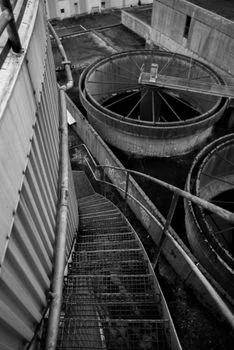
Procurement data from industrial parks in Gajuwaka and Parawada indicates that sewage treatment equipment suppliers in Vizag currently offer a wide variance in automation grades and effluent quality benchmarks. The following table compares five prominent suppliers serving the Vizag region based on 2026 engineering specifications and cost models.
| Supplier | Primary Technology | Automation Grade | 2026 Compliance | CAPEX (100 m³/day) | OPEX (₹/m³) |
|---|---|---|---|---|---|
| ANM Enviro Engineers | ASP / Clarifiers | Automatic PLC | Conditional (Needs Tertiary) | ₹18–25L | ₹1.5–2.5 |
| Hydromo | DAF + RO + ZLD | Full SCADA | Yes (Zero-Discharge) | ₹45–70L | ₹2.8–3.5 |
| Vikas Pump | A/O Process | Manual/Semi-Auto | No (Requires Upgrades) | ₹12–20L | ₹1.8–2.6 |
| Ion Exchange India | Custom ETP/STP | Automatic PLC | Yes | ₹30–50L | ₹1.2–2.2 |
| HydropureWater | MBR / DAF / ZLD | Full PLC/IoT | Yes (EPA/EU Standards) | ₹22–35L | ₹0.8–1.4 |
Supplier 1: ANM Enviro Engineers focuses on large-scale ETP/STP projects with capacities up to 500 m³/hour. Their systems feature 160 Bar pressure ratings and automatic PLC controls. While they meet 2023 CPCB limits, their standard ASP (Activated Sludge Process) units typically require additional membrane or carbon filtration stages to meet the 2026 COD limits.
Supplier 2: Hydromo is the primary choice for facilities in water-stressed zones requiring Zero Liquid Discharge (ZLD). Their integrated systems combine DAF, Reverse Osmosis (RO), and evaporators. While the CAPEX is high (up to ₹70L), they offer the highest level of regulatory security.
Supplier 3: Vikas Pump provides budget-friendly conventional STPs. These are suitable for smaller facilities or housing colonies where discharge limits are less stringent, but they lack the automation necessary for high-variability industrial sewage.
Supplier 4: Ion Exchange India Ltd offers highly specialized equipment for the pharmaceutical and textile sectors. Their systems are engineered for high-strength wastewater but carry a premium price tag and longer lead times for installation.
Supplier 5: HydropureWater serves the Vizag market with high-performance MBR and DAF units. By utilizing global engineering standards, these systems achieve COD ≤50 mg/L with a focus on lowering OPEX through advanced automation and high-flux membrane technology (HydropureWater field data, 2025).
Cost Breakdown: CAPEX, OPEX, and ROI for Vizag Sewage Treatment Systems
The total cost of ownership (TCO) for a 100 m³/day sewage treatment plant in Vizag ranges from ₹12L to ₹70L, depending heavily on the requirement for Zero Liquid Discharge (ZLD) components. CAPEX is typically distributed as follows: 60% for core equipment (membranes, pumps, blowers), 20% for civil works, 15% for mechanical and electrical installation, and 5% for commissioning and training. When you compare Vizag’s 2026 costs to global benchmarks (e.g., California’s $1.2–3.5/m³ OPEX), Vizag facilities benefit from lower labor costs but face higher sludge disposal and energy tariffs.
Operational expenditure (OPEX) is the most critical factor for long-term project viability. For a standard MBR system in Vizag, the OPEX breakdown includes energy (50%), chemical dosing for membrane cleaning and flocculation (20%), labor (15%), sludge disposal (10%), and routine maintenance (5%). Automated systems, while having a slightly higher CAPEX, can reduce OPEX by up to 20% compared to manual plants by optimizing blower speeds and chemical dosing based on real-time sensor data.
| Cost Component | Conventional STP (₹/m³) | MBR System (₹/m³) | ZLD System (₹/m³) |
|---|---|---|---|
| Energy Consumption | ₹0.90 | ₹0.50 | ₹1.80 |
| Chemicals | ₹0.30 | ₹0.20 | ₹0.60 |
| Sludge Disposal (₹2–5/kg) | ₹0.40 | ₹0.20 | ₹0.40 |
| Labor & Maintenance | ₹0.60 | ₹0.30 | ₹0.70 |
| Total OPEX | ₹2.20 | ₹1.20 | ₹3.50 |
The Return on Investment (ROI) for an automated MBR or DAF system in Vizag is typically achieved within 18–36 months. This calculation includes the avoidance of APPCB penalties (averaging ₹10L/year) and the savings from reduced freshwater consumption (₹0.5–1.2/m³). Hidden costs that procurement managers must account for include monsoon surge capacity premiums (typically 10–20% of CAPEX) and annual PCB compliance testing, which can cost between ₹50K and ₹100K per year.
Zero-Risk Selection Framework: How to Choose the Right Supplier for Your Vizag Facility

Selecting a sewage treatment equipment supplier in Vizag requires a five-step technical audit focusing on 2026 compliance, modular scalability, and automated operational stability. To avoid common procurement pitfalls, engineers should follow this structured framework:
- Step 1: Technology-Effluent Matching: If your facility requires COD ≤50 mg/L for reuse, select MBR. If the primary goal is removing heavy oils or solids before a municipal drain, a DAF system is more cost-effective. For space-constrained sites, consider a WSZ Series underground STP for Vizag’s space-constrained industrial parks.
- Step 2: Compliance Verification: Demand third-party lab reports confirming the equipment can meet APPCB 2026 limits (COD ≤250 mg/L, TSS ≤100 mg/L). For high-risk sectors like healthcare, understanding how Vizag hospitals can apply UK-grade MBR systems for pathogen removal provides an extra layer of safety.
- Step 3: Scalability Audit: Vizag’s industrial parks are expanding. Ensure the supplier offers modular systems. Modular MBR tanks allow for a 20–30% capacity increase by simply adding membrane cassettes rather than performing new civil works.
- Step 4: Automation Grade: Prioritize PLC-controlled systems with remote monitoring. These systems reduce human error—the leading cause of STP failure in Vizag—and lower OPEX by approximately 30% over the plant's lifecycle.
- Step 5: TCO Calculation: Do not buy on CAPEX alone. A system with a ₹15L CAPEX and ₹2.2/m³ OPEX is more expensive over 10 years than a ₹25L system with ₹1.2/m³ OPEX.
Red flags to watch for include suppliers who cannot provide local service references within Vizag industrial parks or those who do not offer ZLD upgrade paths. Given Vizag’s aggressive industrial growth, a supplier without a clear roadmap for 2026 compliance is a long-term liability for your facility.
Frequently Asked Questions
What are the 2026 Vizag PCB discharge limits for industrial sewage?
The projected 2026 limits are COD ≤250 mg/L, BOD ≤30 mg/L, TSS ≤100 mg/L, and pH 6.5–8.5. Non-compliance can result in penalties of ₹5–15L per year or mandatory plant shutdowns.
How much does a 100 m³/day sewage treatment plant cost in Vizag?
CAPEX ranges from ₹12L to ₹70L. A conventional STP costs ₹12–20L, an MBR system costs ₹22–35L, and a full ZLD system costs ₹45–70L. OPEX varies from ₹0.8 to ₹3.5 per cubic meter treated.
Which technology is best for space-constrained Vizag factories?
MBR (Membrane Bioreactor) systems are the most space-efficient, requiring 60% less area than conventional STPs. A 100 m³/day MBR plant can fit in approximately 30 m², whereas a conventional ASP plant requires 75 m².
Do Vizag suppliers offer zero-discharge (ZLD) systems?
Yes, specialized suppliers like Hydromo and HydropureWater provide ZLD systems that integrate DAF, RO, and evaporators to ensure no liquid waste leaves the facility. These are ideal for the Gajuwaka and Parawada industrial zones.
What are the maintenance requirements for DAF systems in Vizag?
Standard maintenance includes weekly checks of the surface skimmers, monthly calibration of pH sensors, and quarterly removal of accumulated sludge. Sludge disposal costs in Vizag typically range from ₹2–5 per kg.