
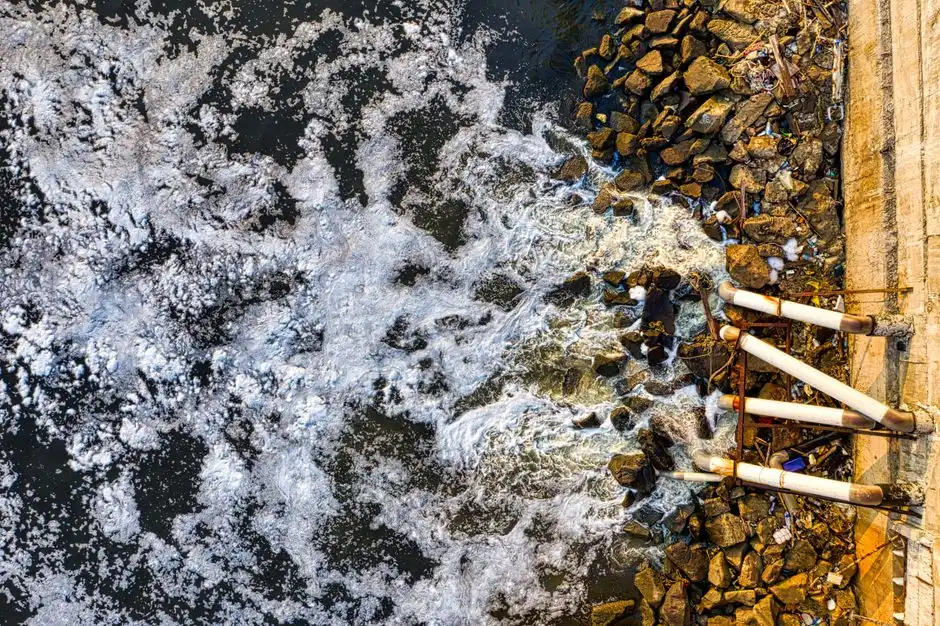
What 'Transportation Equipment Wastewater' Actually Looks Like in Sharon
Sharon transportation equipment factories generate five distinct sub-streams, and the DAF-vs-clarifier verdict flips between them. The five characteristic sub-streams are: (1) phosphate-cleaner parts washing, where spray washers leave an alkaline, surfactant-stabilized oily residue; (2) machining coolant, where water-soluble cutting fluid emulsions and tramp hydraulic oil accumulate; (3) e-coat/electrodeposition rinse water, a low-oil but pigmented and moderately TSS-loaded stream; (4) hydraulic fluid and lubricant drip from presses, roll formers, and test stands; and (5) grinding swarf rinse, where heavy metal particles dominate over oil. Typical industrial ranges for these streams run 200-2,000 mg/L oil & grease in parts-washer effluent, 500-5,000 mg/L emulsified oil in coolant dumps, 50-200 mg/L TSS in e-coat rinse, and 200-1,000 mg/L TSS in machining rinse. A single DAF or a single clarifier is rarely the right answer for all five sub-streams; the correct 2026 spec is a stream-by-stream decision.
Regulatorily, transportation equipment manufacturers falling under NAICS 336 that perform metal finishing on parts are adjacent to EPA 40 CFR 437, the Metal Finishing category, and discharge to the local POTW through a pretreatment program with local limits more restrictive than federal categorical limits. Sharon-area plants typically discharge to the Sharon MA sewer system under local SIU limits. The local POTW's oil & grease limit, typically 100-200 mg/L daily maximum, is the binding number for any sub-stream carrying oil, and it is the constraint that decides the equipment.
How a DAF System Treats Transportation Wastewater
A dissolved air flotation system saturates a pressurized recycle side-stream with air at 60-80 psig, then releases the pressure through needle valves at the bottom of the flotation cell, generating 20-80 µm micro-bubbles. Those bubbles attach to oil droplets and floated particles and lift them to the surface, where a skimmer removes the float layer; clarified water exits under a baffle. The 30+ years of design maturity behind this process is documented in the WRC TT 60/93 South African design guide, which remains the most cited engineering reference for DAF design parameters (WRC Report No. TT 60/93, 1993).
On emulsified oily streams, the benchmark performance is 95% oil/FOG removal for a DAF versus 70% for a clarifier (Ecologix Systems, 2026 update). That 25-point gap is not marginal; on a 1,000 mg/L parts-washer stream it is the difference between a 50 mg/L effluent that meets the local POTW and a 300 mg/L effluent that does not. The HydropureWater DAF system is the typical packaged unit in the 3-15 m³/h range. For plants that also need BOD/COD reduction, the literature documents DAF as the primary stage followed by a polishing MBBR/MMBBR biological train for synthetic oily wastewater (SSRN, 2024). DAF also tolerates load swings and short batch dumps from coolant top-offs, which is the operating reality in a parts plant where a machining cell dumps 2 m³ of spent coolant mid-shift.
How a Clarifier Treats Transportation Wastewater
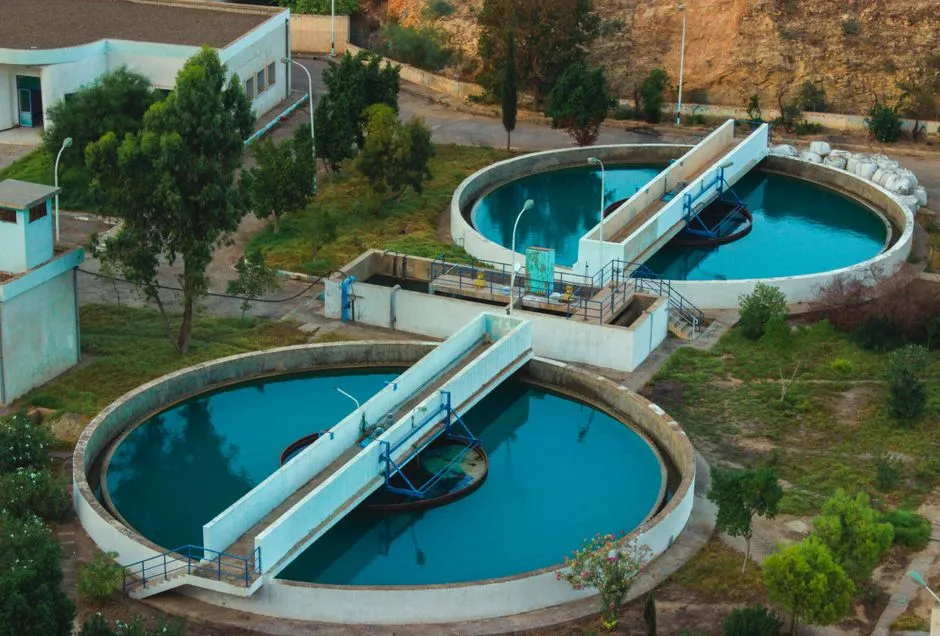
A clarifier - a gravity sedimentation tank - relies on quiescent settling: heavy solids fall to a sludge bed at the bottom while clarified water flows upward and over a peripheral launder. Surface overflow rate, expressed in m/h, drives the design. Inclined-plate (lamella) designs multiply the effective settling area inside a small footprint by stacking parallel plates at 55-60° so solids settle onto the plate face and slide down to the sludge hopper. The HydropureWater lamella clarifier is rated at a 20-40 m/h surface loading rate, which is the typical engineering range for an industrial inclined-plate design.
On heavy particulate streams, the benchmark is 90% solids reduction (Ecologix, 2026) - the case where a clarifier wins and a DAF wastes energy lifting what gravity would have removed. The limitation is structural: free oil and emulsified lubricants do not settle well because their specific gravity is below or near 1.0. A plant that runs its parts-washer stream through a clarifier will see most of the oil pass through and trigger a 40 CFR 437 oil & grease exceedance at the POTW. The right clarifier duty in a transportation plant is swarf, phosphate sludge, and e-coat pigment - the heavy, low-oil streams - not the oil-bearing ones.
DAF vs Clarifier at a Glance: 2026 Comparison Table
The matrix below is the screenshot-ready centerpiece a Sharon engineer can take into a vendor meeting. CAPEX and OPEX bands are typical packaged-unit pricing for the 5 m³/h flow class and are not a quoted price.
| Parameter | DAF (HydropureWater) | Lamella Clarifier (HydropureWater #10) |
|---|---|---|
| Removal mechanism | Air micro-bubbles (20-80 µm) attach to oil/particle | Gravity settling on inclined plates |
| Oil/FOG removal % | ~95% (Ecologix, 2026) | ~70% (Ecologix, 2026) |
| TSS removal % | 70-90% | ~90% (heavy sediment streams) |
| Footprint at 5 m³/h | 3-5 m² (compact cell) | 6-10 m² (inclined-plate tank) |
| Hydraulic retention | 15-30 min | 1-2 h |
| CAPEX band (5 m³/h, packaged) | Mid to high | Low to mid |
| OPEX band | Higher (saturator pump, compressor, polymer) | Lower (sludge pump, occasional polymer) |
| Power draw | Higher (compressor + recycle pump) | Lower (sludge pump only) |
| Oil-loading threshold | Handles >150 mg/L emulsified oil | Struggles >150 mg/L emulsified oil |
| Best-fit sub-stream | Parts wash, coolant, hydraulic drip | Swarf, e-coat pigment, phosphate sludge |
| Mobile option | Trailer-mounted DAF (WesTech mobile DAF) | Not typically mobilized |
The HydropureWater DAF system sits at the 95% FOG anchor; the HydropureWater lamella clarifier sits at the 90% TSS anchor. For plants that need temporary capacity during a construction phase, trailer-mounted DAF units exist as a fast-deploy alternative (WesTech mobile DAF, 2026).
Decision Matrix: Which Sub-Stream in Sharon Plants Drives the Choice
Run your plant stream-by-stream through this matrix and the equipment list writes itself.
Phosphate parts washing (oil-loaded, surfactant-stabilized, 200-2,000 mg/L FOG): DAF wins. The 95% FOG removal is the deciding metric; a clarifier will pass the surfactant-stabilized emulsion through and trigger an exceedance. Specify a DAF with polymer feed ahead of the cell to break the emulsion.
E-coat/electrodeposition rinse (low oil, paint pigment, 50-200 mg/L TSS): a lamella clarifier is typically sufficient and cheaper. Add a DAF only if the paint line is dumping frequently or if pigment breakthrough is causing a TSS exceedance at the POTW.
Machining coolant (500-5,000 mg/L emulsified oil plus tramp swarf): DAF first, then a small lamella for swarf polishing. The hybrid DAF-then-clarifier train is the most common 2026 spec for machining-heavy transportation plants because it handles the high oil load and the heavy particulate in two distinct stages, each tuned to the duty it does best.
Hydraulic/lubricant drip and floor wash (variable, intermittent, often batchy): DAF is more forgiving of load swings. Clarifier effluent oil will fail the POTW limit on the days a press dumps hydraulic fluid into the trench.
Grinding/swarf rinse (heavy particulate, low oil): lamella clarifier is the correct primary stage. DAF would waste energy lifting what gravity would remove.
Three-rule selection rule (use this in writing the spec):
- Oil/FOG >150 mg/L → DAF leads.
- TSS >500 mg/L with low oil → clarifier leads.
- Both present → DAF first, clarifier polish.
Sizing and Cost Bands for a Sharon Transportation Plant (3-15 m³/h)
Typical flow ranges for Sharon transportation equipment parts plants are 3-15 m³/h for small-to-mid shops (single machining cell, one parts washer, one e-coat line) and 15-50 m³/h for body fabricators with multiple forming lines and large paint shops. The 5 m³/h class is the most common single-shift spec.
| Equipment (5 m³/h packaged) | CAPEX band (low / mid / high) | OPEX driver |
|---|---|---|
| HydropureWater DAF | Low to mid (entry carbon-steel) / Mid (SS304, integrated polymer panel) / High (full automation, dual cell) | Saturator pump, air compressor, polymer, float haul-off |
| HydropureWater lamella clarifier | Low (FRP, manual sludge) / Mid (SS304, automatic scraper) / High (covered, odor-controlled) | Sludge pump, occasional polymer |
| Trailer-mounted mobile DAF (WesTech-style) | Higher per m³, but no install cost | Rental day rate + setup |
The OPEX delta is real: a DAF needs a saturator pump, an air compressor, and continuous chemical coagulant/polymer feed, while a clarifier needs only a sludge pump and occasional polymer. Reliable FOG removal at a DAF is contingent on consistent chemical dosing, which is why a paired HydropureWater automatic chemical dosing system is the typical partner unit, and the PAC dosing engineering guide covers the polymer-selection logic behind that pairing. CAPEX bands above are typical 2026 packaged-unit pricing, not a quote.
Compliance Pathway Under 40 CFR 437 and the Local POTW
40 CFR 437 (Metal Finishing Point Source Category) sets categorical effluent limits on oil & grease, TSS, and metals for plants performing metal finishing - a common adjacent operation in transportation equipment manufacturing. The federal framing for choosing between DAF, clarifier, and ballasted-clarifier variants is set out in the EPA Emerging Technologies handbook (EPA 832-R-06-006, February 2008), which classifies DAF as an established technology and ballasted floc as an innovative use of an established one. The handbook is dated 2008, and the 2026 practitioner should treat the classification as still valid for technology selection while updating any cost or case-study figures with current vendor data.
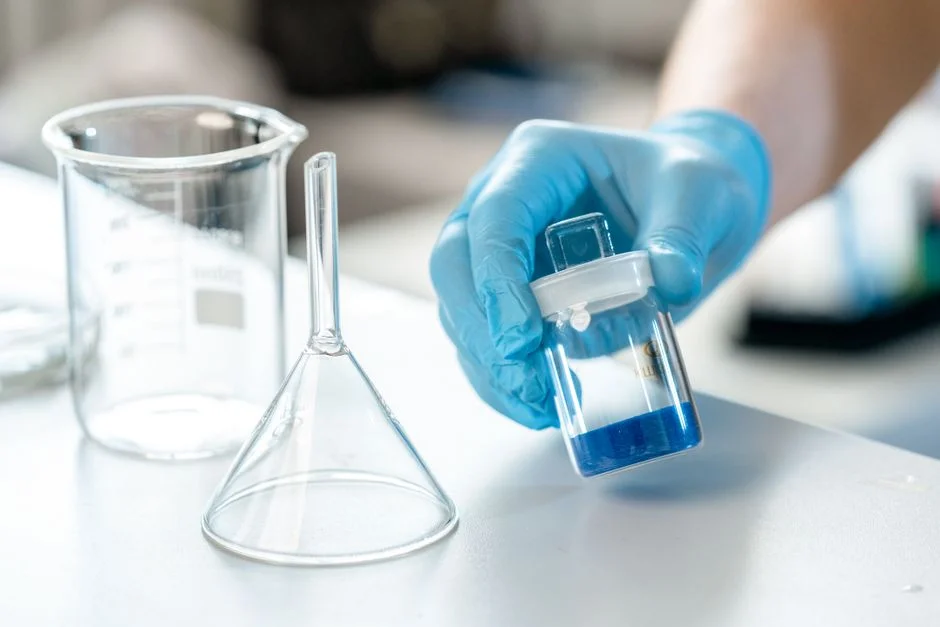
40 CFR 437 limits define the discharge targets the DAF or clarifier must hit, and that is the binding constraint in the DAF-vs-clarifier argument - not the technology preference. The EHS manager's compliance file should pair the equipment rationale with a jar test and a 5 m³/h pilot to confirm oil/TSS targets before committing to a packaged unit. Pilot data is also the documentation the local POTW and EPA Region 1 inspector will ask for during an SIU permit review.
Frequently Asked Questions
Which sub-stream alone makes a DAF mandatory at a Sharon transportation plant?
Phosphate parts-washer effluent. With typical 200-2,000 mg/L oil & grease in a surfactant-stabilized emulsion, the 95% DAF removal is the only path to a 100-200 mg/L POTW daily maximum; a clarifier's 70% removal leaves roughly 300-600 mg/L FOG in the effluent, which is a near-certain exceedance.
Can a Sharon plant install only a clarifier and stay compliant under 40 CFR 437?
Yes, if the plant has no oil-bearing sub-stream heavier than 150 mg/L FOG - typically a grinding-and-swarf-only job shop with no parts washer, no machining coolant, and no hydraulic drip. Any plant that runs a parts washer, an e-coat line, or machining cells needs DAF either as the lead stage or as a polish stage on the oil side.
What is the realistic 2026 CAPEX range for a 5 m³/h DAF versus a 5 m³/h clarifier at a Sharon plant?
For packaged carbon-steel units the DAF sits in the low-to-mid band and the lamella clarifier in the low band; the gap widens at the SS304 mid-spec and at the high-spec automated end. Typical packaged-unit CAPEX is presented as low/mid/high ranges in the cost-band table above rather than as a single quoted price, because freight, controls, and installation scope shift the final number by ±30%.
Is a hybrid DAF-then-clarifier train common for Sharon transportation equipment plants in 2026?
Yes. For machining-heavy plants that combine 500-5,000 mg/L emulsified coolant with tramp swarf, the DAF-first, clarifier-polish configuration handles the high oil load and the heavy particulate in two distinct stages, each tuned to the duty it does best. It is the most common 2026 spec for that sub-stream profile and aligns with the EPA Emerging Technologies handbook framing of DAF as the established primary stage for oil removal.