Industrial wastewater treatment in Turkey under the 2004 Water Pollution Control By-Law caps most sectors at COD ≤200 mg/L and TSS ≤30 mg/L. A hybrid DAF-MBR-RO wastewater system for Turkey removes 95–99% of COD and recovers 75–90% of water as RO permeate for OSB reuse.
Why Industrial Wastewater Treatment in Turkey Needs Hybrid Systems
Hybrid DAF-MBR-RO treatment meets Turkey's 2004 By-Law caps of COD ≤200 mg/L and TSS ≤30 mg/L while recovering 75–90% of water as RO permeate. Textile, chemical, and food plants use the train for 95–99% pollutant removal. A 50,000 m³/day Bursa RO train cut COD from 1,200 mg/L to below 50 mg/L.
Turkey is classified as water-stressed, with annual per capita availability below 1,500 m³ (SESRIC 2024). Public references corroborate the classification, putting availability between 2,500 and 1,350 m³ per person per year and calling Turkey water-stressed (Wikipedia). Industry now uses about 20% of national demand, roughly 22 billion m³ per year. Growth in Denizli, Bursa, and Kocaeli has pushed many sites past conventional activated sludge, and Denizli textile mills using DAF plus MBR recycling have cut water procurement costs by about 40% in recent projects.
Enforcement under the Water Pollution Control By-Law (2004) is tighter than the statute text alone suggests. COD or TSS breaches against the ≤200 mg/L and ≤30 mg/L caps can draw fines up to ₺500,000 ($15,000) per violation. In the Ergene and Gediz basins, sensor-based monitoring can trigger those fines automatically. About 56.8% of treated industrial wastewater is already reused, with textile and chemical plants leading adoption of hybrid ZLD systems for metal recovery in industrial wastewater and water recovery.
Peak production cycles in food and chemical plants still break many activated-sludge trains. Hybrid DAF-MBR-RO blocks handle those spikes while holding effluent at the 1st Class Water Quality band needed for reuse inside Turkish Organized Industrial Zones (OSB). Most plants we size for OSB reuse run the MBR flux at the lower end of the 15–25 LMH design band until pilot data settle. That conservatism reduces early fouling when dye or FOG loads swing by shift.
What Are Discharge Criteria in Turkey?
Discharge criteria in Turkey set general industrial limits at COD ≤200 mg/L and TSS ≤30 mg/L under the Water Pollution Control By-Law (Su Kirliliği Kontrolü Yönetmeliği). Sector tables then tighten or relax those caps by industry and receiving-water sensitivity. For the detailed numeric matrix used in permitting, see the companion Turkey Industrial Effluent Limits: Compliance and Treatment.
Textile plants often face COD ≤300 mg/L at older sites, while new OSB facilities are commonly held to ≤200 mg/L. Chemical plants add NH₄-N ≤10 mg/L and heavy-metal caps. Food processors must keep BOD₅ ≤100 mg/L and FOG ≤20 mg/L. Metal and automotive lines add Cr+6 ≤0.5 mg/L on top of the base COD and TSS rows.
Repeat exceedances above three times the permitted limit can force a mandatory shutdown until compliance is proven. That shutdown clause is why many OSB boards now require continuous analyzers even when the hydraulic load sits just under the 10,000 m³/day SAİS threshold. Color (Pt-Co < 280 for textiles) and FOG often drive pretreatment selection more than COD alone.
| Industrial Sector | COD (mg/L) | TSS (mg/L) | BOD₅ (mg/L) | Other Key Limits |
|---|---|---|---|---|
| Textile Industry | ≤200–300 | ≤30–100 | ≤50 | Color (Pt-Co) < 280 |
| Chemical Industry | ≤200 | ≤30 | ≤50 | NH₄-N ≤10 mg/L |
| Food Processing | ≤200 | ≤30 | ≤100 | FOG ≤20 mg/L |
| Metal/Automotive | ≤200 | ≤30 | ≤50 | Cr+6 ≤0.5 mg/L |
Put those sector rows on the bid sheet before freezing membrane area or chemical packages. A textile color miss will foul an RO skid faster than a modest COD miss on an MBR permeate line. Treat color and FOG as design pollutants in their own right, not as secondary symptoms.
How Does Turkey Regulate Water and Sewage Discharge?
Turkey regulates water and sewage discharge through the same 2004 by-law framework, now backed by continuous online monitoring in priority basins. The Online Wastewater Monitoring System (SAİS), run by the Ministry of Environment, Urbanization and Climate Change, uses 41 stations across four basins: Ergene, Gediz, Küçük Menderes, and Kuzey Ege. Continuous GIS data submission is mandatory for many large dischargers.
Facilities discharging more than 10,000 m³/day — and some high-risk sectors at lower volumes — must install real-time sensors for pH, temperature, dissolved oxygen, conductivity, and flow. The by-law aligns with EU compliance standards for industrial wastewater treatment on several technical points. For statute-level reading and update history, use the dedicated Wastewater Treatment Regulations Turkey: 2026 Compliance Guide.
Zero-discharge incentives include tax breaks and energy subsidies when recovery reaches 90% or higher. That policy push is why industrial wastewater treatment projects in Turkey increasingly add RO after MBR rather than stopping at secondary effluent. Plants that only chase discharge compliance still lose water-tariff savings that OSB buyers now track monthly. Remote SCADA exports that match SAİS fields also cut reporting labor during audits.
Hybrid DAF-MBR-RO Wastewater System Turkey Deployments: Engineering Specs and Field Data
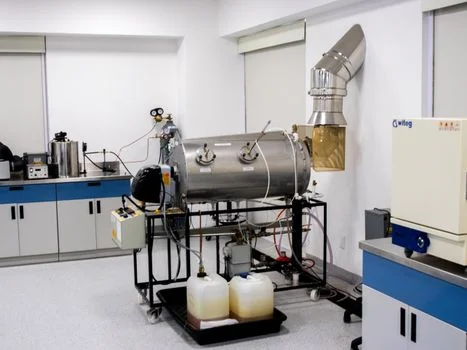
Hybrid DAF-MBR-RO design for Turkish industrial effluent starts with pretreatment sizing, then biological polishing, then tertiary desalting. Pretreatment typically uses DAF systems for high-efficiency TSS and FOG removal at 4–300 m³/h. Units run at 3–5 bar air pressure and remove 90–95% of TSS and 70–85% of FOG, which protects downstream membranes from fouling.
The biological core relies on integrated MBR systems for COD/TSS removal and reuse-quality effluent. Turkish textile and chemical plants usually specify PVDF flat-sheet modules (DF series) for mechanical strength and chemical-clean tolerance. Design flux sits between 15 and 25 LMH. At influent COD of 500–2,000 mg/L, these MBR units reach ≥95% COD removal and TSS <5 mg/L.
Tertiary polishing with RO systems for zero-discharge compliance and industrial water reuse closes the loop for ZLD targets. Bursa Industrial Zone RO trains have shown 75–90% recovery on industrial feeds. Maintaining that recovery needs PLC-controlled chemical dosing for pretreatment and pH adjustment, typically 20–50 mg/L PAC coagulant on textile wastewater.
| Parameter | DAF (Pretreatment) | MBR (Biological) | RO (Tertiary) |
|---|---|---|---|
| COD Removal Rate | 20–30% | 90–95% | 98–99% (of remaining) |
| TSS Removal Rate | 90–95% | >99% | N/A (Membrane barrier) |
| Energy Consumption | 0.1–0.3 kWh/m³ | 0.4–0.8 kWh/m³ | 1.5–3.0 kWh/m³ |
| Operating Pressure | 3–5 bar | -0.1 to -0.3 bar (Suction) | 10–15 bar (Low pressure) |
| Typical Flux/Loading | 5–10 m³/m²·h | 15–25 LMH | 12–18 LMH |
Total energy for a full DAF-MBR-RO hybrid typically lands between 2.0 and 4.1 kWh/m³, depending on salinity and permeate targets. That is higher than secondary-only trains. Recovering up to 90% of process water still offsets OPEX where OSB water tariffs keep rising. Keep RO flux in the 12–18 LMH band unless a site pilot proves a higher stable rate.
When influent salinity climbs, expect the train to sit nearer 4.1 kWh/m³ than 2.0 kWh/m³. Antiscalant choice and PAC dose then matter as much as membrane area. A poorly tuned dosing skid can erase the energy advantage of a well-sized DAF stage within one cleaning cycle.
Turkey Industrial Wastewater CAPEX OPEX Hybrid ZLD Benchmarks
CAPEX for industrial wastewater systems in Turkey separates cleanly by technology stack at a given hydraulic load. At 100 m³/h, a standalone DAF package often costs $80,000–$300,000. A full MBR train typically ranges from $500,000 to $2M, and adding RO for ZLD goals usually adds another $300,000–$1.5M.
OPEX is dominated by energy at about 40% and chemicals at about 25%. Membrane replacement commonly takes another 20% of OPEX, with PVDF or NF membranes replaced every 3–5 years at roughly $50–$100 per square meter. Labor is about 15% of OPEX because PLC and SCADA work still needs specialized technicians.
| System Capacity | DAX CAPEX (Est.) | MBR CAPEX (Est.) | RO CAPEX (Est.) | Total OPEX ($/m³) |
|---|---|---|---|---|
| 50 m³/h | $45,000–$120,000 | $280,000–$900,000 | $180,000–$700,000 | $0.95–$1.60 |
| 100 m³/h | $80,000–$300,000 | $500,000–$2,000,000 | $300,000–$1,500,000 | $0.80–$1.50 |
| 200 m³/h | $150,000–$550,000 | $900,000–$3,500,000 | $550,000–$2,800,000 | $0.70–$1.30 |
Hybrid ZLD payback in high-stress textile hubs usually falls in the 3–5 year window. That math rests on 20–30% annual raw-water savings plus avoided non-compliance fines. As OSB water tariffs rise, the ROI period is expected to shorten by about 15% by 2027. For comparable cost structures in other high-stress markets, engineers can review cost models for food processing wastewater treatment.
At 50 m³/h, total OPEX often sits near $0.95–$1.60/m³. At 200 m³/h, economies of scale commonly pull OPEX toward $0.70–$1.30/m³ when automation is shared across trains. Civil works and concentrate disposal can still move the installed CAPEX outside the equipment-only bands shown above, so treat those rows as process-equipment planning ranges.
Choosing the Right System for Turkish Industrial Sectors
System selection for Turkish industry starts with influent COD, FOG, metals, and the reuse target, not with a brand catalog. Textile mills fight dye color and FOG first: DAF plus MBR covers discharge limits, while RO is required for zero-discharge recycle from about 1,500 mg/L COD down to <50 mg/L. Chemical plants in zones such as Izmir Tekeli OSB often pair an ~8,000 m³/day submerged MBR with RO to hit 1st Class reuse quality and nitrogen limits. Food processors need strong DAF for BOD and FOG before MBR so final BOD₅ stays ≤100 mg/L.
Use this checklist before freezing the P&ID:
- Is influent COD >1,000 mg/L? Add chemical dosing and DAF pretreatment before biology.
- Is water reuse a goal? Specify MBR turbidity control before any RO stage.
- Are heavy metals present? Plan post-MBR specialty membranes or ion exchange.
- Is discharge >10,000 m³/day? Budget SAİS-ready sensors for pH, DO, conductivity, and flow.
- Is 90%+ recovery required for incentives? Include RO and a concentrate path (evaporation or advanced dewatering).
- Can the vendor pilot MBR flux on your effluent? Reject bids that skip site-specific flux testing.
- Is PLC dosing and remote GIS reporting included? Both are now practical compliance tools, not extras.
Procurement teams that score vendors on pilot data, dosing integration, and remote monitoring separate industrial packages from generic municipal kits. Those three checks prevent most early membrane fouling failures we see on Turkish OSB startups. Ask for cleaning chemical consumption at the proposed flux, not only the clean-water factory curve.
Who This Is For and Next Steps
This guide is for plant engineers, EPC contractors, and procurement managers sizing treatment trains for Turkish OSB discharge or reuse. Look elsewhere if you only need a municipal sewer connection with no reuse target and no sector-specific metal or color limits. When flow, COD, and reuse targets are ready, request a hybrid DAF-MBR-RO sizing quote with your influent table attached.
Frequently Asked Questions
What are the discharge limits for industrial wastewater in Turkey?
Under the 2004 Water Pollution Control By-Law, general industrial limits are COD ≤200 mg/L, TSS ≤30 mg/L, and pH 6–9. Sector permits still apply. Textile sites may be allowed COD up to 300 mg/L depending on sub-sector and location, while new OSB plants are often held near ≤200 mg/L. Confirm the receiving-water class before locking design targets.
How much does a 100 m³/h MBR system cost in Turkey?
For 2026 planning, CAPEX for a 100 m³/h MBR system typically ranges from $500,000 to $2,000,000. Hybrid OPEX often falls between $0.80 and $1.50 per cubic meter when DAF and RO sit in the same train. Energy use of 0.4–0.8 kWh/m³ on the MBR stage is usually the largest operating line. Final bids still move with membrane area, civil works, and automation scope.
Can hybrid DAF-MBR-RO systems achieve zero-discharge in Turkey?
Yes. Hybrid DAF-MBR-RO trains can reach 90%+ water recovery when RO recovery stays in the 75–90% band shown in Bursa projects. RO permeate commonly meets reuse targets around COD ≤50 mg/L. The concentrate still needs evaporation or advanced sludge dewatering to claim true zero-liquid discharge, so without a concentrate plan the plant has high reuse, not full ZLD.
What are the penalties for non-compliance with Turkey's wastewater regulations?
Administrative fines can reach ₺500,000 ($15,000) per violation for COD or TSS breaches. Monitored basins can trigger penalties from sensor data rather than only from grab samples. Repeat offenses, or cases where limits are exceeded by more than three times, can lead to Ministry-ordered shutdown until compliance is shown. That shutdown risk often dominates the ROI case for upgrades.
Which industries in Turkey reuse the most treated wastewater?
The textile industry leads with about 35% of total industrial reuse, followed by chemicals at about 20% and food processing at about 15%. Water scarcity in Denizli, Bursa, and Kocaeli hubs, plus incentives for ≥90% recovery, drive that ranking. Those sectors also face the strictest color, FOG, and COD pressure, so reuse trains pay back through tariff savings and avoided fines.
What does zero discharge compliance Turkey 2026 industrial permitting require?
Zero discharge compliance for Turkey's 2026 industrial permits requires recovery at 90% or higher plus a verifiable concentrate path. Perks include tax breaks and energy subsidies once that threshold is proven. Practically, plants pair MBR permeate with RO at 75–90% recovery and add evaporation or advanced dewatering for the brine. SAİS-ready sensors support the continuous reporting these permits expect.
What DAF MBR RO engineering specs Turkey textile mills should specify?
Textile mills should specify DAF at 3–5 bar removing 90–95% TSS, MBR at 15–25 LMH with PVDF flat-sheet modules, and RO at 12–18 LMH with 10–15 bar feed pressure. PAC dosing of 20–50 mg/L controls color ahead of the membranes. Total train energy lands between 2.0 and 4.1 kWh/m³ depending on salinity. Confirm flux with a site pilot before purchase.
How do OSB wastewater reuse MBR RO Turkey projects perform?
OSB wastewater reuse projects combining MBR and RO in Turkey typically reach 75–90% RO recovery and permeate near COD <50 mg/L. The Bursa Industrial Zone reference train treats 50,000 m³/day and cut COD from 1,200 mg/L to below 50 mg/L. Denizli textile mills report about 40% lower water procurement costs. Payback in high-tariff zones usually lands within 3–5 years.