Why Omaha Wastewater Treatment Plant Costs Are Climbing in 2026
Omaha wastewater treatment plant cost in 2026 spans $1.5M for a 0.1 MGD industrial package plant to $1.7B for the city's combined sewer overflow program. The Papillion Creek WRRF expansion ($411M) prices new capacity at $2.74 per gallon; Missouri River WWTP upgrades hit $11.33 per gallon over 50 to 150 MGD. Three drivers shape these numbers: technology choice, contracting model, and Nebraska DEQ nutrient rules.
Nebraska DEQ's 2025 nutrient limits are the biggest regulatory shift local industry has faced in a decade. Total nitrogen (TN) caps at ≤ 3 mg/L and total phosphorus (TP) at ≤ 0.1 mg/L, which means about 80% of Omaha's industrial facilities now need tertiary treatment upgrades. The DEQ 2024 compliance guide puts the added CAPEX at 20–30% to cover advanced filtration or biological nutrient removal (BNR) stages.
Population growth of 1.2% per year and heavy industrial expansion (Tyson Foods' $1.3B plant is the most cited example) have stretched regional capacity. Equipment lead times have lengthened by 6 to 9 months, so procurement managers now bake inflation and logistics surcharges into 2026 budgets. Aging infrastructure at the Missouri River WWTP (built 1964) and Papillion Creek WRRF (1970s) is driving a $1.7B municipal plan, which pushes many industrial sites toward modular, decentralized systems that avoid rising municipal surcharge fees.
Combined sewer overflows (CSOs) in older districts add another wrinkle. During heavy storms, industrial plants face pressure to handle their own wet-weather flows, so many install equalization tanks or DAF systems for Omaha meatpacking and food processing plants. Surge management typically runs $500,000 to $2M per facility depending on storage volume.
CAPEX by Technology and Scale in Omaha
Capital expenditure for a wastewater treatment plant in Omaha is set mostly by effluent quality targets and hydraulic load. Buyers should separate municipal-scale benchmarks from the cost profile of industrial package systems. The Papillion Creek AGS expansion achieved $2.74 per gallon; smaller industrial plants usually pay more per gallon because they lose the economies of scale that large municipal builds enjoy.
| Technology Type | 0.1 - 2 MGD (Industrial) | 10 - 50 MGD (Municipal) | Omaha Benchmark (CAPEX/Gal) |
|---|---|---|---|
| Conventional Activated Sludge | $1.2M – $8.5M | $15M – $110M | $11.33 (Missouri River) |
| Aerobic Granular Sludge (AGS) | $2.0M – $10M | $25M – $150M | $2.74 (Papillion Creek) |
| MBR (Membrane Bioreactor) | $2.5M – $12M | $40M – $200M | $4.50 - $6.00 (Est.) |
| DAF (Dissolved Air Flotation) | $200K – $1.5M | $5M – $20M | $1.20 (Industrial Pre-treat) |
| WSZ Package Systems | $1.5M – $5M | N/A | $2.10 (Rural Industrial) |
Conventional activated sludge remains the baseline, but its large footprint and high civil costs make it a tough sell on land-constrained Omaha sites. AGS technology — adopted for the Papillion Creek WRRF — adds 15–20% to equipment CAPEX, yet the 40% land reduction often cuts total project cost. Jacobs' 2024 data indicates AGS also drops OPEX by about 30%, which is why long-range planners keep returning to it.
Food processing and meatpacking plants get the most value from DAF systems for Omaha meatpacking and food processing plants, which pre-treat high FOG and TSS loads. These systems run $200,000 to $1.5M and are often paired with MBR systems for Omaha facilities meeting Nebraska DEQ's 2025 nutrient limits to hit high-purity effluent targets. Smaller rural industrial parks typically pick WSZ series underground package systems for Omaha industrial facilities because the plug-and-play design cuts on-site construction and removes the need for a full-time operator.
OPEX Deep Dive: Energy, Chemicals, and Labor for Omaha Industrial WWTPs
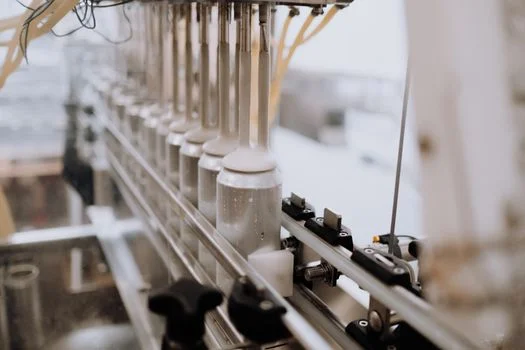
Operating expenditure usually outruns CAPEX over a 20-year lifecycle. In Omaha, OPEX tracks local utility rates and the Missouri River basin's hard-water chemistry, so the technology choice has to align with 2026-2030 fiscal plans.
| Technology | Energy ($/1k Gal) | Chemicals ($/1k Gal) | Labor ($/1k Gal) | Total OPEX ($/1k Gal) |
|---|---|---|---|---|
| Conventional | $0.45 | $0.25 | $0.40 | $1.10 |
| AGS | $0.32 | $0.23 | $0.30 | $0.85 |
| MBR | $0.60 | $0.28 | $0.45 | $1.33 |
| DAF (Pre-treat) | $0.15 | $0.55 | $0.20 | $0.90 |
Energy is 40–60% of OPEX, and aeration alone is 50–70% of that energy bill. AGS cuts aeration energy by roughly 30% versus conventional sludge because the granular structure runs nitrification and denitrification in a single tank. Chemical costs in Omaha run $0.10 to $0.30 per 1,000 gallons, mostly coagulants like PAC or ferric chloride. The region's hard water profile pushes chemical demand up by 15–20% to get proper flocculation.
Labor is the third lever. MBR systems deliver better effluent but need about 20% more labor for membrane cleaning. Many Omaha sites counter this by adding automated chemical dosing systems to reduce Omaha WWTP OPEX and chlorine dioxide generators for disinfection. These automation packages can trim labor by 25% and shave 10–15% off total annual OPEX. For small flows, WSZ series package plants almost eliminate daily operator cost through remote monitoring and self-adjusting logic.
Contracting Models Compared: CMAR, Design-Bid-Build, and Turnkey in Omaha
The contracting model can swing the final wastewater treatment plant cost in Omaha by as much as 25%. Design-bid-build (DBB) used to be the default, but change-order risk of 15–25% of CAPEX has pushed Omaha project managers toward more collaborative setups.
| Model | Cost Certainty | Schedule Speed | Risk Profile | Omaha Usage Case |
|---|---|---|---|---|
| CMAR | High (Guaranteed Max Price) | Fast (Overlapping phases) | Shared | Papillion Creek Expansion |
| Design-Bid-Build | Low (Change order risk) | Slow (Sequential) | Owner-heavy | Small Industrial Upgrades |
| Turnkey (EPC) | Highest (Fixed Price) | Fastest | Contractor-heavy | Package WSZ Systems |
Construction Manager at Risk (CMAR) is now the standard for large Omaha builds. On the Papillion Creek expansion, CMAR let the city lock in a $411M guaranteed maximum price and save an estimated 12–18% versus traditional bidding. CMAR pairs well with newer tech like AGS because the design firm and contractor have to coordinate from day one to avoid technical discrepancies downstream.
Industrial buyers lean toward turnkey or Engineering, Procurement, and Construction (EPC) contracts for package system deployments. Fixed-price EPC contracts cut the administrative load on the plant team and give one accountable party. Food processors racing against a compliance deadline can use this route to align with food processing wastewater treatment cost benchmarks for meatpacking plants without interrupting production schedules.
Omaha WWTP Case Studies and Lessons for Industrial Buyers
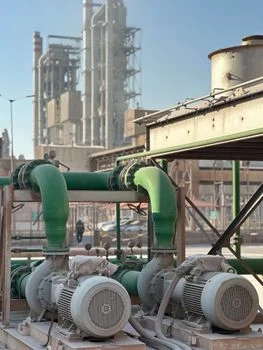
Recent projects give buyers a reality-check on the numbers. The Papillion Creek WRRF Expansion ($411M, 2026) is the regional anchor: AGS technology under CMAR delivery, a large capacity bump inside the existing footprint, $2.74 per gallon CAPEX, and $0.85 per 1,000 gallons OPEX. That combination is the efficiency benchmark for the area.
The Missouri River WWTP Upgrades tell the opposite story. As part of the $1.7B CSO program, the 1964 plant moved from about 50 MGD wet-weather capacity to 150 MGD. It also rebuilt aging trains and large disinfection works. Omaha CSO lists Schedule A, B1, and B2 costs at completion as $19.6M, $61.8M, and $51M. The comparison table still uses the $11.33 per gallon program-scale benchmark. For industrial buyers, retrofitting an aging on-site system is almost always pricier than installing a new modular plant.
The Tyson Foods Omaha Plant (2025) is the private-sector case worth studying. Faced with tight DEQ limits on FOG and TSS, the site installed a 0.5 MGD DAF system for pre-treatment. CAPEX was $1.2M, OPEX $0.90 per 1,000 gallons, municipal surcharge fees dropped 70%, and solids removal cleared 95%. Plants with more complex streams often layer on hybrid DAF-RO systems for industrial rinse wastewater treatment to push further. These Omaha benchmarks track with global wastewater treatment plant cost benchmarks for industrial buyers, which suggests the city is converging with international efficiency standards.
How to Select the Right Wastewater Treatment Equipment for an Omaha Facility
Equipment selection comes down to influent characteristics, available land, and the 2025 Nebraska DEQ mandates. A decision matrix built during the preliminary engineering report (PER) phase is the fastest way to narrow options.
| Influent Priority | Recommended System | Primary Benefit | Cost Impact |
|---|---|---|---|
| High FOG / TSS | DAF | 95% Solid Removal | Low CAPEX / High Chem |
| Strict TN/TP Limits | MBR (DF Series) | Reuse-quality Effluent | High CAPEX / High Energy |
| Limited Footprint | AGS Technology | 40% Space Saving | Moderate CAPEX / Low OPEX |
| Low Flow / Remote | Package (WSZ Series) | Fully Automated | Fixed CAPEX / Low Labor |
For meatpacking and food processing sites, solids removal is almost always step one. A DAF system provides the pre-treatment that protects the downstream biology. To hit the TN ≤ 3 mg/L limit, add an MBR membrane bioreactor module so the plant stays compliant even when influent swings.
Before full-scale deployment, run pilot work: jar tests for DAF chemical optimization and membrane fouling studies for MBR. For small flows under 1 MGD, a WSZ series underground package system is often the pragmatic pick because it skips heavy civil works and gives a fixed cost that finance teams can defend.
Who This Is For, Who Should Look Elsewhere, and Next Step
This page is for industrial buyers and EPC contractors sizing a 0.1 to 50 MGD plant. It supplies defensible CAPEX and OPEX numbers for Omaha or comparable Midwestern sites. If you only need a solids-removal skid under 50,000 GPD, or a non-industrial reuse application, start with the package-system column above instead. For everyone else, scope your influent, set a target effluent, then request a sized quotation — send your flow and load data here. Our engineers will return a CAPEX/OPEX range matched to your site.
Frequently Asked Questions
What is the average cost per gallon for a new wastewater treatment plant in Omaha?
Municipal plants in Omaha range from $2.74 to $11.33 per gallon of capacity. Industrial package systems typically fall between $1.50 and $5.00 per gallon, depending on influent complexity and the required treatment level.
How do Nebraska DEQ's 2025 nutrient limits affect WWTP costs?
The new nitrogen and phosphorus limits require tertiary treatment for most facilities. That adds roughly 20–30% to CAPEX for filtration or biological stages and raises OPEX by $0.20–$0.40 per 1,000 gallons from extra energy and chemicals.
What's the most cost-effective technology for a meatpacking plant in Omaha?
A Dissolved Air Flotation (DAF) system is the most cost-effective solution for meatpacking. It removes over 95% of FOG and TSS, which can cut municipal surcharges by 30–40%. CAPEX for these systems ranges from $200K to $1.5M for typical industrial scales.
How can I reduce OPEX for my Omaha WWTP?
Implementing automated chemical dosing systems can cut labor costs by 20–30%. Upgrading to high-efficiency blowers or adopting AGS technology can reduce aeration energy consumption by 30%.
What's the difference between CMAR and design-bid-build for WWTP projects?
CMAR (Construction Manager at Risk) provides a guaranteed maximum price and reduces schedule delays by 20%, but needs early contractor involvement. Design-bid-build often looks cheaper at bid time but carries high overrun risk (15–25%) from change orders.