Why Peru’s Food Processing Plants Are Failing Wastewater Compliance
In 2025, Peruvian food processing facilities faced significant financial penalties for non-compliance with DS 015-2015-MINAM’s stringent wastewater discharge limits. SUNASS data from 2025 indicates fines ranging from $10,000 to $50,000 per violation, primarily for exceeding permissible levels of Biochemical Oxygen Demand (BOD₅) and Total Suspended Solids (TSS). A prominent case involved a Lima-based dairy plant that incurred a $35,000 fine in 2025 due to discharging wastewater with 2,100 mg/L of Fats, Oils, and Grease (FOG), alongside an effluent profile of 1,800 mg/L BOD₅ and 3,200 mg/L TSS. Common compliance gaps identified in MINAM’s 2025 audit reports include the absence of effective FOG pretreatment, inadequate sludge management protocols, and a lack of water reuse systems. Beyond direct fines, non-compliance can lead to severe repercussions such as permit revocation, disruptions in supply chains, and the loss of crucial export certifications, particularly for markets with stringent organic standards like the EU and USDA. These factors underscore the urgent need for robust and compliant wastewater treatment solutions.
Food Processing Wastewater in Peru: Effluent Profiles and Treatment Challenges
Peru's diverse food processing sector presents a range of wastewater characteristics, each posing unique treatment hurdles. Dairy plants typically generate wastewater with FOG levels between 800–1,500 mg/L and BOD₅ loads of 1,200–3,000 mg/L, often accompanied by significant ammonia concentrations from cleaning processes. Meat processing facilities contend with higher FOG (1,500–2,500 mg/L) and TSS (2,000–4,000 mg/L) due to blood, fat, and particulate matter. Beverage production, while generally having lower FOG, can still produce BOD₅ levels of 800–2,000 mg/L from sugars and organic residues. Key operational challenges include the solidification of FOG in pipelines, leading to blockages and reduced flow, and significant organic load variability, especially during seasonal fruit processing campaigns. Ammonia spikes, common in dairy and cheese production, require specific treatment strategies. Peru-specific issues exacerbate these challenges, including limited viable sludge disposal sites—with Lima’s primary landfill operating at 90% capacity—and increasing mandates for water reuse driven by MINAM’s 2025 circular economy program and regional water scarcity. ambient temperatures, particularly in Andean regions, can significantly impact treatment efficiency; for instance, anaerobic digestion processes can experience a 30% drop in efficiency at temperatures below 20°C.
| Industry Segment | Typical FOG (mg/L) | Typical BOD₅ (mg/L) | Typical TSS (mg/L) | Key Challenges |
|---|---|---|---|---|
| Dairy | 800–1,500 | 1,200–3,000 | 1,000–2,500 | High FOG, ammonia, dairy solids, temperature sensitivity |
| Meat Processing | 1,500–2,500 | 1,500–3,500 | 2,000–4,000 | Very high FOG & TSS, blood, animal solids, odor control |
| Beverage (Fruit/Vegetable) | 200–800 | 800–2,000 | 500–1,500 | High BOD₅ from sugars, seasonal variability, suspended solids |
| Beverage (Non-alcoholic/Brewery) | 100–500 | 500–1,500 | 300–1,000 | Moderate BOD₅, yeast, cleaning chemicals |
Hybrid Wastewater Treatment Systems for Food Processing: DAF + MBR + RO Designs
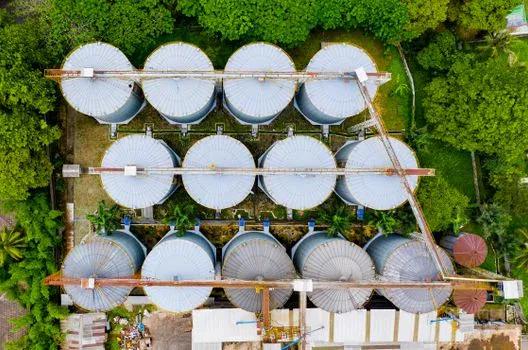
To effectively address the complex pollutant profiles of food processing wastewater and meet stringent Peruvian regulations, hybrid treatment systems integrating Dissolved Air Flotation (DAF), Membrane Bioreactors (MBR), and Reverse Osmosis (RO) offer a comprehensive solution. Primary treatment using DAF is crucial for initial FOG and TSS removal. HydropureWater's DAF systems, available in 13 models with flow rates from 4–300 m³/h, can achieve 80–90% FOG removal and 60–70% TSS reduction. Following DAF, an equalization tank is vital to buffer flow and concentration variations before secondary treatment. MBR technology, such as that employing HydropureWater's DF series flat-sheet membranes, provides advanced biological treatment. MBR systems excel at degrading BOD₅ and COD to levels below 10 mg/L and 50 mg/L respectively, and offer a significantly smaller footprint (up to 60% less) compared to conventional activated sludge processes. Typical MBR retention times range from 6–12 hours. For achieving the highest effluent quality required for discharge or reuse, tertiary treatment with RO is implemented. HydropureWater's JY series RO systems can produce permeate with Total Dissolved Solids (TDS) below 50 mg/L, enabling up to 95% water recovery for non-potable applications like irrigation or industrial cooling. A common process flow involves DAF followed by an equalization tank, then the MBR, and finally RO. Mitigation strategies for membrane fouling, such as FOG coating PVDF membranes in MBRs, include effective pre-treatment via DAF and potentially inline 50 μm screening. The DAF stage typically operates with a 1–2 hour retention time.
| Treatment Stage | Primary Pollutant Targeted | Typical Removal Efficiency | HydropureWater Product Series | Typical Retention Time | Footprint Consideration |
|---|---|---|---|---|---|
| Dissolved Air Flotation (DAF) | FOG, TSS, floating solids | FOG: 80–90% TSS: 60–70% |
DAF line (4–300 m³/h) | 1–2 hours | Moderate |
| Membrane Bioreactor (MBR) | BOD₅, COD, TSS, nutrients | BOD₅: >95% (<10 mg/L) TSS: >99% (<5 mg/L) COD: >90% (<50 mg/L) |
DF Series Membranes (integrated in MBR units) | 6–12 hours | Compact (60% smaller than CAS) |
| Reverse Osmosis (RO) | TDS, dissolved salts, small organic molecules | TDS: <50 mg/L (permeate) Water Recovery: 75–95% |
JY Series (Water Purification System) | Continuous flow | Compact, but requires pre-treatment |
CAPEX and OPEX Breakdown for Food Processing WWTPs in Peru (2026)
Procurement managers and engineers evaluating wastewater treatment solutions for Peruvian food processing facilities must consider both capital expenditure (CAPEX) and operational expenditure (OPEX). For systems treating flow rates between 10 m³/h and 500 m³/h, CAPEX varies significantly by technology. A DAF-only system for FOG and primary TSS removal might range from $50,000 to $300,000. A more advanced DAF-MBR hybrid system, capable of meeting stricter BOD₅ and TSS limits, could cost between $200,000 and $2,000,000. A full hybrid system incorporating DAF, MBR, and RO for high-quality effluent and water reuse can range from $500,000 to $5,000,000, depending on the scale and complexity. These costs are also highly dependent on the required flow rate: a 10 m³/h DAF-MBR system might be around $200,000, escalating to approximately $800,000 for 50 m³/h, $2.5 million for 200 m³/h, and up to $5 million for a 500 m³/h full hybrid plant. OPEX components include energy consumption, which can range from $0.15 to $0.40 per cubic meter of treated water, chemical costs for DAF (coagulants, flocculants) and MBR (cleaning agents) between $0.05 to $0.20 per m³, and membrane replacement for MBR systems, estimated at $0.08 to $0.15 per m³ (considering a typical 5–7 year lifespan). RO system recovery rates (75–95%) influence both CAPEX (higher recovery often means larger systems and more pretreatment) and OPEX (higher recovery means less wastewater to discharge). For example, a Lima-based beverage plant reported annual savings of $120,000 by upgrading from a DAF-only system to a DAF-MBR configuration, significantly reducing their discharge fees and avoiding potential fines.
| System Type | Flow Rate (m³/h) | Estimated CAPEX Range (USD) | Estimated OPEX Range ($/m³) |
|---|---|---|---|
| DAF Only | 10 | $50,000 – $150,000 | $0.10 – $0.30 |
| DAF Only | 100 | $150,000 – $300,000 | $0.08 – $0.25 |
| DAF + MBR | 10 | $200,000 – $700,000 | $0.20 – $0.50 |
| DAF + MBR | 100 | $800,000 – $2,000,000 | $0.15 – $0.40 |
| DAF + MBR + RO (Full Hybrid) | 10 | $500,000 – $1,500,000 | $0.30 – $0.70 |
| DAF + MBR + RO (Full Hybrid) | 100 | $2,500,000 – $5,000,000 | $0.25 – $0.55 |
DS 015-2015-MINAM Compliance Checklist for Food Processing Facilities
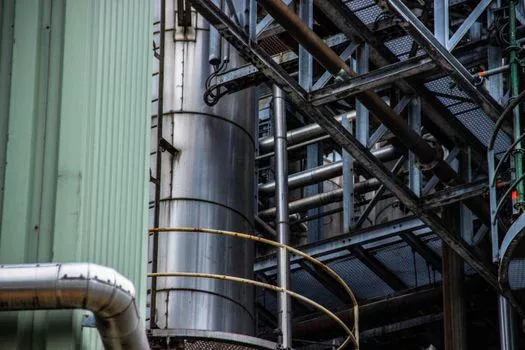
Ensuring continuous compliance with DS 015-2015-MINAM requires a systematic approach to wastewater treatment operations and monitoring. The core effluent limits stipulated in Table 2 of DS 015-2015-MINAM include BOD₅ <30 mg/L, TSS <50 mg/L, ammonia <10 mg/L, and FOG <15 mg/L. Beyond these daily limits, facilities must adhere to specific monitoring protocols: continuous pH and flow rate measurement, weekly analysis of BOD₅ and TSS, and quarterly testing for heavy metals if applicable to the specific food processing inputs or operations. Sludge management is also critical; under Ley 28611, sludge intended for land application must be treated to meet Class B standards, meaning fecal coliform counts must be below 2,000,000 Most Probable Number (MPN) per gram. MINAM’s 2025 circular economy program actively promotes water reuse, mandating that food processing plants achieve at least 30% water recycling for non-potable applications such as irrigation or cooling. Maintaining comprehensive documentation is paramount for SUNASS audits; this includes detailed operating logs, regular maintenance records for all treatment equipment, and certified third-party laboratory reports for all water quality analyses. A proactive compliance checklist should cover these key areas to prevent violations and ensure sustainable operations.
How to Select a Wastewater Treatment Supplier in Peru: Zero-Risk Framework
Selecting the right wastewater treatment supplier in Peru is critical to avoid costly technical failures and regulatory issues. Buyers must carefully consider the distinction between local and international providers. Local suppliers, such as AquaTec Peru and HidroTech, typically offer competitive advantages like 12–24 month warranties and more responsive, localized after-sales support and spare parts availability. International companies, while often possessing broader technological portfolios, may focus on larger municipal or industrial projects and could have longer lead times for service. The choice between turnkey solutions (design-build-operate) and modular systems (e.g., combining DAF + MBR + RO units) also impacts project execution. Turnkey projects can reduce overall risk and management burden but generally come with a 20–30% higher CAPEX. Modular systems allow for phased deployment and greater flexibility in adapting to evolving needs. A crucial evaluation criterion is the supplier’s demonstrated expertise and track record in complying with DS 015-2015-MINAM and specific food processing applications. Requesting at least three verifiable references from similar operations in Peru is essential. After-sales support is another key differentiator; suppliers based in Lima can often provide 24/7 service, whereas international entities might have response times of 48–72 hours. Red flags to watch for include suppliers who cannot offer pilot testing, hesitate to provide performance guarantees, or lack a local inventory of critical spare parts for their equipment.
| Supplier Type | Warranty | Response Time (Service) | Spare Parts Availability | Project Scale Focus | Typical Cost Premium (vs. modular) |
|---|---|---|---|---|---|
| Local (e.g., AquaTec Peru, HidroTech) | 12–24 months | 24–48 hours | High (local stock) | Small to large industrial | N/A (modular) |
| International (e.g., ACCIONA) | 12 months (standard) | 48–72 hours | Moderate (import dependent) | Large municipal/industrial (>5,000 m³/day) | N/A (often large custom projects) |
| Turnkey Solutions | Varies (often integrated) | Integrated service | Integrated service | All scales | 20–30% higher |
| Modular Systems | Standard component warranty | Depends on integrator/supplier | Depends on integrator/supplier | All scales | N/A (base option) |
Frequently Asked Questions
What’s the best wastewater treatment system for a 50 m³/h dairy plant in Lima?
For a 50 m³/h dairy plant in Lima, a hybrid DAF-MBR system is highly recommended. This configuration provides robust FOG and BOD₅ removal, addressing the typical high organic loads and FOG content of dairy effluent. The estimated CAPEX for such a system would be around $800,000, with an estimated 95% removal efficiency for FOG and BOD₅, ensuring compliance with DS 015-2015-MINAM.
Can I reuse treated wastewater for irrigation in Peru?
Yes, treated wastewater can be reused for irrigation in Peru, aligning with MINAM’s 2025 circular economy program which mandates 30% reuse for non-potable applications. To be suitable for irrigation, treated effluent must meet stringent quality standards, typically achieved with RO systems that produce permeate with TDS below 50 mg/L, effectively removing salts and other contaminants.
How much does MBR membrane replacement cost?
MBR membrane replacement is a significant operational cost. It typically ranges from $0.08 to $0.15 per cubic meter of treated water, considering a membrane lifespan of 5 to 7 years. This cost factor should be included in the OPEX calculations when evaluating MBR systems.
What are the penalties for non-compliance with DS 015-2015-MINAM?
Penalties for non-compliance with DS 015-2015-MINAM, as enforced by SUNASS, can include substantial fines ranging from $10,000 to $50,000 per violation. Repeated or severe non-compliance can also lead to the revocation of operating permits, significantly impacting business continuity.
How long does it take to deploy a package wastewater treatment plant?
The deployment timeline for package wastewater treatment plants varies. Compact DAF-MBR systems can often be installed and commissioned within 6 to 12 weeks. For larger, custom-engineered systems that may require more extensive civil works or integration, the timeline can extend to 6 to 12 months.
Related Equipment
- DAF systems for FOG removal in food processing — view specifications, capacity range, and technical data
- Integrated MBR systems for BOD₅/TSS compliance in Peru — view specifications, capacity range, and technical data
- RO systems for water reuse in food processing plants — view specifications, capacity range, and technical data
Need a customized solution? Request a free quote with your specific flow rate and pollutant parameters.