Why Taiwan’s Sewage Treatment Equipment Market is a Procurement Minefield
Taiwan’s sewage treatment equipment market is fragmented, with suppliers specializing in niche technologies (e.g., UV disinfection, MBR, DAF) and compliance with EPA Taiwan’s strict discharge limits (e.g., COD ≤ 100 mg/L, TSS ≤ 30 mg/L). In 2026, CAPEX for industrial systems ranges from TWD 1.2M for compact UV units to TWD 45M for large-scale MBR plants, with OPEX varying by energy efficiency (e.g., 0.3–0.8 kWh/m³ for DAF vs. 0.6–1.2 kWh/m³ for MBR). This guide provides engineering specs, cost benchmarks, and a zero-risk supplier selection framework to eliminate procurement guesswork.
The regulatory environment in 2026 has become significantly more punitive for Taiwanese manufacturers. The Environmental Protection Administration (EPA) Taiwan now enforces discharge limits of COD ≤ 100 mg/L, TSS ≤ 30 mg/L, and ammonia nitrogen ≤ 10 mg/L for most industrial zones. Non-compliance results in immediate penalties ranging from TWD 50,000 to TWD 200,000 per violation, with the potential for forced production halts. Despite these high stakes, the supplier market remains disorganized, with over 12 active manufacturers and no single dominant player. This fragmentation often leads to massive pricing discrepancies for identical technical requirements.
A recent case study involves a food processing plant in Taichung that required a new Dissolved Air Flotation (DAF) system to handle high fats, oils, and grease (FOG) levels. Due to a lack of local cost benchmarks, the facility procurement team accepted a single-source quote of TWD 8.2M. Subsequent market analysis revealed the average price for a system of that capacity and specification was TWD 5.3M—a 35% overpayment. This scenario is common when buyers fail to separate equipment CAPEX from long-term OPEX, such as energy consumption and chemical dosing. Procurement managers often overlook the fact that a cheaper MBR system might consume 40% more energy (up to 1.2 kWh/m³), effectively erasing any initial savings within the first 24 months of operation.
Common procurement pitfalls in the Taiwanese market include over-reliance on single supplier quotes, ignoring the specific salinity challenges of local groundwater, and underestimating the importance of a local service network. For instance, plants in coastal industrial parks often face high-salinity wastewater that can cause rapid membrane fouling if the supplier does not provide an engineering spec for RO systems in high-salinity wastewater. Without a structured framework, engineers risk selecting equipment that meets 2026 standards but fails under the increased hydraulic loads projected for 2027-2028.
Taiwan’s Top 5 Sewage Treatment Equipment Suppliers: Technology, Costs, and Compliance
The Taiwanese market features a range of suppliers with specialized technologies and compliance certifications. Some firms excel in biological treatment, while others focus exclusively on physical-chemical separation or disinfection. The following data-driven comparison assists procurement managers in shortlisting vendors based on 2026 market performance and technical reliability.
| Supplier Type | Primary Technology | CAPEX Range (TWD) | OPEX (kWh/m³) | Compliance Certs |
|---|---|---|---|---|
| Domestic MBR Specialist | Membrane Bioreactor (MBR) | 15M – 45M | 0.6 – 1.2 | CNS 14701, ISO 14001 |
| Semiconductor Water Specialist | Reverse Osmosis (RO) | 8M – 25M | 1.5 – 3.0 | EPA Taiwan Approved |
| UV & Parts Manufacturer | UV Disinfection | 1.2M – 3.5M | 0.1 – 0.3 | CNS 14701, CE |
| International UV/Ozone Provider | Advanced Oxidation | 4M – 12M | 0.4 – 0.9 | Global Standards |
| Global RO Systems Provider | High-Salinity RO | 10M – 30M | 2.0 – 3.5 | ISO 9001 |
The domestic MBR specialist is currently Taiwan’s largest exporter of membrane systems, offering units with 95% COD removal efficiency and a footprint 60% smaller than conventional activated sludge systems. This is particularly valuable for urban factories in New Taipei City or Kaohsiung where land costs are prohibitive. For semiconductor and petrochemical plants, the high-salinity specialist provides RO systems with 90% recovery rates, essential for meeting water recycling mandates. Their systems are specifically engineered to handle the complex chemical makeup of Hsinchu Science Park effluent.
In the disinfection sector, the leading domestic UV parts manufacturer focuses on systems like the UV CROWN, which achieves 99.9% pathogen removal. These systems are often integrated with pressure vessels for municipal and large-scale industrial applications. International providers of UV and Ozone systems offer superior advanced oxidation processes but typically command a 20–30% price premium due to imported components and specialized logistics. Finally, global RO providers offer high-performance systems for high-salinity wastewater but often lack the dense local service network required for 24-hour emergency repairs in central and southern Taiwan.
Engineering Specs for Taiwan’s Most Common Sewage Treatment Technologies
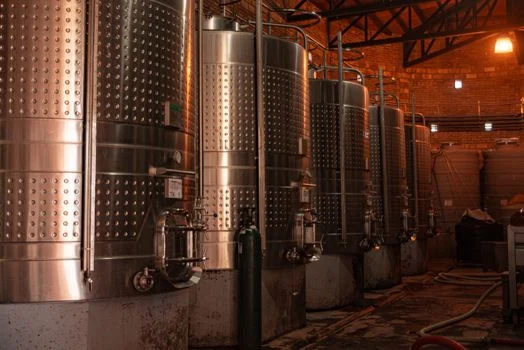
Matching wastewater characteristics to the correct technology is critical to avoiding system failure. For industrial operators, this means evaluating removal efficiencies for COD, TSS, and salinity against energy consumption benchmarks.
| Technology | Key Specifications | Removal Efficiency | Ideal Application |
|---|---|---|---|
| MBR | PVDF Flat-sheet (0.1 μm) | 95% COD, 99% TSS | Space-constrained sites |
| DAF | Micro-bubble (20-40 μm) | 97% TSS, 95% FOG | Food/Textile/Paper |
| UV | Low-pressure High-output | 99.9% Pathogens | Hospital/Municipal |
| RO | Thin-film Composite | 95% Salt Rejection | Semiconductor/Petrochem |
The MBR system with 95% COD removal and 60% smaller footprint utilizes PVDF flat-sheet membranes with a 0.1 μm pore size. This technology is the gold standard for achieving EPA Taiwan’s strict 2026 limits in a single step. However, it requires careful management of energy consumption, which typically ranges from 0.6 to 1.2 kWh/m³. For industries dealing with high suspended solids or organic oils, a high-efficiency DAF system for TSS and FOG removal is more cost-effective. DAF systems use micro-bubble technology to float contaminants to the surface for mechanical skimming, consuming significantly less energy (0.3–0.8 kWh/m³) than membrane systems.
Disinfection requirements are often met using UV systems or chemical generators. The UV CROWN system is highly effective for pathogen removal without leaving chemical residuals, though it is limited to water with low turbidity (<10 NTU). In cases where residual disinfection is required, such as in medical facilities, an on-site ClO₂ generator for pathogen removal in hospital wastewater provides a more robust solution. For high-salinity streams, RO remains the only viable option for salt rejection, though it requires extensive pre-treatment. Proper chemical dosing strategies for Taiwan’s discharge limits, including PLC-controlled coagulation and pH adjustment, are essential to protect RO membranes and MBR units from premature fouling.
CAPEX and OPEX Benchmarks for Sewage Treatment Equipment in Taiwan (2026)
Budgeting for 2026 projects requires an understanding of both the upfront equipment costs and the hidden expenses associated with installation and compliance. In the Taiwanese market, local manufacturing often provides a 15–25% cost advantage over imported systems without sacrificing compliance with CNS 14701 standards.
| System Type | Capacity (m³/day) | CAPEX (TWD) | Annual OPEX (TWD) |
|---|---|---|---|
| Compact UV | 50 - 200 | 1.2M - 3.5M | 150K - 400K |
| Industrial DAF | 100 - 500 | 4.5M - 12M | 600K - 1.5M |
| Integrated MBR | 50 - 500 | 15M - 45M | 1.2M - 4.5M |
| Industrial RO | 100 - 400 | 8M - 25M | 1.8M - 5.5M |
For small-scale or decentralized applications, a modular underground sewage treatment plant for space-constrained sites can reduce CAPEX by 15–25% by eliminating the need for large concrete tanks and housing structures. OPEX drivers in Taiwan are dominated by energy costs, which account for 40–60% of total operating expenses. Chemical dosing for phosphorus removal or pH correction typically adds TWD 0.5–2.0 per cubic meter of treated water. Membrane replacement is another significant factor, with MBR membranes costing between TWD 500 and 1,200 per square meter, depending on the material and manufacturer.
Hidden costs frequently derail procurement budgets. Installation typically adds 10–20% to the equipment CAPEX, while environmental permits and consultancy fees for EPA Taiwan compliance can range from TWD 200,000 to TWD 500,000. Annual compliance testing and sludge disposal fees add another TWD 50,000 to 150,000. To mitigate these costs, many Taiwanese plants are moving toward energy-efficient designs, such as low-pressure UV lamps and variable-frequency drives (VFDs) for pumps, which can reduce energy-related OPEX by up to 30%. High-efficiency RO systems with integrated energy recovery devices are also becoming standard for semiconductor facilities seeking to lower their total cost of ownership.
How to Evaluate Supplier Reliability: A 3-Step Zero-Risk Framework
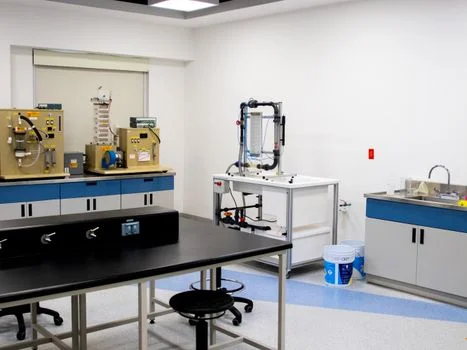
To minimize procurement risk, facility operators should move beyond price-based selection and adopt a technical validation framework. This process ensures that the selected equipment can handle the specific influent variations common in Taiwanese industrial sectors.
Step 1: Technology and Influent Match
Verify that the supplier’s equipment is rated for your specific wastewater characteristics. For