
Top 5 Sewage Treatment Equipment Suppliers in Fukuoka: 2025 Engineering Specs, Costs & Zero-Risk Selection Guide
Fukuoka’s industrial facilities evaluating sewage treatment equipment face a complex landscape where technical specifications and compliance requirements vary significantly. For example, Fukuoka’s top sewage treatment equipment suppliers offer systems with COD removal rates of 85–98% and TSS removal of 90–99%, though these specs depend heavily on the chosen technology, such as MBR versus DAF. Kurata Kogyo’s underground WSZ series, for instance, is designed to handle flow rates of 1–80 m³/h while requiring a footprint 60% smaller than conventional activated sludge systems. As a benchmark for advanced water treatment, Fukuoka City’s desalination plant operates with a substantial 50,000 m³/day capacity, leveraging UF membrane pretreatment to achieve high water quality. This comprehensive guide provides a data-driven comparison of 5 key local suppliers, detailing their engineering specifications, typical cost ranges (¥5M–¥50M), and crucial compliance with Japan’s Water Pollution Control Act, including stringent limits like BOD ≤20 mg/L and T-N ≤20 mg/L.Why Fukuoka’s Sewage Treatment Equipment Market Demands a Data-Driven Approach
Japan’s Water Pollution Control Act imposes significant financial penalties, reaching up to ¥10 million, for industrial facilities that exceed discharge limits for parameters such as Biochemical Oxygen Demand (BOD) and Total Nitrogen (T-N), with national standards set at BOD ≤20 mg/L and T-N ≤20 mg/L. Fukuoka Prefecture often enforces even stricter local ordinances, particularly for discharges into sensitive coastal areas, intensifying the need for precise treatment solutions. In 2023, a Fukuoka-based food processing facility incurred ¥3 million in penalties after its Dissolved Air Flotation (DAF) system consistently failed to achieve the required 90% FOG (Fats, Oils, and Grease) removal, directly violating local discharge ordinances. This incident highlights a common challenge: supplier specifications are frequently presented vaguely, where a claim of '90% removal' is insufficient without specifying the influent and effluent parameters (e.g., reducing 500 mg/L COD to 50 mg/L). To navigate these complexities, procurement managers and plant engineers require transparent, data-driven insights into potential sewage treatment equipment suppliers in Fukuoka. This guide introduces a framework for evaluating key players—including Kurata Kogyo, Ebara, San Lan Technologies, HydropureWater, and using Fukuoka City’s desalination plant as a technological benchmark—based on verifiable engineering specifications, cost benchmarks, and compliance capabilities.Fukuoka’s Top 5 Sewage Treatment Equipment Suppliers: Engineering Specs Compared
| Supplier | Technology Type | Capacity (m³/h) | COD Removal (%) | TSS Removal (%) | Energy Use (kWh/m³) | Footprint (m²) | Compliance (BOD/T-N limits) | Notable Features/Clients |
|---|---|---|---|---|---|---|---|---|
| Kurata Kogyo | Underground Activated Sludge (WSZ series) | 1–80 | 90–92% | 90–95% | 0.6–0.9 | 60% less than conventional AS | BOD ≤20 mg/L, T-N ≤30 mg/L (standard) | Compact, suitable for limited space, various public/private sector projects. |
| Ebara | MBR, Activated Sludge, DAF | 5–500+ | 95–98% (MBR) | 98–99% (MBR) | 0.8–1.5 (MBR) | Varies by system (e.g., MBR compact) | BOD ≤10 mg/L, T-N ≤15 mg/L (MBR) | Proprietary MBR systems, often require pre-treatment for FOG >100 mg/L. |
| San Lan Technologies | DAF, Activated Sludge | 5–200 | 70–85% (DAF) | 90–95% (DAF) | 0.3–0.6 (DAF) | Moderate (DAF compact) | FOG removal >95%, BOD ≤30 mg/L (DAF) | Specializes in FOG removal for food processing, chemical coagulation. |
| HydropureWater | MBR, DAF, Activated Sludge, Ozone Disinfection | 2–1000+ | 95–99% (MBR) | 98–99% (MBR) | 0.7–1.2 (MBR) | Compact (MBR), flexible (DAF) | BOD ≤5 mg/L, T-N ≤10 mg/L, 99% pathogen kill | High-efficiency MBR systems for stringent limits; ozone disinfection for Fukuoka’s medical facilities. |
| Fukuoka City Desalination Plant (Benchmark) | UF Membrane Pretreatment | 50,000 m³/day (plant capacity) | N/A (pre-treatment) | >99% (turbidity) | 0.2–0.4 (UF only) | Large (utility scale) | SDI <3 (critical for RO protection) | Demonstrates robust UF membrane pretreatment for high-volume, sensitive applications. |
Cost Breakdown: CAPEX and OPEX for Sewage Treatment Systems in Fukuoka (2025)
Accurate budgeting for industrial sewage treatment equipment in Fukuoka requires a clear understanding of both initial capital expenditures (CAPEX) and ongoing operational costs (OPEX). The financial implications vary significantly across different treatment technologies, influencing long-term sustainability and return on investment. The following table provides a benchmark for typical costs associated with common sewage treatment systems in Fukuoka for 2025, based on a nominal flow rate of 50 m³/h.| Technology Type | CAPEX (¥M) | OPEX (¥/m³) | Lifespan (years) | Maintenance (annual % of CAPEX) |
|---|---|---|---|---|
| MBR (Membrane Bioreactor) | ¥30M–¥50M | ¥150–¥300 | 15–20 (system), 5–7 (membranes) | 3–5% |
| DAF (Dissolved Air Flotation) | ¥5M–¥15M | ¥50–¥100 | 10–15 | 2–4% |
| Activated Sludge (Conventional) | ¥15M–¥30M | ¥80–¥180 | 20–25 | 4–6% |
MBR vs. DAF vs. Activated Sludge: Which Technology Fits Your Fukuoka Facility?
Compliance Checklist: Avoiding Fines and Shutdowns in Fukuoka
Ensuring continuous compliance with Japan’s Water Pollution Control Act and Fukuoka Prefecture’s local ordinances is paramount for industrial facilities, as violations can lead to severe penalties. A structured compliance checklist helps procurement managers and plant engineers mitigate these risks.- Pre-installation Verification: Before commissioning, meticulously verify that the selected supplier’s guaranteed effluent specifications (e.g., COD 500 mg/L influent → 50 mg/L effluent) are precisely matched to your facility’s specific influent wastewater characteristics and the required discharge limits.
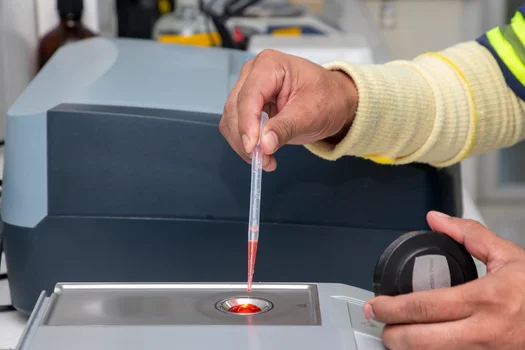
- Regular Compliance Testing: Implement a rigorous schedule of quarterly testing for key parameters such as BOD, T-N, and FOG. Each comprehensive test, performed by certified laboratories in Fukuoka, typically costs around ¥50,000.
- Comprehensive Documentation: Maintain detailed records of all wastewater treatment system operations, maintenance logs, and compliance test results for a minimum of five years. These records are essential for demonstrating adherence during regulatory audits.
Frequently Asked Questions
Q: What’s the cheapest sewage treatment system for a 20 m³/h Fukuoka factory?
A: For a 20 m³/h factory in Fukuoka, the most cost-effective solution depends on your wastewater type. A DAF system (¥5M–¥8M CAPEX) is ideal for FOG-heavy industrial wastewater, such as from food processing. For low-FOG applications like textile manufacturing, an underground WSZ system (¥7M–¥12M CAPEX) offers a compact and budget-friendly option.
Q: How do I comply with Fukuoka’s BOD ≤20 mg/L limit?
A: To comply with Fukuoka’s stringent BOD ≤20 mg/L limit, MBR systems, such as HydropureWater’s DF series, are highly effective, achieving 95%+ BOD removal rates. However, if your influent BOD exceeds 1,000 mg/L, pre-treatment (e.g., a DAF system or anaerobic digestion) is typically required before the MBR stage to ensure optimal performance and membrane longevity.
Q: What’s the lifespan of a sewage treatment system in Fukuoka?
A: The lifespan of sewage treatment systems varies by technology. MBR membranes generally last 5–7 years before requiring replacement, while the overall MBR system infrastructure can last 15–20 years. DAF systems, with proper maintenance and consistent sludge disposal (which costs ¥5,000–¥15,000 per ton in Fukuoka), typically have a lifespan of 10–15 years.
Q: Can I reuse treated sewage water in Fukuoka?
A: Yes, treated sewage water can be reused in Fukuoka for non-potable applications like industrial cooling or irrigation, provided it meets specific quality standards. For instance, recycled water must achieve a Boron concentration of ≤1.0 mg/L, a standard benchmarked by Fukuoka City’s desalination plant. MBR systems combined with Reverse Osmosis (RO) technology, such as HydropureWater’s JY series, are capable of producing water quality suitable for various reuse applications.
Q: What’s the lead time for sewage treatment equipment in Fukuoka?
A: Standard sewage treatment equipment, such as DAF or compact activated sludge (WSZ) systems, typically has a lead time of 3–6 months from order to installation in Fukuoka. For more complex or custom-engineered MBR or MBR+RO systems, the lead time can extend to 6–12 months, depending on specific design requirements and component availability.
Related Equipment
- MBR systems for Fukuoka’s BOD ≤20 mg/L limits — view specifications, capacity range, and technical data
- DAF systems for FOG-heavy wastewater in Fukuoka — view specifications, capacity range, and technical data
- ozone disinfection for Fukuoka’s medical facilities — view specifications, capacity range, and technical data
Need a customized solution? Request a free quote with your specific flow rate and pollutant parameters.


