Choose by Wastewater Fraction, Not Equipment Name
For Maplesville mining and metals facilities, the 2026 choice depends on the wastewater fraction. Choose a clarifier for dense, rapidly settling mineral fines and tailings solids; use DAF for conditioned colloidal solids, oil and grease, flotation reagents, and buoyant or low-specific-gravity precipitates. Combined streams often need both: a lamella or conventional clarifier for bulk solids followed by DAF polishing. Final sizing requires flow, TSS, particle size, pH, dissolved metals, jar testing, and the applicable permit rather than a generic tank size.
The contaminant fraction, not the equipment label, determines the primary separation mechanism. A mining or metals wastewater stream may contain dense mineral fines, colloidal clay, oil and grease, residual flotation reagents, and dissolved metals in the same flow. Gravity sedimentation works when particles are dense enough to settle within the available surface overflow rate. Dissolved air flotation works when conditioned particles can be contacted by microbubbles and removed from the surface.
Clearwater Industries reports that its DAF systems use 30–50 micron microbubbles to lift suspended solids, oils, and fats for removal by skimming (Clearwater Industries, April 27, 2026). That mechanism is suited to floatable or flocculable material, but a high silt and clay load can be a poor DAF feed. If dense tailings fines dominate, begin with a clarifier. If conditioned colloids, oils, or buoyant precipitates dominate, evaluate DAF. If both fractions are material, specify primary clarification followed by DAF polishing rather than forcing one unit to perform both jobs.
| Observed wastewater fraction | Initial selection | Engineering reason |
|---|---|---|
| Dense mineral fines and tailings solids | Conventional or lamella clarifier | Particle density and settleability support gravity separation. |
| Conditioned colloids, oils, flotation reagents, or buoyant precipitates | DAF | Conditioned particles attach to 30–50 micron microbubbles and float for skimming (Clearwater Industries, April 27, 2026). |
| Both settleable and floatable fractions are significant | Clarifier followed by DAF | The clarifier removes bulk solids; DAF polishes the residual floatable load. |
For a preliminary concept, compare an high-rate lamella clarifier for mineral fines with an industrial DAF system for metals wastewater. The final choice should follow site characterization and bench testing, not an assumed “best” machine.
Map the Stream Before Sizing Equipment
Equipment sizing starts with a wastewater profile that separates settleable particles, floatable material, and dissolved contaminants; total TSS alone cannot perform that role. The RFQ data set should include flow rate, TSS, particle-size distribution, pH, temperature, and concentrations of relevant dissolved metals such as copper, lead, and zinc. It should also characterize oil and grease, surfactants, residual flotation reagents, and the expected solids-capture rate.
- Map the sources: mill discharge, tailings overflow, floor washdown, equipment wash, condenser or cooling-water blowdown, metal-finishing rinses, and stormwater contacts.
- Sample representative production and seasonal conditions rather than relying on one composite sample.
- Separate particulate sampling from dissolved-metal analysis and define the analytical methods.
- Define the destination: discharge, process-water reuse, or a zero-liquid-discharge application.
- Run bench-scale jar tests to establish chemical demand, floc behavior, settling, flotation, and sludge characteristics.
Sample representativeness is a sizing issue, not administrative paperwork. A unit sized from peak flow but tested on an unrepresentative average TSS can be hydraulically adequate while failing its clarification duty. Conversely, a unit selected from one high-solids grab sample may be unnecessarily large. The mining wastewater characterization and sewer-limit requirements process should connect each source to its flow, contaminant profile, sampling frequency, and destination.
| Input to obtain | Decision supported | Procurement requirement |
|---|---|---|
| Flow rate across production and seasonal conditions | Hydraulic capacity and treatment-train configuration | Provide the complete flow-duration record and applicable peak basis. |
| TSS and particle-size distribution | Separation of bulk fines from colloidal material | State analytical methods and fractions used. |
| pH, temperature, copper, lead, zinc, and other relevant dissolved metals | Conditioning needs and permit significance | Identify discharge, reuse, or ZLD limits. |
| Oil and grease, surfactants, and flotation reagents | Need for DAF and emulsion or reagent treatment | Include representative concentrations and variability. |
| Jar-test results | Chemical dose, mixing, flotation or settling performance, and sludge behavior | Define test objective, protocol, and required performance criteria. |
For process-water reuse, ask whether the proposed treatment is intended only to protect a downstream membrane or filtration system, or to meet a defined reuse specification. That distinction affects whether filtration and residual-solids control belong in the same RFQ.
How DAF Removes Colloids, Oils, and Buoyant Solids
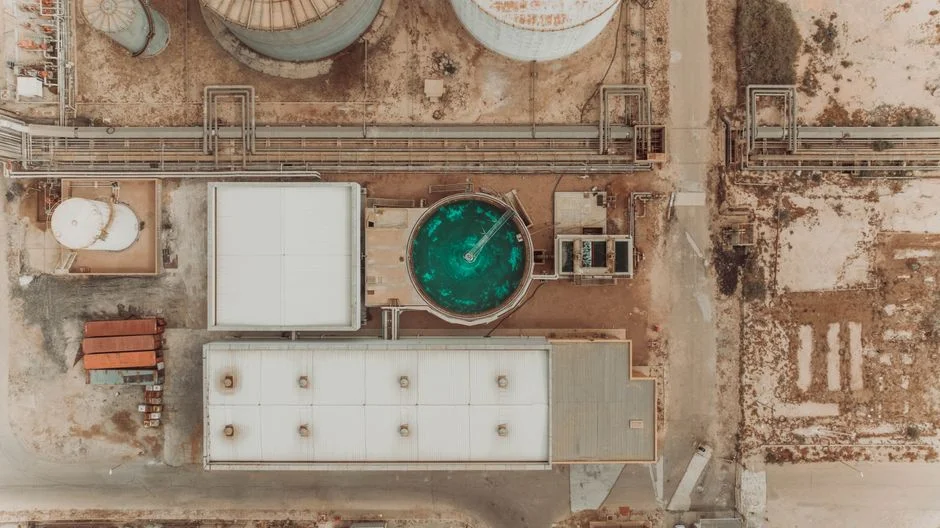
DAF separates conditioned suspended material by attaching microbubbles to floc and recovering the floating aggregate with a skimmer. Clearwater Industries states that its systems use 30–50 micron microbubbles to lift suspended solids, oils, and fats for surface removal (Clearwater Industries, April 27, 2026). The process is most appropriate for material that can be conditioned and floated, not an indiscriminate substitute for bulk-solids separation.
Clean clarified water is required at startup because the recycle loop draws clarified effluent, pressurizes it, saturates it with air, and returns it to the flotation tank; depressurization forms the microbubbles (Clearwater Industries, April 27, 2026). Coagulant, pH adjustment, and polymer may be introduced through serpentine flocculator tubes or chemical mix tanks. Clearwater Industries states that effective chemical conditioning increases floc size and its ability to contact the microbubbles, so chemical dosing is part of the treatment process rather than an accessory.
After conditioning, the floc enters the flotation tank. A paddle skimmer removes the floating solids, while heavier settled solids are withdrawn from the bottom collection zone (Clearwater Industries, April 27, 2026). For procurement, this makes the automatic chemical dosing system part of the performance-critical scope, not a line item to be added later.
Three engineering checks are essential:
- Flotation test: establish that the conditioned fraction rises and can be removed consistently under the proposed loading.
- Solids capture: verify the expected capture rate rather than relying on a generic TSS removal claim.
- Residual solids: identify what remains after skimming and bottom withdrawal, including whether filtration is required before process-water reuse or discharge.
Raw tailings should not be assumed to be a suitable DAF feed. High silt and clay loads represent a recognized limitation because the process must float the conditioned material rather than continuously recover a heavy bulk-solids stream. A DAF concept for a Maplesville mill therefore needs a solids-handling assessment and representative testing before equipment selection.
Where Clarifiers and Lamella Settling Are Stronger
Conventional and lamella clarifiers are stronger primary units when the wastewater contains dense, settleable mineral fines or metallurgical sludge. Conventional clarification withdraws settled sludge from the bottom and recovers clarified overflow through a launder. Lamella plates increase the effective settling area within a smaller tank footprint, but the separation mechanism remains gravity sedimentation.
HydropureWater lists surface loading rates of 20–40 m/h for its high-efficiency lamella clarifier and states that chemical consumption can be reduced by up to 30% (HydropureWater, 2026). These are catalog figures, not guarantees of site performance. The selected loading must be checked against the actual particle settleability, sludge blanket, withdrawal design, and required underflow condition.
Dense particles settle because their specific gravity and settling velocity support gravity separation. Colloidal material, emulsified oil, surfactants, and dissolved metals may pass through without additional treatment. A clarifier therefore protects downstream treatment from the heaviest solids load, but it does not by itself remove the dissolved-metal load or guarantee capture of every fine or buoyant particle.
| Design question | Clarifier or lamella assessment |
|---|---|
| Is the primary load dense, rapidly settling mineral fines? | Favors gravity clarification if the particles settle under the selected surface overflow rate. |
| Is colloidal clay, emulsified oil, or a buoyant precipitate significant? | Plan chemical conditioning and downstream DAF or another polishing step. |
| Is the civil footprint constrained? | Evaluate a high-rate lamella configuration rather than a conventional tank footprint. |
| Must the underflow reach a defined solids concentration? | Specify the required underflow condition and verify the sludge-withdrawal design. |
| Is dissolved-metal removal required? | Do not treat gravity clarification as a dissolved-metals removal process; establish the required chemical and polishing steps. |
For a new mine, mill, smelter, or metals-finishing facility with a constrained civil footprint, evaluate a high-rate lamella clarifier for mineral fines as the primary solids-removal step. If residual colloidal or buoyant contaminants remain, connect the downstream treatment objective to the reuse or discharge specification.
Compare DAF, Conventional Clarification, and Lamella Clarification
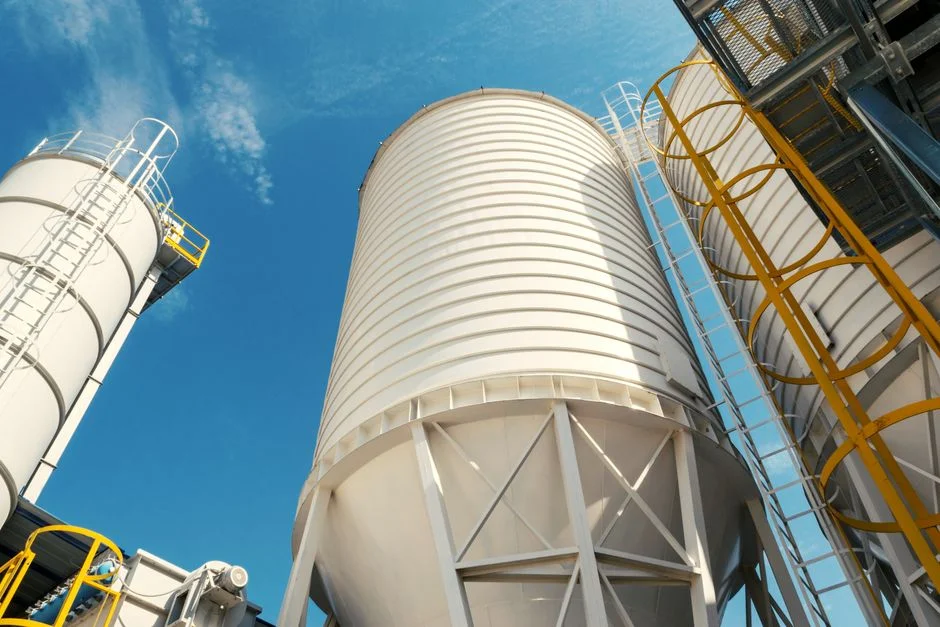
The most important comparison is the fraction each mechanism removes; tank size and catalog capacity do not determine contaminant suitability. DAF uses microbubbles and skimming, while conventional and lamella clarification use gravity settling and bottom sludge withdrawal. A combined train is often the most defensible architecture when both settleable and floatable fractions are material.
| Criterion | DAF | Conventional clarification | Lamella clarification |
|---|---|---|---|
| Primary mechanism | Microbubbles attach to conditioned particles; sludge is skimmed. | Particles settle by gravity; sludge is withdrawn from the bottom. | Inclined plates increase effective settling area within a smaller footprint. |
| Target fraction | Conditioned colloids, oils, flotation reagents, and buoyant or low-specific-gravity precipitates. | Dense mineral fines, tailings solids, and metallurgical sludge. | Dense mineral fines and other gravity-settleable solids. |
| Solids behavior | Floated sludge is skimmed; heavier solids settle and are withdrawn. | Settled sludge concentrates at the bottom. | Settled sludge concentrates in the bottom collection system. |
| Chemical requirements | Coagulation and flocculation are normally central to performance; dose and contact time require testing. | Chemical aid may assist settling, but surface overflow rate and withdrawal design govern performance. | Chemical aid may assist settling; lamella plates improve area but do not change the mechanism. |
| Footprint | Compact separator arrangement is possible, but the full conditioning skid must be included. | Generally requires more civil area. | Compresses the footprint of gravity settling. |
| Sludge | Proper conditioning can produce a thicker sludge that may need little further dewatering (Clearwater Industries, April 27, 2026). | Underflow normally requires concentration and dewatering. | Underflow normally requires concentration and dewatering. |
| Best treatment position | Primary for oil, reagent, and conditioned colloid loads; polisher after clarification. | Primary for bulk solids; upstream of polishing when required. | Primary for bulk mineral fines; upstream of polishing when required. |
Catalog configurations help identify candidate configurations but do not guarantee performance. Clearwater Industries describes the FPAC as a low-profile cross-flow separator for small-to-medium flow with very high solids loads; the FPBC as a high-profile design with lamella pack technology for low-to-medium loads, including low-buoyancy particles; and the FPHF as a high-flow configuration for low-to-large solids loads (Clearwater Industries, April 27, 2026). The COMPACT DAF includes conditioning equipment, sensors, instruments, and a control panel; it uses a single skid at 66 GPM or less and a modular two-skid arrangement above that flow (Clearwater Industries, April 27, 2026).
For a Maplesville purchase, treat those descriptions as a shortlist of applicability. Site wastewater characterization, chemical testing, and selected design loading still determine whether the equipment will perform as intended. A buyer comparing an industrial DAF system for metals wastewater with either clarifier should use the same influent data, required effluent quality, and solids-handling basis for both bids.
Build the Treatment Train and Cost Boundary
A combined mining or metals wastewater stream commonly needs a treatment train that removes bulk solids before polishing the residual floatable and colloidal load. The typical architecture is a conventional or lamella clarifier, followed by DAF when the residual fraction requires it, with chemical conditioning, controls, sludge withdrawal, and dewatering included in the equipment scope.
This architecture changes the cost comparison. A low-priced DAF that receives raw tailings may fail because its solids-handling system was not designed for that duty. A low-priced clarifier may meet bulk-solids targets but leave colloidal, oily, or precipitated contaminants unresolved. The economically relevant comparison is the installed treatment train against the required effluent and reuse targets.
| Cost boundary | Information needed from each bidder |
|---|---|
| Primary equipment | Clarifier or DAF, selected for the identified contaminant fraction and documented design basis. |
| Chemical conditioning | Coagulant, pH adjustment, polymer, storage, metering, mixers, controls, and chemical consumption assumptions. |
| Sludge handling | Withdrawal pumps, sludge storage, thickening, conditioning, and dewatering requirements. |
| Instrumentation and controls | Level, flow, pH, turbidity, dosing control, alarms, PLC scope, and operator interface. |
| Installation and site works | Foundations, access, piping, electrical supply, utilities, drainage, and installation scope. |
| Performance and support | Testing, commissioning, operator training, spare parts, warranties, and service support. |
Clearwater Industries states that correctly conditioned DAF can produce a thicker sludge that may need little further dewatering (Clearwater Industries, April 27, 2026). That potential saving should be evaluated against the actual jar-test sludge and vendor guarantee, not counted automatically. The supplied research does not provide a reliable 2026 unit price for DAF or a clarifier. Request a budgetary quotation tied to flow, TSS, particle-size distribution, contaminant fractions, and required effluent quality.
Ask each bidder to quote the clarifier or DAF, chemical-conditioning skid, controls, sludge withdrawal, and dewatering as one train. HydropureWater’s plate and frame filter press catalog covers filtration areas from 1 m² to 500 m² for the sludge-dewatering stage (HydropureWater, 2026). That range is a catalog selection boundary, not a determination of the required press area. Obtain the required filtration area from the selected unit’s solids-production and dewatering calculations.
Specify, Test, and Qualify the 2026 Purchase
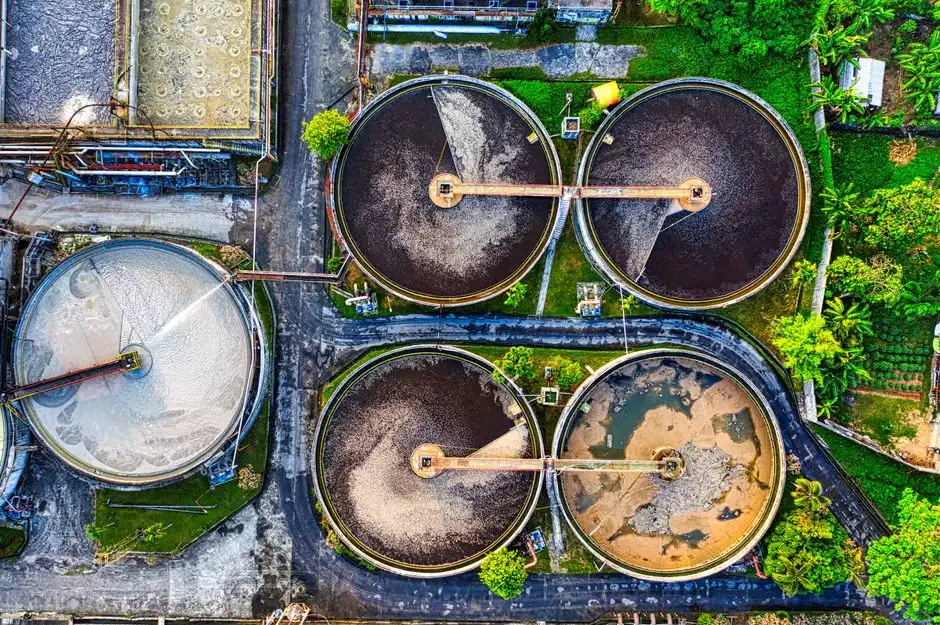
A defensible RFQ must contain enough wastewater data, test results, and performance boundaries for vendors to size comparable systems. Include representative wastewater characterization, jar-test results, the required hydraulic-loading basis, materials of construction, controls scope, and sludge-handling requirements. If the RFQ contains only flow and TSS, bidders will make incompatible assumptions about the contaminant fraction.
For clarification, identify the required rise rate or surface loading and the settling characteristics used to justify it. For DAF, define the air-to-solids relationship, required flotation performance, recycle basis, and conditioning requirement. These are design inputs, not generic production-rate labels. A single jar-test result should not be used to represent every production and seasonal condition.
- Issue a common data package: provide the same wastewater analyses, flow basis, destination, and effluent criteria to every bidder.
- Define the train: state which streams are combined and identify the required separation mechanism for each fraction.
- Request evidence: require pilot or comparable metal-bearing effluent data, automated dosing capability, and post-commissioning support.
- Review materials: ask for a corrosion-protection proposal based on pH, chemistry, abrasiveness, temperature, and cleaning exposure.
- Test the bid: compare guaranteed performance, utilities, chemicals, sludge output, controls, installation, and support on the same basis.
For acidic, abrasive, or chemically aggressive mining water, do not assume a standard material configuration is suitable. Clearwater Industries states that its standard DAF clarifiers are manufactured in 304 stainless steel, with 316 stainless steel, polypropylene, and other materials available on request (Clearwater Industries, April 27, 2026). That supplier statement is not a site-specific recommendation; the selected material should be justified against the actual water chemistry and operating conditions.
The supplied research identifies 40 CFR Part 43 as the federal ore mining and dressing point-source category. Buyers must still verify current site permits and applicable local requirements; the equipment proposal and compliance plan should be reviewed together. The dewatering options for mining wastewater sludge should be aligned with the final solids route rather than considered after the treatment unit is ordered.
Frequently Asked Questions
Should a Maplesville mine or metals processor choose DAF or a clarifier?
Choose a clarifier when dense, rapidly settling mineral fines dominate, and choose DAF when conditioned colloids, oils, flotation reagents, or buoyant precipitates dominate. If both fractions are significant, evaluate a clarifier followed by DAF polishing. Confirm the choice with representative wastewater characterization and jar testing rather than equipment name or total TSS alone.
What data is required to size DAF or a lamella clarifier?
Request flow rates across production and seasonal conditions, TSS, particle-size distribution, pH, temperature, dissolved metals, oil and grease, surfactants, residual flotation reagents, and the destination for the treated water. Include jar-test results, chemical demand, settling or flotation behavior, and sludge characteristics. For clarification, require the proposed surface-loading basis; for DAF, require the air-to-solids relationship and flotation-performance basis.
How should DAF and clarifier prices be compared when no published unit price is available?
Request budgetary quotations using the same flow, TSS, contaminant fractions, and required effluent quality. Require each bidder to price the primary unit, chemical-conditioning skid, controls, sludge withdrawal, dewatering, installation inputs, and support as one scope. A valid comparison must also state chemical consumption and expected sludge quantity, because a lower equipment price can be offset by higher operating or sludge-handling costs.
Which supplier capabilities reduce corrosion and delivery risk?
Request a written materials and corrosion-protection proposal tied to the site’s pH, dissolved metals, abrasiveness, and temperature, plus pilot or comparable metal-bearing effluent data and evidence of automated chemical dosing. Also require a documented delivery and commissioning schedule, performance criteria, commissioning tests, operator training, and post-commissioning support. Verify current permit obligations with the site’s mining and metals wastewater compliance workflow and responsible authority.