How to Select Sewage Treatment Equipment Suppliers in Bloemfontein
Bloemfontein buyers shortlist sewage treatment equipment suppliers by design flow (typically 1–300 m³/h), effluent quality targets, and DWS Blue Drop documentation support. Package-plant lifecycle budgets commonly fall in the R500K–R10M band. Industrial and municipal projects also need DAF pretreatment TSS removal in the 92–97% range under stated influent solids, plus spare-parts lead times that match local downtime risk.
In project briefs we review for Free State sites, three supplier archetypes appear most often. Local consultants such as Aqua Agri Solutions focus on DWS Blue Drop compliance. Importers such as Maskam Water supply pumps and UV packages. Residential specialists such as BIOROCK offer zero-electricity aerobic units for 4–30 PE. Industrial and municipal work hinges on flow compatibility, trade-effluent limits, and who can keep the plant in Blue Drop audit shape after commissioning.
Why Bloemfontein’s Sewage Treatment Market Needs Localized Support
Bloemfontein’s water stress, including a 40% reduction in Free State dam levels in 2023, pushes municipalities and factories toward reuse-ready effluent rather than once-through discharge. The Department of Water and Sanitation (DWS) Blue Drop 2023 report shows that only 38% of Free State municipalities achieved greater than 90% compliance with effluent quality standards. That gap raises the bar for equipment reliability and for suppliers who can produce audit-ready operating records.
Food processing and textile growth around the city increases demand for compact high-efficiency trains. Plants sizing pretreatment often specify a high-efficiency DAF system for industrial pretreatment in Bloemfontein ahead of biological stages. Reuse schemes lean on an MBR system for water reuse in Bloemfontein’s water-scarce regions to cut freshwater intake. Provincial rules, including the Free State Water Services Act, expect systems to ride seasonal swings from 20 to 100 m³/h on smaller municipal installations.
Imported pumps and packaged plants can look cheaper on the purchase order. Most plants we size for Bloemfontein still lose weeks when a critical spare ships from overseas, and generic certificates rarely map cleanly onto DWS Blue Drop evidence packs. Localized documentation support and rapid parts access therefore sit beside removal efficiency on the evaluation sheet.
How Do You Compare Wastewater Plant Equipment Suppliers?
You compare wastewater plant equipment suppliers on flow envelope, TSS removal under stated influent conditions, Blue/Green Drop support depth, after-sales response, lead time, and cost transparency—not on brochure claims alone. Bloemfontein’s 2026 market still clusters into five practical archetypes, from pure compliance consultants to integrated DAF/MBR/package-plant providers.
| Supplier Archetype | Primary Offering | Flow Rate Range (m³/h) | TSS Removal Efficiency (%) | Compliance Support (DWS Blue/Green Drop) | After-Sales Service | Lead Time (weeks) | Cost Transparency |
|---|---|---|---|---|---|---|---|
| Local Compliance Consultant | DWS Blue Drop consulting, chemical supply, lab testing | N/A (Consulting) | N/A (Consulting) | High (Expert documentation, audits) | High (Local, responsive) | 1-2 | Medium |
| Imported Equipment Distributor | Pumps, UV systems, packaged plants (imported) | 1-150 | 85-95 (for package plants) | Medium (Generic certs, limited local DWS specific) | Medium (Spares lead times 6-8 weeks) | 8-12 | Low |
| Residential Package Plant Specialist | Zero-electricity aerobic units (4-30 PE) | 0.5-5 | 90-95 | Low (Focus on domestic standards) | Medium (Limited industrial scale support) | 4-6 | Medium |
| Integrated Systems Provider (HydropureWater) | DAF, MBR, Underground Package Plants, custom solutions | 1-300+ | 92-99 (system dependent) | High (SAWQG, DWS Blue/Green Drop aligned) | High (Local support, rapid spares) | 6-10 | High |
| Water Treatment Chemical & Systems Provider | Chemicals, filtration media, basic systems | 5-100 | 80-90 (for basic systems) | Medium (General water quality, not DWS specialized) | Medium (Local, but limited complex support) | 3-5 | Low |
Note: Costs are indicative; requesting detailed quotes is essential for project-specific pricing. Imported systems may have lower upfront costs but often entail longer lead times for critical spare parts and potential import duties, impacting overall lifecycle costs. Conversely, local providers, while sometimes lacking packaged equipment, often excel in DWS compliance consulting and immediate after-sales support.
What makes a reliable wastewater treatment equipment supplier?
A reliable wastewater treatment equipment supplier for utilities publishes verified flow and effluent guarantees, holds SAWQG-aligned design data, and can produce Blue Drop process evidence without a second consultancy. Spare-parts commitments matter as much as nameplate efficiency: imported package plants often quote 6–8 week spares lead times, while local-support models target shorter turnarounds inside a 6–10 week equipment delivery window.
Ask for reference plants at similar COD/TSS loads, a written O&M staffing plan, and sample monthly lab sheets. Residential zero-electricity units rated 0.5–5 m³/h fit estates and small PE loads; they rarely scale to food-factory or municipal duty where seasonal peaks hit 20–100 m³/h.
Engineering Specs for Common Bloemfontein Sewage Systems
Sewage treatment systems shortlisted for Bloemfontein projects are compared on flow rate, footprint at a reference 50 m³/h duty, specific energy (kWh/m³), effluent TSS/COD/BOD, maintenance interval, and DWS/Blue Drop alignment. Package plants remain the default when civil space is tight and SAWQG Class II effluent is the permit target.
| System Type | Flow Rate (m³/h) | Footprint (m²) (for 50 m³/h) | Energy Use (kWh/m³) | Effluent Quality (TSS, COD, BOD mg/L) | Maintenance Frequency | Local Compliance (DWS/Blue Drop) |
|---|---|---|---|---|---|---|
| Underground Package Plants (WSZ Series) | 1-80 | 50-80 | 0.3-0.6 | TSS <20, COD <60, BOD <20 | Monthly (Sludge, aeration) | SAWQG Class II, DWS Blue Drop aligned |
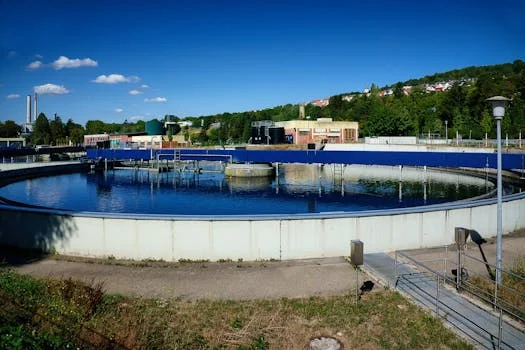
Where civil cover and odour control dominate the brief, an Underground Package Sewage Treatment Plant (WSZ Series) covering 1–80 m³/h at roughly 0.3–0.6 kWh/m³ and a 50–80 m² footprint for a 50 m³/h duty is a common baseline. Target effluent of TSS <20 mg/L, COD <60 mg/L and BOD <20 mg/L aligns with SAWQG Class II expectations when the process is operated and sampled monthly for sludge and aeration checks.
Cost Drivers and a Practical Selection Checklist
Lifecycle cost for package plants in this market typically sits between R500K and R10M, driven by hydraulic capacity, pretreatment needs, import duties, and the labour required to stay Blue Drop ready. Upfront equipment price is only one line; spares logistics and chemical or sludge handling often decide the five-year total.
Use this checklist before issuing an RFQ:
- Confirm peak and average flow (m³/h) and whether seasonal swings reach the 20–100 m³/h band.
- Lock effluent limits (TSS, COD, BOD mg/L) and whether reuse or trade discharge applies.
- Require DWS Blue/Green Drop documentation samples, not only generic CE or ISO certificates.
- Compare TSS removal claims with conditions (for DAF pretreatment, 92–97% under stated influent solids).
- Score after-sales: local stock versus 6–8 week import spares, plus commissioning and training scope.
- Request a transparent cost build-up covering civil interface, electrics, and first-year consumables.
- Verify lead time realism against the 6–10 week integrated-system and 8–12 week importer ranges above.
Who This Is For / Who Should Look Elsewhere / Next Step
This framework suits plant engineers, EPC contractors, and municipal procurement teams buying industrial or small municipal trains in the Free State. Estate developers needing only 0.5–5 m³/h residential aerobic units should stay with domestic package specialists rather than industrial DAF/MBR scopes.
If your duty sits in the 1–300 m³/h envelope and you need SAWQG-aligned package or pretreatment hardware, share flow and pollutant data next. Use a project quote request so sizing and compliance options can be compared on the same sheet.
Frequently Asked Questions
Which suppliers fit industrial sewage plants in Bloemfontein?
Industrial sites usually need integrated suppliers covering DAF pretreatment, MBR or package biological stages, and Blue Drop documentation, not residential aerobic specialists. Match the supplier’s flow range to your peak m³/h, require TSS/COD guarantees with influent conditions, and check spare-parts lead times against production downtime cost before award.
How should utilities judge trusted wastewater plant equipment suppliers?
Utilities should judge suppliers by audit-ready operating evidence, local response capability, and proven effluent under SAWQG Class II or permit limits. Ask for monthly sludge and aeration maintenance plans, sample Blue Drop records, and references at similar Free State loads. Generic import certificates alone do not prove DWS compliance support.
What flow and TSS figures matter when shortlisting suppliers?
Shortlists for Bloemfontein industrial and small municipal plants typically start at 1–300 m³/h design flow, with DAF pretreatment often specified for 92–97% TSS removal under stated solids loading. Package biological units aimed at SAWQG Class II commonly target TSS <20 mg/L, COD <60 mg/L and BOD <20 mg/L when operated at the design hydraulic load.
Why do imported package plants cost less upfront but more to run?
Imported distributors often quote lower capital cost inside the 1–150 m³/h band, yet spares lead times of 6–8 weeks and import duties raise lifecycle spend. Local compliance consultants and integrated providers trade some capital for faster documentation and parts response, which matters when Blue Drop audits or production stops cannot wait on overseas freight.
When is an underground package plant the right choice?
An underground package plant suits sites needing 1–80 m³/h, limited surface footprint (about 50–80 m² at 50 m³/h), and energy near 0.3–0.6 kWh/m³ with monthly sludge and aeration checks. Choose it when SAWQG Class II effluent and DWS Blue Drop alignment are required and odour or visual impact must stay low relative to open civil works.