Start with the right Bangkok site and discharge question
For a Bangkok housing development, a buried A/O package sewage treatment plant is a credible starting point only when a public sewer connection is unavailable, unsuitable or not required by the current authority decision. A buried A/O package sewage treatment plant combines biological treatment, clarification and disinfection in an underground unit, while an integrated MBR wastewater treatment system may suit tighter solids separation or a defined reuse objective. The decisive issue is not the process name: it is whether the site has an approved discharge route and sufficient land for construction, maintenance and sludge removal. Begin by defining the occupied development boundary, sewer status, receiving drain or canal, discharge ownership and land available for treatment and access.
Thailand’s decentralized domestic wastewater treatment context has three major system classes: centralized, cluster and on-site treatment. The WEPA review, published in 2015, describes a combination of an on-site facility and a wastewater treatment plant as the typical domestic wastewater management form in Thailand and identifies the Pollution Control Department as a central public institution. These historical observations provide context, not a current project approval.
The same review warns that Bangkok soakage pits often do not function as intended because low-permeability clay and high groundwater increase the potential for groundwater contamination and septic-tank overflows. A septic system therefore cannot be accepted merely because it appears in an earlier housing precedent. Its service boundary must be tested against current soil, groundwater, flood and receiving-environment conditions.
The Bangkok Metropolitan Administration is the principal public-sector counterpart identified in the JICA conceptual master plan dated July 2011. That plan is strategic and historical; it does not establish the present connection requirement, discharge consent, environmental-assessment route or approving office for a specific development. Confirm the current jurisdiction and technical criteria with the relevant Thai authority and the project’s licensed designer. Packaged sewage treatment options for housing developments and regional packaged sewage treatment selection provide useful comparison frameworks, but the Thai approvals must be confirmed independently.
Turn occupancy into a defensible treatment capacity
The defensible design flow comes from a project-specific occupancy and wastewater-generation schedule, not from the final number of housing units alone. The S2 conceptual master plan reports city-scale design-flow totals for 2040, but it does not provide a per-person design factor that can be transferred directly to this housing development. The project design basis must identify the applicable factor and justify it for the occupancy pattern, uses and local sewerage assumptions.
- List the occupied units by construction and occupancy phase.
- Assign the design population to each phase.
- Multiply design population by the wastewater-generation factor selected in the approved design basis.
- Convert average daily flow from m³/day to average m³/h by dividing by 24.
- Test the selected package against operating duration, peak response, staging and future expansion.
| Sizing input | Evidence or required project information | Procurement consequence |
|---|---|---|
| Initial occupied phase | Verified units, design population and occupancy assumptions | Specify the first-stage duty and the operating period assumed by the supplier |
| Fully built-out phase | Approved occupancy schedule and wastewater-generation factor | Reserve expansion, or select staged equipment with justified reserve capacity |
| Average flow | m³/day divided by 24 to obtain average m³/h | Compare against the WSZ selection range of 1–80 m³/h |
| Peak response | Project hydraulic model and the selected package’s operating strategy | Require evidence of equalization, redundancy and sustained treatment performance |
| Non-residential contributions | Commercial use, laundry, kitchen and grease information for mixed-use development | Separate hydraulic and pollutant loads before process selection |
| Groundwater infiltration | Site investigation and sewer or drainage design assumptions | Determine whether infiltration belongs in the treatment-flow basis |
The WSZ catalog range of 1–80 m³/h comes from the supplied product material, not from a Bangkok project study. It is a selection envelope, not permission to choose one unit for the whole development. The buyer must establish how long the plant operates each day, how it absorbs peak flow, and whether the initial installation can be expanded without replacing civil works.
Confirm design population, occupancy assumptions, groundwater infiltration, commercial uses, laundry contributions and any kitchen or grease load before freezing the flow schedule. A useful cross-check is the wastewater treatment stages and equipment matching, but the project calculation remains the controlling document.
Compare A/O package, MBR and decentralized alternatives
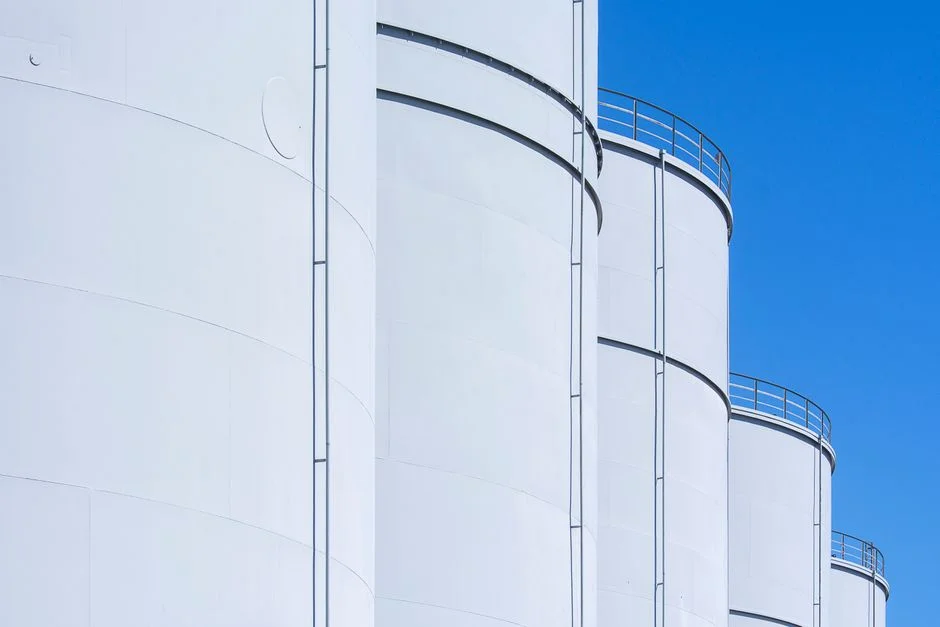
The process choice should follow the confirmed discharge and reuse requirements, available operating envelope and sludge-management route. A buried A/O package is appropriate where the development needs an automated biological treatment train in limited surface area. The WSZ unit integrates anoxic and aerobic contact oxidation, sedimentation and disinfection in one underground package, reducing the number of separately installed treatment units while retaining an above-grade access and operating zone.
MBR should be shortlisted where more stringent solids separation, a smaller biological-separation footprint or a reuse-oriented objective justifies added process complexity. The supplied MBR catalog lists a system range of 10–2,000 m³/day and states that the process provides near-reuse-quality effluent with filtration below 1 μm. These are catalog claims requiring project-specific validation; they are not automatic permission to reuse the effluent. The receiving standard, intended reuse, public-health requirement and residual-disinfection need must be confirmed separately.
A septic or soakaway arrangement remains a comparison option only where current site and receiving conditions demonstrate that it can function. S1’s warning about Bangkok’s low-permeability clay, high groundwater, contamination potential and overflow risk argues against assuming infiltration feasibility. A public sewer connection must also remain in the comparison because S2’s planning framework addresses new housing developments connected to public sewerage. Connection cost, schedule, tariffs, easements and the authority’s capacity at the proposed connection point require a current review.
| Selection criterion | Buried A/O package | MBR system | Central sewer connection | Septic or soakaway option |
|---|---|---|---|---|
| Primary fit | On-site biological treatment with compact civil works | On-site treatment with stringent solids separation or a reuse objective | Developer connection to public sewerage | Small, isolated or demonstrably suitable disposal conditions |
| Land and access | Buried treatment footprint plus access, sludge and service space | Buried or installed process footprint plus maintenance access | On-site sewer route and connection works | Tank and dispersal area, including service access |
| Automation | Substantially automated package operation | Automated membrane and biological-process controls | Utility-operated public network | Typically passive or manually serviced |
| Effluent route | Must have an approved receiving point | Must have an approved receiving or reuse point | Public sewer and treatment route | Soil, drain or other route only if technically and legally acceptable |
| Sludge handling | Scheduled extraction and responsible disposal | Sludge or residual-waste management included in the offer | Developer connection interface | Scheduled septage extraction and disposal |
| Key procurement test | Guaranteed effluent, duty cycle, access and expansion | Membrane guarantees, cleaning regime and reuse approval | Current connection offer, timetable and tariff | Groundwater, soil and receiving-environment evidence |
Compare process fit, footprint, automation, effluent route, sludge handling, maintenance access and expansion before purchase price. A lower equipment quotation can be outweighed by civil work, chemical use, inspection, membrane replacement, septage transport or a delayed sewer connection. No supplied research provides comparable Bangkok package-plant prices, so the supplier must quote these items separately.
Design the buried plant around Bangkok site constraints
A treatment package cannot be considered installable until site-specific investigation establishes excavation conditions, groundwater, flooding exposure, soil bearing and utility conflicts. These are design inputs, not checks to complete after equipment selection. The buried process footprint may be compact, but excavation, temporary works, access structures and contaminated-water management can materially affect cost and constructability.
The WSZ product evidence supports installation below grade with landscaping above; the same product information also describes trailer mounting for mobile deployment. For a permanent housing development, the relevant question is not whether the shell can be buried, but whether the complete operating envelope can be built and serviced within the land allocation. The sludge-dewatering equipment reference is relevant only if residual-sludge treatment is part of the proposed system; it should not be assumed into the package scope without a process decision.
Reserve access for sludge withdrawal, inspection, media or membrane maintenance, odor control, electrical supply and emergency bypass. Confirm lifting arrangements, safe working space, access-road loading, drainage and equipment replacement routes. A buried package with no usable maintenance access is not a complete design.
Sludge management must be scheduled rather than left to the building operator. S1’s survey of 301 households in 50 Bangkok districts in 2013 found that 34% accumulated septage for one year and 27% for one to five years. Those findings concern on-site household facilities, not a WSZ package, but they demonstrate a practical management failure mode: storage can outlast the assumed extraction interval. The project should define who extracts the residual sludge, where it is transferred, which facility receives it, and what records accompany the movement.
Confirm odor, noise and land-use effects with the relevant authority and adjacent property stakeholders. Early engagement is particularly important where the discharge point, access road or emergency bypass affects neighbouring parcels. The final civil and landscape layout should show how the plant remains serviceable without removing landscaping or interrupting occupied housing.
Prove treatment performance before equipment selection
The applicable building category and receiving requirement must be identified before an effluent claim is accepted. S1 lists maximum permitted effluent BOD values of 20, 30, 40, 50 and 200 mg/L for building Types A, B, C, D and E, respectively. The excerpt does not identify the governing instrument or its year, so these values cannot establish the current requirement for a 2026 project. They indicate why category identification is a necessary first step, not a substitute for current approval criteria.
S1 reports average effluent BOD across on-site facility types of 849–1,436 mg/L. The audited 2013 evidence demonstrates the treatment gap associated with poorly managed on-site facilities; it is not a packaged-plant acceptance value. Neither figure should be used as a design target for WSZ or MBR equipment.
| Performance item | Information to obtain from the supplier and approver | Reason for the check |
|---|---|---|
| Design influent | Flow range, operating hours and wastewater characteristics agreed for the project | Prevents a generic unit being matched to an undefined duty |
| Guaranteed effluent | Parameters, concentration limits, test methods, sampling point and frequency | Creates an enforceable performance boundary |
| Building classification | Current category and corresponding discharge criteria confirmed by the relevant authority | Links treatment selection to the applicable requirement |
| Treatment scope | Disinfection, nutrient removal, equalization, screening and odor control inclusions | Prevents omissions between quoted and required equipment |
| Reuse | Intended use, public-health requirement, residual disinfection and approval route | Converts a catalog claim into a permitted project objective |
| Commissioning | Acceptance loads, sampling procedure, training and performance-test documentation | Demonstrates compliance before handover |
Require the supplier to state the design influent, guaranteed effluent parameters, test methods, sampling point, test frequency and performance guarantee. A reference photograph or generic “domestic wastewater” designation is not enough. Ask what remains outside the package boundary and who is responsible for each addition.
Treat every reuse claim as conditional until the intended use and approval route are confirmed. A treatment train capable of producing low-turbidity effluent does not establish fitness for irrigation, toilet flushing or another reuse without the corresponding public-health and site requirements. The performance-verification framework for packaged wastewater treatment can help structure the acceptance test, but it does not replace the project-specific discharge consent.
Build the procurement and approval checklist
A defensible inquiry starts with verified demand and site constraints, not with a named package. Issue each bidder the same design-flow schedule, wastewater characteristics, development phasing, discharge point, required effluent parameters, available land, groundwater information, power supply and septage or residual-sludge removal route. Describe whether each load is residential, commercial or mixed use and identify the applicable design basis.
Require a technical and commercial response covering:
- Process basis, equipment list, treatment capacity and operating duration.
- Civil-interface drawing, access structures, excavation, loading and utility requirements.
- Controls, alarms, power demand, emergency bypass and remote supervision.
- Influent and effluent guarantees, test methods, sampling points and commissioning criteria.
- Installation sequence, owner responsibilities, training, spare parts and warranty.
- Inspection, media or membrane maintenance, sludge extraction, transport and disposal.
- Expansion provisions and the effect of later occupancy phases.
Request a lifecycle comparison covering capital equipment, excavation, access structures, power, chemicals, inspection, sludge extraction, transport, disposal and replacement obligations. The supplied research contains no defensible Bangkok package-plant price data. Therefore, ask for itemized quotations and the commercial assumptions behind them; do not estimate a generic price from equipment scope.
Ask the relevant Thai authority to confirm whether the development must connect to public sewerage, whether an on-site discharge consent is available, and whether environmental assessment or another approval is required. Obtain the same confirmation through the licensed designer responsible for the project. A 2011 conceptual master plan and a 2015 review cannot answer those site-specific questions.
Use WSZ and MBR as an initial technical shortlist, then select only after receiving comparable site-specific bids, current authority feedback and verified performance guarantees. The domestic wastewater procurement checklist and buyer-guide framework can support tender-document completeness, while the process selection must remain grounded in the Bangkok project basis.
Frequently Asked Questions
How much does a packaged sewage treatment plant cost for a Bangkok housing development?
The supplied evidence does not provide a defensible Bangkok package-plant price. Request itemized bids covering equipment, excavation, access structures, installation, power, chemicals, commissioning, O&M, sludge extraction, transport and disposal. Give every bidder the same flow schedule, site information and performance requirements so the quotations can be compared at the same scope. Ask which items are exclusions and which costs vary with the selected duty, access arrangement or phased expansion.
Should a Bangkok housing project choose WSZ A/O or MBR?
Choose WSZ A/O where the confirmed discharge route, footprint, automated biological treatment and operating access suit the project. Shortlist MBR where the project has a stricter solids-separation requirement, a defined reuse objective or a justified need for its process configuration. Compare guaranteed effluent, civil footprint, membrane or media maintenance, sludge handling and lifecycle cost—not the process name alone.
How is the required packaged plant capacity calculated?
Multiply the approved design population for each occupancy phase by the wastewater-generation factor selected in the project design basis to obtain average daily flow, then divide m³/day by 24 to obtain average m³/h. Test the initial and fully built-out phases separately, then check operating duration, peak response, infiltration and staged expansion. The supplied evidence does not justify importing a universal per-person factor into this project.
Can a septic tank replace a packaged sewage treatment plant in Bangkok?
Not without a site-specific feasibility and approval finding. S1’s 2013 assessment warns that Bangkok’s low-permeability clay and high groundwater can prevent soakage pits from functioning as intended and increase contamination and overflow risks. The project must establish the soil and groundwater conditions, available dispersal area, receiving route, extraction route and current authority acceptance before treating a septic tank as equivalent to a managed treatment plant.
What documents are needed to approve an on-site sewage treatment system?
Submit the wastewater-flow calculation, occupancy schedule, site and groundwater information, process description, guaranteed effluent parameters, civil layout, discharge route, residual-sludge plan and current authority and licensed-designer confirmations. Include access for maintenance and sludge removal, electrical and control requirements, commissioning criteria and any environmental-assessment or discharge-consent documentation. For comparison workflows, see packaged sewage treatment options for housing developments and regional packaged sewage treatment selection, while keeping the Bangkok approval evidence current and project-specific.