What Amman Projects Need to Decide First
Domestic sewage treatment in Amman involves selecting a treatment route for wastewater from accommodation, food service, sanitation, laundry, and other domestic activities. A project may use decentralized sewage treatment, connect to an authorized sewer, or combine both. The first procurement decision is the regulatory boundary: establish the flow, wastewater characteristics, receiving point, reuse objective, available footprint, and responsible authority. Jordan’s water scarcity makes treated wastewater strategically important, but available research cites historical JS893/2002 values rather than a complete current permit framework. Every Amman proposal should begin with confirmation of the applicable discharge or reuse conditions from the relevant authority. The regional domestic sewage treatment buyer’s guide provides a decision framework, but its permit conclusions must be checked against current Amman requirements.
Before comparing package systems, define the project boundary in writing. This should distinguish incoming domestic sewage from any industrial-like process water, identify where treatment ends, state how the treated flow will be conveyed, and establish who owns sludge removal, disposal, and reuse. The buyer should also record the development phase and whether future connections or phases will increase the load.
The site brief should identify the property type, wastewater sources, average and peak flow, available footprint, soil and groundwater conditions, power supply, noise and odour constraints, intended reuse, and receiving point. A property adjacent to a public sewer is not automatically required to install treatment, while a site without an authorized receiving route may need an on-site solution. The available evidence does not establish which option is legally applicable to each Amman site. That conclusion must come from the current authority and project-specific permit discussion, not from historical national performance data.
Jordan’s Wastewater and Reuse Context
Historical evaluations of Jordan’s treatment plants record that in 2005, plants received 107.3 MCM of wastewater, produced about 75.4 MCM of effluent, and sent more than 90 percent to agricultural use. These figures explain why Jordan’s sewage-reuse policy is material to project planning, although they do not serve as substitute project inputs.
The MCC As-Samra expansion illustrates the national reuse opportunity: the expanded plant provides 133 million cubic metres of high-quality treated water per year for irrigation in the Jordan Valley. MCC reports that approximately 375,000 households in the Zarqa Governorate and neighbouring Amman benefited from additional freshwater supplies as treated wastewater was substituted in agricultural applications. This is national infrastructure context and does not establish the permit, treatment route, or reuse conditions for an individual Amman property.
The evaluation reproduced JS893/2002 limits for reclaimed domestic wastewater. They are shown below as historically cited and must be verified against the current standard and permit before use.
| Historical JS893/2002 use category | BOD5 (mg/L) | COD (mg/L) | TSS (mg/L) |
|---|---|---|---|
| Vegetables eaten cooked | 30 | 500 | 150 |
| Fruit, forestation, industrial crops and grains | 300 | 500 | 150 |
| Discharge to wadis and catchments | 60 | 150 | 60 |
Source: Abdulla et al., Evaluation of Wastewater Treatment Plants in Jordan, SUSANA, citing JS893/2002. Buyers should obtain the current applicable standard, permit conditions, and reuse approval for the intended discharge or irrigation route. Further context is available in this review of wastewater reuse and water security in Jordan.
Build a Project-Specific Sewage Treatment Duty
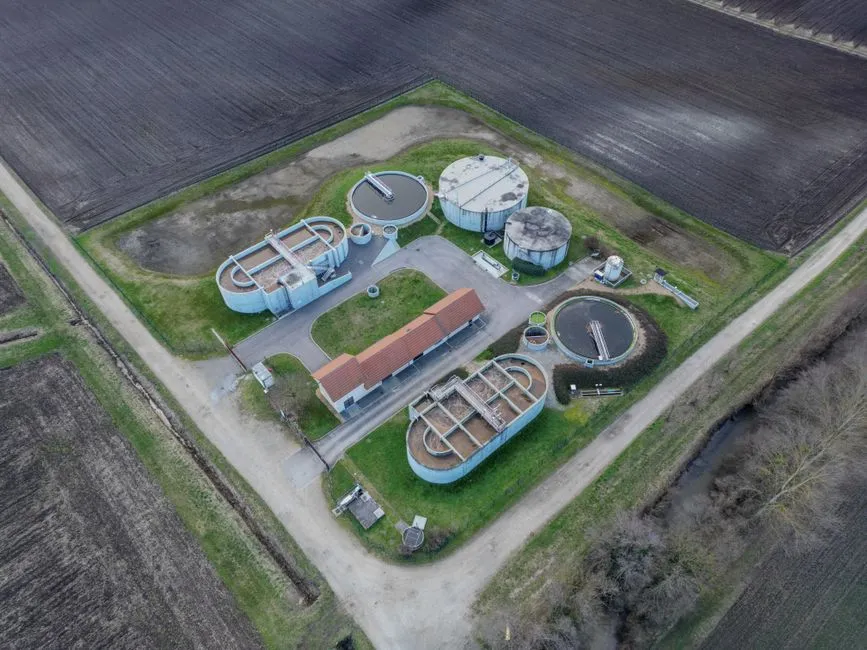
A defensible wastewater treatment plant sizing exercise starts with the wastewater-generation basis rather than a catalogue flow. The supplier brief should quantify occupancy and activity, then present the resulting duty through the following sequence.
- Establish the generation basis. Record day population, overnight occupancy, staff, guest rooms, kitchen flows, laundry, medical fixtures, and any industrial-like inflows. Separate normal operation from events, seasonal occupancy, and phased development.
- Determine hydraulic duty. State average flow, peak flow, peak factor, incoming-flow range, and required treatment hours. Request measured data where a phased, mixed-use, or operationally variable site is proposed.
- Characterize the wastewater. Include representative BOD5, COD, TSS, and operational data relevant to the process. Do not substitute a generic domestic-sewage composition for project data.
- Fix the service boundary. Define the receiving or reuse route, receiving-water sensitivity, irrigation constraints, odour and noise limits, sludge-disposal route, and future expansion requirement.
- Build the operating envelope. Price biological media or membranes, aeration, pumping, disinfection, sludge removal, inspections, power, and spare parts as part of the life-cycle scope.
| Sizing input | Information the buyer must establish | Why it affects selection |
|---|---|---|
| Hydraulic duty | Average flow, peak flow, peak factor and operating hours | Determines equipment capacity, equalization, pumping and redundancy |
| Organic and solids load | Representative BOD5, COD and TSS | Sets biological treatment and solids-separation duties |
| Site and receiving route | Footprint, soil, groundwater, receiving point and reuse objective | Controls configuration, installation, discharge or reuse design |
| Operations | Power, sludge route, maintenance access, operator involvement and expansion | Determines whether the proposed package is operable and supportable |
Historical As-Samra results show why a design target must not be confused with plant performance. The evaluation cited a 20 mg/L BOD5 design effluent standard but reported As-Samra effluent BOD5 and COD of 135 mg/L and 506 mg/L. Those results belong to the cited plant and historical evaluation; they are not Amman acceptance values. For project design, use verified inputs and current approval criteria, then assess the WSZ underground package sewage treatment plant and MBR membrane bioreactor for domestic sewage against that duty. A practical method for checking a housing proposal is set out in packaged sewage treatment plant sizing for housing.
Compare Decentralized, WSZ Package and MBR Systems
The WSZ series combines anoxic/aerobic A/O biological contact oxidation, sedimentation, and disinfection in one buried package unit, providing a compact option for sites where surface land is constrained. The verified product catalogue states that the unit is fully automated and handles 1–80 m³/h. It can be installed below grade with landscaping above or mounted on a trailer for mobile deployment. These attributes make the WSZ relevant to hotels, hospitals, and residential communities, provided the selected unit matches the verified duty and local installation requirements.
The MBR is the higher-separation option in the supplied catalogue. It uses activated sludge with submerged PVDF membrane filtration, achieves filtration below 1 μm, occupies a footprint stated as 60 percent smaller than conventional systems, and covers 10–2,000 m³/day. These characteristics may justify MBR selection where fine solids separation, compact installation, and reuse potential are project objectives. The buyer must still examine aeration, membrane fouling, cleaning, recovery, redundancy, solids handling, and replacement responsibility.
| Decision dimension | Decentralized approach | WSZ package | MBR system |
|---|---|---|---|
| Treatment process | Site-level route; final process must match the permitted design | A/O contact oxidation, sedimentation and disinfection | Activated sludge with submerged PVDF membranes |
| Hydraulic capacity | Set by project-specific design | 1–80 m³/h | 10–2,000 m³/day |
| Footprint and installation | Depends on selected process and site | Buried or trailer-mounted | Catalogue states 60 percent smaller footprint than conventional systems |
| Solids separation | Must be defined in the approved process | Sedimentation within the integrated unit | Filtration below 1 μm |
| Automation and attendance | Depends on process and maintenance arrangement | Fully automated | Automation not quantified in the supplied research |
| Sludge and maintenance | Requires a defined removal and disposal route | Requires inspection, sludge removal and component or media access | Requires fouling control, cleaning, aeration, solids handling and replacement planning |
| Compliance basis | Current permit and receiving-route requirements | Demonstrate the proposed duty and final effluent against current conditions | Include membrane and solids-separation performance in the same duty-based verification |
Source for WSZ and MBR parameters: HydropureWater verified product catalog. The supplied research provides no comparative cost, efficiency, membrane life, or service-life figures. Use the table as a screening tool, then require each shortlisted supplier to demonstrate capacity, process fit, expansion provisions, and acceptance obligations for the actual project.
From Equipment Selection to Commissioning
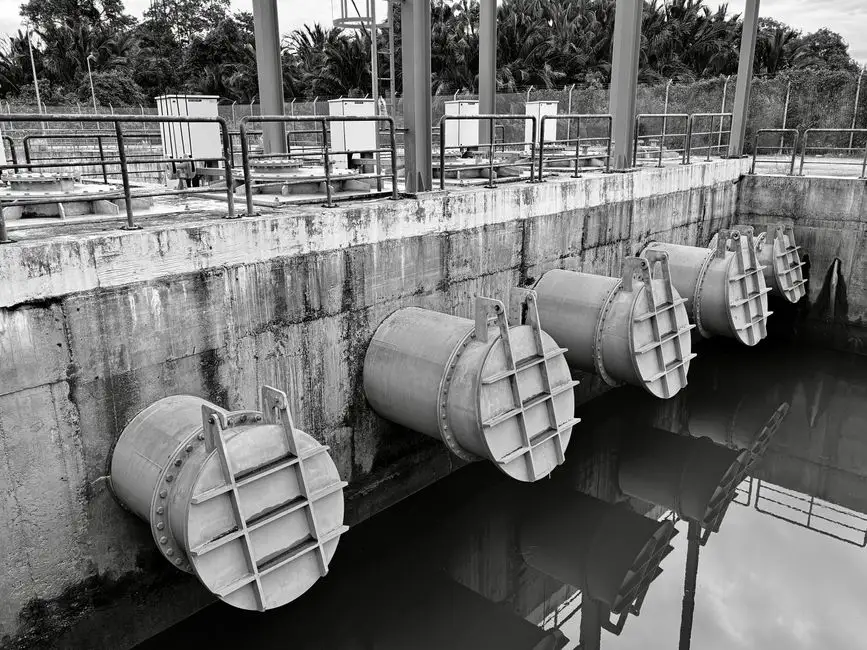
Equipment selection should follow a controlled procurement sequence with traceable design inputs and acceptance obligations. Issue the supplier brief with the verified design flow, peak flow, wastewater characterization, soil and groundwater conditions, footprint, power supply, noise and odour constraints, receiving point, reuse objective, and future expansion requirement. The response should include inlet works, biological treatment, solids separation, disinfection, pumping, controls, sludge removal, alarms, power requirements, and auxiliary equipment.
Request the general arrangement, installation and commissioning requirements, operating philosophy, maintenance schedule, spare-parts list, warranty scope, and supporting calculations. For MBR proposals, define membrane cleaning, aeration, fouling control, recovery, and replacement responsibilities. For WSZ proposals, require clear access for inspection, sludge removal, and media or component maintenance. A broader reference for packaged sewage treatment plant sizing for housing and containerised MBR for a residential development can help identify the information to request, although the Amman permit and site data must govern.
Performance acceptance should reference the current permit and reuse specification, with sampling points, test methods, frequency, acceptance values, and non-compliance responses expressly agreed. Do not copy historical Jordan data into the contract. Coordinate final approval with the relevant Amman and Jordanian authorities.
Frequently Asked Questions
How much does a domestic sewage treatment system cost in Amman?
The supplied research contains no current Amman equipment-price or installation-cost range. Request a cost breakdown covering the selected process, verified design and peak flow, excavation and civil works, power and controls, sludge handling, commissioning, permits, and long-term operation.
Should an Amman hotel or housing development choose WSZ or MBR?
Choose WSZ when its 1–80 m³/h duty, buried A/O contact-oxidation process, sedimentation, and disinfection fit the site and operating plan. Consider MBR when its 10–2,000 m³/day duty, sub-1-μm filtration, and compact footprint are justified by the reuse and solids-separation requirements.
What flow data should be requested before ordering a package sewage treatment plant?
Request average and peak flow, the occupancy basis, inflow variability, wastewater characteristics, future expansion, footprint, power and utility constraints, receiving route, and the current permit or reuse condition.
Can treated sewage from an Amman site be reused?
Reuse can support Jordan’s water-security objectives, but its acceptability depends on the current standard, permit, and proposed end use. Confirm the route with the relevant authority; do not treat historical JS893/2002 values as current approval criteria.
How should a buyer verify a sewage treatment supplier?
Ask for a duty-matched process design, performance basis, general arrangement, scope boundaries, installation requirements, commissioning plan, maintenance and training scope, spare parts, warranty terms, and evidence supporting the proposed guarantees.