Which package plant fits a Stockholm housing development?
A Stockholm housing development can suit a buried A/O WSZ system when land is constrained, unattended operation is required and the discharge can comply with its site permit. An MBR becomes relevant where footprint, receiving-water sensitivity or near-reuse-quality effluent justify membrane maintenance. A shared biofilm train may suit a small housing association when lifecycle cost and simple operation outweigh tighter effluent performance, seasonal variability and reuse requirements. Final selection depends on the actual site—not household count alone.
The three principal routes are therefore distinct. A buried WSZ package combines anoxic and aerobic treatment below grade for a constrained residential installation. An MBR package treatment alternative separates biological treatment from sub-micrometre membrane filtration. Shared biofilm treatment uses fixed-media biological units, with performance and maintenance governed by the selected media and operating controls.
Stockholm’s municipal programme does not answer the development’s equipment question. The EIB describes a citywide collection tunnel and upgrades at Sickla and Henriksdal for the period 2019–2031, with the plants intended to treat the city’s total sewage inflows. That programme addresses central infrastructure and stormwater resilience; it does not establish the technical suitability, capacity or permit conditions for a decentralized site that cannot connect to the municipal network. A comparable regional package-plant housing comparison is therefore useful for method, not for Stockholm approval.
Before selecting equipment, require the design population, measured and design flows, groundwater level, bedrock condition, excavation access, discharge point, receiving-water sensitivity, treatment objectives and sludge route. A catalogue flow rate cannot answer those site questions.
Turn the development's population into a design flow
A defensible hydraulic calculation starts with design population, not house count, because occupancy, fixture use and household composition determine wastewater flow. HydropureWater’s 2026 field data uses 5–30 households, 25–150 people and one treatment train as a small-community reference. That scope is a comparison point, not an automatic selection rule for a Stockholm housing development.
Use the following sequence in the RFQ:
- Establish the design population from the proposed households and expected occupancy.
- Calculate Q_avg = PE × per-capita flow, using 150–200 L/person·day from HydropureWater’s 2026 field data.
- Calculate Q_peak = Q_avg × peaking factor, using the 2.5–3× factor stated in HydropureWater’s 2026 field data for small Swedish communities.
- Require site-specific influent sampling before finalising biological loading, storage and equalization.
The same HydropureWater 2026 field data reports raw domestic sewage at this scale of 250–400 mg/L BOD, 250–350 mg/L TSS and 30–60 mg/L NH4-N. Those are influent bands for preliminary design, not effluent limits and not a substitute for sampling the development’s incoming sewage.
| RFQ design input | Evidence or required submission | Engineering question |
|---|---|---|
| Design population | Household mix and occupancy assumptions | What population is approved for both treatment and collection? |
| Average flow | PE × 150–200 L/person·day, per HydropureWater 2026 field data | Does the supplier size the biological train on average flow? |
| Peak flow | Average flow × 2.5–3, per HydropureWater 2026 field data | Is equalization and flow control included? |
| Raw sewage quality | 250–400 mg/L BOD, 250–350 mg/L TSS and 30–60 mg/L NH4-N, per HydropureWater 2026 field data; verify by sampling | Which biological loading assumptions underpin the guarantee? |
| Hydraulic peak | Supplier-specific calculation from wastewater production and collection timing | Can the package, pumps and controls pass the transient duty? |
Require each bidder to label average, peak and hydraulic peak flows separately. State whether the offered train includes equalization, flow control, pumping and the required disinfection stage. For below-grade proposals, also require the buried WSZ A/O sewage treatment plant to identify chamber access, lifting arrangements and any duty outside the quoted treatment envelope.
Match WSZ, MBR and biofilm packages to the site
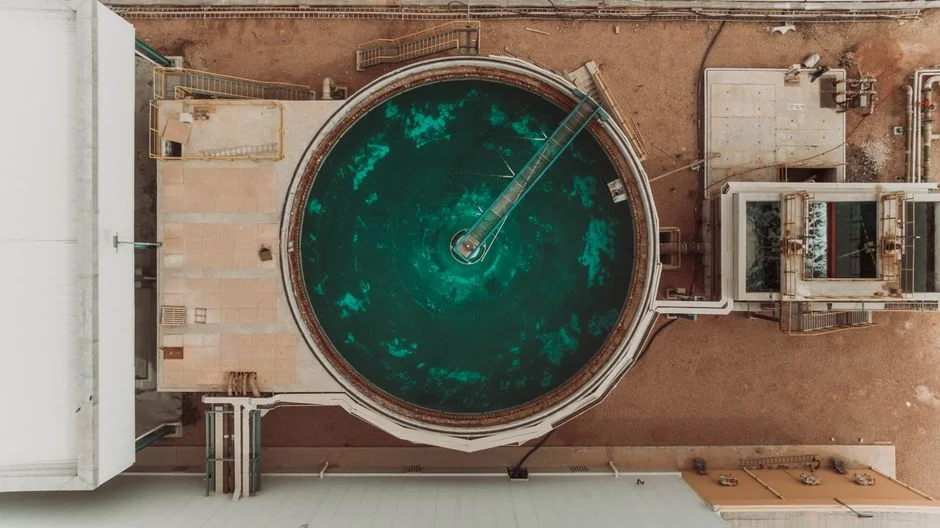
WSZ, MBR and biofilm packages should be compared against the receiving environment and construction constraints, rather than ranked by nominal capacity. HydropureWater’s 2026 field data describes the WSZ as integrating anoxic and aerobic contact oxidation, sedimentation and disinfection in one buried package, with a 1–80 m³/h range, full automation and no dedicated operator requirement.
A WSZ package is the strongest candidate where the plant must be below grade, surface area is limited and reliable unattended operation is required. HydropureWater’s 2026 field data identifies residential, hotel, hospital and small-cluster applications for this route. At a Stockholm housing site, the decision remains conditional on groundwater, bedrock, excavation access and permit acceptance; below-grade construction does not remove those constraints.
An MBR is the stronger candidate when the footprint must be small or the treatment objective approaches reuse quality. HydropureWater’s 2026 field data states that the membrane process provides sub-1 µm filtration and near-reuse-quality effluent, while occupying about 60% less space than conventional activated sludge across a 10–2,000 m³/day capacity window. Require bidders to price membrane cleaning, replacement intervals, membrane-fouling controls, spare membranes and operator attendance rather than treating the footprint benefit as the whole lifecycle case.
Shared biofilm treatment is most defensible for a small housing association where simpler operation and per-household cost matter, reuse is unnecessary and seasonal performance variation can be accepted. The Biorock Sweden reference comprises six houses, 25 people, a 16,000 L primary tank, flow-control chamber, two ECOROCK-3000 units and a pump where site levels require it. It illustrates a workable configuration; it is not a universal Stockholm standard or a substitute for project-specific loading calculations.
Seasonal uncertainty remains material. Ogden’s ASABE 2001 evidence reports performance fluctuations in biofilm and wetland systems, so the RFQ should require seasonal performance expectations and monitoring provisions. A supplier should state how low temperatures, holiday periods and variable loading will affect the proposed biological treatment.
Installation constraints can reverse the apparent process ranking. In the Biorock above-ground example north of Stockholm, the stony site and absence of a mains connection favoured an above-ground arrangement with UV disinfection; trained contractors completed installation in less than 2 days, according to Biorock. That evidence supports retaining above-ground options when geology or access makes excavation disproportionate. A separate UV disinfection package may therefore form part of either route.
| Decision condition | Preferred route | Buyer must verify |
|---|---|---|
| Below-grade installation, unattended operation, constrained surface area | Buried A/O WSZ | Groundwater, bedrock, excavation, access, automation and site permit |
| Tight footprint, sensitive receiver or near-reuse objective | MBR | Membrane maintenance, replacement provision, controls and residual energy demand |
| Small housing association, no reuse requirement, simpler operation valued | Shared biofilm | Seasonal performance, loading basis, redundancy and monitoring |
| Surface access limited or excavation is impractical | Evaluate above-ground treatment | Noise, odour, visual impact, flood exposure, access and local planning |
Check the receiving water, climate and sludge obligations
The receiving water and proposed discharge point must be fixed before selecting the process because they determine the applicable effluent objectives, monitoring requirements and treatment train. Use the site’s Swedish wastewater permit and the revised Urban Waste Water Treatment Directive, EU/2024/3019, as part of the compliance basis. The EIB Stockholm programme states that its infrastructure investments support revised UWWTD requirements and protection of the sensitive Baltic Sea ecosystem, but it does not provide a package-plant sizing rule for an individual housing development.
Climate and stormwater planning should also remain separate from the package’s nominal treatment capacity. The EIB identifies reduced overflows to Lake Mälaren and adaptation to heavy rainfall as central objectives of Stockholm’s collection and treatment programme. For a decentralized site, require the designer to explain how roof runoff, surface water and peak sanitary discharges are prevented from entering or overwhelming the treatment and storage system.
Disinfection must follow the permit and intended use. Consider UV where chemical-free treatment is required or the discharge or reuse line needs a physical disinfection barrier. Evaluate chlorine dioxide only where the approved process and residual requirements justify it. A chlorine dioxide generation package should therefore be selected from the permit and operating concept, not added as a default specification.
Sludge is part of the environmental approval, not residual equipment. Require the supplier to state solids production, storage volume, withdrawal frequency, transport arrangements, destination and receiving-facility acceptance conditions. The Swedish small-community reference describes annual-to-biennial withdrawal for its 25-person installation, but a Stockholm development’s interval must be calculated from actual loading and available storage.
If dewatering is required, use an appropriately sized plate-and-frame sludge dewatering package and make the haulier’s acceptance criteria the governing requirement. Do not use the reported influent BOD, TSS and NH4-N bands as proof of effluent compliance. Before award, require evidence that the proposed process can meet the permit’s site-specific BOD, TSS, nitrogen and disinfection requirements, with defined sampling points and acceptance tests.
Build a permit-ready supplier RFQ

A comparable RFQ should give every bidder the same site evidence and require each supplier to expose exclusions and assumptions. Product selection is then evaluated through a staged technical, commercial and approval workflow rather than a catalogue-capacity comparison.
- Issue the site basis: include the site plan, design population, household mix, average and peak flows, inlet test results, receiving-water data, effluent objectives, groundwater level, bedrock information and excavation constraints.
- Define the complete treatment train: require identification of pretreatment, equalization, biological treatment, solids separation, disinfection, sludge storage, controls, alarms, remote monitoring and every exclusion.
- Define construction responsibilities: cover installation method, temporary works, access, landscaping, noise, odour, power supply, commissioning and performance testing.
- Define the service period: request operator attendance, routine maintenance, membrane cleaning where applicable, spare parts, sludge-handling support, warranty, remote support and local service capability.
- Make award conditional: require site verification, permit acceptance, demonstrated performance at the agreed flow and influent conditions, and a signed process guarantee.
The domestic sewage package-equipment selection guide is useful for checking that major process stages remain visible in the tender rather than disappearing behind a package headline. For Stockholm, the receiving-water data and permit basis must be local; a generic equipment guide cannot supply them.
| RFQ package | Required bidder response | Reason for inclusion |
|---|---|---|
| Design and site basis | Population, flows, sampling results, groundwater, bedrock, discharge point and treatment objectives | Creates a comparable sizing basis |
| Process scope | Complete train, capacities, controls, alarms, remote monitoring and exclusions | Prevents under-specified package pricing |
| Construction scope | Excavation or installation, temporary works, utilities, access, noise, odour and commissioning | Allocates site risk and responsibility |
| Sludge and compliance | Storage calculation, withdrawal interval, transport route, discharge evidence and permit conditions | Connects equipment to approval and lifecycle obligations |
| Commercial schedule | Capital cost, installation, commissioning, annual service, consumables, membrane replacement and exclusions | Supports lifecycle comparison rather than purchase-price ranking |
| Warranty and acceptance | Performance guarantee, test protocol, sampling points, acceptance period and remedy | Converts catalogue claims into contractual obligations |
Ask each bidder to state which items are assumed and which require approval. A compliant quotation should identify the permit holder, designer, installer, operator, sludge hauler and commissioning party, rather than leaving responsibility inside an “integrated package” label.
Frequently Asked Questions
Why is one nominal m³/h capacity insufficient for a Stockholm housing RFQ?
Capacity must be tied to design population, per-capita flow, peaking factor, hydraulic peak, equalization and the treatment train included. Ask each bidder to identify its average, peak and hydraulic peak duties and to show the population and wastewater assumptions behind them. A nominal capacity without that breakdown cannot be compared consistently.
How should a housing board compare a buried A/O package with an MBR?
Compare installed footprint, excavation and groundwater exposure, treatment objectives, membrane or mechanical maintenance, operator attendance, energy use, consumables, replacement provisions, sludge handling and warranty support—not purchase price alone. The MBR case is strongest when its treatment performance is required; the A/O case is strongest where below-grade, unattended operation dominates.
What evidence is needed before a supplier can claim a compliant discharge?
Require site-specific influent testing, the identified discharge point, applicable permit conditions, a stated process design basis and a performance-testing protocol with agreed sampling points. Also require confirmation of sludge handling and operational monitoring. Equipment descriptions and general effluent ranges are not discharge approval.
What should a housing-association board request in a fixed-price proposal?
Request a priced scope covering the complete process, civil works, utilities, installation, temporary works, commissioning, performance testing, operator training, maintenance, remote support, spare parts, membrane replacement where applicable and sludge services. State exclusions, permit responsibilities, warranty remedies and any assumptions about groundwater, bedrock, power and discharge construction. No fixed price should depend on undisclosed ground or permit assumptions.
When does above-ground treatment deserve consideration?
Retain an above-ground option when excavation is constrained by bedrock, groundwater, access or construction risk. Require bidders to address noise, odour, visual impact, flood exposure, security, access and maintenance in that arrangement. The Biorock example north of Stockholm used an above-ground system because the stony site and lack of a mains connection favoured that layout, but local conditions and planning requirements still govern acceptance.