Why Port Elizabeth’s Wastewater Costs Differ from National Averages
In Port Elizabeth, a 2025 wastewater treatment plant costs between R1.2M (50 m³/day compact MBR system) and R45M (5,000 m³/day municipal plant with tertiary treatment). Local factors like Nelson Mandela Bay Municipality’s (NMBM) effluent standards and labor rates add 15–25% to national averages. For industrial facility managers in the Coega IDZ or municipal engineers in Despatch, these local variances are the difference between a project that meets budget and one that faces significant overruns. According to the NMBM 2024 Water Services By-law, discharge limits for Total Suspended Solids (TSS) are restricted to <10 mg/L, requiring advanced tertiary treatment stages that are often optional in less regulated inland provinces.
The coastal environment of Nelson Mandela Bay introduces specific engineering challenges that directly inflate capital expenditure (CAPEX). Influent chloride levels frequently exceed 200 mg/L due to saltwater intrusion in aging pipe networks, necessitating the use of 316L stainless steel or specialized epoxy-coated components to prevent premature corrosion. This material upgrade typically adds R150,000 to R500,000 to the cost of a standard 500 m³/day plant. local labor rates for skilled wastewater operators range from R250 to R400 per hour, significantly higher than the R180–R300 observed in Gauteng, increasing annual operating expenditure (OPEX) by approximately 12–18% (Source: South African Federation of Civil Engineering Contractors 2024).
Energy and land availability also dictate technology selection in the region. With Eskom’s 2025 tariffs reaching R2.10/kWh, energy-efficient aeration and membrane systems are prioritized to manage long-term costs. In industrial zones like Coega, where land costs range from R800 to R1,500/m², the footprint of the treatment system becomes a financial lever. Choosing compact MBR systems for Port Elizabeth’s space-constrained sites allows for a footprint of just 0.5 m² per m³/day treated, compared to 2 m² for conventional activated sludge systems.
| Cost Factor | Port Elizabeth (2025) | National Average (SA) | Impact on Total Cost |
|---|---|---|---|
| Skilled Labor (Operator) | R250 – R400/hour | R180 – R300/hour | +15% OPEX |
| Industrial Land Cost | R800 – R1,500/m² | R500 – R900/m² | Favors compact designs |
| Material Spec (Corrosion) | 316L Stainless / Epoxy | 304 Stainless / Galvanized | +R150K – R500K CAPEX |
| Electricity Tariff | R2.10/kWh (Est.) | R1.95/kWh | Focus on kWh/m³ efficiency |
Wastewater Treatment Plant Cost Breakdown by Process: MBR vs. DAF vs. Conventional
Membrane Bioreactor (MBR) technology in Port Elizabeth commands a CAPEX range of R25,000 to R40,000 per m³/day of capacity, reflecting its ability to meet the strictest NMBM effluent limits. While the initial investment is higher than traditional methods, the effluent quality—often showing <1 mg/L TSS—eliminates the need for separate clarifiers and sand filters. For an industrial site treating 200 m³/day, an MBR plant typically costs between R5M and R8M. The energy intensity of these systems ranges from 0.8 to 1.2 kWh/m³, a factor that must be weighed against the reduced footprint and superior water quality suitable for reuse in cooling towers or irrigation.
Dissolved Air Flotation (DAF) systems are priced between R15,000 and R25,000 per m³/day and are the preferred solution for the city’s robust food processing and abattoir sectors. A 100 m³/day DAF system involves a CAPEX of R1.5M to R2.5M, with chemical costs for coagulants and flocculants averaging R12 to R20 per m³ of treated water. Understanding how DAF systems remove FOG from food processing wastewater is essential for Port Elizabeth manufacturers facing NMBM surcharges for Fats, Oils, and Grease (FOG) levels exceeding 50 mg/L. Utilizing DAF systems for high-FOG industrial wastewater in Port Elizabeth can reduce these surcharges by up to 90%.
Conventional Activated Sludge (CAS) remains the lowest CAPEX option at R10,000 to R20,000 per m³/day, but it carries the highest long-term land and sludge management costs. Sludge disposal in the Eastern Cape is increasingly expensive, with landfill fees for wet sludge ranging from R800 to R1,200 per ton. Tertiary treatment add-ons, such as UV disinfection or chlorine dioxide dosing, are no longer optional for NMBM discharge permits; these add R5,000 to R15,000 per m³/day to the base cost. For example, a 300 m³/day UV system adds R1.2M to R2M to a project budget but is necessary to meet E. coli limits of <1,000 CFU/100mL.
| Treatment Process | CAPEX (per m³/day) | Energy Use (kWh/m³) | Effluent Quality (TSS) | Ideal Application |
|---|---|---|---|---|
| MBR | R25,000 – R40,000 | 0.8 – 1.2 | <1 mg/L | Water Reuse / Urban Sites |
| DAF | R15,000 – R25,000 | 0.2 – 0.4* | 20 – 50 mg/L | Food / Dairy / Abattoirs |
| Conventional (CAS) | R10,000 – R20,000 | 0.4 – 0.6 | 15 – 30 mg/L | Large Municipal / Rural |
| Tertiary (UV/Sand) | R5,000 – R15,000 | 0.1 – 0.2 | Reduces TSS by 50% | Compliance Add-on |
*DAF energy excludes biological stages; focus is on solids separation.
Packaged vs. Custom-Built Plants: Which is Right for Port Elizabeth?
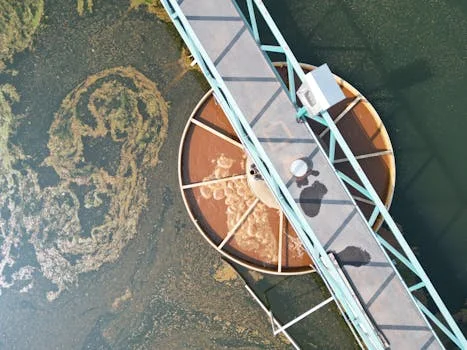
Packaged wastewater treatment plants in South Africa typically range from R12,000 to R30,000 per m³/day and offer a rapid response to compliance crises. These systems are pre-engineered and factory-tested, with delivery times of 8 to 12 weeks. For a developer or factory manager in Port Elizabeth, packaged sewage treatment plants for rapid deployment in Port Elizabeth, such as the WSZ Series, can be installed and commissioned in as little as 2 to 4 weeks. This is significantly faster than the 6 to 12 months required for custom civil-heavy constructions. A 1,000 m³/day custom-built plant can cost between R20M and R50M, with design and engineering fees alone consuming 10–15% of the total budget.
A relevant local benchmark is the Rosehill Mall Sewage Treatment Plant in nearby Port Alfred. By utilizing a 240 m³/hr packaged system, the project avoided the lengthy environmental and construction delays associated with traditional concrete works, achieving compliance with Department of Water and Sanitation (DWS) standards in a fraction of the time. While custom-built plants offer greater flexibility for large-scale municipal flows exceeding 2,000 m³/day or highly complex industrial influent, packaged plants are increasingly the standard for flows under 500 m³/day due to their lower risk profile and predictable pricing.
| Feature | Packaged Plant (e.g., WSZ) | Custom-Built Plant |
|---|---|---|
| Lead Time | 8 – 12 Weeks | 6 – 12 Months |
| Installation Time | 2 – 4 Weeks | 4 – 8 Months |
| CAPEX | Lower (Standardized) | Higher (Bespoke Engineering) |
| Scalability | Modular (Add units) | High (Built into design) |
| Best For | <500 m³/day / Urgent Needs | >2,000 m³/day / Complex Influent |
ROI Calculator: How to Justify Your Wastewater Treatment Plant Investment
Calculating the Return on Investment (ROI) for a wastewater plant in Port Elizabeth requires a shift from viewing treatment as a sunk cost to viewing it as a risk mitigation and resource recovery tool. The Nelson Mandela Bay Municipality 2024 Tariff Book specifies fines for non-compliance ranging from R50,000 to R200,000 per event for industrial dischargers. An industrial facility that avoids just two such fines per year through consistent compliance saves R400,000 annually. When these savings are combined with the potential for water reuse—valued at R5 to R15 per m³ in a water-scarce region—the payback period for a modern plant often falls under four years.
To calculate your specific payback period, use the following formula: (Annual Savings + Revenue) / (CAPEX + Annual OPEX) = Payback Period in Years. For example, a R3M packaged MBR plant that generates R800,000 in annual savings (from reduced municipal water purchases and avoided fines) achieves a payback in approximately 3.75 years. This calculation is increasingly favorable as municipal water tariffs in Nelson Mandela Bay continue to rise above inflation. while MBR systems have higher energy costs, they reduce sludge disposal volumes by 30–40% compared to conventional systems, providing a secondary OPEX saving that is often overlooked in initial estimates. This is similar to how wastewater treatment costs compare in other water-scarce regions globally, where resource recovery is the primary driver for investment.
| Financial Metric (500 m³/day Plant) | MBR System | DAF System (Industrial) |
|---|---|---|
| Estimated CAPEX | R15,000,000 | R10,000,000 |
| Annual OPEX (Power/Chem/Labor) | R1,200,000 | R950,000 |
| Annual Avoided Fines/Surcharges | R400,000 | R600,000 |
| Water Reuse Value (R10/m³) | R1,825,000 | R0 (Requires tertiary) |
| Net Annual Benefit | R1,025,000 | R-350,000 (Cost center) |
| Payback Period | ~6.5 Years (with reuse) | Compliance focused |
Port Elizabeth Compliance Checklist: What Permits and Standards Apply?
Compliance in Nelson Mandela Bay is governed by a multi-tiered regulatory framework that requires meticulous technical documentation. The NMBM Water Services By-law 2024 sets strict limits for effluent discharge: TSS must be <10 mg/L, Chemical Oxygen Demand (COD) <75 mg/L, and Ammonia <5 mg/L. For industrial dischargers, the NMBM Industrial Effluent Discharge Guidelines 2023 add further restrictions on heavy metals (e.g., Chromium <0.1 mg/L) and FOG (<50 mg/L). Failing to meet these standards results in immediate administrative penalties and potential suspension of water services.
Securing the necessary permits is a critical path item for any project. This includes a Water Use License from the Department of Water and Sanitation (DWS), Environmental Authorization from the Department of Forestry, Fisheries and the Environment (DFFE), and a local Trade Effluent Permit. Permit fees range from R5,000 to R50,000 depending on flow volumes. Construction must adhere to SANS 1200 standards, while any water intended for reuse must be benchmarked against SANS 241:2015 for non-potable applications. Understanding how other coastal cities manage municipal wastewater compliance can provide valuable insights into the rigorous monitoring required, which in Port Elizabeth includes quarterly inspections for municipal plants and monthly sampling for industrial sites.
Frequently Asked Questions
What is the average cost per m³ for a wastewater treatment plant in Port Elizabeth?
For 2025, CAPEX costs range from R15,000 to R40,000 per m³ of daily capacity, depending on the technology and effluent requirements. OPEX typically ranges from R2 to R8 per m³ treated, influenced heavily by local electricity tariffs and sludge disposal fees.
How long does it take to build a wastewater treatment plant in Port Elizabeth?
Packaged plants can be delivered and installed in 8–12 weeks. Custom-built civil plants require 6–12 months. Note that DWS licensing and environmental authorizations can add 3–6 months to the pre-construction phase.
Can I reuse treated wastewater in Port Elizabeth?
Yes, reuse for non-potable applications like industrial cooling, dust suppression, or irrigation is encouraged by the NMBM, provided the system includes tertiary treatment (UV and filtration) and receives municipal approval.
What funding options are available for wastewater treatment plants in South Africa?
Options include Green Fund grants for up to 50% of CAPEX, DBSA loans at prime + 2%, and NMBM rebates for projects that demonstrably reduce municipal water demand through reuse.
What are the most common compliance violations in Port Elizabeth?
The most frequent violations involve exceeding TSS (>10 mg/L) and ammonia (>5 mg/L) limits, usually due to undersized aeration or lack of tertiary filtration. Fines for these events typically start at R50,000.