For a 1,000 m³/day industrial plant, aerobic and anaerobic wastewater treatment differ sharply in capital and operating cost. Anaerobic packages typically sit at $200,000–$800,000 CAPEX. Aerobic trains usually run $500,000–$2 million. Anaerobic OPEX is often 30–50% lower when influent COD exceeds 2,000 mg/L and biogas is recovered. Aerobic trains still win where cold climate, tight TN/TP limits, or polishing after anaerobic pretreatment set the design basis.
Aerobic and Anaerobic Wastewater Treatment Cost Decision Rule
Anaerobic systems usually cost less to build and operate on high-COD waste. CAPEX is about $200,000–$800,000 versus $500,000–$2 million for aerobic at 1,000 m³/day. Biogas of 0.35–0.45 m³/kg COD removed can cut OPEX 30–60%. Aerobic systems deliver 90–98% COD removal and meet strict TN and TP limits more directly, at higher energy and sludge cost.
Underestimating true project cost still drives 20–40% budget overruns. That figure comes from a 2024 Water Environment Federation (WEF) survey of 120 plants. Plant managers must hold CAPEX, OPEX, and lifecycle sludge cost in one model before they lock a process path. A 500 m³/day food plant in Shandong, China, once spent about $400,000/year on a conventional aerobic train. The same site faced $1.2 million in COD fines. Anaerobic pretreatment could have cut energy cost by roughly $300,000/year. CAPEX still looked high without a clear payback sheet.
Three drivers dominate the choice. First is equipment and civil CAPEX. Second is ongoing energy, chemical, and labor OPEX. Third is long-term sludge disposal plus major overhauls. Regulatory pressure from China’s GB 18918-2002 and the EU Urban Waste Water Directive 91/271/EEC pushes many sites to upgrade. When discharge rules tighten across markets, teams often cross-check region-specific notes. One example is our Wastewater Treatment Regulations Thailand: 2026 Standards & Compliance guide. Use that discipline before you freeze CAPEX versus OPEX assumptions.
Warm climates favor anaerobic bulk removal because reactors hold 35–55°C with less heating. Cold climates raise anaerobic OPEX through external heat. Stringent effluent standards still push many plants toward aerobic polishing even after anaerobic pretreatment. The cost question is rarely “which biology is better.” It is which combination hits permit limits at the lowest 20-year NPV.
Aerobic vs Anaerobic Wastewater Treatment
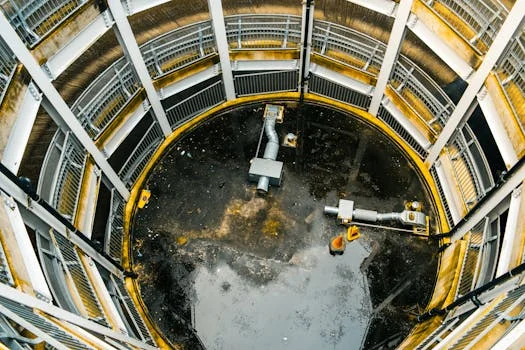
Aerobic versus anaerobic process biology sets energy use, footprint, and effluent quality. Those three items set cost. Anaerobic microbes work without oxygen and convert organics to methane-rich biogas. They typically remove 70–90% COD at 35–55°C. Yield is often 0.35–0.45 m³ biogas per kilogram of COD removed (per 2024 IWA benchmarks). Recovered energy can offset 30–60% of plant OPEX. Sludge yield stays low at 0.1–0.2 kg TSS per kg COD removed.
Aerobic microbes need dissolved oxygen and oxidize organics at ambient 10–30°C. COD removal of 90–98% is common. Many plants reach TN < 10 mg/L and TP < 1 mg/L without a separate tertiary train. Aeration blowers often consume about 50% of OPEX. Sludge production rises to 0.4–0.6 kg TSS/kg COD removed, so haulage cost climbs. UASB-type anaerobic reactors need roughly 10–15 m² per 1,000 m³/day. Conventional activated sludge needs 30–50 m² per 1,000 m³/day—about 50–70% more land.
Most plants we size for high-COD food or beverage waste run anaerobic first, then polish. When final nitrogen and solids limits are tight, a compact polish stage follows. An MBR membrane bioreactor wastewater treatment system after anaerobic pretreatment is a frequent layout. Smaller sites with moderate COD sometimes skip anaerobic entirely. They may use a compact aerobic treatment system for small industrial plants when footprint and operator skill are limited.
The table below compares UASB-style anaerobic parameters with activated-sludge aerobic parameters. Each row maps to a direct cost impact for procurement and process engineering reviews.
| Parameter | Anaerobic Treatment (e.g., UASB) | Aerobic Treatment (e.g., Activated Sludge) | Cost Impact |
|---|---|---|---|
| COD Removal Efficiency | 70–90% (Pre-treatment) | 90–98% (Primary/Polishing) | Higher efficiency for final compliance, but anaerobic excels in bulk removal. |
| Operating Temperature | 35–55°C (Mesophilic/Thermophilic) | 10–30°C (Ambient) | Anaerobic requires heating in cold climates, increasing OPEX. |
| Biogas Yield | 0.35–0.45 m³/kg COD removed | None | Anaerobic offers biogas revenue/energy offset, reducing OPEX. |
| Sludge Production | 0.1–0.2 kg TSS/kg COD removed | 0.4–0.6 kg TSS/kg COD removed | Anaerobic has significantly lower sludge disposal costs. |
| Energy Consumption | Low (net positive with biogas recovery) | High (aeration blowers ~50% OPEX) | Anaerobic offers substantial OPEX savings. |
| Footprint Requirement | 10–15 m²/1,000 m³/day (compact) | 30–50 m²/1,000 m³/day (larger) | Anaerobic saves land/civil works costs. |
| Effluent Quality | Requires polishing for strict standards | Meets strict standards (TN, TP) directly | Anaerobic often needs post-treatment for full compliance. |
Field note on temperature: mesophilic anaerobic trains at 35–37°C are the default for food and beverage wastewater in temperate zones. Thermophilic operation near 55°C appears mainly where waste heat is free and pathogen kill is required. If you must buy steam only to keep the reactor warm, recalculate OPEX before you claim biogas savings. Heating can erase the energy advantage that looked obvious on a warm-climate spreadsheet.
Effluent quality also changes the CAPEX story. Anaerobic effluent with 70–90% COD removal still carries residual organics and nutrients. Plants that discharge to a municipal sewer with a high COD surcharge may accept that quality. Plants that discharge to a river under TN < 10 mg/L and TP < 1 mg/L almost always budget an aerobic polish. Skipping that polish to “save CAPEX” is a common cause of later fines.
What Does Aerobic Wastewater Treatment Cost?
Aerobic wastewater treatment cost for a 1,000 m³/day industrial plant typically lands at $500,000–$1.2 million CAPEX for conventional activated sludge. MBR packages often run $700,000–$2 million. Annual OPEX of $100,000–$250,000 is common when aeration dominates the bill. CAPEX usually makes up only 15–20% of a 20-year NPV. OPEX carries most of the lifecycle burden. Anaerobic CAPEX at the same flow is lower: $200,000–$500,000 for UASB or EGSB and $300,000–$700,000 for AFBR. Those figures cover reactor, gas holder, flare, screening, and equalization.
Annual OPEX for anaerobic at 1,000 m³/day commonly sits at $50,000–$120,000 net. Biogas recovery can cut energy about $20,000/year. Chemicals average $10,000. Labor averages $30,000. Sludge disposal averages about $30,000. Aerobic OPEX of $100,000–$250,000 breaks down roughly as $80,000 energy, $20,000 chemicals, $50,000 labor, and up to $100,000 sludge disposal. On a 20-year NPV basis, anaerobic lifecycle cost often falls in the $2.5 million–$4 million band. That split is about CAPEX 20%, OPEX 60%, and overhauls 20%. Aerobic lifecycle cost often sits at $3.5 million–$6 million. That split is about CAPEX 15%, OPEX 70%, and membrane or major works 15%.
Regional multipliers move these bands. China projects often see 30–40% lower CAPEX from local fabrication and about 20% lower labor. EU projects can run 20–30% higher CAPEX for ATEX/CE scope and about 15% higher energy cost. US projects may add 10–20% CAPEX for UL/NSF certification. US sludge disposal can run about 25% higher under EPA Part 503 rules. High TSS above 500 mg/L can raise anaerobic OPEX 15–25% through heavier pretreatment. Dewatering hardware such as a plate and frame filter press then becomes a shared cost item for both paths.
Capital-planning teams that already compare packaged civil scopes can reuse the same challenge method. Our Prefabricated Pump Stations vs Traditional Pump Stations: Construction cost notes show how civil allowances drift when vendors quote equipment only. Apply that same skepticism to tank depth, gas handling, and sludge yards before you accept a low equipment sticker.
| Cost Category | Anaerobic System (1,000 m³/day) | Aerobic System (1,000 m³/day) | Regional Adjustments |
|---|---|---|---|
| CAPEX (USD) | $200K–$700K (UASB/EGSB/AFBR) | $500K–$2M (Activated Sludge/MBR) | China: -30-40% CAPEX | EU: +20-30% CAPEX | US: +10-20% CAPEX |
| Annual OPEX (USD) | $50K–$120K (Net)
|
$100K–$250K
|
China: -20% Labor | EU: +15% Energy | US: +25% Sludge Disposal |
| 20-Year Lifecycle (NPV, USD) | $2.5M–$4M | $3.5M–$6M | Reflects cumulative regional adjustments. |
Water Treatment Plant Cost Breakdown and ROI Calculator
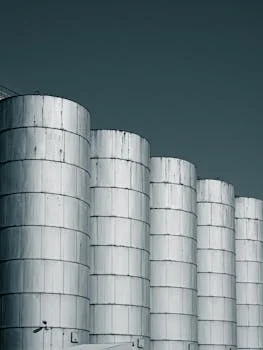
Anaerobic wastewater systems typically reach payback under 3 years when influent COD exceeds 2,000 mg/L. Local energy prices must be at least moderate for that horizon to hold. The simple payback formula used in plant reviews is:
Payback Period (Years) = (Anaerobic CAPEX − Aerobic CAPEX) / (Aerobic OPEX − Anaerobic OPEX + Biogas Revenue)
Example 1: 500 m³/day dairy plant (COD 3,500 mg/L), China
- Anaerobic CAPEX (UASB): $350,000
- Aerobic CAPEX (Activated Sludge): $600,000
- Anaerobic Annual OPEX: $60,000
- Aerobic Annual OPEX: $150,000
- Biogas Revenue (energy offset/sales): $20,000/year
Payback calculation: ($350,000 − $600,000) / ($150,000 − $60,000 + $20,000) = −$250,000 / $110,000 = 2.27 years. The negative CAPEX difference means aerobic CAPEX is higher. The anaerobic path therefore pays back on OPEX and biogas alone in this dairy case.
Example 2: 2,000 m³/day textile plant (COD 1,200 mg/L), EU
- Anaerobic CAPEX (EGSB): $800,000
- Aerobic CAPEX (MBR): $1,500,000
- Anaerobic Annual OPEX: $180,000
- Aerobic Annual OPEX: $300,000
- Biogas Revenue: $15,000/year (lower COD)
Payback calculation: ($800,000 − $1,500,000) / ($300,000 − $180,000 + $15,000) = −$700,000 / $135,000 = 5.18 years. Lower COD cuts biogas yield. EU energy savings alone therefore stretch the payback horizon.
Key tipping points for anaerobic payback
- COD > 2,000 mg/L: payback often under 3 years.
- Energy cost > $0.12/kWh: biogas recovery often pulls payback under 4 years.
- Sludge disposal > $100/ton: lower anaerobic solids yield often pulls payback under 3 years.
Operation cost for aerobic treatment is driven first by aeration power, then by sludge haulage. In the 1,000 m³/day band, energy alone can approach $80,000/year. Sludge disposal can reach $100,000/year when solids yield sits at 0.4–0.6 kg TSS/kg COD. Those two lines explain why aerobic OPEX often doubles anaerobic OPEX on high-COD waste even when both trains meet the same final permit after polishing.
Keep units consistent when you fill the calculator. Express flow in m³/day and COD in mg/L. Convert biogas to annual USD using your boiler fuel or power tariff. Do not mix CAPEX quotes that exclude civil works with OPEX models that assume finished tanks.
Step-by-step ROI calculator (text-based)
- Plant size (m³/day): [Input]
- Influent COD (mg/L): [Input]
- Estimated anaerobic CAPEX (USD): [Input]
- Estimated aerobic CAPEX (USD): [Input]
- Estimated anaerobic annual OPEX (USD, before biogas offset): [Input]
- Estimated aerobic annual OPEX (USD): [Input]
- Estimated annual biogas revenue (USD): [Input]
- Adjusted anaerobic annual OPEX: (Input 5 − Input 7)
- Annual OPEX savings: (Input 6 − Input 8)
- CAPEX difference: (Input 4 − Input 3)
- Payback period (years): (Input 10 / Input 9)
| Scenario | Influent COD (mg/L) | Energy Cost ($/kWh) | Sludge Disposal ($/ton) | Estimated Payback (Years) |
|---|---|---|---|---|
| High COD, Low Energy | 3,500 | $0.08 | $70 | 2.2 – 2.5 |
| Medium COD, High Energy | 1,800 | $0.15 | $120 | 3.5 – 4.0 |
| Low COD, Moderate Energy | 1,000 | $0.10 | $80 | 5.0+ |
When to Use Anaerobic or Aerobic Water Treatment
Use anaerobic treatment when influent COD stays above about 2,000 mg/L. The wastewater should be warm enough to hold 35–55°C without heavy heating. The site must also be able to monetize or offset biogas. Use aerobic treatment when discharge limits demand TN < 10 mg/L and TP < 1 mg/L in one biological step. Also choose aerobic when climate is cold, or when COD is modest and biogas yield would be thin. Hybrid trains fit most high-strength industrial sites that must still pass strict final permits. Those hybrids use anaerobic bulk removal plus aerobic polish.
Selection checklist for plant and EPC teams:
- Measure stable influent COD, BOD, TSS, temperature, and oil/grease for at least two production seasons.
- Confirm discharge limits for COD, TN, TP, and any local biogas or air-permit rules.
- Price local power ($/kWh) and sludge disposal ($/ton) before comparing process options.
- Include civil depth: UASB tanks often need 3–5 m versus 2–3 m for many aerobic basins.
- Budget pretreatment for TSS > 500 mg/L; a dissolved air flotation (DAF) system as pre-treatment can add 10–20% CAPEX yet cut downstream OPEX 15–30%.
- Model 20-year NPV, not equipment sticker price alone.
- Assign operator skill for gas safety on anaerobic trains versus blower and membrane care on aerobic trains.
For plants between 50 and 500 m³/day with moderate COD, a compact aerobic package can be simpler to staff. As flow and COD climb into the 500–5,000 m³/day band, OPEX savings and biogas credit usually favor anaerobic pretreatment. That shift shows up clearly once sludge tip fees exceed about $100/ton or power exceeds about $0.12/kWh.
Cost drivers buyers should price explicitly before award:
- Reactor or basin volume and material (concrete, steel, or packaged FRP).
- Aeration blower duty for aerobic trains, including standby capacity.
- Gas holder, flare, and boiler tie-in for anaerobic trains.
- Screening and grit removal shared by both process paths.
- Sludge thickening, dewatering, and off-site tip fees.
- Instrumentation for DO, ORP, gas flow, and permit sampling.
- Commissioning seed sludge or granular inoculum lead time.
When comparing vendor bids, normalize every quote to the same battery limits. Exclude civil works from one bid and include them in another, and the cheaper package often loses on NPV. Ask for blower kW, expected sludge wet tons per day, and biogas Nm³/day at your COD and temperature. Those three numbers explain most OPEX gaps between aerobic-only and anaerobic-plus-polish layouts on industrial plant sites.
Hidden Costs Vendors Rarely Put in the Quote
Civil works, permitting, and downtime commonly add 20–40% beyond equipment quotes on industrial wastewater projects. Excavation, concrete tanks, foundations, and piping alone often equal 20–40% of total CAPEX. That band is about $100,000–$300,000 at 1,000 m³/day. Deeper anaerobic tanks raise excavation and concrete cost versus shallower aerobic basins. UASB reactors often need 3–5 m depth. Many aerobic basins sit closer to 2–3 m.
Permitting and compliance fees add another 5–15% of CAPEX. That is roughly $25,000–$150,000 by region and complexity. Biogas systems may need ATEX/CE explosion protection in the EU. US sites may need air-quality permits for emissions. Those packages need specialist engineering and can stretch the schedule.
Downtime often costs 1–3% of annual OPEX. That equals about $5,000–$30,000/year in lost production or temporary treatment. Aerobic trains with blowers, pumps, and mixers tend to fail more often than simpler anaerobic reactors. That pattern matches a 2024 WEF reliability study. Sludge disposal still hides 10–30% of OPEX, or $30,000–$100,000/year. Anaerobic digestion shrinks volume, but cake usually still needs dewatering. Aerobic sludge is 2–3 times more voluminous. It often needs thickening before economical haulage.
Pretreatment gaps create another silent cost. High-TSS wastewater without solids removal fouls anaerobic beds and raises downtime. Spending 10–20% more CAPEX on DAF or fine screening often returns 15–30% OPEX relief downstream. Most plants we commission for brewery or food waste regret under-scoping screens more than over-scoping reactor volume.
Case Study: 1,500 m³/day Brewery Cut OPEX 43% with Anaerobic Pretreatment
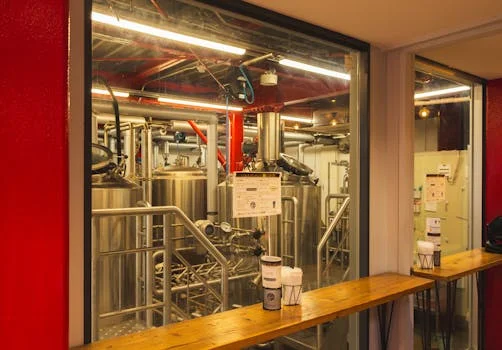
A 1,500 m³/day brewery in Hangzhou, China, cut annual OPEX by 43% after adding UASB anaerobic pretreatment. Payback landed at 2.8 years on high-strength brewery wastewater. Influent COD averaged 4,500 mg/L with TSS at 800 mg/L. The existing aerobic-only train cost about $280,000/year in OPEX from aeration energy and sludge haulage. The site also faced repeated COD fines that threatened the operating license.
HydropureWater installed a UASB pretreatment train at $450,000 CAPEX ahead of the existing aerobic polish stage. Rotary bar-screen pretreatment protected the granular bed. Annual OPEX fell to $160,000. Captured biogas used as boiler fuel was worth about $30,000/year. Combined OPEX savings and biogas credit repaid the anaerobic CAPEX in 2.8 years. Final effluent held COD below 50 mg/L and TN below 10 mg/L, clearing fines. Rotary screening alone cut UASB downtime about 20% after commissioning.
The engineering lesson was not that anaerobic biology is magic. It was that bulk COD removal before aeration shrinks blower power and sludge mass at the same time. For similar brewery or food plants above roughly 1,000 m³/day and 3,000 mg/L COD, that sequence is the default layout we evaluate first.
Compared with continuing aerobic-only treatment, the brewery avoided both the $120,000/year OPEX gap and the fine exposure that had already reached seven figures at the Shandong food plant cited earlier. The UASB did not replace the aerobic stage. It unloaded it. That distinction matters for buyers who fear “ripping out” a working plant. Most industrial retrofits keep the existing aeration basin as polish and insert anaerobic volume upstream.
Who This Is For / Who Should Look Elsewhere / Next Step
Who this is for: industrial plant managers, EPC process leads, and procurement teams. The typical case is high-COD food, beverage, dairy, textile, or similar streams at roughly 500–5,000 m³/day.
Who should look elsewhere: sites with very low COD, no path to use or flare biogas safely, or municipal plants whose permit is already met by a stable aerobic train with low energy tariffs.
Next step: gather flow, COD, TSS, temperature, power tariff, and sludge tip fee. Then request a side-by-side sizing through our request a project quote form so payback is calculated on your numbers, not generic ranges.
Frequently Asked Questions
What is the primary cost difference between aerobic and anaerobic wastewater treatment?
Anaerobic systems usually show lower CAPEX and lower OPEX on high-COD waste. At 1,000 m³/day, CAPEX is about $200,000–$800,000 and OPEX about $50,000–$120,000/year. Aerobic trains often need $500,000–$2 million CAPEX and $100,000–$250,000/year OPEX. Biogas recovery and lower sludge mass drive the OPEX gap. Aeration and sludge handling dominate aerobic operating cost.
Which system is better for high-strength industrial wastewater?
Anaerobic systems are generally more cost-effective when COD exceeds 2,000 mg/L. They remove bulk organics at 70–90% and produce 0.1–0.2 kg TSS/kg COD. They also generate 0.35–0.45 m³ biogas/kg COD removed. Most plants still add aerobic polishing when TN, TP, or residual COD limits are strict.
How does biogas production change anaerobic operating cost?
Biogas can offset 30–60% of anaerobic energy needs when COD is high enough to sustain yield. At plant scale this often appears as roughly $15,000–$30,000/year in fuel or power credit in the worked examples above. That credit shortens simple payback. The effect is strongest where grid power exceeds about $0.12/kWh.
Do anaerobic systems always need post-treatment?
Yes for most industrial permits that limit nitrogen, phosphorus, or very low residual COD. Anaerobic effluent is a pretreatment stream, not a final discharge in those cases. An aerobic polish or tertiary step is the usual route to TN < 10 mg/L and TP < 1 mg/L.
How does plant size affect the choice between aerobic and anaerobic systems?
For smaller industrial plants (50–500 m³/day) with moderate COD, compact aerobic treatment systems might be simpler and more cost-effective. However, as plant size and COD load increase (500–5,000 m³/day), the OPEX savings and biogas revenue potential of anaerobic systems become more compelling, often leading to a favorable payback period.
What hidden costs should buyers add beyond the equipment quote?
Add civil works at 20–40% of CAPEX and permitting at 5–15%. Add downtime at 1–3% of annual OPEX and sludge disposal at 10–30% of OPEX. Together these items often move a low equipment quote into a different NPV band than the sticker price alone suggests.