Which Packaged Plant Is the Right Starting Point for Taipei Housing?
For a Taipei housing development, the defensible shortlist begins with the discharge pathway: confirm whether a public sewer is available and whether the project must connect to it, or whether decentralized treatment is permitted. Average daily flow cannot size equipment by itself because residential wastewater production peaks in the morning, late afternoon and evening, according to Biocell Water. Equipment selection should then respond to peak hydraulics, required effluent quality, site restrictions, odor, sludge handling, maintenance access and staged occupancy—not simply tank volume. Taipei’s Sewerage Systems Office is simultaneously renewing treatment and pumping assets, confirming that equipment condition, automation, monitoring and energy performance remain active municipal priorities.
Before issuing an equipment specification, establish the public-sewer connection point, available capacity, ownership and any sewer pretreatment requirements. A package plant becomes the relevant option only if a connection is unavailable, impractical or expressly prohibited. Where sewer access exists, confirm the authority’s design conditions instead of assuming that a packaged treatment system reduces the downstream obligation.
The same local renewal evidence applies to private procurement. Taipei’s Sewerage Systems Office lists renewal work at the Dihua and Neihu plants and at pumping stations, including replacement of aged equipment, automated controls, monitoring improvements, odor facilities and energy-saving measures (Taipei Sewerage Systems Office, 2026). These are municipal priorities, not a Taipei housing-code checklist, but they provide a sensible condition benchmark for bids: condition monitoring, alarms, process stability and energy performance should be demonstrable rather than assumed.
Historical sewer-coverage figures should not be used as the current baseline. The Taipei Times reported Taipei City’s integrated domestic-wastewater treatment rate at 43 percent in March 2000; that figure is historical context only and is unsuitable for procurement decisions now. The project brief should use current confirmation from the relevant sewer and permitting authorities.
Turn the Development's Sewage Profile into a Sizing Basis
A package plant should be sized from a verified development-specific flow and loading basis, not from a nominal population label. Collect the design population and occupancy pattern first, then document average daily wastewater flow, peak factors, groundwater or stormwater ingress, commercial-space contributions and any industrial or laundry waste. Biocell Water identifies mornings, late afternoons and evenings as typical residential peak periods and warns that substantial low-flow periods also occur, so the assessment must address both hydraulic peaks and treatment stability.
Keep sanitary sewage hydraulically separate from rainfall and surface runoff. The Taipei Times’ March 2000 account quoted environmental engineers stating that domestic wastewater should be transferred for treatment rather than drained together with rainwater. Although that article is too old for current coverage statistics, its separation principle remains directly relevant when defining inflows, storm connections and stormwater ingress.
The ULTRAAQUA Taiwan case provides a reference process and case flow—not a unit-sizing rule for housing. ULTRAAQUA’s case states a design flow of 16.950 m³/day for a project in Taoyuan, within Greater Taipei. Do not infer household count, unit capacity or a Taipei development’s average flow from that value.
- Establish the contributing population and occupancy schedule.
- Document average flow and the basis for morning, late-afternoon and evening peaks.
- Separate sanitary sewage from stormwater, groundwater and surface runoff.
- Quantify BOD5, suspended solids, nitrogen, phosphorus, ammonia and coliform loading.
- Assess kitchen grease, cleaning chemicals, decentralized pumping and flow equalization.
- State the receiving route, required pretreatment and permitted discharge conditions.
Biocell Water notes that residential ammonia and COD can be high, partly because of cleaning products and households without grease traps. Request concentration and loading information rather than relying on generic domestic-sewage assumptions. A supplier should also document how peak hydraulic loading, low-flow periods, grease, equalization and chemical inputs affect the proposed process.
| Sizing input | Information required | Why it affects plant selection |
|---|---|---|
| Flow basis | Design population, occupancy pattern, average daily flow and verified peak assumptions | Determines hydraulic capacity, equalization, biological loading and redundancy |
| Wastewater quality | BOD5, SS, total nitrogen, total phosphorus, ammonia nitrogen and coliform | Defines biological treatment, solids separation, nutrient removal and disinfection needs |
| Non-domestic inputs | Grease, cleaning chemicals, commercial wastewater, laundry waste, groundwater and stormwater ingress | Identifies pretreatment, separation, attenuation and hydraulic risks |
| Receiving route | Public sewer, permitted outfall or reuse arrangement, plus authority requirements | Sets the permit basis and whether treatment is necessary |
| Reference only | ULTRAAQUA Taiwan case: 16.950 m³/day | Shows a documented case scale; it does not size the Taipei development |
Procurement timing should begin early. Taipei’s Sewerage Systems Office scheduled its Jingmei and Songshan pumping-station renewal from July 2024 to February 2026, an estimated 510 calendar days (Taipei Sewerage Systems Office, 2026). That municipal project does not set a private-equipment duration, but it demonstrates why detailed design, approval, fabrication, installation and commissioning should be scheduled rather than assumed instantaneous.
Compare Buried A/O, Containerized MBR and Modular Biological Plants
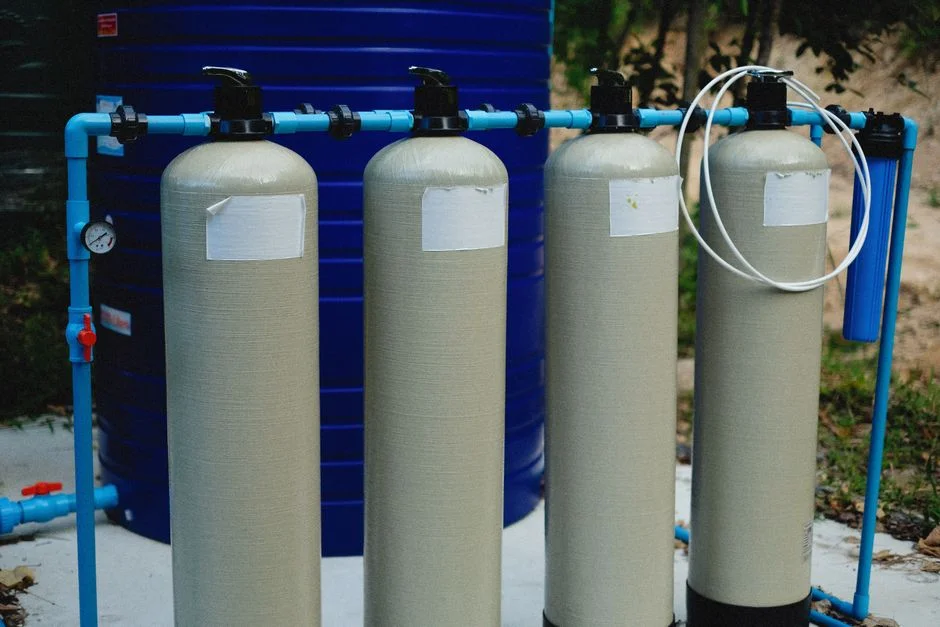
Buried A/O, containerized MBR and other modular biological systems should be compared against the same site, effluent, construction and operating requirements. A buried system can preserve above-ground space, while containerized and modular systems can simplify staged installation; neither architecture is automatically more suitable for a Taipei housing development.
The WSZ-series buried integrated A/O package sewage treatment plant combines anoxic and aerobic biological contact oxidation, sedimentation and disinfection in an underground unit. HydropureWater states that the series handles 1–80 m³/h, operates automatically and requires no operator. These are manufacturer-supplied specifications, not independent performance evidence for a Taipei site. The arrangement can preserve landscaping above grade, but excavation, groundwater control, access and odor containment become central design issues.
A containerized or mobile arrangement offers a different construction and access model. The WSZ series can also be mounted on a trailer for mobile deployment, while Biocell Water identifies fixed-bed biological reactors, MBBR and MBR as containerized residential-development technologies selected according to site restrictions, effluent requirements and budget. Its below-ground approach installs MBBR or SBR equipment inside a civil concrete tank; its above-ground approach uses containerized modules. These are industry examples, not Taipei-specific requirements.
An containerized MBR wastewater treatment system is relevant where compact biological treatment and fine solids separation are priorities. The technical question is not simply whether MBR can meet the outlet specification. Require the supplier to explain membrane fouling control, pretreatment, cleaning, membrane replacement, sludge separation, operator access and redundancy. A package boundary that omits these items can leave significant lifecycle and compliance risk with the owner.
The ULTRAAQUA Taiwan reference used primary screening and sedimentation, anoxic/oxidation biological treatment, secondary sedimentation, open-channel UV disinfection and sludge treatment. A simpler integrated package may combine or omit some of these unit operations, but the comparison must identify where each function is located. Screens, grit separation, primary clarification, secondary clarification, flow equalization and site sludge treatment may fall outside the equipment supplier’s scope and into civil works.
| Decision factor | Buried A/O | Containerized MBR | Other modular biological system |
|---|---|---|---|
| Primary configuration | Integrated anoxic/aerobic biological treatment, sedimentation and disinfection below grade | Containerized biological treatment with membrane solids separation | Examples include MBBR, SBR and fixed-bed systems in tanks or modules |
| Site implications | Excavation, structural works, groundwater management and below-grade access | Surface modules, access roads, lifting provisions and visual impact | Civil tank or modular layout selected around site restrictions |
| Operational focus | Process control, aeration, odor containment and sludge removal | Process control plus membrane fouling, cleaning and replacement | Cycle operation, media or biofilm maintenance, aeration and sludge handling |
| Phased development | Requires an agreed expansion and tank-works strategy | Can add modules if the electrical, hydraulic and control architecture allow | Biocell Water states that modular systems can be installed in phases as developments grow |
| Must be confirmed | Excavation depth, access, odor control, standby power and civil interfaces | Pretreatment, membrane strategy, redundancy and replacement commitments | Specific process boundaries, controls, maintenance access and expansion provisions |
Every proposal should state whether odor control, grease interception, flow equalization, duty/standby blowers and pumps, remote alarms, standby power, access roads and sludge removal are included. Exclusions should appear in the commercial schedule, not remain implicit in the process diagram.
Match the Package Plant to the Required Effluent
Effluent limits must come from the project’s permit and receiving arrangement; a reference case cannot replace that authority decision. ULTRAAQUA’s Taiwan case states limits described as stringent Environmental Protection Agency discharge standards for that project. The values apply to the cited case and should be used as a comparison benchmark, not represented as a universal Taipei housing-development permit.
| Parameter | ULTRAAQUA Taiwan reference-case value | Procurement significance |
|---|---|---|
| BOD5 | ≤ 20 mg/L | Benchmark for organic-load removal |
| SS | ≤ 20 mg/L | Benchmark for solids separation |
| Total nitrogen | ≤ 15 mg/L | Requires an appropriate nitrogen-removal process |
| Total phosphorus | ≤ 2 mg/L | May require additional phosphorus-control measures |
| Ammonia nitrogen | ≤ 10 mg/L | Tests nitrification capacity and aeration control |
| Coliform bacteria | ≤ 160,000 CFU/100 ml | Requires a defined disinfection and monitoring approach |
Source: ULTRAAQUA, “Wastewater Treatment Plant in Taiwan Case,” accessed for this article in 2026.
Process selection follows from the required outcome and sensitivities. Biological A/O can address carbon and nitrogen removal, but the supplied case alone does not establish a guaranteed performance for another package. MBR adds membrane-based solids separation, making pretreatment and fouling management central. The ULTRAAQUA reference used UV disinfection after secondary sedimentation, whereas an integrated package may place disinfection within the supplied treatment train.
Define disinfection as an explicit package boundary. HydropureWater’s open-channel UV disinfection system range includes open-channel and outdoor rainproof configurations and is described as providing chemical-free disinfection. Confirm UV dose, lamp availability, fouling control, cleaning access, power failure response, sampling and performance monitoring rather than treating the presence of a UV unit as sufficient.
The final effluent specification should combine the permit, receiving-water classification, sewer pretreatment rules and any water-reuse objective. For reuse, clarify whether the objective is specified as a quality requirement or only an intended downstream use. Treatment objectives, reuse requirements and discharge route must be confirmed with the relevant authority, and the guaranteed outlet specification should then appear in the permit, design documents and supplier contract.
Check Site, Construction and Operational Feasibility
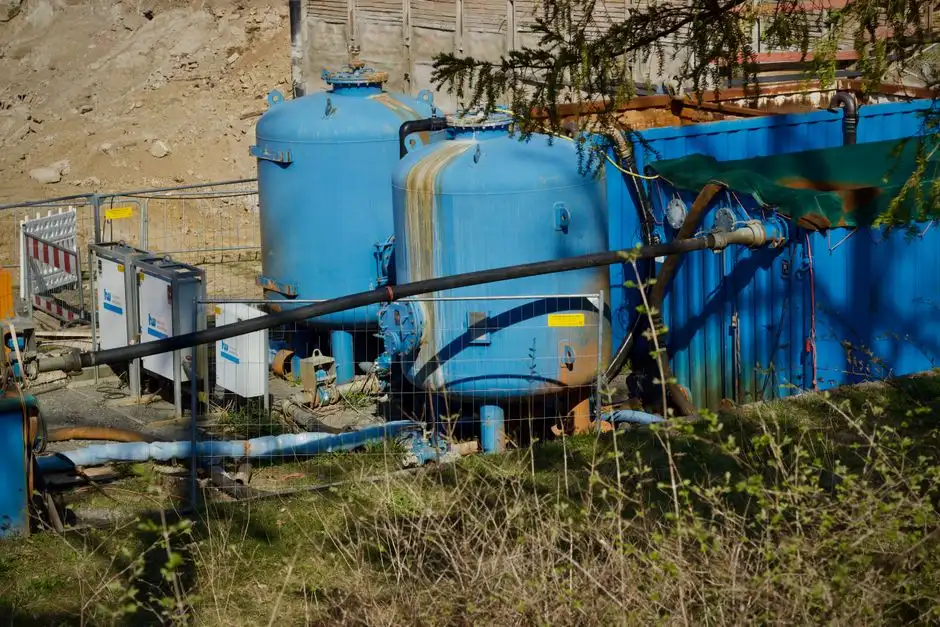
A plant that passes process screening can still fail on site access, construction interfaces or maintenance obligations. Confirm the available footprint, excavation depth, soil and groundwater conditions, vehicle and installation-crane access, landscaping constraints and the location of the receiving sewer or outfall. For below-grade tanks, assess excavation stability, dewatering, structural interfaces, odor containment and safe access. For above-ground modules, assess flood exposure, visual impact, security, lifting routes and maintenance clearances.
Footprint alone is therefore an incomplete comparison. A buried unit may reduce surface congestion but require more civil work; containerized equipment may shorten site intervention but consume surface area and require access roads. Evaluate construction disruption, utilities, odor and flood exposure alongside footprint.
Establish the complete sludge route before selecting equipment. Ask whether the package includes collection, thickening, stabilization, dewatering, storage, final disposal and removal frequency. Where mechanical dewatering must be separated from the biological package, HydropureWater’s sludge dewatering filter press is an example of a distinct equipment item. Require the proposal to identify polymer use, cake handling, washwater return, operator attendance and the party responsible for transport and disposal.
Controls and support should be defined at procurement stage. Request local alarms, remote monitoring, duty/standby arrangements, power-failure response, spare-parts availability and local maintenance support. Biocell Water highlights maintenance without emptying tanks or entering them, non-specialist maintenance and alarms as important features for residential developments. Those features do not eliminate the need for site access, safe lifting, confined-space controls or trained operators where the selected process requires them.
Include a supplier schedule for design review, fabrication, delivery, installation, commissioning, operator training, performance testing, warranty commencement and permit support. Biocell Water notes that process selection may depend on site restrictions, effluent standard and budget, and that modular systems can support phased development. The procurement document should preserve that flexibility through defined expansion interfaces, not leave expansion to an informal future variation.
Build a Supplier Comparison and Procurement Checklist
Comparable bids require every supplier to expose the same assumptions, process boundaries and exclusions. Require a stated design-flow basis, contributing population, average and peak assumptions, process stages, duty/standby equipment, expected sludge production and outlet-quality guarantee. If a bidder relies on population or per-capita rates, require the source and project-specific inputs behind them. The ULTRAAQUA 16.950 m³/day case can be included as a reference case only; it should not be used as a substitute for the development’s design basis.
Request a site plan showing excavation, access roads, drainage, odor control, electrical supply, control cabinet, lifting points, sample points, sludge storage and maintenance clearances. Also request a process flow diagram with every discharge, sludge and waste stream identified. The boundary between package equipment and civil works must be visible in both documents.
The programme should cover approval, detailed design, fabrication, civil works, delivery, installation, commissioning, operator training and performance testing. Taipei’s Sewerage Systems Office listed the July 2024–February 2026 pumping-station renewal as an estimated 510 calendar days (Taipei Sewerage Systems Office, 2026). Although municipal and private-project schedules are not directly comparable, the reference supports requiring a milestone schedule rather than a single delivery date.
| Procurement item | Require in every proposal | Acceptable basis for comparison |
|---|---|---|
| Design basis | Population, occupancy, average flow, peak assumptions, pollutant loads and inflow sources | Verified project data with assumptions clearly identified |
| Process and equipment | Stages, capacities, duty/standby configuration, controls, alarms and expansion provisions | Same design scenario and exclusions for every bidder |
| Civil interfaces | Tank, excavation, roads, drainage, odor control, utilities and access | Site-specific drawings and responsibility matrix |
| Sludge | Generation, treatment, storage, transport and final disposal | Complete route with operating responsibilities identified |
| Commercial exclusions | Sewer fees, civil works, power, chemicals, permits, monitoring, operators and maintenance | No undisclosed exclusions or uncapped operating assumptions |
| Lifecycle commitments | Aeration energy, membrane cleaning or replacement, service visits and alarm support | Supplier schedule and performance obligations |
| Acceptance | Commissioning, training, testing, warranty and permit support | Named deliverables, dates and acceptance criteria |
Compare bids on lifecycle commitments rather than equipment price alone. Include aeration energy, membrane cleaning or replacement, sludge transport, maintenance visits, controls, alarm support and spare parts. Final selection should remain conditional on site investigation, verified sewer information, permit confirmation and authority acceptance of the proposed process and receiving arrangement.
Frequently Asked Questions
How much does a packaged sewage treatment plant cost for a Taipei housing development?
No supported project price or quotation is available, so a defensible budget cannot be stated from the research alone. Request itemized quotations on a common design basis, covering equipment, civil works, sewer connection, electrical supply, commissioning, sludge disposal, monitoring, operator attendance and maintenance. Ask bidders to identify exclusions and recurring costs separately.
Should a Taipei housing development choose a buried A/O plant or a containerized MBR?
Choose based on the discharge route, required effluent, excavation and access constraints, phased occupancy and operating obligations. A buried A/O arrangement may suit a site where below-grade civil works are acceptable; MBR merits review where compact treatment and fine solids separation are priorities, but only after pretreatment, fouling control and membrane replacement are defined. Biocell Water also identifies MBBR and SBR as project-specific alternatives.
How is a residential sewage treatment plant sized for morning and evening peaks?
Develop a site-specific flow series from occupancy and verified wastewater-generation data, including morning, late-afternoon and evening peaks, low-flow periods and non-domestic inflows. Biocell Water identifies those three periods as typical residential peaks. Require the selected process to accommodate both peak hydraulic load and low-flow biological stability; the ULTRAAQUA 16.950 m³/day case does not establish a peak-sizing rule.
What should a developer verify before approving a supplier's effluent-compliance guarantee?
Confirm the legally applicable permit, receiving-water classification, sewer pretreatment rules and any reuse requirement with the relevant authority. The ULTRAAQUA limits are case-specific benchmarks, not universal Taipei housing limits. The guarantee should identify each parameter, sampling point, test method, acceptance condition, responsible party and remedy for non-compliance.
Which maintenance and sludge-disposal requirements should be written into the contract?
Define access requirements, routine inspections, cleaning, controls and alarm support, spare parts, response times, operator training and sludge collection, treatment, storage, transport and final disposal. Biocell Water identifies non-specialist access and alarms as important residential-development features, but the contract should state exactly who performs each task and at what frequency.