Why Wastewater Treatment Plant Costs in Chittagong Are Rising in 2025
In 2025, wastewater treatment plant costs in Chittagong range from $2M for a 1,000 m³/day industrial CETP to $4.4B for the city-wide municipal sewerage system slated for 2030. Key cost drivers include treatment technology (e.g., MBR vs. activated sludge), footprint constraints (e.g., Chittagong EPZ’s 2,200 m² CETP), and compliance with Bangladesh’s Environmental Conservation Rules 1997. For example, a 5,000 m³/day MBR plant costs $1.2M–$1.8M, while a conventional activated sludge system of the same capacity costs $800K–$1.2M. Local factors like land prices ($150–$300/m² in industrial zones) and CWASA’s sewer connection fees (Tk50,000–Tk200,000 per industrial unit) add 10–20% to budgets.
Chittagong’s industrial growth, currently expanding at 12% year-over-year within Export Processing Zones (EPZs), is significantly outstripping the city's existing wastewater infrastructure. This disparity forces individual factories and industrial clusters to invest in private Central Effluent Treatment Plants (CETPs) or face Department of Environment (DoE) fines that can reach Tk500,000 per day for non-compliance. As the "commercial capital" of Bangladesh, Chittagong faces unique geographical challenges, including high water tables and seasonal monsoon flooding, which necessitate robust engineering designs that drive up initial capital expenditure (CAPEX).
The Chattogram Water Supply and Sewerage Authority (CWASA) 2030 sewerage masterplan, budgeted at approximately Tk4,446 crore, represents a massive shift in how the city manages waste. For industrial stakeholders, this means a transition toward higher effluent surcharges and mandatory connection fees. land scarcity in Chittagong’s industrial belts—where prices average $250/m²—is making traditional, sprawling treatment lagoons economically unviable. This has led to a surge in demand for compact MBR systems for Chittagong’s land-constrained sites, which offer a smaller footprint at a higher technology cost.
Regulatory pressure is also intensifying. The 2024 amendments to the Environmental Conservation Rules have introduced stricter Chemical Oxygen Demand (COD) and Biological Oxygen Demand (BOD) limits specifically for the textile and tannery sectors, which dominate the local economy. Meeting these standards requires advanced tertiary treatment stages, such as DAF systems for textile and tannery effluents in Chittagong, adding roughly 15-25% to the total project budget compared to 2020 benchmarks.
Wastewater Treatment Plant Costs in Chittagong: 2025 Benchmarks by Plant Type
Industrial CETP costs in Chittagong currently range between $1,500 and $3,000 per m³/day of capacity, depending heavily on the complexity of the influent. A standard 1,000 m³/day system for a textile mill typically requires a budget of $2M, while larger installations, such as the 38 million liters per day system serving the Chittagong EPZ, benefit from economies of scale but involve massive civil engineering costs. For municipal planners, the costs are lower per unit of volume but higher in total scale, with benchmarks sitting at $400–$600 per m³/day.
A detailed breakdown for a 5,000 m³/day Membrane Bioreactor (MBR) plant in the Chittagong region shows that equipment costs account for the largest share of the budget. Specifically, high-quality membranes cost approximately $800,000, while civil works—including reinforced concrete tanks designed for saline coastal soil—add $400,000. Automation and control systems, essential for maintaining compliance with 2024 DoE standards, add another $200,000. For regional context, you may also review wastewater treatment plant costs in Medan for regional comparison.
| Plant Type | Capacity (m³/day) | Capital Cost (USD) | O&M Cost ($/m³) | Payback Period (Years) |
|---|---|---|---|---|
| Industrial CETP (MBR) | 1,000 | $1.5M – $2.2M | $0.45 – $0.65 | 3.5 – 5.0 |
| Industrial CETP (AS) | 1,000 | $0.9M – $1.3M | $0.30 – $0.45 | 4.0 – 6.0 |
| Municipal (CWASA Style) | 10,000 | $4.0M – $6.0M | $0.15 – $0.25 | 7.0 – 10.0 |
| Textile DAF + Bio | 2,000 | $2.5M – $3.5M | $0.50 – $0.75 | 3.0 – 4.5 |
For smaller industrial units, integrated solutions are becoming the standard. Using underground sewage treatment plants for Chittagong’s high land costs can reduce the total land requirement by up to 60%, allowing factories to utilize their limited ground area for production rather than waste management. While the initial equipment cost for these integrated units is 15% higher than traditional builds, the total project cost is often lower due to reduced land acquisition and site preparation needs.
Engineering Parameters That Drive Costs in Chittagong’s Wastewater Plants
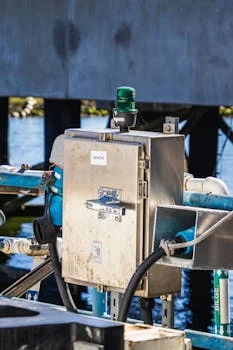
The footprint of a wastewater treatment plant in Chittagong directly correlates with land acquisition costs that average $250/m² in prime industrial zones like Patenga or Nasirabad. In these areas, land-efficient technologies like MBR are not just a technical preference but a financial necessity. While an Activated Sludge (AS) system might require 5,000 m² for a specific capacity, an MBR system can achieve the same results in 2,000 m², saving the developer approximately $750,000 in land costs alone. This trade-off between CAPEX and land value is a primary driver in recent procurement decisions.
Excavation depth is another critical variable. In the Chittagong EPZ, some CETP tanks reach depths of 8 meters to compensate for limited surface area. Deep excavation in Chittagong’s alluvial and often waterlogged soil requires expensive shoring and dewatering during construction, adding 15-20% to civil work costs. the number of treatment stages significantly impacts the budget. Primary stages like screening and sedimentation are relatively inexpensive, but tertiary stages—required by the 2024 ECR amendments for water reuse—can add 30% to the total cost. Detailed insights on how wastewater treatment stages impact costs and compliance are essential for accurate budgeting.
| Parameter | Cost Driver | Budget Impact (%) |
|---|---|---|
| Footprint | Land acquisition in industrial zones ($250/m²) | 15% – 30% |
| Tank Depth | Soil stabilization and deep excavation shoring | 10% – 15% |
| Treatment Stages | Tertiary filtration and advanced oxidation | 20% – 35% |
| Material Costs | Local steel ($900/ton) and concrete ($135/m³) | 25% – 40% |
| Energy Efficiency | High-efficiency blowers vs. standard units | 5% – 10% (CAPEX) |
Operational costs are heavily influenced by local electricity rates, which hover around Tk8.50/kWh for industrial users in Chittagong. This makes energy-efficient technologies, such as high-efficiency diffusers and variable frequency drives (VFDs), highly attractive. Over a 10-year lifecycle, a system that uses 0.6 kWh/m³ (typical of modern MBR) versus 1.0 kWh/m³ (typical of older AS) will save a 5,000 m³/day plant over $150,000 in energy costs. Additionally, managing byproduct waste is a rising expense; engineers should consult guides on sludge dewatering costs for Chittagong’s wastewater plants to factor in disposal fees and equipment requirements.
CETP vs. Municipal Plants: Cost and Technology Comparison for Chittagong
Centralized Effluent Treatment Plants (CETPs) offer industrial clusters in Chittagong a faster path to compliance, typically requiring 6 to 12 months for permitting compared to the 2 to 3 years required for large-scale municipal projects. A CETP allows multiple factories to share the burden of CAPEX and O&M, which is particularly beneficial for the textile sector where high-volume, high-COD waste requires specialized treatment like Dissolved Air Flotation. The 38,000 m³/day CETP in Chittagong EPZ serves as a benchmark for this model, distributing costs across dozens of garment manufacturers.
Municipal plants, such as those planned by CWASA, benefit from massive economies of scale. While an industrial CETP might cost $2,000/m³/day, a 50,000 m³/day municipal plant can be constructed for roughly $450/m³/day. However, municipal plants follow less stringent national standards for BOD (< 30 mg/L) compared to the specialized limits imposed on industrial sectors. For industries, the choice often depends on the proximity to CWASA’s planned lines. If a factory is outside the immediate 2030 service area, a private ETP or participation in a local CETP is the only way to avoid heavy DoE fines.
| Feature | Industrial CETP | Municipal Plant (CWASA) |
|---|---|---|
| Cost per m³/day | $1,500 – $3,000 | $400 – $600 |
| Permitting Time | 6 – 12 Months | 24 – 36 Months |
| Compliance Focus | COD, Heavy Metals, Color | BOD, Pathogens, TSS |
| O&M Complexity | High (Chemical/Biological) | Medium (Biological) |
| Scalability | Modular / Incremental | Fixed / Large-scale |
For disinfection, municipal plants often rely on traditional chlorination, but modern industrial units in Chittagong are increasingly adopting Chlorine dioxide generators for Chittagong’s wastewater disinfection. Chlorine dioxide is more effective at removing the persistent color and odors associated with textile dyes, ensuring that the final effluent meets the aesthetic and chemical standards required for discharge into the Karnaphuli River or for internal non-potable reuse.
ROI Calculator: How to Justify Wastewater Treatment Plant Costs in Chittagong
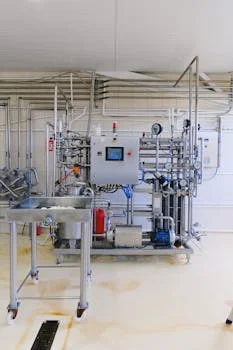
Calculating the Return on Investment (ROI) for a wastewater treatment plant in Chittagong requires a multi-variable analysis of capital expenditure (CAPEX), operational savings, and avoided regulatory penalties. The primary financial driver for most Chittagong-based manufacturers is the avoidance of "Environmental Compensation" fines levied by the DoE. These fines are often calculated based on the volume of untreated waste discharged and can exceed the annual O&M budget of a compliant plant within just a few weeks of non-compliance.
To estimate your ROI, follow this four-step engineering framework:
- Step 1: Determine CAPEX based on the 2025 benchmarks ($1.5M for a 1,000 m³/day MBR CETP).
- Step 2: Calculate annual O&M. In Chittagong, this typically ranges from Tk0.50 to Tk1.20 per cubic meter, covering power, chemicals, and labor.
- Step 3: Quantify savings. This includes avoided fines (avg. Tk100,000/day for medium-scale non-compliance) and reduced fresh water intake costs (Tk40/m³ for industrial supply).
- Step 4: Apply the formula: Payback (Years) = (CAPEX - Government Subsidies) / (Annual Savings - Annual O&M).
| Plant Type | Capacity (m³/day) | CAPEX (USD) | Annual Savings (Fines + Water) | Payback Period | 10-Year ROI |
|---|---|---|---|---|---|
| Textile ETP | 1,000 | $1.8M | $550,000 | 3.8 Years | 210% |
| Food Processing | 500 | $0.9M | $280,000 | 4.1 Years | 185% |
| Municipal (Small) | 5,000 | $2.5M | $400,000* | 7.5 Years | 95% |
*Municipal savings primarily derived from avoided health costs and environmental remediation.
Government incentives also play a role. The Bangladesh government occasionally offers 20% capital grants or low-interest "Green Transformation" loans for CETP projects. When these are factored in, the payback period for a high-efficiency plant can drop below 3.5 years, making it one of the most stable long-term investments for an industrial facility in the region.
Compliance Checklist: Meeting Bangladesh’s Wastewater Standards in Chittagong
The Department of Environment (DoE) 2024 amendments to the Environmental Conservation Rules require textile and tannery operations in Chittagong to maintain Chemical Oxygen Demand (COD) levels below 250 mg/L. Failure to meet these standards results in immediate "Show Cause" notices and potential factory closures. For municipal planners, the focus remains on BOD (< 30 mg/L) and Total Suspended Solids (TSS < 50 mg/L). Compliance is monitored through regular site visits and mandatory effluent testing at DoE-certified labs, which costs approximately Tk10,000 per sample.
Common compliance pitfalls in Chittagong include underestimating the impact of salinity on biological treatment (due to the coastal location) and failing to design for monsoon-related hydraulic surges. Plants that do not include adequate equalization tanks often fail BOD tests during heavy rains when the system is overwhelmed. Additionally, CWASA requires a separate connection fee for any facility discharging into the municipal sewer, which ranges from Tk50,000 to Tk200,000 per unit.
| Parameter | Standard (Industrial) | Testing Frequency | Penalty for Violation |
|---|---|---|---|
| COD | < 250 mg/L | Weekly | Tk 50,000 - 500,000 |
| BOD | < 50 mg/L | Weekly | Tk 30,000 - 200,000 |
| pH | 6.0 – 9.0 | Daily (Continuous) | Immediate Fine |
| TSS | < 100 mg/L | Weekly | Tk 20,000 - 100,000 |
| Color | < 150 (Pt-Co) | Monthly | Warning / Fine |
To ensure long-term compliance, engineers should integrate modular disinfection and polishing stages. For instance, Chlorine dioxide generators for Chittagong’s wastewater disinfection provide a reliable way to meet pathogen and color standards without the hazardous byproduct formation associated with liquid chlorine. robust sludge management is now a mandatory part of the DoE's "Green" clearance, requiring documented disposal routes for all treated solids.
Frequently Asked Questions
How much does a water treatment plant cost in Bangladesh?
Costs range from $2M for a 1,000 m³/day CETP to $4.4B for Chittagong’s 2030 municipal system. Industrial plants typically cost $1,500–$3,000 per m³/day of capacity, while municipal plants cost $400–$600 per m³/day based on 2025 benchmarks.
How much does it cost to set up a sewage treatment plant in Chittagong?
A 5,000 m³/day MBR plant costs between $1.2M and $1.8M. A conventional activated sludge system of the same capacity costs $800K–$1.2M. Additional costs include land ($150–$300/m²) and CWASA connection fees (Tk50,000–Tk200,000), which add 10–20% to the total budget.
What is the price of a 1500 GPD RO water plant in Bangladesh?
For industrial-grade systems, the price ranges from $15,000 to $25,000. This depends heavily on pretreatment needs; for example, using DAF systems for textile and tannery effluents in Chittagong as a precursor to RO can increase the price but extends membrane life. Large-scale reverse osmosis purification systems for municipal use (10,000+ GPD) cost $50,000 to $100,000.
How much does it cost to install a sewage treatment plant?
Installation typically accounts for 15–25% of the total capital cost. For a $1M plant, expect installation costs of $150K–$250K. Factors affecting this include site accessibility, the need for soil stabilization in Chittagong's coastal terrain, and local labor rates for skilled technicians (Tk1,500–Tk2,500/day).
What are the ongoing costs for a wastewater treatment plant in Chittagong?
Operational and maintenance (O&M) costs average Tk0.50–Tk1.20/m³ for CETPs and Tk0.30–Tk0.80/m³ for municipal plants. Major expenses include energy (Tk8.50/kWh), chemicals (Tk200–Tk500/kg), and sludge disposal (Tk5,000–Tk10,000/ton), with energy accounting for approximately 40% of the total O&M budget.