In 2026, US sewage projects apply cost equipment matrix models risk selection to match suppliers to flow, footprint, and EPA limits. Systems from A3-USA, PEWE, and Parkson report MBR effluent COD ≤50 mg/L and DAF TSS removal of 92-97%. Federal secondary treatment still targets BOD ≤30 mg/L and TSS ≤30 mg/L. This guide compares twelve suppliers on engineering specs, CAPEX and OPEX ranges, and a structured procurement sequence.
Cost Equipment Matrix Models Risk Selection for US Sewage Plants
Top US sewage treatment equipment suppliers in 2026 span turnkey MBR builders, DAF specialists, and municipal infrastructure firms. Typical claimed performance includes MBR effluent COD ≤50 mg/L and DAF TSS removal of 92-97%, against EPA secondary limits of BOD ≤30 mg/L and TSS ≤30 mg/L. Final choice rests on influent profile, flow band, footprint, and total cost of ownership.
An incompatible supplier choice produced a $2.1 million EPA fine for a Midwest food processor in late 2023. Their undersized Dissolved Air Flotation (DAF) unit could not handle peak organic loading during a production surge. Scraped 2024 audit data showed 37% of municipal plants failed EPA inspections mainly from equipment misapplication. Technology mismatched to influent strength or flow swings drove those failures.
Supplier choice sets both Capital Expenditure (CAPEX) and Operating Expenditure (OPEX). Turnkey integrators often cut onsite construction cost by 15-20% with modular skids. Component specialists may cost more upfront yet fit niche industrial streams better. Misjudging that balance creates "compliance creep," where chemical and energy use climb as influent drifts from design assumptions.
For 2026 work, suppliers cluster into three archetypes. Turnkey firms such as A3-USA ship complete, skid-mounted MBR systems for near-reuse-quality effluent. Specialists such as PEWE focus on high-rate clarifiers and separation hardware. Broad catalogs from ThomasNet or Xylem supply standardized parts when in-house engineering is strong. Compact sites may also evaluate an Underground Package Sewage Treatment Plant (WSZ Series) when buried footprint and factory assembly matter.
How Should Buyers Compare Wastewater Treatment Plant Equipment Suppliers?
The US market is fragmented by technology niche. No single vendor leads every step from screening to tertiary membranes. Teams should score suppliers on primary process focus and the flow rates those trains are built to serve. High-flow municipal Conventional Activated Sludge (CAS) vendors rarely match compact, high-strength industrial pretreatment specialists.
| Supplier Name | Primary System Types | Flow Range (m³/day) | Key Certifications | Notable Strength |
|---|---|---|---|---|
| A3-USA | MBR, SBR, CAS | 50 - 5,000 | EPA, NSF/ANSI 40 | Stainless-steel MBR modules |
| PEWE | DAF, Clarifiers | 10 - 2,500 | US Patents (G²-SEP®) | Patented high-rate solids separation |
| Parkson | Screening, CAS, SBR | 500 - 50,000+ | EPA, ISO 9001 | Large-scale municipal headworks |
| Evoqua (Xylem) | MBR, SBR, UV | 100 - 100,000+ | NSF/ANSI 61, Title 22 | Comprehensive digital monitoring |
| WesTech | Clarifiers, CAS | 1,000 - 200,000 | EPA, AIS Compliant | Heavy-duty municipal infrastructure |
| Huber Technology | Screening, Sludge | N/A (Component) | ISO 14001 | Advanced inlet screening and dewatering |
| Smith & Loveless | SBR, Pump Stations | 20 - 10,000 | NSF/ANSI 40 | Factory-built, modular plant designs |
| Trojan Tech | UV Disinfection | 100 - 500,000 | NWRI Validation | Market leader in chemical-free disinfection |
| World Water Works | DAF, MBBR | 50 - 5,000 | EPA Benchmarked | High-rate anaerobic/aerobic hybrids |
| Aqua-Aerobic | SBR, Cloth Media | 500 - 50,000 | Title 22, EPA | Advanced tertiary filtration systems |
| Ovivo | MBR, CAS | 1,000 - 100,000 | ISO 9001 | Large-scale membrane integration |
| H2O Innovation | MBR, UF/RO | 100 - 20,000 | NSF/ANSI 61 | Custom membrane system engineering |
A clear 2026 gap is the missing "universal" vendor. PEWE stays focused on DAF and physical-chemical separation. A3-USA aligns more with biological MBR trains. Match those strengths to influent facts such as high FOG versus high BOD before shortlisting.
Engineering Specs: How to Match System Type to Wastewater Characteristics
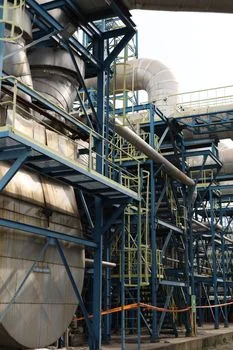
Spec-to-influent matching is the surest path to stable EPA compliance. DAF systems for industrial pretreatment target high TSS and Fats, Oils, and Grease (FOG), typically removing 90-95% of those loads. Membrane Bioreactors (MBR) target nutrient and organic carbon reduction, often holding effluent COD below 50 mg/L.
| Technology | Influent COD (mg/L) | Effluent COD (mg/L) | TSS Removal % | Energy Use (kWh/m³) |
|---|---|---|---|---|
| MBR (Membrane Bioreactor) | 500 - 1,500 | ≤ 50 | > 99% | 0.8 - 1.2 |
| DAF (Dissolved Air Flotation) | 1,000 - 5,000 | 300 - 800 | 92 - 97% | 0.2 - 0.4 |
| CAS (Activated Sludge) | 250 - 600 | ≤ 100 | 85 - 90% | 0.3 - 0.5 |
| SBR (Batch Reactor) | 300 - 1,000 | ≤ 80 | 90 - 95% | 0.4 - 0.7 |
Footprint trade-offs matter as much as effluent numbers. MBR trains usually need 60% less space than CAS because secondary clarifiers drop out. That gain raises energy use to 0.8 to 1.2 kWh/m³ versus 0.3 to 0.5 kWh/m³ for CAS, mainly from membrane air scour. Membranes also recur every 5 to 7 years at about $0.15 to $0.30 per cubic meter treated. Where land is cheap, a secondary clarifier selection guide can show when sedimentation beats membranes on cost.
CAPEX, OPEX, and ROI Models for Sewage Treatment Systems in 2026
Budget work in 2026 must track total cost of ownership (TCO). OPEX often overtakes CAPEX within the first 5 to 8 years. Per detailed CAPEX and OPEX models for wastewater treatment systems, energy and chemical dosing dominate long-run spend. Fold those drivers into any cost equipment matrix models risk selection worksheet before award.
| System Type | CAPEX ($/m³/day capacity) | OPEX ($/m³ treated) | Primary Cost Driver |
|---|---|---|---|
| MBR | $1,200 - $2,500 | $0.40 - $0.80 | Energy & Membrane Replace |
| DAF | $600 - $1,100 | $0.20 - $0.50 | Chemical Coagulants |
| CAS | $800 - $1,500 | $0.25 - $0.45 | Sludge Handling & Labor |
| SBR | $900 - $1,800 | $0.30 - $0.55 | Aeration & Control Logic |
Payback often comes from avoided surcharges and fines. One industrial food processor saw roughly 3.2 years payback after a DAF cut TSS and FOG ahead of the sewer. Modular packages from A3-USA can trim initial CAPEX by 15-25% through less onsite engineering and faster startup. Buried package plants such as the Underground Package Sewage Treatment Plant (WSZ Series) follow the same modular cost logic when land use is constrained.
Which Wastewater Equipment Suppliers Fit Municipal Facilities?
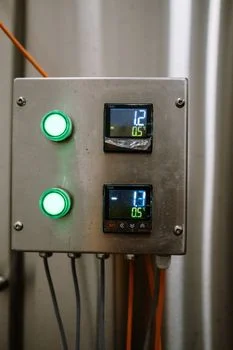
Compliance remains the hard gate for every sewage project. Federal municipal discharge baselines stay at BOD ≤30 mg/L and TSS ≤30 mg/L. Sensitive basins such as the Chesapeake Bay, and California Title 22 reuse rules, often push Total Nitrogen (TN) ≤10 mg/L and Total Phosphorus (TP) ≤1 mg/L. Vendors must show validated data under changing load, not only nameplate claims.
Ask for these documents before shortlist approval:
- NSF/ANSI 40: Standard for residential and small municipal wastewater treatment systems.
- NSF/ANSI 245: Specifically for nutrient (nitrogen) reduction capabilities.
- State-Specific Permits: Validation for Title 22 (California) or similar reuse standards in Florida and Texas.
- Third-Party Pilot Testing: For industrial applications, suppliers should provide pilot-scale data using the actual wastewater from the site to ensure the chemical dosing and flux rates are accurate.
Missing case studies for similar influent and flow is a hard red flag. Without documented peers, process failure risk rises and the operator stays liable for violations.
What Separates Reliable Wastewater Treatment Plant Equipment Suppliers?
Large buys need a fixed decision tree so marketing claims do not steer award. Technical facts must lead every cut.
- Define Influent Characteristics: Establish a baseline for average and peak BOD, COD, TSS, FOG, and nutrient levels. Use at least 12 months of historical data to account for seasonal variations.
- Identify Discharge Requirements: Are you discharging to a municipal sewer (pretreatment) or a local waterway (direct discharge)? Direct discharge requires significantly higher effluent quality (typically MBR or tertiary CAS).
- Match Technology to Parameters: Use the engineering specs table. High FOG/TSS? Start with DAF. Strict nutrient limits and small footprint? MBR is the primary candidate.
- Filter Suppliers by Track Record: Narrow your list to 3-4 suppliers who have successfully implemented the chosen technology at your required flow rate. For example, validate A3-USA’s performance in a 500 m³/day municipal plant before committing to a larger build.
- Request a Pilot Study: Especially for industrial waste, never purchase a full-scale system without a 30-day pilot test. This validates chemical dosing for DAF and coagulation systems and ensures the system won't foul prematurely.
That sequence moves performance risk back onto the supplier. The awarded package should meet benchmark effluent from day one, not after costly redesign.
Frequently Asked Questions
How much does a DAF system cost for an industrial facility?
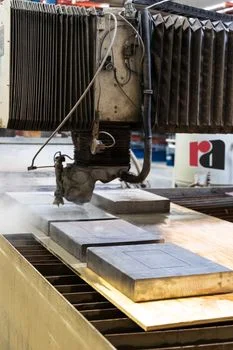
A typical DAF system costs between $80,000 and $500,000 for capacities of 4-300 m³/h, with an average OPEX of $0.20-$0.50/m³ according to PEWE performance data. Costs vary based on automation levels and material of construction (e.g., stainless steel vs. carbon steel).
What is the difference between MBR and CAS energy consumption?
MBR systems consume 0.8-1.2 kWh/m³, which is roughly double the 0.3-0.5 kWh/m³ required by CAS systems. This higher energy demand is due to membrane aeration but is offset by a 60% smaller footprint and higher effluent quality. Implementing strategies to cut OPEX by 30-50% can help mitigate these costs.
Are factory-built sewage plants as reliable as field-erected plants?
Yes, factory-built modular systems (like those from Smith & Loveless or A3-USA) often offer higher quality control because they are manufactured in a controlled environment. They are typically compliant with NSF/ANSI 40 standards and are ideal for flows up to 5,000 m³/day.
What are the EPA limits for TSS and BOD in 2026?
The federal secondary treatment standards remain at ≤30 mg/L for both BOD and TSS (30-day average). However, local "Total Maximum Daily Load" (TMDL) requirements in many states now mandate levels as low as ≤5 mg/L for nitrogen-sensitive areas.
Who This Is For / Who Should Look Elsewhere / Next Step
This guide serves US plant engineers, municipal procurement leads, and industrial EHS managers comparing sewage equipment vendors on specs, cost, and compliance proof. Commodity parts buyers with no process risk, or teams outside US EPA frameworks, should look elsewhere. If your flow, influent, and permit limits are already drafted, request a technology match and pilot plan against the matrix above before locking CAPEX.