Port Elizabeth’s industrial and municipal sectors require sewage treatment equipment that meets Eastern Cape bylaws and national standards like SANS 241. In 2025, suppliers offer systems with TSS removal rates of 90–99% (e.g., DAF systems) and flow capacities from 1–300 m³/h. Key considerations include compliance with local discharge limits (e.g., COD < 75 mg/L for municipal effluent), CAPEX ranges ($50,000–$2M for modular plants), and OPEX costs ($0.15–$0.50/m³). This guide provides engineering specs, cost benchmarks, and a supplier comparison framework to streamline your decision.
Why Port Elizabeth’s Sewage Treatment Needs Are Unique in 2025
Port Elizabeth’s industrial wastewater discharge increased 18% since 2020, according to the Eastern Cape Department of Economic Development, Environment, and Tourism 2023 report, placing unprecedented strain on aging municipal infrastructure. This growth is primarily driven by the expansion of the automotive sector, including major hubs for VW and Isuzu, alongside a robust food processing industry encompassing dairy, seafood, and beverage production.
Local compliance in the Eastern Cape is notably more stringent than national averages in specific parameters. While national standards might allow Fats, Oils, and Grease (FOG) levels of up to 50 mg/L, Port Elizabeth’s municipal bylaws for specific industrial zones often enforce limits as low as 10 mg/L to prevent the clogging of the city’s sewer network. This necessitates the use of advanced separation technologies rather than traditional gravity traps.
The expansion of municipal projects, such as the Motherwell Wastewater Treatment Works (WWTW) upgrades, has highlighted the need for modular equipment that can be deployed rapidly to manage overflow during peak periods. Operational challenges in the region are compounded by rising Eskom energy tariffs and a shortage of specialized wastewater operators. Consequently, there is a distinct market shift toward automated, energy-efficient systems that minimize human intervention.
Space constraints in established industrial zones like North End and Deal Party have also increased the demand for compact or underground systems that do not sacrifice treatment capacity for footprint. Engineering teams must now prioritize systems with high power-to-flow ratios and integrated remote monitoring to maintain compliance under fluctuating load conditions.
Sewage Treatment Equipment Types: Engineering Specs and Use Cases for Port Elizabeth Projects
Dissolved Air Flotation (DAF) systems achieve FOG removal rates of 95–99% and TSS removal of 90–95%, making them the primary choice for Port Elizabeth’s food processing and textile sectors. The high-efficiency DAF system for Port Elizabeth’s industrial wastewater utilizes micro-bubbles (20–50 microns) to lift suspended solids to the surface for mechanical skimming. For engineers, the DAF line offers flow rates from 4 to 300 m³/h, accommodating both small-scale dairy plants and large-scale textile operations.
Membrane Bioreactors (MBR) represent the gold standard for projects requiring high-quality effluent or water reuse. A compact MBR system for municipal and industrial sewage treatment combines biological digestion with ultrafiltration, producing effluent with TSS levels below 1 mg/L and 99.9% pathogen removal. In Port Elizabeth, where water scarcity often threatens industrial continuity, MBR systems allow factories to recycle process water for cooling towers or irrigation.
For residential estates, hotels, or rural Eastern Cape developments, integrated underground systems are the preferred solution. The automated underground sewage treatment plant for residential communities employs an Anoxic/Oxic (A/O) process to achieve 85–92% COD removal. These units are fully automated via PLC, requiring minimal operator oversight, and their subsurface installation preserves the aesthetic value of the property while mitigating noise and odor concerns.
| Equipment Type | TSS Removal Rate | COD Removal Rate | Footprint Requirement | Primary Use Case |
|---|---|---|---|---|
| DAF | 90–95% | 60–85% | Moderate | Food processing, Textiles, Dairy |
| MBR Bioreactors | >99% | 90–98% | Low (Compact) | Municipal upgrades, Water reuse |
| Underground WSZ | 80–90% | 85–92% | Minimal (Subsurface) | Hotels, Residential, Rural sites |
| Chemical Dosing | N/A (Pre-treatment) | N/A | Very Low | pH correction, Flocculation |
Chemical dosing systems are essential auxiliary components for meeting SANS 241 pH and turbidity limits. Modern systems feature PLC-controlled coagulant and flocculant dosing with ±1% accuracy, ensuring that chemical consumption is optimized against real-time flow and load sensors. Engineers must note that DAF systems require specific pre-treatment for heavy grit, and MBR membranes typically require replacement every 5 to 8 years depending on the fouling index and maintenance protocols.
Cost Breakdown: CAPEX, OPEX, and ROI for Sewage Treatment Equipment in Port Elizabeth
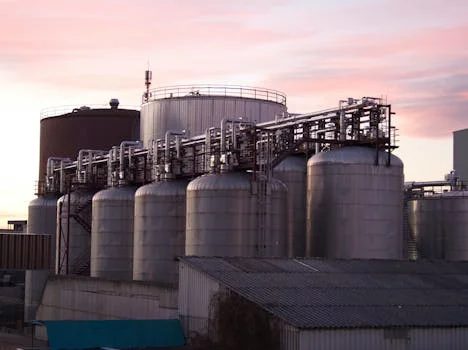
Capital Expenditure (CAPEX) for sewage treatment plants in the Port Elizabeth market varies significantly based on technology and throughput, with 2025 benchmarks ranging from $50,000 for small modular units to over $2M for municipal-scale installations. DAF systems typically fall within the $80,000 to $500,000 range, whereas MBR plants command a premium ($200,000–$2M) due to the cost of high-flux membranes and sophisticated aeration equipment.
Operational Expenditure (OPEX) is primarily driven by energy consumption, chemical requirements, and maintenance. In the Eastern Cape, energy costs average $0.08–$0.25/m³, with MBR systems sitting at the higher end of the spectrum due to membrane scouring requirements. Chemical costs for coagulation and pH adjustment range from $0.05–$0.15/m³. For MBR users, a specialized "sinking fund" for membrane replacement should account for $0.03–$0.10/m³ over the life of the system.
| Cost Component | DAF Systems | MBR Systems | Underground WSZ |
|---|---|---|---|
| Typical CAPEX | $80k – $500k | $200k – $2M | $50k – $300k |
| Energy ($/m³) | $0.10 – $0.18 | $0.15 – $0.25 | $0.08 – $0.12 |
| Chemicals ($/m³) | $0.08 – $0.15 | $0.02 – $0.05 | $0.03 – $0.06 |
| Maint. & Parts | Low (Skimmers) | High (Membranes) | Moderate (Pumps) |
The Return on Investment (ROI) for these systems is increasingly favorable due to rising municipal water tariffs and stricter enforcement of fines. Non-compliance with SANS 241 can result in fines exceeding R50,000 per month for industrial dischargers. Water reuse strategies can save approximately R1.20/m³ compared to purchasing municipal water. A cost breakdown and ROI calculator for wastewater treatment plants suggests a simple payback period of 3 to 7 years for MBR systems when accounting for avoided fines and reuse savings.
Port Elizabeth Supplier Comparison: How to Evaluate Local Providers
Evaluating sewage treatment equipment suppliers in Port Elizabeth requires a rigorous assessment of technical expertise and local support capabilities rather than a simple comparison of price quotes. A key differentiator is whether the supplier provides in-house engineering and customization or acts as a mere reseller of generic components. Suppliers with local service presence in the Eastern Cape can offer response times within 24 hours, which is critical for industrial plants where downtime can lead to immediate compliance breaches and production halts.
A supplier evaluation framework emphasizes the importance of verifying a provider's track record with SANS 241 certifications and local municipal discharge permits. Procurement managers should utilize a weighted scoring system to rank potential partners objectively. For most industrial projects in Port Elizabeth, a balanced scorecard might assign 30% to compliance assurance, 25% to total lifecycle cost, 20% to local service availability, 15% to equipment customization, and 10% to lead time.
| Evaluation Criterion | Weight | What to Look For |
|---|---|---|
| Compliance Track Record | 30% | Proven SANS 241/Eastern Cape permit approvals |
| Total Lifecycle Cost | 25% | Energy efficiency and chemical consumption data |
| Local Service/Support | 20% | PE-based technicians and 24/7 service contracts |
| Technical Customization | 15% | Ability to modularize for specific site footprints |
| Lead Time & Delivery | 10% | Local stock of wear parts and membranes |
Engineers should ask critical questions before finalizing a supplier agreement: 1. What is the guaranteed TSS removal rate for our specific effluent type? 2. Can you provide a reference site within the Nelson Mandela Bay Municipality? 3. What is the expected lifespan of the primary membranes or skimmers? 4. How does the system handle shock loads during peak production? 5. Is the control system compatible with our existing SCADA architecture? 6. What are the specific energy requirements per cubic meter of treated water? 7. Do you provide assistance with the Department of Water and Sanitation (DWS) permit application? 8. What is the lead time for emergency replacement parts? 9. Is the system modular for future capacity expansion? 10. What level of operator training is included in the CAPEX?
Compliance Checklist: Meeting Eastern Cape and National Wastewater Standards
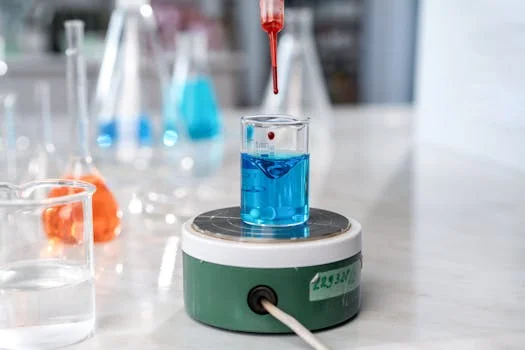
Compliance in Port Elizabeth is governed by a dual-layer of regulation: the national SANS 241 standards for effluent quality and the Nelson Mandela Bay Municipality’s industrial effluent bylaws. For municipal discharge, the standard limits generally include COD < 75 mg/L, BOD < 25 mg/L, and TSS < 25 mg/L. However, industrial dischargers in the Eastern Cape must be particularly vigilant about FOG limits, which are often capped at <10 mg/L for food processing facilities.
Required documentation for a compliant operation includes a valid Wastewater Discharge Permit from the Department of Water and Sanitation, monthly laboratory test reports for COD, pH, and TSS, and detailed maintenance logs for all treatment equipment. A typical compliance timeline for a new installation in Port Elizabeth involves:
- Permit Application (Months 1–4): Submission of technical designs to the DWS and local municipality.
- Equipment Installation (Months 5–10): Physical setup, PLC integration, and dry testing.
- Commissioning & First Audit (Month 11): Stabilization of biological processes and initial effluent testing.
- Ongoing Reporting (Monthly): Submission of water quality data to municipal authorities.
Frequently Asked Questions
What are the most common sewage treatment systems used in Port Elizabeth?DAF systems are the industry standard for Port Elizabeth’s industrial sectors due to their high FOG removal. MBR systems are increasingly used for municipal upgrades and