Wastewater Treatment Plant Cost in Tema Ghana by Capacity
A wastewater treatment plant cost in Tema Ghana is set by flow, process and what Tema Port adds to the FOB price. Installed package plants in this data set run from $250,000 at 50 m³/day to $2,300,000 at 1000 m³/day. Industrial pretreatment sits above municipal plants of the same capacity.
Factory and procurement teams in Tema often see a band from $500,000 to $2 million for a 200 m³/day plant. That spread is too wide for a board paper. Five drivers explain it: port logistics, Ghana EPA compliance, labor rates, energy cost and water scarcity.
Cargill's $2.5 million investment in a 150 m³/day plant at its Tema facility, with recycling built in, cut municipal water dependency by 30%. On factory jobs sized in Tema, buyers usually chase that recycling cut rather than once-through discharge. Package plants in the same files run 20–30% cheaper than custom civil works. A package framed for 50 m³/day is the wrong box for a 500 m³/day factory.
The table below is HydropureWater's 2025 project data for Ghana. Columns move from FOB at the factory gate, to landed cost at Tema Port, to installed cost on site. Use the installed column for the investment memo. Use FOB only to test a supplier quote.
| Capacity (m³/day) | Plant Type | Estimated FOB Cost (USD) | Estimated Landed Cost at Tema Port (USD) | Estimated Installed Cost (USD) |
|---|---|---|---|---|
| 50 | Package | $150,000 | $190,000 | $250,000 |
| Industrial (Pre-treatment) | $180,000 | $230,000 | $300,000 | |
| Municipal | $160,000 | $200,000 | $270,000 | |
| 200 | Package | $400,000 | $500,000 | $600,000 |
| Industrial (Pre-treatment) | $480,000 | $600,000 | $750,000 | |
| Municipal | $430,000 | $540,000 | $680,000 | |
| 500 | Package | $800,000 | $1,000,000 | $1,250,000 |
| Industrial (Pre-treatment) | $960,000 | $1,200,000 | $1,500,000 | |
| Municipal | $850,000 | $1,060,000 | $1,350,000 | |
| 1000 | Package | $1,500,000 | $1,850,000 | $2,300,000 |
| Industrial (Pre-treatment) | $1,800,000 | $2,250,000 | $2,800,000 | |
| Municipal | $1,600,000 | $2,000,000 | $2,500,000 |
How to Read the Capacity Table
At 50 m³/day the installed band is $250,000 for a package, $300,000 for industrial pretreatment and $270,000 for a municipal unit, which is the small-factory range. It is not a price for a 200 m³/day kitchen block with a heavy FOG load. At 200 m³/day a package shows $400,000 FOB, $500,000 landed and $600,000 installed.
The same 200 m³/day flow as industrial pretreatment shows $480,000 FOB, $600,000 landed and $750,000 installed. The municipal row at 200 m³/day is $430,000 FOB, $540,000 landed and $680,000 installed. Pick the row that matches the waste, not the row that looks cheapest.
At 500 m³/day the package installed cost is $1,250,000, industrial pretreatment is $1,500,000 and municipal is $1,350,000. At 1000 m³/day those installed figures are $2,300,000, $2,800,000 and $2,500,000. The gap between package and industrial stays wide as flow grows. Do not close that gap by deleting pretreatment.
Industrial wastewater plants in Tema, especially food and general manufacturing, carry 15–20% higher capital cost than municipal plants. The premium pays for pretreatment such as Dissolved Air Flotation (DAF) systems, which take fats, oils and grease out before biology. Tema Port fees can add an additional 10–15% to the landed cost of imported equipment.
Plants at 500 m³/day show a per-cubic-meter treatment cost about 30% lower than 100 m³/day facilities. On single factory lines sized in Tema, flow often sits nearer 100 m³/day than 500 m³/day, so the scale saving is not yours until the meter proves it. Teams pricing a cost to start up integrated transportation waste water system ghana are usually bundling the plant, the pump line and the haulage contract.
Price those three scopes separately, then add them, because a combined quote hides which piece moved. For a country-level view of the same stack, compare Wastewater Treatment Plant Cost in Ghana 2026: Engineering Breakdown w. Municipal buyers who need the process train, not only the Tema price, can use Sewage Treatment Plant Ghana: 2026 Process, Cost & Buyer's Guide.
Main Cost Drivers for a Tema Plant
- Port logistics: Tema Port fees add 10–15% on imported equipment in this set.
- Ghana EPA compliance: the EIA, the discharge permit and yearly monitoring sit outside the equipment price.
- Labor: installation labor is inside the installed column, not the FOB column.
- Energy: the PURC SLT-LV energy charge is 232.1130 GHp/kWh from 1 April 2026.
- Water scarcity: reuse savings in this file are booked at $0.50 to $1.50 per cubic meter.
- Process: MBR capital is about 25% above conventional activated sludge.
- Scale: treatment cost per cubic metre at 500 m³/day runs about 30% below 100 m³/day.
Technology Choice and What It Does to Installed Cost
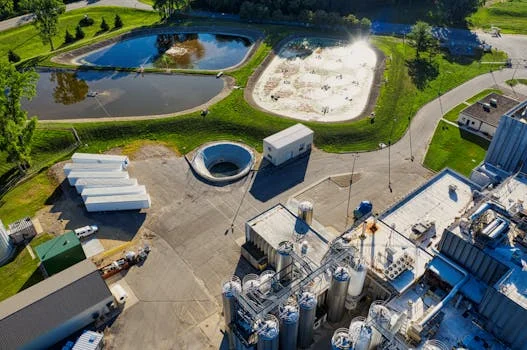
Wastewater treatment technology sets both capital cost per cubic metre and the effluent a Tema plant can hold. The comparison below uses the same 2025 project set as the capacity table. Read capital and operating cost together. A cheap tank with a high power bill loses over a six-year hold.
| Technology | Typical Capital Cost ($/m³) | Annual O&M Cost ($/m³/year) | Footprint (m²/m³) | Typical Effluent Quality (COD, BOD, TSS) | Primary Application |
|---|---|---|---|---|---|
| A/O (Anaerobic/Oxic) | $600 - $900 | $30 - $50 | 2.0 - 3.0 | COD < 300, BOD < 60, TSS < 60 mg/L | Medium strength organic wastewater |
| MBR (Membrane Bioreactor) | $1,000 - $1,500 | $40 - $60 | 1.0 - 1.5 | COD < 50, BOD < 10, TSS < 10 mg/L | High-quality effluent for reuse, space-constrained sites |
| DAF (Dissolved Air Flotation) | $800 - $1,200 (standalone) | $50 - $70 | 1.5 - 2.5 | Effective for FOG, TSS reduction; requires downstream treatment | Industrial pretreatment (FOG, suspended solids) |
| SBR (Sequencing Batch Reactor) | $500 - $800 | $35 - $55 | 1.8 - 2.8 | COD < 200, BOD < 40, TSS < 40 mg/L | Variable loads, smaller to medium capacities |
What the Technology Table Is Really Saying
A/O capital in the table is $600 - $900, and annual O&M is $30 - $50. MBR capital is $1,000 - $1,500 with O&M at $40 - $60, on a footprint of 1.0 - 1.5. SBR capital is $500 - $800 with O&M at $35 - $55. Standalone DAF is $800 - $1,200 with O&M at $50 - $70.
A/O footprint is 2.0 - 3.0, SBR is 1.8 - 2.8 and DAF is 1.5 - 2.5, in m² per m³ of daily flow. Choose SBR when loads swing and the table line COD < 200, BOD < 40, TSS < 40 mg/L is acceptable. Choose A/O for medium-strength organics when COD < 300, BOD < 60, TSS < 60 mg/L meets the permit. Choose MBR when reuse needs COD < 50, BOD < 10, TSS < 10 mg/L on a tight plot.
MBR systems cost about 25% more upfront than conventional activated sludge. They also cut footprint by up to 40% and can make reuse-quality water for irrigation. On a tight Tema plot, that space cut is often why MBR wins. The Ghana-wide MBR file is MBR Wastewater Treatment System in Ghana: Costs, Tech & Compliance 202.
For industrial sites such as Cargill's thermal plant, DAF systems remove FOG and add $150,000 to $300,000 to capital cost. On food-plant jobs sized in Tema, DAF stays in the train even when the biology changes from A/O to MBR. Skipping it to save capital usually returns later as a biology upset.
The Ghana EPA 2025 discharge line used here is COD below 250 mg/L and BOD below 50 mg/L. That bar favors MBR or a tuned A/O train over a simple SBR when the permit must be met every day. A gravity thickener can be cheaper than a DAF thickener, but DAF still wins on many oily industrial streams. Match the thickener to the solids, not to a catalogue photo.
Compliance Costs: Ghana EPA Permits, EIAs and Hidden Fees
Ghana EPA compliance is a cash cost before concrete, not a note after startup. Limits used for Tema jobs in this guide are COD < 250 mg/L, BOD < 50 mg/L, TSS < 50 mg/L, pH within 6–9, and no detectable lead or mercury. Food plants in the same notes also face FOG < 10 mg/L. Breach penalties in these files run from $10,000 to $50,000 per infraction.
Permit Steps Before Construction
According to the Environmental Protection Authority, the Environmental Protection Act, 2025 (Act 1124) is the current primary statute. The Authority's laws page also lists the Environmental Protection (Environmental Assessment) Regulations, 2025. Its large-scale permit guideline still requires registration under Act 1124 and L.I. 1652 before construction or operation.
The same guideline sets a screening decision within 25 working days of registration. The committee can issue a permit, decline it, call for a Preliminary Environmental Report, or call for a full EIA. Processing and permit fees follow L.I. 2228 (2015) before the permit is issued. The laws page also points to the Fees and Charges (Miscellaneous Provisions) Act, 2022 (Act 1080).
Budget lines in this data set, separate from the statute, put an EIA at $20,000 to $100,000. An annual discharge permit sits between $5,000 and $20,000. Monitoring adds $10,000 to $30,000 per year. Tema sewer connection fees in the same files run from $50,000 to $200,000.
Industrial sites usually draw tighter monitoring, and a higher permit effort, than a small municipal plant. On industrial files prepared for Tema, the monitoring budget is a yearly line, not a startup extra. Ask the EPA regional office which path applies before the process is frozen.
ROI Calculator: Payback Periods for Tema Wastewater Plants
Payback for a Tema wastewater plant in this 2025 data set is 6.5 years at 100 m³/day and 5.0 years at 800 m³/day. The middle row, 300 m³/day, is also 6.5 years. Figures come from HydropureWater's 2025 Ghana project file. Treat the years as a screen, not as a lender's model.
| Plant Size (m³/day) | Estimated Capital Cost (USD) | Estimated Annual O&M Cost (USD) | Estimated Annual Water Savings (USD) | Estimated Payback Period (Years) |
|---|---|---|---|---|
| 100 | $900,000 | $70,000 | $100,000 | 6.5 |
| 300 | $1,800,000 | $120,000 | $200,000 | 6.5 |
| 800 | $3,500,000 | $250,000 | $500,000 | 5.0 |
How to Read the Payback Years
The files state payback as (Capital Cost + Annual O&M × Years) / (Annual Savings + Revenue) = Payback Period. On the 100 m³/day row, capital is $900,000, annual O&M is $70,000 and stated savings are $100,000. A net-cash check that subtracts the $70,000 O&M from the $100,000 saving gives a longer payback than 6.5 years. Keep the table's 6.5 years when avoided fines or tipping fees sit in the benefit.
The 300 m³/day row carries $1,800,000 capital, $120,000 annual O&M and $200,000 water savings, still at 6.5 years. The 800 m³/day row carries $3,500,000 capital, $250,000 annual O&M and $500,000 savings, at 5.0 years. Run the same net-cash check on those two rows before the years go into a board pack. Scale helps only if the saving grows faster than O&M.
Water recycling, as on the Cargill job, cuts the municipal bill. This data set books that saving at $0.50 to $1.50 per cubic meter of reused water. Tipping fees for third-party waste run from $0.20 to $0.50 per cubic meter and can offset O&M. On reuse jobs seen in Tema, only the cleaner stream goes back to process, so the saving sits at the low end of that band.
According to PURC (13 March 2026), the Ghana Water Limited industrial rate is 3178.1100 GHp per 1,000 litres from 1 April 2026. The industrial service charge in that gazette is 25000.0000 GHp per month. At 100 pesewas to the cedi, the volumetric rate is GHS 31.7811 per m³. Those rates stay in force until the Commission reviews them, with indexation between major reviews.
The $0.50 to $1.50 band is a project saving, not that PURC tariff. Do not paste the cedi tariff over the dollar saving without a current exchange rate. Power is the other monthly leak on the same gazette. The SLT-LV energy charge is 232.1130 GHp/kWh from 1 April 2026, with a service charge of 50000.00 GHp per month.
A blower-heavy plant on the SLT-LV class feels that energy charge every month. Confirm the SLT class with the utility before the operating budget is locked. Other SLT classes are in the same 13 March 2026 publication and are not copied here.
How to Choose a Wastewater Treatment Supplier for Tema Projects
A wastewater treatment supplier for Tema is acceptable only with a Ghana EPA path, parts in Accra or Tema, and a pilot on the real waste. Price rank comes after those three tests. A low FOB number that cannot be permitted is not a saving. Installed cost, not the container price, is the number that should win the bid.
Supplier Checklist for Tema
A supplier evaluation checklist for package plants should cover Ghana EPA experience, a local crew in Accra or Tema, after-sales cover and spare-parts stock. Walk that list before the quote is scored. Two missing items are enough to drop a bidder. Ask for named staff who will stand in Tema during commissioning, not a regional phone number only.
Red flags are a missing West Africa case, a vague compliance promise, and no local partner. Chinese manufacturers, including HydropureWater, often price 20–30% below Western bids in this set. That gap helps only if installation, the permit and spares are contracted in Tema. A container price alone is not an installed plant.
For food waste and other hard streams, run a pilot on DAF systems before the full purchase. On Tema food pilots, polymer dose moves after the jar test, not before the purchase order. The pilot costs less than a wrong full-scale unit. Record FOG in and FOG out so the result can be set against FOG < 10 mg/L.
Who Should Use This Tema Cost Range
Use the wastewater treatment plant cost in Tema Ghana tables as a screening budget for factories and municipal clients in the port city. EPC estimators can use the FOB, landed and installed columns to test a vendor quote. The rows are not a substitute for a site survey or a permit decision. Replace them once inlet COD, FOG and the discharge point are known.
Look elsewhere if the waste sits outside the COD bands in the technology table, or if the flow is far above 1000 m³/day. A refinery or a mine needs a different permit column and a different cost stack. Do not stretch the package row to cover that duty. A buyer who only needs a national average should leave this Tema port file.
Next step: fix flow, inlet COD and the discharge point, then send them with a Tema plant budget request. One note is enough to turn these ranges into a sized equipment list. Keep the PURC water rate and the EPA permit path in that same note.
Frequently Asked Questions
Tema wastewater cost questions below are answered from the tables in this guide and from the EPA and PURC publications already cited.
How much does it cost to set up a sewage treatment plant in Tema?
A sewage plant in Tema costs about $250,000 installed for a 50 m³/day package and can pass $5 million for a 1,000 m³/day industrial works. A 200 m³/day MBR plant, with installation and permits, sits near $1.2 million in this data set. Package rows in the capacity table land between those poles. Add Tema Port, civil works and the EPA file before you treat the equipment price as the project price.
Do wastewater treatment plants make money in Tema?
Yes, wastewater plants in Tema can earn when reuse, tipping fees or avoided fines beat the operating bill. Reuse in this set saves $0.50–$1.50 per cubic meter against municipal water. Third-party tipping fees run $0.20–$0.50 per cubic meter. Avoided fines of $10,000–$50,000 add a further benefit in the years a plant would otherwise breach. Payback on well-run plants in these files falls between 4 and 10 years, before any extra revenue is booked.
What are the Ghana EPA requirements for wastewater discharge in Tema?
Ghana EPA discharge limits used for Tema in this guide are COD below 250 mg/L, BOD below 50 mg/L, TSS below 50 mg/L and pH between 6 and 9, with no detectable lead or mercury. Food plants in the same notes face FOG below 10 mg/L. Sector permits can be tighter than that general line. Act 1124 is the statute on the Authority's laws page, so design to the permit limit.
Can I install a package wastewater treatment plant in Tema without a permit?
No, a package plant in Tema cannot be installed without a permit. Ghana EPA requires registration before construction, and this guide treats an EIA plus a discharge permit as mandatory above 50 m³/day. The large-scale guideline gives the Authority 25 working days from registration to a screening decision. Operating without that permit can bring a shutdown and fines up to $50,000. Buy the registration form from an EPA office and file the signed site plan with it.
What is the cheapest wastewater treatment option for a small factory in Tema?
The cheapest small-factory option in this Tema set is an underground package plant at 50 m³/day, about $250,000 installed, sized to meet the EPA limits above. The WSZ-series unit is the usual pick at that flow. Above that capacity, compare MBR when reuse quality matters with A/O when capital has to stay lower. Ask for a pilot if the waste carries heavy FOG. Do not drop the permit line to save the fee.