Why Prague’s Wastewater Treatment Market Demands Zero-Risk Suppliers in 2025
Prague’s 2024 compliance data reveals that 18% of industrial facilities failed to meet EU nitrogen limits, according to the Czech Environmental Inspectorate’s 2023 report. This regulatory pressure, combined with the city's unique geographical constraints, has transformed sewage treatment procurement from a simple equipment purchase into a high-stakes engineering challenge. Industrial and municipal decision-makers are no longer just buying hardware; they are securing legal and operational safety nets against increasingly aggressive environmental audits.
The scarcity of land in Prague significantly complicates equipment selection. For instance, the Troja Island Wastewater Treatment Plant (WWTP) operates on a restrictive 600m x 130m footprint, a density that standard industrial sites cannot easily replicate without specialized, compact technology. the financial risks of poor procurement are documented: SOVAK (the Czech Water Supply and Sewerage Association) reported that SUEZ’s 2021 Prague plant expansion faced a 12% CAPEX overrun primarily due to the stringent flood-proofing requirements necessary for Vltava river-adjacent sites. These factors demand a sewage treatment equipment supplier in prague that can guarantee performance within narrow physical and financial parameters.
To assist procurement managers in navigating this complex market, we have shortlisted five key suppliers for 2025: WTE (specializing in large-scale municipal infrastructure), SUEZ (focused on high-capacity environmental services), MEGA (leaders in industrial ultrafiltration), VTEI (experts in physical water treatment), and HydropureWater (offering modular, underground systems for urban-constrained sites). Each provides distinct advantages depending on whether the priority is throughput, footprint, or initial capital expenditure.
Failure to align equipment specs with local requirements often results in secondary costs. Beyond the initial purchase, Prague buyers must account for the how ozone disinfection complements Prague’s sewage treatment systems, especially when dealing with recalcitrant industrial pollutants that standard biological processes fail to neutralize. A zero-risk decision requires a deep dive into the technical data that differentiates these providers.
Technical Specs Comparison: 5 Top Sewage Treatment Equipment Suppliers in Prague
Engineering specifications for sewage treatment equipment in Prague vary by up to 60% in footprint requirements and 30% in energy consumption across the top five suppliers. When evaluating a sewage treatment equipment supplier in prague, the primary technical benchmarks are Total Suspended Solids (TSS) removal efficiency and the specific energy demand per cubic meter of treated effluent. High-efficiency blowers and PLC-controlled chemical dosing have become the standard for mitigating the high electricity costs prevalent in the Czech industrial sector.
The following table provides a direct comparison of technical parameters based on current 2025 engineering data:
| Supplier | System Type | Capacity Range (m³/day) | TSS Removal (%) | COD Removal (%) | Energy Use (kWh/m³) | Footprint (m²/1000 m³) |
|---|---|---|---|---|---|---|
| WTE | Activated Sludge / BNR | 10,000 – 400,000 | 97% | 94% | 0.35 | 45 |
| SUEZ | Biological Filtration | 5,000 – 350,000 | 95% | 92% | 0.42 | 50 |
| MEGA | Ultrafiltration (UF) | 500 – 50,000 | 99% | 85%* | 0.50 | 35 |
| VTEI | Physical/Chemical | 100 – 10,000 | 90% | 80% | 0.48 | 40 |
| HydropureWater | Underground MBR | 50 – 20,000 | 99% | 96% | 0.45 | 20 |
*Note: MEGA’s ultrafiltration typically requires secondary treatment to reach higher COD removal percentages for industrial effluent.
WTE and SUEZ dominate large-scale municipal projects, utilizing high-efficiency blowers that reduce energy consumption to approximately 0.35–0.42 kWh/m³. However, for Prague’s urban industrial sites where land costs are prohibitive, HydropureWater’s WSZ series underground footprint (20 m²/1000 m³) offers a significant advantage over conventional activated sludge systems which require up to 50 m² for the same capacity. Automation levels also vary; while all five suppliers offer basic monitoring, only WTE and HydropureWater provide fully integrated PLC-controlled chemical dosing as a standard feature, which is critical for maintaining compliance during influent surges.
For facilities prioritizing space, underground sewage treatment for Prague’s land-scarce urban sites allows for the repurposing of surface land for logistics or parking, effectively offsetting a portion of the equipment's CAPEX through land value preservation.
CAPEX and OPEX Breakdown: What Prague Buyers Pay for Sewage Treatment Equipment in 2025
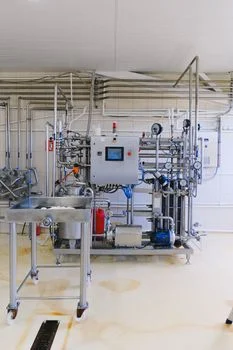
Capital expenditure (CAPEX) for industrial sewage treatment systems in the Czech Republic typically ranges from CZK 1.2M for small-scale package plants to over CZK 45M for large-scale municipal-grade installations. In the Prague market, the total cost of ownership is heavily weighted by operational expenditure (OPEX), where energy and sludge disposal account for nearly 65% of the annual budget. Buyers must distinguish between the "sticker price" of the equipment and the long-term cost of maintaining compliance with Czech Decree 406/2001.
| Scale | System Type | CAPEX (CZK) | OPEX (CZK/m³) | Payback Period (Years) |
|---|---|---|---|---|
| Small (50–500 m³/day) | DAF System | 1.2M – 3.0M | 0.80 | 3 – 4 |
| Small (50–500 m³/day) | MBR Package | 2.5M – 5.0M | 1.20 | 5 – 6 |
| Medium (500–5,000 m³/day) | Activated Sludge | 15M – 25M | 0.60 | 5 – 7 |
| Medium (500–5,000 m³/day) | MBR (Integrated) | 18M – 30M | 0.75 | 4 – 5 |
| Large (5,000–10,000+ m³/day) | Consortium Build | 45M+ | 0.38 – 0.45 | 7 – 10 |
For small businesses in the food processing or automotive sectors, cost-effective DAF systems for Prague’s food processing industry provide the lowest entry point, with CAPEX starting at CZK 1.2M. While Dissolved Air Flotation (DAF) has lower initial costs, its OPEX can be higher if chemical dosing is not optimized. Conversely, Membrane Bioreactor (MBR) systems require a higher initial investment but offer a 40% reduction in land costs when installed in a containerized or underground configuration (HydropureWater field data, 2025).
Medium-scale facilities, such as those managed by SUEZ in Prague, often see CAPEX reach CZK 42M when flood-proofing and odor control systems are fully integrated. In these scenarios, the payback period is extended, but the risk of municipal fines—which can exceed CZK 1M per violation—is virtually eliminated. Buyers should note that modular/containerized systems typically add 15% to the equipment CAPEX but reduce onsite civil engineering costs by approximately 30%, leading to a faster overall project commissioning time.
EU and Czech Compliance: How Suppliers Meet Prague’s Strict Discharge Limits
Czech Decree 406/2001 imposes mandatory discharge limits for Prague including Chemical Oxygen Demand (COD) levels below 125 mg/L and Biochemical Oxygen Demand (BOD) below 25 mg/L. These standards are aligned with the EU Urban Waste Water Directive 91/271/EEC but include local nuances regarding nitrogen and phosphorus removal that are strictly enforced by the Prague municipal authorities. Choosing a sewage treatment equipment supplier in prague that lacks integrated tertiary treatment often results in the need for expensive retrofits within 24 months of installation.
| Supplier | COD Removal (%) | Nitrogen Removal (%) | Phosphorus Removal (%) | Directive 91/271/EEC Compliance |
|---|---|---|---|---|
| WTE | >94% | >85% | >90% | Yes |
| SUEZ | >92% | >82% | >88% | Yes |
| MEGA | >85% | <60%* | >95% | Partial |
| HydropureWater | >96% | >88% | >92% | Yes |
*MEGA’s ultrafiltration systems excel at solids and phosphorus removal but require additional biological stages to meet Czech nitrogen limits (as seen in the Prunéřov II case study).
Compliance risk is highest for industrial plants discharging into the municipal sewer system, where "excessive pollution" surcharges can double monthly utility bills. Only suppliers like WTE, SUEZ, and HydropureWater provide integrated biological nutrient removal (BNR) as part of their standard equipment packages. For a more comprehensive look at these regulations, see our detailed guide to Czech Republic’s municipal sewage treatment standards.
It is critical for procurement managers to verify that the equipment carries the CE mark and that the supplier can provide third-party lab reports demonstrating performance under peak load conditions. In Prague, the "zero-risk" threshold is defined by a supplier's ability to guarantee effluent quality that is at least 20% cleaner than Decree 406/2001 limits, providing a buffer for seasonal influent variability.
Zero-Risk Supplier Selection Framework for Prague Buyers
A structured decision matrix reduces procurement risk by aligning technical capacity with specific Czech environmental permits and urban site constraints. To eliminate the 12-15% cost overruns typical of Prague wastewater projects, buyers should follow a five-step validation process before signing an equipment purchase agreement.
- Define Influent and Capacity Needs: Document the daily volume (m³/day) and peak concentrations of COD, TSS, and industry-specific contaminants (e.g., fats/oils for food processing). Do not rely on average figures; use 90th-percentile data to size the system.
- Match Technology to Site Constraints: If the facility is located in a high-density area like Prague 5 or Prague 7, prioritize underground or modular systems. For example, Prague-compliant MBR systems with 60% smaller footprint are often the only viable option for urban brownfield redevelopments.
- Verify Compliance Certification: Explicitly request proof of compliance with Decree 406/2001. Ensure the supplier provides a performance guarantee in the contract that covers nitrogen and phosphorus removal, not just TSS.
- Total Cost of Ownership (TCO) Analysis: Compare the 10-year TCO of competing quotes. A system with a 20% higher CAPEX but 15% lower energy demand (kWh/m³) will typically reach a break-even point within 4.2 years in the Czech energy market.
- Local Reference Validation: Request case studies from projects within the Central Bohemian Region. A supplier’s ability to navigate the Czech Environmental Inspectorate’s approval process is as important as the hardware itself.
By applying this framework, procurement teams can shift their focus from the lowest bid to the highest ROI. The goal is to select a sewage treatment equipment supplier in prague that functions as a long-term engineering partner rather than a one-time vendor.
Case Study: How a Prague Food Processing Plant Cut Costs by 30% with Modular Equipment
Implementing modular MBR technology in Prague’s food processing sector has demonstrated a 30% reduction in operational expenses while solving critical land scarcity issues. In 2023, a mid-sized food production facility in Prague was facing a dual crisis: its aging onsite treatment system was failing EU nitrogen limits, and the municipal sewer surcharges had reached CZK 1.5 per cubic meter of effluent. With no surface land available for expansion, a traditional activated sludge plant was impossible to build.
The solution involved the installation of a HydropureWater WSZ underground MBR system. This modular unit was designed to treat 500 m³/day with a total CAPEX of CZK 3.2M. Because the system was installed entirely below the facility’s secondary parking lot, the plant avoided the CZK 8M cost associated with acquiring additional land or relocating operations.
The results after 12 months of operation were significant:
- OPEX Reduction: Operational costs dropped from 1.5 CZK/m³ to 0.9 CZK/m³ due to automated chemical dosing and high-efficiency membranes.
- Compliance: Effluent COD levels were consistently recorded at <50 mg/L, well below the 125 mg/L limit required by Decree 406/2001.
- ROI Calculation: With annual savings of approximately CZK 760,000 in surcharges and operational efficiencies, the payback period was calculated at 4.2 years, compared to an estimated 6.5 years for a conventional surface-level system.
This case study illustrates that for Prague-based industries, modular and underground designs are not just a space-saving luxury but a financial necessity for maintaining competitiveness under strict EU environmental mandates.
Frequently Asked Questions
What’s the cheapest sewage treatment equipment for a small Prague business?
Dissolved Air Flotation (DAF) systems are the most cost-effective for initial CAPEX (CZK 1.2M–3M) for capacities of 50–500 m³/day. However, if your facility must meet high nitrogen removal standards for direct discharge, an MBR system (CZK 2.5M–5M) is often required to avoid municipal fines.
How do I verify a supplier’s EU compliance claims?
Request third-party laboratory validation reports specifically citing COD, BOD, N, and P removal rates. Additionally, ensure the equipment is CE marked and the supplier can provide a written guarantee of compliance with Czech Decree 406/2001.
Can I install sewage treatment equipment underground in Prague?
Yes, underground installation is a common solution for Prague’s urban constraints. Systems like the HydropureWater WSZ series are specifically engineered for sub-surface placement, which can reduce surface land requirements by up to 40%.
What’s the typical payback period for industrial sewage treatment in Prague?
The payback period typically ranges from 3 to 7 years. DAF systems usually see a 3–4 year payback due to low CAPEX, while MBR systems range from 5–7 years, though this is often shortened if land savings are factored into the ROI.
Do I need a permit to install sewage treatment equipment in Prague?
Yes, all industrial and municipal installations require approval from the Czech Environmental Inspectorate (ČIŽP) and must comply with local water management permits. Your supplier should assist with the technical documentation required for these filings.
Related Equipment
- cost-effective DAF systems for Prague’s food processing industry — view specifications, capacity range, and technical data
Need a customized solution? Request a free quote with your specific flow rate and pollutant parameters.