Portugal’s sewage treatment equipment market is dominated by suppliers like Ecodepur, Winpulsat, and Xylem/BIOBOX, each offering specialized solutions for industrial and municipal needs. For example, Ecodepur’s DAF systems remove 95–97% of TSS and FOG at flow rates up to 300 m³/h, while Winpulsat’s reverse osmosis units achieve 99% salt rejection for process water reuse. Key selection criteria include EU Directive 91/271/EEC compliance, energy efficiency (target: <0.5 kWh/m³), and lifecycle costs (capex: €50,000–€500,000; opex: €0.10–€0.30/m³). This guide provides a 2025 technical comparison, cost benchmarks, and a decision framework to match equipment to your project’s regulatory and operational requirements.
Why Portugal’s Sewage Treatment Equipment Market Demands Technical Precision
Portugal’s regulatory landscape for wastewater discharge is rigorously enforced, creating significant financial and operational stakes for industrial and municipal facilities. The Administração da Região Hidrográfica (ARH) strictly enforces the EU Urban Waste Water Directive 91/271/EEC, which mandates secondary treatment for all agglomerations greater than 2,000 Population Equivalent (PE) and requires tertiary treatment for discharges into sensitive areas, such as the Ria Formosa or the Tagus estuary, to protect vulnerable ecosystems. Industrial sectors, including textiles, food processing, and pulp/paper, face even stricter effluent limits as defined by Portuguese Decree-Law 236/98, often requiring BOD below 25 mg/L, COD below 125 mg/L, and TSS below 35 mg/L.
In 2023, a Porto textile plant faced a stark example of these pressures when an ARH audit revealed non-compliant effluent with TSS levels at 80 mg/L, significantly exceeding the 35 mg/L limit. This violation resulted in a substantial €120,000 fine and a mandatory upgrade to a Dissolved Air Flotation (DAF) system, an investment that cost the plant an additional €220,000. Such incidents highlight common pain points in the sector, including the high energy costs associated with some treatment technologies; for instance, DAF systems typically consume between 0.4–0.8 kWh/m³. Space constraints are another critical consideration, particularly in urban or retrofitted industrial sites, where compact solutions like Membrane Bioreactor (MBR) systems are often favored over conventional activated sludge plants. the complexity of chemical dosing and sludge management adds layers of operational challenge, demanding technically precise and reliable sewage treatment equipment solutions.
Key Sewage Treatment Technologies for Portuguese Projects: Specs and Use Cases
Selecting the appropriate sewage treatment technology is paramount for meeting specific project requirements, encompassing influent quality, desired effluent standards, flow rates, and available footprint. For Portuguese industrial and municipal applications, Dissolved Air Flotation (DAF), Membrane Bioreactor (MBR), and compact package plants represent the most prevalent and effective solutions.
DAF Systems excel in treating industrial wastewater with high concentrations of Fats, Oils, and Grease (FOG) and Total Suspended Solids (TSS), making them ideal for sectors like food processing, slaughterhouses, and dairies. These high-efficiency DAF system for TSS and FOG removal typically achieve TSS removal efficiencies of 92–97% and FOG removal of 95–99%, with BOD reduction ranging from 60–80% (per EPA 2024 benchmarks). Their energy consumption generally falls between 0.3–0.6 kWh/m³, and they require a relatively modest footprint of 10–30 m² per 50 m³/h of treatment capacity. Maintenance involves weekly skimmer adjustments and periodic sludge removal.
MBR Systems are distinguished by their ability to produce high-quality effluent in a compact footprint, making them ideal for space-constrained sites, urban developments, or retrofits where land is at a premium. These compact MBR system for space-constrained sites utilize membranes with pore sizes typically ranging from 0.1–0.4 µm (often made of PVDF), resulting in effluent quality that consistently meets stringent standards: BOD below 5 mg/L and TSS below 1 mg/L. While offering superior effluent quality and a footprint up to 40% smaller than conventional activated sludge systems, MBRs have higher energy consumption, generally 0.6–1.2 kWh/m³, primarily due to the aeration required for biological treatment and membrane scouring. Quarterly membrane cleaning and eventual replacement (every 5–8 years) are key maintenance considerations.
Package Plants, such as the WSZ Series, are designed for small communities, rural hotels, or remote industrial facilities requiring treatment capacities from 1–80 m³/h. These systems often employ an A/O (Anaerobic/Anoxic/Oxic) biological contact oxidation process followed by sedimentation. They deliver effluent quality typically meeting secondary treatment standards, with BOD below 20 mg/L and TSS below 30 mg/L. Energy consumption is efficient, ranging from 0.2–0.4 kWh/m³, and their modular design allows for flexibility, including options for burial underground or trailer mounting for portability. Sludge production rates and maintenance are generally lower compared to larger, more complex systems.
| Technology | Primary Use Case | TSS Removal Efficiency | BOD Removal Efficiency | Energy Use (kWh/m³) | Footprint (per 50 m³/h) | Key Maintenance |
|---|---|---|---|---|---|---|
| DAF Systems | High FOG/TSS loads (food processing, slaughterhouses) | 92–97% | 60–80% | 0.3–0.6 | 10–30 m² | Weekly skimmer adjustment |
| MBR Systems | Space-constrained sites, high effluent quality needs | <1 mg/L | <5 mg/L | 0.6–1.2 | 40% smaller than conventional activated sludge | Quarterly membrane cleaning |
| Package Plants | Small communities, distributed sites (1–80 m³/h) | <30 mg/L | <20 mg/L | 0.2–0.4 | Compact, often buried | Routine biological monitoring |
Portugal’s Top Sewage Treatment Equipment Suppliers: Technical Comparison
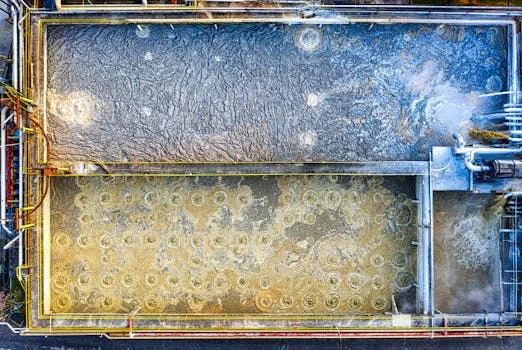
The Portuguese market for sewage treatment equipment features several prominent suppliers, each with distinct specializations, technical capabilities, and service models. Evaluating these differentiators is key to selecting a partner that aligns with specific project requirements for sewage treatment equipment supplier in portugal.
- Ecodepur: As a market leader with over 25 years of experience, Ecodepur specializes in both DAF and MBR systems. Their client base includes prominent industries like Douro Valley wineries and Porto automotive plants, demonstrating their capability across diverse industrial wastewater treatment needs. Ecodepur’s equipment is CE-certified and consistently meets the stringent requirements of EU Directive 91/271/EEC. They offer robust customer support, including a 24/7 technical hotline and a guaranteed 48-hour response time for critical issues.
- Winpulsat: This supplier focuses heavily on industrial water treatment, with expertise in technologies such as Reverse Osmosis (RO), ultrafiltration, and demineralization, crucial for process water reuse applications. Winpulsat serves clients in specialized sectors like metal finishing and electronics. Their operations are ISO 9001 certified, ensuring quality management, and their solutions comply with Portuguese Decree-Law 236/98. They provide comprehensive support, including on-site training and annual maintenance contracts.
- Xylem/BIOBOX: A globally recognized entity, Xylem, through its BIOBOX brand, offers a broad portfolio of solutions for both municipal and industrial applications across Portugal. They serve major urban centers like Lisbon, Porto, and Algarve resorts, indicating their capacity for large-scale projects. Their products carry NSF/ANSI 61 certification (for drinking water contact components) and meet general EU standards. Xylem maintains a local subsidiary in Portugal, ensuring a 72-hour response time for service requests.
- Ultrapur: Ultrapur provides a range of water treatment technologies, including DAF, various filtration systems, and disinfection solutions. Their clientele typically includes small municipalities and hospitality businesses such as hotels. Ultrapur’s equipment is CE-marked and designed to meet ARH standards. However, their support services are generally limited to business hours, which may be a consideration for operations requiring continuous or urgent assistance.
Comparing these suppliers on measurable factors beyond technology type reveals key differentiators in their operational support:
| Supplier | Lead Time (Equipment) | Warranty Terms | After-Sales Service | Certifications / Compliance |
|---|---|---|---|---|
| Ecodepur | 8–12 weeks | 2–5 years (system dependent) | 24/7 technical hotline, 48-hour response | CE-certified, EU Directive 91/271/EEC |
| Winpulsat | 10–14 weeks | 2 years (standard) | On-site training, annual maintenance contracts | ISO 9001, Portuguese Decree-Law 236/98 |
| Xylem/BIOBOX | 10–14 weeks | 1–3 years (component dependent) | Local subsidiary, 72-hour response | NSF/ANSI 61, EU standards |
| Ultrapur | 6–10 weeks | 1 year | Limited to business hours | CE-marked, ARH standards |
Cost Breakdown: Sewage Treatment Equipment in Portugal (2025 Data)
Understanding the full financial commitment for a wastewater treatment plants Portugal cost involves evaluating both Capital Expenditure (CAPEX) and Operational Expenditure (OPEX), alongside Portugal-specific economic factors. Accurate budgeting and lifecycle cost analysis are critical for any industrial or municipal project.
- CAPEX (Capital Expenditure): The initial investment varies significantly by technology and capacity.
- DAF systems: Typically range from €30,000 for smaller units (4 m³/h) up to €250,000 for larger systems (300 m³/h).
- MBR systems: Due to advanced membrane technology, CAPEX is higher, from €80,000 (10 m³/day) to €500,000 (2,000 m³/day).
- Package plants: Designed for smaller scale, these are more affordable, costing between €20,000 (1 m³/h) and €150,000 (80 m³/h).
- OPEX (Operational Expenditure): Ongoing costs are largely driven by energy, chemicals, and maintenance.
- DAF systems: OPEX is generally €0.10–€0.25/m³, with chemicals (coagulants, flocculants) contributing around €0.05/m³ and energy costs at approximately €0.08/m³.
- MBR systems: Higher energy demand and membrane replacement costs push OPEX to €0.20–€0.40/m³. Membrane replacement is a significant factor, costing about €0.10/m³ every 5–8 years.
- Package plants: With simpler operation, OPEX ranges from €0.15–€0.30/m³.
Portugal-specific costs further influence these figures. Electricity prices in Portugal, at €0.15–€0.20/kWh, are typically higher than the EU average, significantly impacting energy-intensive systems. Labor costs for skilled technicians range from €25–€40/hour. Chemical costs include polyelectrolytes at €3–€5/kg and FeCl₃ (ferric chloride) at €0.50–€0.80/kg.
A compelling ROI calculation example demonstrates the long-term value of investing in efficient sewage treatment. Consider a 100 m³/h DAF system for a food processing plant, with a CAPEX of €180,000 and an OPEX of €0.18/m³. This investment could pay back in approximately 3.2 years by avoiding potential ARH fines, which can easily reach €50,000 per year for non-compliance, and by reducing fresh water costs through effluent reuse, saving an estimated €0.50/m³. Cost-saving strategies include implementing energy-efficient blowers for DAF systems, optimizing membrane cleaning cycles in MBRs, and deploying PLC-controlled chemical dosing for precise treatment to minimize reagent waste. For more insights into sewage treatment capex opex Portugal, consider reviewing municipal sewage treatment plant engineering specs and costs.
| Technology Type | CAPEX Range (2025) | OPEX Range (per m³) | Key Cost Drivers |
|---|---|---|---|
| DAF Systems | €30,000–€250,000 | €0.10–€0.25 | Energy, chemicals, sludge disposal |
| MBR Systems | €80,000–€500,000 | €0.20–€0.40 | Energy (aeration), membrane replacement, labor |
| Package Plants | €20,000–€150,000 | €0.15–€0.30 | Energy, biological media, routine maintenance |
Compliance Checklist: Meeting Portugal’s ARH and EU Standards
Achieving and maintaining compliance with Portuguese and European Union wastewater discharge regulations is a non-negotiable aspect of any sewage treatment project. The ARH (Administração da Região Hidrográfica) rigorously enforces these standards, making a thorough understanding of compliance requirements essential for ARH environmental standards Portugal.
The overarching legal framework is the EU Urban Waste Water Directive 91/271/EEC, which mandates secondary treatment for all urban agglomerations with a Population Equivalent (PE) greater than 2,000. tertiary treatment is required for discharges into designated sensitive areas, such as the Ria Formosa or the Tagus estuary, to prevent eutrophication and protect aquatic ecosystems. For industrial discharges, Portuguese Decree-Law 236/98 sets specific, often stricter, effluent limits. For example, textile industries must adhere to limits such as BOD <25 mg/L, COD <125 mg/L, and TSS <35 mg/L.
ARH requirements extend beyond discharge limits to include strict monitoring and reporting protocols. Sampling frequency is prescribed based on plant size: daily for facilities serving >10,000 PE and weekly for those below 10,000 PE. Quarterly reporting of effluent quality data to the ARH is mandatory. Non-compliance carries severe penalties, ranging from €5,000 to €500,000, in addition to mandatory equipment upgrades or operational modifications.
When evaluating a sewage treatment equipment supplier in portugal, a comprehensive compliance checklist should include:
- CE certification: Demonstrates conformity with European health, safety, and environmental protection standards.
- NSF/ANSI 61 certification: (If applicable) Essential for any components or systems that may come into contact with drinking water.
- ISO 14001 certification: Indicates a robust environmental management system within the supplier's operations.
- ARH-approved testing reports: Suppliers should provide documentation of their equipment meeting relevant performance standards, such as EN 12566 for package plants.
Standard testing protocols for effluent quality include BOD (EN 1899-1), COD (ISO 6060), TSS (EN 872), and microbiological analysis (ISO 9308-1). Prospective buyers should request proof of these testing protocols being applied to the proposed equipment, ensuring the supplier can provide a complete compliance dossier with the installed system.
Decision Framework: Choosing the Right Supplier for Your Project
Navigating the complexities of Portugal water treatment suppliers comparison requires a structured decision framework that balances technical needs, regulatory compliance, and long-term costs. This step-by-step process helps procurement managers, environmental engineers, and facility operators make informed choices.
- Step 1: Define Project Requirements. Begin by clearly outlining your operational parameters. This includes the exact flow rate (e.g., 50 m³/h), the influent wastewater quality (e.g., high COD of 1,200 mg/L from a textile plant), the required effluent limits (e.g., BOD <25 mg/L, TSS <35 mg/L), and any site-specific constraints like available space. For example, a 50 m³/h textile plant with high COD and limited space may strongly lean towards a compact MBR system over a conventional DAF or activated sludge plant.
- Step 2: Evaluate Technical Fit. Assess potential technologies and suppliers based on their proven removal efficiencies, specific energy use (kWh/m³), and maintenance requirements. Utilize the technical comparison data from earlier sections to match technologies like DAF for high FOG/TSS or MBR for superior effluent quality and smaller footprints. Consider DAF system technical specifications and cost benchmarks and a comparison of MBR, DAF, and chlorine dioxide systems for industrial wastewater.
- Step 3: Assess Compliance. Verify that the proposed equipment and the supplier's track record meet all ARH and EU standards, including specific industry limits under Decree-Law 236/98. Request supplier case studies from similar industries in Portugal to demonstrate their history of successful compliance and understanding of local regulations.
- Step 4: Compare Costs. Conduct a thorough analysis of CAPEX, OPEX, and lifecycle costs. Use the ROI calculator or cost breakdown tables to evaluate the long-term financial implications of each option. Factor in Portugal-specific costs for electricity, labor, and chemicals.
- Step 5: Validate Supplier Support. Evaluate the supplier's after-sales service, including warranty terms, guaranteed response times for technical support, and the availability of operator training. For instance, Ecodepur offers 24/7 support with a 48-hour response, while Ultrapur's support is limited to business hours, a critical difference for continuous operations.
Key trade-offs often emerge during this process: opting for a DAF system might mean lower CAPEX but a larger footprint compared to an MBR system, which offers superior effluent quality and compactness at a higher initial investment. Similarly, package plants offer flexibility for smaller scales but may lack the scalability of custom-engineered systems for future expansion.
Frequently Asked Questions
Portuguese buyers frequently seek clear, data-driven answers regarding sewage treatment equipment. Here are responses to common procurement concerns:
Q: How much does a sewage treatment plant cost in Portugal?
A: The Capital Expenditure (CAPEX) for sewage treatment plants in Portugal ranges significantly, from €20,000 for a small package plant to €500,000 for a large MBR system. Operational Expenditure (OPEX) is typically €0.10–€0.40/m³, varying based on the technology chosen and local energy costs, which are €0.15–€0.20/kWh in Portugal. For example, a 100 m³/h DAF system costs approximately €180,000 with an OPEX of €0.18/m³.
Q: What are the penalties for non-compliance with ARH standards?
A: Penalties for non-compliance with ARH environmental standards in Portugal are severe, ranging from €5,000 to €500,000. These fines are often coupled with mandatory equipment upgrades or operational changes to achieve compliance. A notable case in 2023 involved a Porto textile plant facing a €120,000 fine for exceeding TSS limits (80 mg/L effluent vs. 35 mg/L limit).
Q: Which technology is best for high FOG wastewater (e.g., food processing)?
A: Dissolved Air Flotation (DAF) systems are typically the most effective technology for treating high FOG (Fats, Oils, and Grease) wastewater, common in food processing, slaughterhouses, and dairies. DAF systems efficiently remove 95–99% of FOG and TSS. While MBR systems can also handle FOG, they may require more frequent membrane cleaning and maintenance when dealing with very high FOG loads.
Q: How do I choose between a local supplier (like Ecodepur) and an international one (like Xylem)?
A: Local suppliers, such as Ecodepur, often offer faster response times (e.g., 24–48 hours) and possess deeper, localized knowledge of ARH standards and specific regional environmental conditions. International suppliers like Xylem provide global support networks, standardized documentation, and often a broader range of technologies. The choice depends on your priority: immediate local expertise and rapid response (Ecodepur’s 24/7 hotline) versus comprehensive global backing and standardized processes (Xylem’s local subsidiary with a 72-hour response time).
Q: What documentation do I need for ARH approval?
A: For ARH approval, you will typically need CE certification for the equipment, NSF/ANSI 61 certification if any part of the system contacts drinking water, and ISO 14001 certification for the supplier's environmental management. Crucially, you must also provide ARH-approved testing reports, such as those demonstrating compliance with EN 12566 for package plants. A reputable supplier should provide a complete compliance dossier with the installed equipment.