DAF System in UK: Engineering Specs, Costs & Compliance for Industrial Buyers (2025 Data)
Dissolved Air Flotation (DAF) systems are pre-treatment units used across UK industry to strip suspended solids, oils and greases from wastewater before biological polishing or sewer discharge. In the UK they are typically specified to remove 95%+ of TSS, 90%+ of FOG, and 60-85% of BOD under the Urban Waste Water Treatment Directive 91/271/EEC, with 2025 turnkey prices from £40,000 for a small food line to £500,000+ for a 300 m³/h petrochemical or municipal pre-treatment train. This guide covers the engineering specs, compliance thresholds, and cost benchmarks UK procurement and EPC teams need when comparing DAF with SAF, lamella clarifiers, and MBR. A correctly sized UK DAF unit routinely removes 95%+ of TSS (typically from 500 mg/L down to <25 mg/L), 90% of FOG, and 60-85% of BOD, with micro-bubbles of 30-50 microns generated at 4-6 bar saturation pressure. Hydraulic loading sits at 5-15 m/h, retention time at 20-60 minutes (30 min is the industry standard for 95% TSS removal), and chemical dosing is normally 50-200 mg/L PAC or 30-150 mg/L ferric chloride plus 0.5-3 mg/L polymer.How DAF Systems Work: The Science Behind Micro-Bubble Flotation
DAF clarifies wastewater by attaching microscopic air bubbles to suspended particles so the bubble-particle aggregate floats and can be skimmed. UK systems operate at 4-6 bar saturation pressure to generate 30-50 micron bubbles (Veolia 2024), which then attach to solids via surface tension. Effectiveness hinges on holding that micro-bubble size distribution: bubbles above 100 microns reduce flotation efficiency by 20-30% (UK Water Industry Research 2023). The DAF process unfolds in four distinct stages:- Saturation: Wastewater, or a portion of the clarified effluent, is saturated with air under high pressure (typically 4-6 bar) in a saturation tank. This dissolves a significant amount of air into the water.
- Release: The supersaturated water is then released into the DAF flotation tank through a pressure reduction valve, causing the dissolved air to come out of solution as microscopic bubbles. These bubbles, 30-50 microns in diameter, drive efficient flotation.
- Flotation: As the micro-bubbles are introduced into the influent wastewater, they attach to suspended solids, fats, oils, and greases. The combined particle-bubble aggregate becomes less dense than water and rapidly floats to the surface, forming a concentrated sludge blanket.
- Skimming: A mechanical skimmer continuously removes this floating sludge blanket from the surface of the DAF tank, while the clarified water exits from the bottom of the tank. Thames Water's municipal pre-treatment facilities often use DAF for solid-liquid separation ahead of biological treatment.
DAF System Engineering Specs for UK Industrial Applications
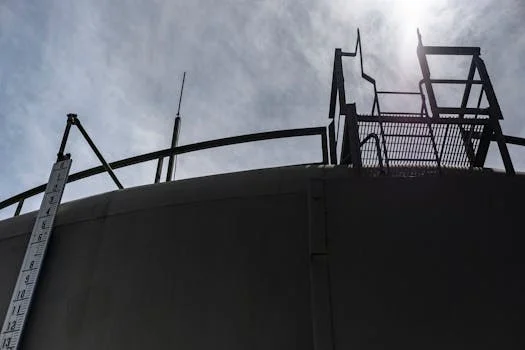
The following table outlines DAF performance benchmarks for various UK industrial applications:
| Industry | Influent TSS (mg/L) | Effluent TSS (mg/L) | Removal Efficiency (%) | Hydraulic Loading Rate (m/h) | Chemical Dosing (mg/L) |
|---|---|---|---|---|---|
| Food Processing | 500 - 2,000 | <25 | 95 - 98 | 5 - 8 | PAC: 80-150, Polymer: 1-3 |
| Petrochemical | 300 - 1,500 | <30 | 90 - 95 | 8 - 12 | Ferric Chloride: 50-120, Polymer: 0.5-2 |
| Textile | 200 - 800 | <30 | 85 - 92 | 7 - 10 | PAC: 60-100, Polymer: 1-2 |
| Municipal Pre-treatment | 150 - 400 | <20 | 80 - 90 | 10 - 15 | PAC: 50-80, Polymer: 0.5-1 |
These benchmarks are derived from a combination of Xylem, KWI, and Veolia specifications, alongside typical UK Environment Agency permit conditions.
UK DAF systems typically operate at 5-15 m/h hydraulic loading rates. Food processing plants run at the lower end (5-8 m/h) because of higher FOG content, while municipal pre-treatment runs at the higher end (10-15 m/h) where TSS concentrations are lower but flow rates are large. For 95% TSS removal the retention time sits at 20-60 minutes, with 30 minutes the industry standard (KWI 2024). Our DAF systems for UK industrial wastewater are engineered to meet these specifications, with the DAF saturation block sized to keep bubble output inside the 30-50 micron window.UK Compliance: Meeting Environment Agency and EU Standards with DAF
Meeting Environment Agency discharge limits is the primary driver for DAF selection in the UK, and non-compliance carries both fines and reputational cost. DAF systems are routinely used to support compliance with the Urban Waste Water Treatment Directive 91/271/EEC (retained in UK Urban Waste Water Treatment Regulations practice). That Directive will be repealed and replaced by Directive (EU) 2024/3019 from 1 August 2027 in the EU (EUR-Lex). Earlier UK tender narratives often quoted <30 mg/L TSS and <20 mg/L BOD; Environment Agency UWWTR look-up table compliance for secondary-treated urban discharges sets BOD at 25 mg/l O₂ (maximum 50 mg/l O₂) and COD at 125 mg/l O₂ (maximum 250 mg/l O₂). Site permits still set FOG case by case; many industrial discharges still face <10 mg/L FOG targets on oily streams. By cutting TSS from around 500 mg/L to <25 mg/L (95% removal), a well-run DAF lets many UK plants meet EA solids limits without tertiary filtration (Xylem 2024). UK food processors often face tighter local FOG limits, sometimes <5 mg/L, which pushes them toward 98%+ removal units (Veolia 2024). For sectors like healthcare, where pathogen and chemical limits also apply, DAF sits as the pre-treatment stage ahead of disinfection or MBR polishing, as configured in UK-compliant medical wastewater treatment systems. Continuous adherence also requires automated sampling ports for EA compliance monitoring (Environment Agency 2023), so that daily composite samples can be drawn without shutting the line down.DAF vs Alternatives: When to Choose DAF for UK Industrial Wastewater
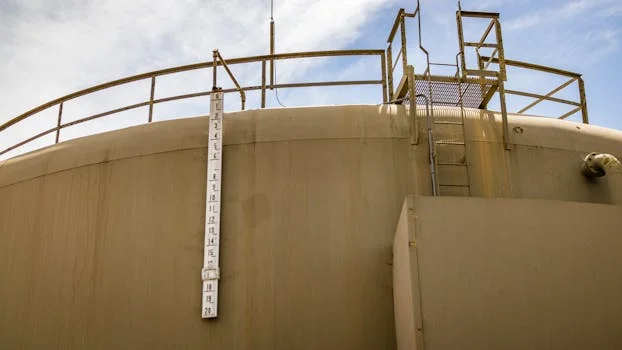
| System | TSS Removal (%) | FOG Removal (%) | BOD Removal (%) | Footprint (m²/100 m³/h) | CAPEX (£/m³/h) | OPEX (£/m³) | Best For (Industries) |
|---|---|---|---|---|---|---|---|
| DAF | 90 - 98 | 85 - 98 | 60 - 85 | 10 - 20 | 300 - 600 | 0.15 - 0.25 | Food & Beverage, Petrochemical, Meat Processing, Dairy |
| SAF (Suspended Air Flotation) | 70 - 85 | 60 - 80 | 40 - 60 | 15 - 25 | 200 - 400 | 0.10 - 0.20 | Lower FOG/TSS loads, less stringent effluent |
| Lamella Clarifier | 70 - 90 | <50 | <30 | 5 - 15 | 250 - 500 | 0.08 - 0.15 | High TSS, low FOG, compact space |
| MBR (Membrane Bioreactor) | >99 | >95 | >95 | 20 - 40 | 1,000 - 1,500 | 0.25 - 0.40 | High-quality effluent, water reuse, compact, high BOD |
Data sourced from UK Water Industry Research 2023 and leading industry reports.
SAF systems generate 100-200 micron bubbles through mechanical aeration, which drops FOG removal to 70-80% and often fails the <10 mg/L FOG limits faced by UK food processors (KWI 2024).A DAF vs API separator comparison for UK industrial buyers reaches the same conclusion: DAF wins on emulsified oils because micro-bubbles attach where gravity separation cannot. MBR delivers >99% TSS, >95% FOG, and >95% BOD, which is what you need for water reuse, but CAPEX runs about 3x DAF (roughly £1,200/m³/h versus £400/m³/h) and OPEX climbs to £0.25-0.40/m³ because of membrane cleaning (UK Water Industry Research 2023). For a deeper read on MBR economics as an alternative, see the MBR systems cost and ROI analysis. Where the goal is simply meeting TSS and FOG permit limits cost-effectively, DAF remains the preferred choice.DAF System Costs in the UK: CAPEX, OPEX, and ROI (2025 Data)
UK DAF turnkey prices run from £40,000 for a 10 m³/h food-line unit to £500,000+ for a 300 m³/h petrochemical or municipal pre-treatment system. The wide range is driven by tank size, material of construction, and the level of automation, so the first move on any quotation is to fix flow, peak factor, influent TSS, and target effluent TSS before comparing prices. The following table provides typical CAPEX and OPEX benchmarks for DAF systems in the UK based on capacity:| Capacity (m³/h) | CAPEX (£) | OPEX (£/year) | Energy Use (kWh/m³) | Chemical Cost (£/m³) | Labor (hours/week) |
|---|---|---|---|---|---|
| 10 | £40,000 - £70,000 | £8,000 - £15,000 | 0.3 - 0.4 | 0.05 - 0.08 | 2 - 4 |
| 50 | £100,000 - £180,000 | £20,000 - £35,000 | 0.3 - 0.45 | 0.06 - 0.09 | 4 - 6 |
| 100 | £200,000 - £350,000 | £30,000 - £55,000 | 0.35 - 0.5 | 0.07 - 0.10 | 6 - 8 |
| 300 | £500,000 - £800,000+ | £70,000 - £120,000+ | 0.4 - 0.55 | 0.08 - 0.12 | 8 - 12 |
Data based on UK Water Industry Research 2024 and HydropureWater field data, 2025.
CAPEX scales with tank size, material of construction (stainless steel outlasts FRP but adds cost), and the level of automation; a PLC control package typically adds 15-20% to CAPEX while cutting operator hours and stabilising effluent quality. UK DAF systems cost £0.15-£0.25/m³ to operate, with energy at 0.3-0.5 kWh/m³ and chemicals at £0.05-£0.10/m³ as the largest lines (UK Water Industry Research 2024). ROI is usually driven by avoided discharge fees and fines. A UK food processor treating 50 m³/h of 500 mg/L TSS wastewater can save around £50,000 per year in discharge fees by installing a £150,000 DAF system, giving a payback period of roughly 3 years. Environment Agency environmental permitting charges cover application and subsistence fees under the published charging scheme; volumetric trade-effluent bills are set separately by the sewerage undertaker.Who this is for / next step
Use this guide if you are sizing a UK pre-treatment train for food, dairy, meat, petrochemical, textile, or municipal flows in the 10-300 m³/h range, or comparing DAF against SAF, lamella, or MBR. Look elsewhere if your feed is purely soluble BOD with no FOG or TSS, or if you need reuse-grade effluent, where MBR is the more honest answer. For a sized proposal with hydraulic loading, saturation pressure, and chemical dosing matched to your effluent, send your flow and influent data through the DAF enquiry form and our engineers will return a CAPEX/OPEX band within two working days.
Frequently Asked Questions
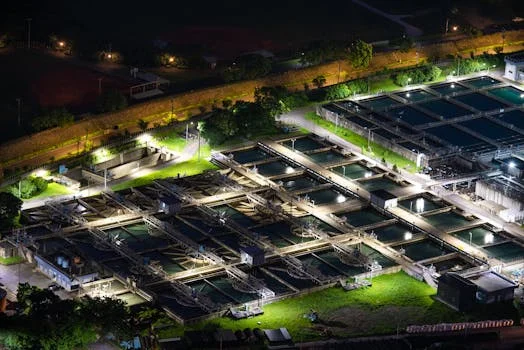
What is the difference between DAF and SAF?
DAF systems generate 30-50 micron bubbles by dissolving air at 4-6 bar, achieving 95%+ FOG removal; SAF systems use larger 100-200 micron bubbles from mechanical aeration and only reach 70-80% FOG removal, which often misses the <10 mg/L FOG limits set for UK food processors (KWI 2024). DAF's finer bubbles attach to emulsified oils and smaller suspended solids, which is the practical reason DAF dominates UK pre-treatment design.
How much does a DAF unit cost in the UK?
UK DAF system costs range from £40,000 for a 10 m³/h unit to £500,000+ for a 300 m³/h system. CAPEX scales with capacity, material of construction (stainless steel vs. FRP), and automation; PLC control typically adds 15-20%. Annual OPEX runs £0.15-£0.25/m³ of treated water, with energy and chemical consumption as the main lines (UK Water Industry Research 2024).
How does a DAF system work in UK water treatment plants?
UK DAF systems run a four-stage process: saturation of part of the flow with air at 4-6 bar, release of 30-50 micron bubbles into the flotation tank, attachment of those bubbles to TSS, FOG, and BOD particles, and skimming of the resulting sludge blanket from the surface. The result is typically 95% TSS removal and 90% FOG removal (Xylem 2024) ahead of biological or sewer discharge.
What are the UK compliance requirements for DAF systems?
UK DAF systems support Environment Agency discharge limits under the Urban Waste Water Treatment Directive 91/271/EEC framework. Environment Agency UWWTR look-up table compliance sets BOD at 25 mg/l O₂ and COD at 125 mg/l O₂ for secondary-treated urban discharges; earlier tender packs often quoted <30 mg/L TSS and <20 mg/L BOD. Food processors can face tighter local FOG limits, sometimes <5 mg/L, and the installation must include automated sampling ports for continuous EA compliance monitoring (Environment Agency 2023).
Can DAF systems handle high-strength industrial wastewater in the UK?
Yes, with the right chemical programme. UK DAF systems are designed to manage TSS up to 5,000 mg/L and FOG up to 2,000 mg/L when dosed with PAC or ferric chloride at 50-200 mg/L plus 0.5-3 mg/L polymer (Veolia 2024). For exceptionally high loads, a two-stage DAF or an upstream API separator is the more cost-effective route than oversizing a single unit.