In Oman, Dissolved Air Flotation (DAF) systems achieve 90-97% removal of suspended solids, oils, and COD, meeting Oman Environmental Authority (OEA) discharge limits of <50 mg/L TSS and <125 mg/L COD for industrial effluent (OEA 2024). DAF systems are critical for Oman’s oil & gas, food processing, and desalination sectors, where high FOG and salinity challenge conventional treatment. This guide provides Oman-specific technical specs, cost benchmarks (OMR 50,000–500,000 for turnkey systems), and a supplier decision framework for Muscat, Sohar, and Salalah projects.
Why Oman’s Industries Need DAF Systems: Regulatory Pressures and Wastewater Challenges
Oman Environmental Authority (OEA) Decision 159/2023 mandates that industrial effluent discharged into the environment must not exceed 50 mg/L for Total Suspended Solids (TSS) and 125 mg/L for Chemical Oxygen Demand (COD). For many Muscat-based food processing plants, traditional grease traps are no longer sufficient to meet these tightening standards, particularly regarding Fats, Oils, and Grease (FOG) limits, which are capped at <10 mg/L. Non-compliance is costly; Muscat Municipality and the OEA have increased enforcement, with fines for industrial discharge violations now ranging from OMR 5,000 to OMR 50,000 per occurrence, depending on the severity and frequency of the breach.
The industrial landscape in Oman presents unique wastewater challenges that necessitate high-efficiency separation technologies like DAF. In the oil and gas sector, produced water contains high salinity and emulsified oils that do not settle easily. In the textile sector, surfactants and dyes create stable emulsions, while the desalination industry faces seasonal challenges from algae blooms and high Total Organic Carbon (TOC) levels. These contaminants require a proactive flotation strategy rather than passive sedimentation to ensure downstream processes are protected and regulatory limits are maintained.
A recent case study from a Sohar-based dairy plant illustrates the risk of outdated infrastructure. The facility was facing OMR 30,000 in accumulated fines due to effluent FOG levels exceeding 250 mg/L. After conducting a technical audit, the facility replaced their overloaded clarifier with a DAF system for Oman’s industrial wastewater. The system achieved 95% FOG removal and 92% COD reduction within the first month of operation, bringing the plant into full compliance and eliminating further regulatory penalties. This transition highlights how DAF technology serves as both a compliance tool and a financial safeguard for Omani industrial operators.
How DAF Systems Work: Micro-Bubble Technology and Process Parameters for Oman’s Wastewater
The effectiveness of DAF systems in Oman’s desert climate is dictated by the solubility of air in wastewater, which decreases as temperatures rise between 25°C and 45°C. The DAF process begins with chemical conditioning, where coagulants and flocculants are added to the influent to aggregate fine particles and oils into larger "flocs." These flocs are then introduced to a stream of "white water"—recycled effluent saturated with dissolved air at high pressure (4–6 bar). When this pressure is released into the flotation tank, the air comes out of solution as micro-bubbles ranging from 30 to 50 μm in diameter.
These micro-bubbles attach to the flocs, reducing their density and causing them to rise rapidly to the surface. A mechanical skimmer then removes the thickened sludge layer from the top, while the clarified water is discharged from the bottom. In Oman, where salinity can reach up to 40,000 mg/L in oilfield produced water, the design must account for higher water density, which requires precise bubble size control to maintain flotation velocity. To manage these complex chemical interactions, Omani facilities often integrate a PLC-controlled chemical dosing for DAF systems in high-salinity wastewater to ensure optimal floc formation regardless of influent fluctuations.
| Parameter | Standard DAF Specification | Oman-Specific Adjustment |
|---|---|---|
| Bubble Size | 30–50 μm | Optimized for high-salinity buoyancy |
| Operating Temperature | 15–30°C | Heat-stabilized components (up to 50°C) |
| Material of Construction | Epoxy Coated Carbon Steel | SS316L for coastal/saline environments |
| Recycle Ratio | 10–20% | 15–30% for high-solids industrial loads |
| Saturation Pressure | 4–6 Bar | High-efficiency air-dissolving tubes |
For technical teams evaluating these systems, the process flow diagram must include a dedicated pressure vessel (saturation tank), a flotation cell with a longitudinal or circular skimmer, and a specialized recycle pump. Given the corrosive nature of Omani industrial effluent, particularly in Sohar and Salalah, using corrosion-resistant materials like Stainless Steel 316L for all wetted parts is a standard engineering requirement to prevent premature equipment failure.
DAF System Efficiency in Oman: COD, BOD, and TSS Removal Benchmarks by Industry
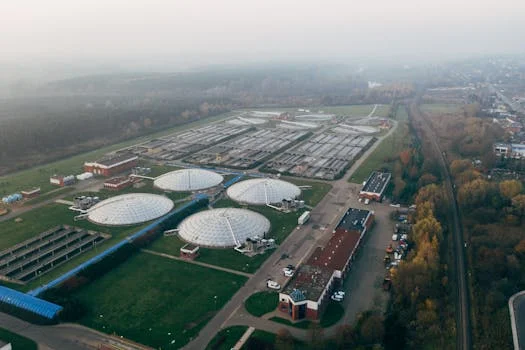
Industrial DAF units operating in Muscat’s food processing zones typically achieve Fats, Oils, and Grease (FOG) removal rates exceeding 95%, often reducing influent concentrations from 500 mg/L to less than 10 mg/L. This efficiency is critical for meeting OEA standards and protecting municipal sewer networks from blockages. In the oil and gas sector, DAF systems are used as secondary treatment to remove emulsified hydrocarbons, achieving 85–90% COD removal even in the presence of high salinity. This performance allows operators to either reuse the water for injection or meet strict environmental discharge protocols.
The removal of Total Suspended Solids (TSS) remains the primary benchmark for DAF performance across all Omani sectors. Benchmarks show consistent 95–99% TSS removal for influent concentrations ranging from 100 to 1,000 mg/L. For textile manufacturers in the Al Rusayl Industrial Estate, DAF systems are essential for removing dyes and surfactants that contribute to high BOD levels. By integrating DAF with proper chemical dosing, these facilities can compare DAF systems with lamella clarifiers, Swirltex, and other alternatives to find the most footprint-efficient solution for their site.
| Industry Sector | COD Removal % | TSS Removal % | FOG Removal % | Typical Influent (mg/L COD) |
|---|---|---|---|---|
| Food & Dairy | 92–97% | 95–99% | 98% | 1,500 – 3,000 |
| Oil & Gas | 85–90% | 90–95% | 95% | 1,000 – 2,500 |
| Textiles | 70–85% | 90–95% | N/A | 800 – 1,500 |
| Desalination (Pre-treatment) | 40–60% | 95% | N/A | <100 (TOC focus) |
Achieving these benchmarks requires precise chemical dosing. In Muscat’s seafood processing plants, for instance, the use of Polyaluminum Chloride (PAC) as a coagulant followed by an anionic polyacrylamide flocculant has proven most effective at destabilizing protein-heavy emulsions. This chemical strategy, when paired with a high-performance DAF, ensures that the effluent remains well within the OEA 2024 compliance window, effectively reducing the risk of fines by over 90%.
Oman’s DAF System Suppliers: Local vs International Vendors and Decision Framework
Procurement teams in Oman evaluate DAF suppliers based on a weighted matrix of local regulatory expertise, lead times for spare parts, and the ability to provide on-site pilot testing in regions like Sohar and Salalah. While international vendors like Xylem or Veolia offer high-end technological features, they often come with longer lead times (8–12 months) and higher CAPEX. Conversely, local partnerships or China-Oman joint ventures like HydropureWater provide a middle ground, offering advanced DAF system for Oman’s industrial wastewater with lead times as short as 3–5 months and localized after-sales support.
A refinery project in Salalah recently utilized this decision framework when choosing between three global vendors. The primary criteria were the ability to handle high-salinity wastewater and the availability of a local maintenance team. They selected a system that offered a 4-month lead time and an OMR 30,000 lower CAPEX compared to Western European alternatives. This allowed the refinery to meet its commissioning deadline while ensuring that technical support was available within a 24-hour drive from Muscat.
| Supplier Type | Lead Time | After-Sales Support | Compliance Knowledge | Relative Cost |
|---|---|---|---|---|
| International (EU/USA) | 8–12 Months | Remote / Third-party | Global Standards | Premium (High) |
| Regional/JV (HydropureWater) | 3–5 Months | Local Omani Team | OEA/Oman-Specific | Competitive (Mid) |
| Local Fabricators | 2–4 Months | Immediate | Basic | Budget (Low) |
For Omani buyers, the supplier evaluation checklist should include:
- Verification of OEA standard compliance for previous Omani projects.
- Availability of SS316L or duplex stainless steel options for corrosion resistance.
- Local reference checks in Muscat, Sohar, or Salalah.
- Provision of a comprehensive O&M manual and on-site operator training.
- Capability for pilot testing on-site to verify chemical dosing requirements.
DAF System Costs in Oman: CAPEX, OPEX, and ROI for Industrial Projects
The Capital Expenditure (CAPEX) for a turnkey DAF system in Oman ranges from OMR 50,000 for small-scale 5 m³/h units to over OMR 500,000 for high-capacity 300 m³/h installations. These costs typically include the flotation tank, saturation system, chemical dosing skids, and basic control automation. For projects in Sohar, civil works and installation can add another 15-20% to the total project cost, depending on the existing infrastructure. Many Omani firms also explore rental options, which cost between OMR 5,000 and OMR 20,000 per month, to address temporary capacity needs or to pilot the technology before a full purchase.
Operational Expenditure (OPEX) in Oman is largely driven by chemical consumption and electricity. On average, treating industrial wastewater costs between OMR 0.50 and OMR 2.00 per cubic meter. Electricity consumption for DAF pumps typically ranges from 0.3 to 0.8 kWh/m³, while chemical costs (PAC and polymers) account for OMR 0.10 to OMR 0.50 per cubic meter. By sourcing chemicals from local Omani suppliers and utilizing energy-efficient motors, facilities can reduce their annual OPEX by up to 20%.
| Cost Component | Estimated Range (OMR) | Notes |
|---|---|---|
| CAPEX (Turnkey) | 50,000 – 500,000 | Capacity dependent (5–300 m³/h) |
| OPEX (per m³) | 0.50 – 2.00 | Includes power, chemicals, labor |
| Rental (Monthly) | 5,000 – 20,000 | Ideal for short-term compliance |
| Maintenance (Annual) | 2,000 – 10,000 | Parts and service contracts |
The Return on Investment (ROI) for a DAF system in Oman is often realized within 12 to 36 months. This rapid payback is achieved through the elimination of OEA fines, reduced sewage surcharge fees, and the potential for water reuse in non-potable applications like irrigation or cooling towers. For food processing plants, the recovered sludge (rich in fats) can sometimes be sold to rendering facilities, providing an additional minor revenue stream that offsets OPEX. To understand how these costs compare globally, engineers can learn how DAF systems fit into broader industrial wastewater treatment strategies in other high-growth industrial regions.
DAF System Installation and Maintenance in Oman: Site Requirements and Best Practices
Standard DAF installation in Omani industrial estates requires a minimum 3-phase power supply of 400V/50Hz and a footprint ranging from 50 to 200 square meters depending on the hydraulic loading rate. Because of Oman's extreme summer temperatures, all outdoor electrical panels must be rated for at least IP65 and include sunshields or active cooling to prevent PLC failure. the high humidity in coastal cities like Muscat and Salalah necessitates the use of high-grade protective coatings or stainless steel for all structural supports to prevent atmospheric corrosion.
Maintenance is the most critical factor in ensuring the 15–20 year lifespan of a DAF unit. Daily tasks include monitoring the influent pH and flow rate, as well as checking the "white water" quality in the saturation tank. Weekly, operators must calibrate the PLC-controlled chemical dosing for DAF systems in high-salinity wastewater to account for changes in production effluent. Monthly maintenance should focus on cleaning the air injection nozzles and inspecting the skimmer blades for wear. Common issues in Oman, such as mineral scaling due to hard water, can be mitigated by implementing a regular acid-wash cycle for the saturation components.
Training Omani facility staff is essential for long-term success. A typical training program lasts 2 to 5 days and covers chemical jar testing, sludge dewatering protocols, and emergency shutdown procedures. By empowering local operators to troubleshoot common issues like foaming or poor floc formation, facilities can maintain consistent OEA compliance and avoid the need for expensive emergency call-outs from Muscat-based service providers.
Frequently Asked Questions
What is the typical efficiency of DAF for COD removal in Oman?
In Omani industrial applications, DAF systems typically achieve 85% to 97% COD removal. The exact efficiency depends on the nature of the COD; insoluble COD (associated with solids and oils) is removed at very high rates, while soluble COD may require additional biological treatment or advanced oxidation.
How does Oman’s high salinity affect DAF performance?
High salinity increases water density, which can slightly reduce the rise rate of air bubbles. This is managed by increasing the air-to-solids ratio and using specialized chemical flocculants that remain stable in high-conductivity environments, ensuring TSS removal remains above 95%.
Are DAF systems required for Muscat Municipality sewer discharge?
Yes, if your industrial effluent exceeds the Muscat Municipality limits for FOG (>10 mg/L) or TSS (>50 mg/L), a DAF system is the most common pre-treatment requirement to avoid heavy fines and potential suspension of discharge permits.
What is the lead time for a DAF system in Oman?
Lead times vary by supplier. International brands usually require 8 to 12 months, while regional suppliers or those with local assembly partnerships, like HydropureWater, can deliver turnkey systems within 3 to 5 months.